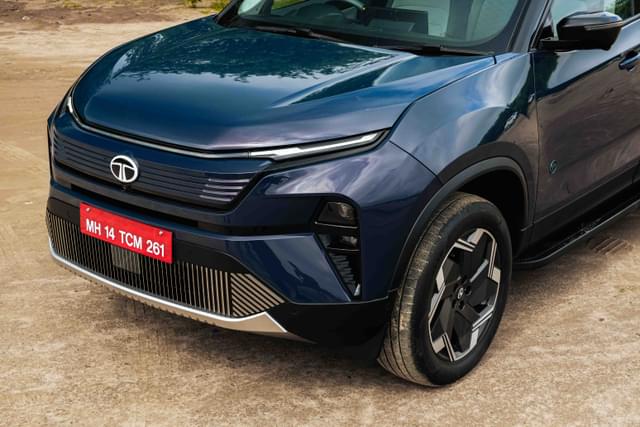
The Tata Harrier EV is India's first mass-market electric SUV with all-wheel drive under ₹30 lakh, combining a 627 km claimed range, Level 2 ADAS, and a flagship feature set that redefines value in the segment.
Key specs
| Range (claimed) | 538–627 km (ARAI claimed) |
|---|---|
| Real-world range | ~414–450 km mixed-cycle (angclassicmotors.com test at ~5.81 km/kWh; CarWale estimates ~450 km) |
| Battery | 65 kWh / 75 kWh lithium-ion |
| Fast charging | 120 kW DC; 20–80% in ~25 min |
| Home charging | 7.2 kW AC; 10–100% in ~10.7 hrs |
| Motor | Single motor (RWD): 167 PS / 215 Nm; Dual motor (QWD): 313 hp / 504 Nm (Front 158 PS + Rear 238 PS) |
| Drivetrain | RWD (65 kWh & 75 kWh base) / QWD AWD (75 kWh top variants) |
| Top speed | Not officially stated |
| 0–100 km/h | 6.3 sec (QWD dual-motor, claimed) |
| Seating | 5 |
The Tata Harrier EV is Tata Motors' flagship electric SUV, priced from ₹21.49 lakh to ₹30.23 lakh (ex-showroom), and represents the brand's most technologically advanced offering to date. Built on a re-engineered platform with a new 'Tidal' electrical architecture, it is available with two battery options — a 65 kWh pack and a 75 kWh pack — delivering a claimed ARAI range of up to 627 km (65 kWh, RWD) and 622 km (75 kWh) respectively. The 75 kWh variant also unlocks Tata's first-ever all-wheel-drive system on an electric vehicle, branded as QWD (Quad Wheel Drive), with a dual-motor setup producing a combined 313 hp and 504 Nm of torque.
The Harrier EV carries over the bold, upright silhouette of the diesel Harrier but gains EV-specific design cues: a blanked-off front grille, aerodynamic alloy wheel covers, revised bumpers, and EV badging. Inside, a grey-and-white dual-tone theme elevates the cabin over the standard Harrier, complemented by a 14.53-inch Samsung QLED touchscreen, a digital instrument cluster, and a 10-speaker JBL Dolby Atmos audio system. Level 2 ADAS, a self-parking mode, summon mode, and a 540-degree transparent view camera system round out a feature list that punches well above its price segment.
With DC fast-charging support up to 120 kW enabling a 20–80% charge in approximately 25 minutes, and a 7.2 kW AC home-charging option that completes a full charge in around 10.7 hours, the Harrier EV is engineered for both daily urban commutes and long-distance travel. It competes directly with the Mahindra XEV 9e, MG ZS EV, and Hyundai Creta Electric, but distinguishes itself through its larger battery, AWD availability, and a more premium feature set at a competitive price point.
Range and charging
The Tata Harrier EV is offered with two battery configurations. The 65 kWh pack is paired exclusively with rear-wheel drive and delivers a claimed ARAI range of 627 km — the highest in its segment at launch. The larger 75 kWh pack, available in both RWD and QWD (AWD) configurations, offers a claimed 622 km. In real-world mixed-cycle testing, however, figures settle closer to 414–450 km, translating to an efficiency of approximately 5.81 km/kWh — still highly competitive for a full-size electric SUV.
On the charging front, the Harrier EV supports up to 120 kW DC fast charging, which takes the battery from 20% to 80% in roughly 25 minutes — a figure that makes long highway trips genuinely practical. For home use, the bundled 7.2 kW AC wallbox charger completes a full 10–100% charge in approximately 10.7 hours, meaning overnight charging is entirely sufficient for most daily use cases. The car also supports regenerative braking with multiple levels of intensity, helping recover energy during city driving.
Tata offers a lifetime high-voltage battery warranty on the Harrier EV, which is a significant ownership assurance and a differentiator over some rivals. Buyers in cities with access to Tata's growing public charging network (Tata Power EV) will find the ecosystem particularly well-integrated.
Performance and drive
The entry-level 65 kWh RWD variant produces around 167 PS and 215 Nm, which is adequate for city and highway use but not particularly exciting. The real performance story is the 75 kWh QWD dual-motor variant, which combines a 158 PS front motor with a 238 PS rear motor for a combined output of 313 hp (approximately 390 bhp peak in Boost mode) and 504 Nm of torque. The 0–100 km/h sprint is dispatched in 6.3 seconds (claimed), making it one of the quickest SUVs under ₹30 lakh in India.
The Harrier EV features frequency-selective dampers that firm up during cornering and soften over bumps — a system that significantly improves ride quality over the standard Harrier's setup. Drive modes include Eco, City, Sport, and Boost, with Boost mode unlocking maximum power for short bursts. The QWD system also includes terrain response modes for sand, mud, and wet surfaces, giving the Harrier EV genuine off-road credentials that most electric SUVs in this price range lack.
Steering feel is well-weighted for an electric SUV, and the overall driving character is composed and confidence-inspiring. PowerDrift's real-world review noted that the AWD system's torque vectoring between axles is smooth and transparent in everyday driving, only becoming noticeable when traction is genuinely needed.
Cabin, space, and tech
The Harrier EV's interior adopts a grey-and-white dual-tone theme that feels noticeably more premium than the standard Harrier's all-black cabin. The centrepiece is a 14.53-inch Samsung QLED touchscreen — one of the sharpest displays in any Indian car — running Tata's Arcade.ev connected car platform with wireless Android Auto and Apple CarPlay. A separate digital instrument cluster and a heads-up display (on top variants) complete the driver-focused tech stack.
The 10-speaker JBL audio system with Dolby Atmos certification delivers a genuinely immersive listening experience. Other notable features include a panoramic sunroof, a digital IRVM that doubles as a front and rear dashcam, wireless phone charging, ventilated front seats, and a 540-degree transparent view camera system for low-speed manoeuvring. The e-Valet and Summon modes — allowing the car to park itself or be called to the driver remotely — are segment-firsts at this price point.
Boot space is rated at 502 litres, which is competitive for the segment, though the absence of a frunk (front trunk) is a missed opportunity given the blanked-off front end. Rear seat space is generous for a 5-seater, with adequate knee room and headroom for tall passengers. The cabin's overall build quality has been praised in reviews, with soft-touch materials on key touchpoints and a well-damped feel to switches and panels.
Safety and ADAS
The Tata Harrier EV is built on a body structure described by Tata as '5-star BNCAP-ready', though formal Bharat NCAP testing results had not been published at the time of this writing. The standard Harrier (ICE) received a 5-star Bharat NCAP rating, and the EV shares the same core body structure with additional reinforcement for the battery pack.
All variants come with at least 6 airbags as standard, with top variants offering up to 7 airbags. The Level 2 ADAS suite includes adaptive cruise control, lane keep assist, lane departure warning, automatic emergency braking, blind spot monitoring, rear cross-traffic alert, and driver drowsiness detection. The ADAS system is calibrated for Indian road conditions and has been noted in reviews as being less prone to false alerts than some rivals.
Additional passive safety features include all-wheel disc brakes, electronic stability control, hill hold and hill descent control, and ISOFIX child seat anchors on the rear seats.
Variants and pricing
The Tata Harrier EV is offered across multiple variants spanning ₹21.49 lakh to ₹30.23 lakh (ex-showroom). The range opens with the Smart (65 kWh RWD) at ₹21.49 lakh and progresses through Smart+, Pure, Pure+, Adventure, Adventure+, Empowered, Empowered+, and the range-topping Empowered+ QWD (75 kWh AWD) at approximately ₹30.23 lakh. Mid-range variants in the ₹24–27 lakh bracket represent the sweet spot, offering the 75 kWh battery with RWD and most of the premium features.
Tata has structured the variant lineup so that the 75 kWh battery becomes available from the Pure+ variant onwards, while QWD (AWD) is reserved for the top two Empowered+ variants. This means buyers who want the longer-range battery but don't need AWD have several well-equipped options in the ₹24–28 lakh range.
How it compares
The Harrier EV's closest rivals are the Mahindra XEV 9e (₹21.90–30.50 lakh), the Hyundai Creta Electric (₹17.99–23.49 lakh), and the MG ZS EV (₹18.98–25.50 lakh). Against the Creta Electric, the Harrier EV offers a significantly larger battery, AWD availability, and a more spacious cabin, but at a higher starting price. The XEV 9e is a more direct rival — both offer AWD, large batteries, and premium features — but the Harrier EV's more conventional SUV body style and established Harrier brand equity give it a broader appeal.
The Harrier EV's 627 km claimed range leads the segment, and its 120 kW fast-charging capability is matched only by the XEV 9e among direct rivals. The 502-litre boot is competitive, though the Curvv EV offers a slightly larger boot in a smaller footprint.
Who should buy it
The Tata Harrier EV is the right choice for buyers who want a full-size electric SUV with genuine long-range capability, a premium feature set, and the option of all-wheel drive — all within a ₹25–30 lakh budget. It is particularly well-suited to families who regularly undertake highway journeys and want the confidence of a large battery and fast-charging support.
Buyers who prioritise a sporty, coupe-SUV aesthetic or who need a third row of seating should look elsewhere. But for those seeking a practical, well-rounded, and feature-rich electric SUV that can genuinely replace a diesel Harrier in daily use, the Harrier EV makes a compelling and well-priced case.
Safety & ADAS
| Airbags | 6 standard; up to 7 on top variants |
|---|---|
| ADAS level | Level 2 |
| Notes | Body structure described as '5-star BNCAP-ready' by Tata Motors; formal Bharat NCAP test results not yet published as of May 2026. Standard Harrier ICE received 5-star Bharat NCAP. All-wheel disc brakes, ESC, hill hold, hill descent control standard. |
Verdict
Best for: Families and highway travellers wanting a full-size electric SUV with AWD, long range, and a premium feature set under ₹30 lakh
What we like
- 627 km ARAI claimed range leads the segment; real-world ~450 km is genuinely usable
- First Tata EV with AWD (QWD dual-motor, 313 hp) available under ₹30 lakh
- 120 kW DC fast charging delivers 20–80% in ~25 min — among the fastest in class
- Samsung QLED 14.53-inch screen, JBL Dolby Atmos, Summon/e-Valet are segment-firsts at this price
- Lifetime high-voltage battery warranty adds long-term ownership confidence
What to know
- No frunk despite blanked-off front end — a missed storage opportunity
- 502-litre boot is smaller than the Tata Curvv EV's 500 L+ and some rivals
- AWD (QWD) restricted to the top two variants above ₹30 lakh, limiting accessibility
- Real-world range of ~414–450 km is significantly below the 627 km ARAI figure
Variants
| Variant | Price | Range | Notable |
|---|---|---|---|
| Smart (65 kWh RWD) | ₹21.49 Lakh | 627 km (ARAI claimed) | Entry variant; RWD; essential features |
| Smart+ (65 kWh RWD) | ₹22.99 Lakh | 627 km (ARAI claimed) | Adds connected car features |
| Pure (65 kWh RWD) | ₹24.49 Lakh | 627 km (ARAI claimed) | Panoramic sunroof, ADAS Level 2 |
| Pure+ (75 kWh RWD) | ₹25.99 Lakh | 622 km (ARAI claimed) | 75 kWh battery; 120 kW DC fast charge |
| Adventure (75 kWh RWD) | ₹26.99 Lakh | 622 km (ARAI claimed) | Ventilated seats, 540-degree camera |
| Adventure+ (75 kWh RWD) | ₹27.99 Lakh | 622 km (ARAI claimed) | Digital IRVM dashcam, JBL Dolby Atmos |
| Empowered+ (75 kWh RWD) | ₹28.99 Lakh | 622 km (ARAI claimed) | HUD, e-Valet, Summon mode, full ADAS |
| Empowered+ QWD (75 kWh AWD) | ₹30.23 Lakh | 622 km (ARAI claimed) | Dual motor 313 hp; 0–100 in 6.3 sec; terrain modes |
Key features
- 65 kWh / 75 kWh battery with up to 627 km ARAI claimed range
- QWD dual-motor AWD system (313 hp / 504 Nm) — first on a Tata EV
- 120 kW DC fast charging: 20–80% in ~25 minutes
- 14.53-inch Samsung QLED touchscreen with wireless Android Auto / Apple CarPlay
- Level 2 ADAS with adaptive cruise, AEB, lane keep assist, and blind spot monitoring
- Self-parking, e-Valet, and Summon mode (segment-first under ₹30 lakh)
- 10-speaker JBL Dolby Atmos audio system and 540-degree transparent view camera
Competitors
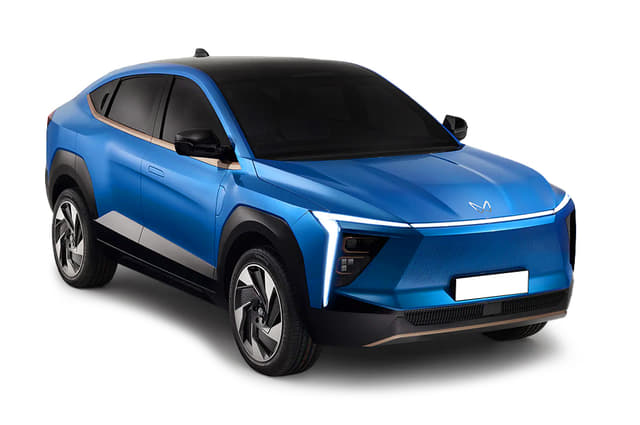 SUV · On Sale
Mahindra
Mahindra XEV 9e
₹21.90 – 31.25 Lakh (ex-showroom, indicative)
 SUV · On Sale
Hyundai Motor India
Hyundai Creta Electric
₹18.02 – 24.70 Lakh (ex-showroom)
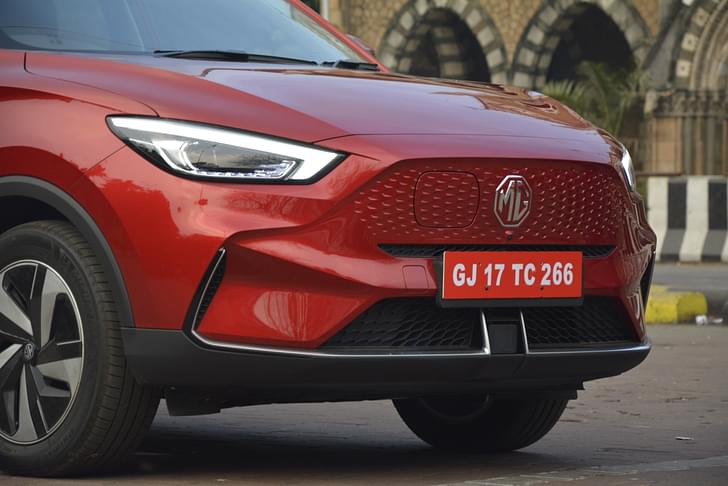 SUV · On Sale
JSW MG Motor India
MG ZS EV
₹17.99 – 20.50 Lakh (ex-showroom)
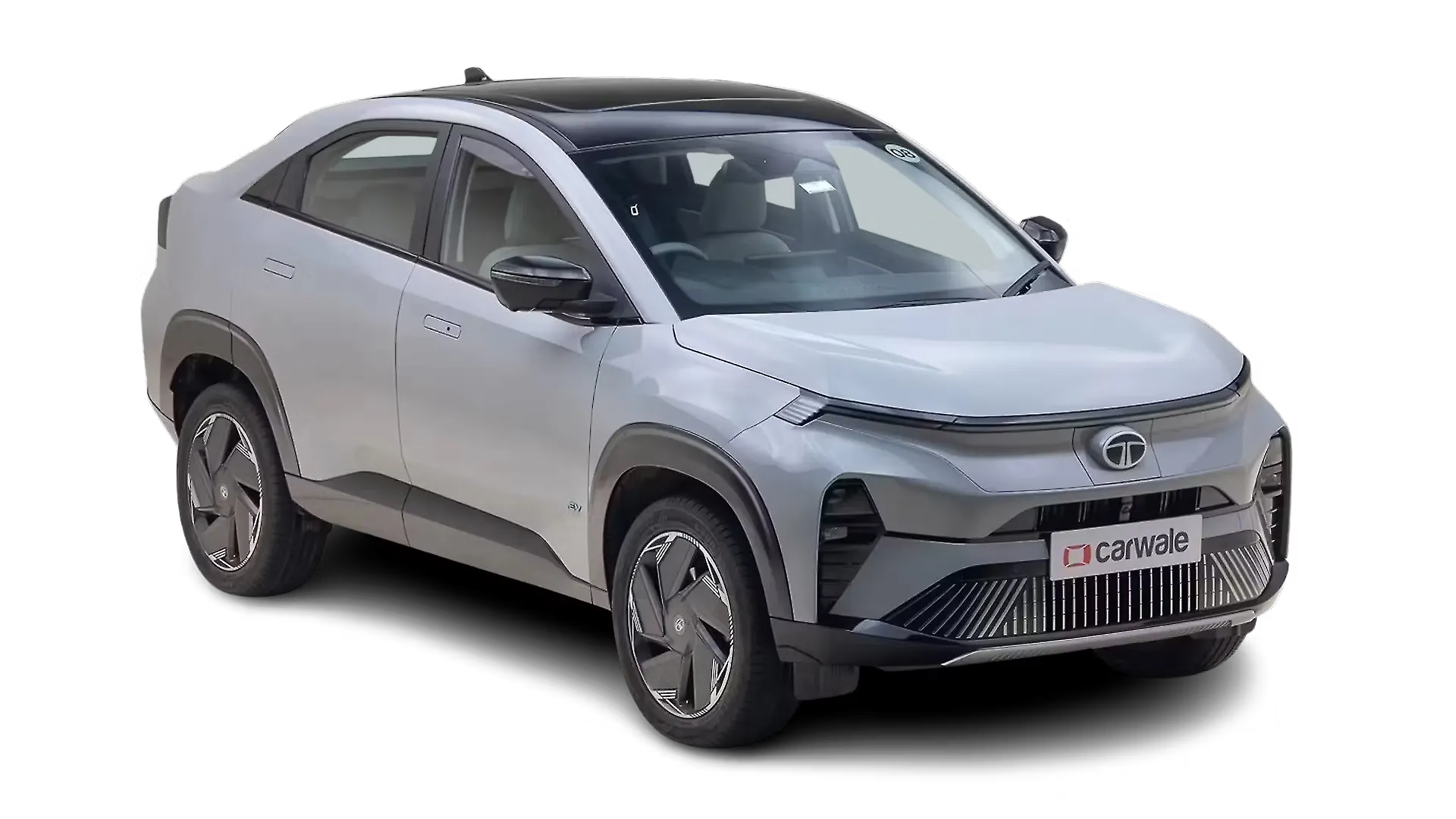 Coupe · On Sale
Tata Motors
Tata Curvv EV
₹17.49 – 22.24 Lakh (ex-showroom)
Latest news
Jaguar's India Repositioning Under Tata Motors: What It Means for Premium EV Buyers in 2026
Jaguar is going all-electric and ultra-premium (£120,000–£150,000) under Tata Motors, narrowing to 8–9 global markets and explicitly targeting India as a growth opportunity.
Tata Motors' July 2026 Price Hike: How a 1.5% Increase Will Impact EV Buyers in India
Tata Motors is hiking EV and ICE car prices by up to 1.5% from July 1, 2026 — its second increase this year — due to rising raw material and input costs.
How Tata Motors' Chery Partnership Will Reshape India's Premium EV Segment in 2027
Tata Motors is using Chery's EV platform to launch premium Avinya cars from 2027, reshaping India's EV hierarchy and opening the mid-premium space to rivals like the Maruti Suzuki e Vitara.
FAQs
What is the price of the Tata Harrier EV?
The Tata Harrier EV is priced from ₹21.49 lakh (Smart, 65 kWh RWD) to ₹30.23 lakh (Empowered+ QWD, 75 kWh AWD), all ex-showroom. On-road prices vary by city and typically add ₹1–2 lakh for registration, insurance, and other charges.
What is the real-world range of the Tata Harrier EV?
While Tata claims up to 627 km (ARAI) for the 65 kWh variant, real-world mixed-cycle testing has recorded approximately 414–450 km, at an efficiency of around 5.81 km/kWh. The 75 kWh QWD AWD variant will return slightly less due to the heavier dual-motor setup.
How long does the Tata Harrier EV take to charge?
With a 120 kW DC fast charger, the Harrier EV charges from 20% to 80% in approximately 25 minutes. Using the bundled 7.2 kW AC home wallbox, a full 10–100% charge takes around 10.7 hours, making overnight home charging the most convenient daily option.
Does the Tata Harrier EV have ADAS?
Yes, the Tata Harrier EV comes with Level 2 ADAS across most variants. The suite includes adaptive cruise control, automatic emergency braking, lane keep assist, lane departure warning, blind spot monitoring, rear cross-traffic alert, and driver drowsiness detection — calibrated for Indian road conditions.
Is the Tata Harrier EV safe?
The Harrier EV is built on a body structure Tata describes as '5-star BNCAP-ready', sharing its core architecture with the standard Harrier ICE which received a 5-star Bharat NCAP rating. It comes with 6–7 airbags, all-wheel disc brakes, ESC, hill hold, and hill descent control. Formal Bharat NCAP EV test results were not published as of May 2026.
Is the Tata Harrier EV worth buying?
For buyers seeking a full-size electric SUV with a large battery, AWD option, and a premium feature set under ₹30 lakh, the Harrier EV offers exceptional value. Its 627 km claimed range, 120 kW fast charging, Samsung QLED screen, and Summon/e-Valet features are segment-leading. The main trade-offs are a real-world range significantly below the ARAI figure and AWD availability only on the top two variants.
What is the difference between the 65 kWh and 75 kWh Tata Harrier EV?
The 65 kWh variant is RWD-only and offers a claimed 627 km ARAI range, starting at ₹21.49 lakh. The 75 kWh variant offers 622 km claimed range, supports 120 kW DC fast charging, and unlocks the QWD dual-motor AWD system on the top two variants. The 75 kWh pack is available from the Pure+ variant (₹25.99 lakh) onwards.
How does the Tata Harrier EV compare to the Mahindra XEV 9e?
Both are full-size electric SUVs with AWD, large batteries, and premium features in the ₹22–30 lakh range. The Harrier EV has a higher claimed range (627 km vs XEV 9e's 656 km ARAI) and a more conventional SUV body style, while the XEV 9e offers a sportier coupe-SUV design and a slightly more powerful top variant. The Harrier EV's established brand equity and wider service network give it a practical ownership edge for many buyers.
Sources
- Tata Harrier EV Official Overview – Features, Range & Tech
- Tata Harrier EV Price 2026, Images, Features – Autocar India
- Tata Harrier EV Price – Features, Images, Colours & Reviews – CarDekho
- Tata Harrier EV Price – Images, Colours & Reviews – CarWale
- TATA Harrier EV 2026 Review: Features, Mileage & On-Road Price Explained