
Tata Motors is hiking EV and ICE car prices by up to 1.5% from July 1, 2026 — its second increase this year — due to rising raw material and input costs.
Tata Motors will increase prices across its full passenger vehicle lineup — covering both ICE models and electric vehicles — by up to 1.5% effective July 1, 2026, marking the company's second price revision within a single calendar year.
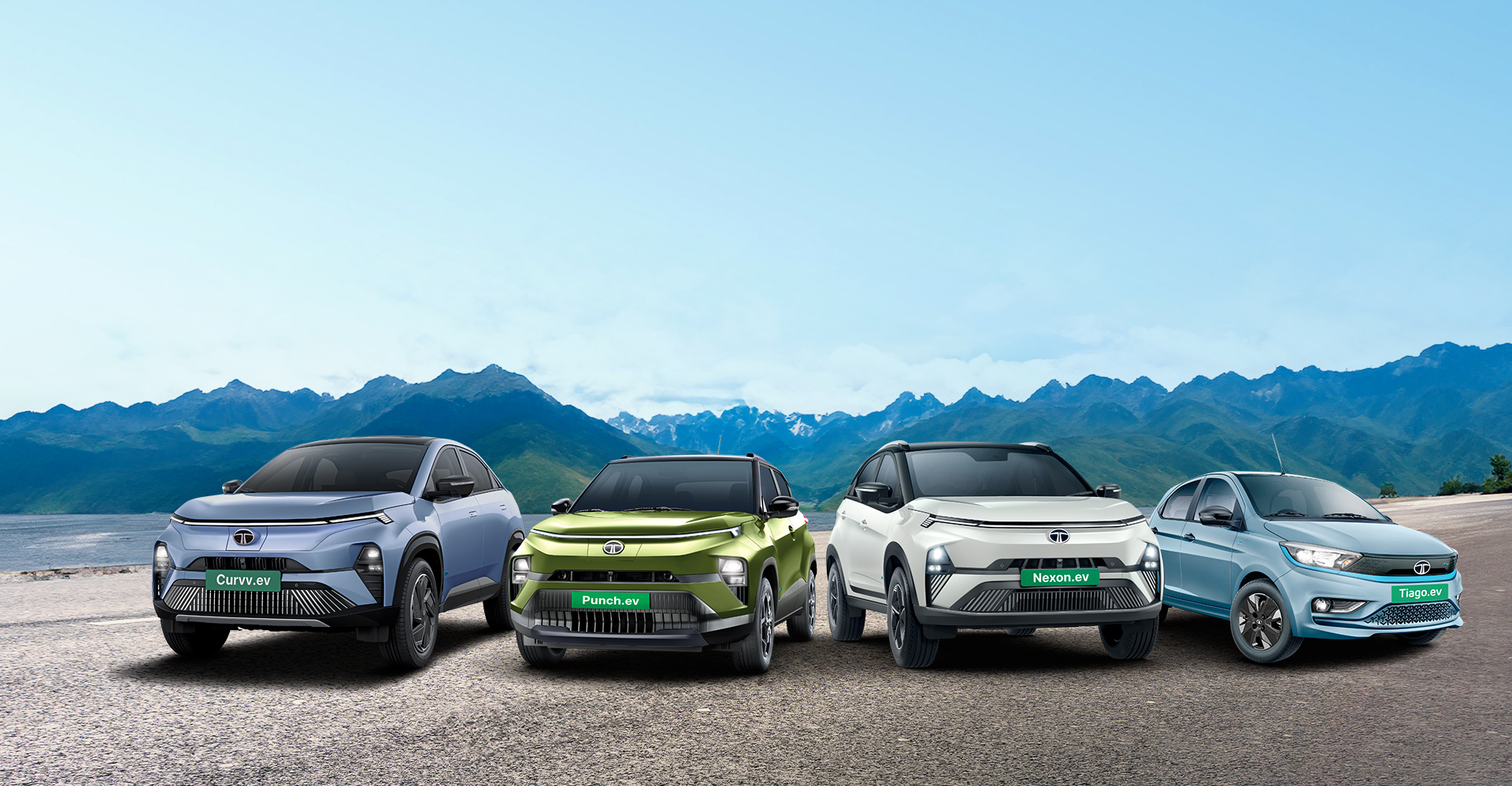
The announcement, made on June 12, 2026, covers every model in the Tata stable: from entry-level hatchbacks like the Tiago and Altroz to mid-range SUVs like the Nexon and Curvv, and flagship models like the Harrier and Safari. On the EV side, the Tiago EV, Punch EV, Nexon EV, Curvv EV, and Harrier EV are all in scope. The company has been explicit that the quantum of increase will vary by model and variant — not every car will see the full 1.5%.
To understand what this means in rupee terms, here is a quick reference across Tata's key EV models at their approximate current ex-showroom price points:
| Model | Approx. Ex-Showroom Price (₹) | Max Hike at 1.5% (₹) | Segment |
|---|---|---|---|
| Tata Tiago EV | ₹8.49 lakh | ~₹12,735 | Entry hatchback EV |
| Tata Punch EV | ₹10.99 lakh | ~₹16,485 | Compact SUV EV |
| Tata Nexon EV | ₹14.99 lakh | ~₹22,485 | Mid-range SUV EV |
| Tata Curvv EV | ₹17.49 lakh | ~₹26,235 | Coupe SUV EV |
| Tata Harrier EV | ₹21.49 lakh | ~₹32,235 | Premium SUV EV |
These figures represent the ceiling, not the guaranteed increase. Tata has confirmed that the actual hike will vary, and some variants may see a smaller adjustment. Buyers who complete bookings before June 30, 2026, should be able to lock in current pricing — though it is advisable to confirm this with your dealership, as booking-to-delivery timelines differ.
Why is Tata Motors raising EV prices in July 2026?
Tata Motors is India's largest electric passenger vehicle manufacturer by cumulative sales volume, and its pricing decisions carry outsized weight for the EV market. The company frames the July hike as a measure to "partially offset the impact of rising input costs and sustained inflationary pressures," while noting that it continues to absorb a significant portion of these cost increases internally.
The cost pressures are not unique to Tata. ETAuto reports that automakers across the board have attributed price hikes to a combination of:
- Higher raw material costs for steel, aluminium, and rubber
- Rising lithium-ion cell prices, which directly affect EV battery pack costs
- Semiconductor supply tightness continuing to push up component costs
- Rupee depreciation making imported components more expensive
- Compliance costs from BS6 Phase 2 emission norms
- Logistics and supply chain inflation
For EV buyers specifically, the lithium-ion cell cost element is the most structurally significant. Battery packs typically account for 35–45% of an EV's total manufacturing cost, so even modest fluctuations in cell prices ripple through to the ex-showroom figure. This dynamic affects every EV brand operating in India, not just Tata.
Autocar India notes that Tata has been absorbing a significant share of these cost increases before passing any portion to customers — a strategy that protects near-term sales volumes but compresses margins over time.
Is this Tata's first price hike in 2026?
No. Fortune India confirms that the July 1 revision is Tata Motors' second price hike of 2026. The first came on April 1, 2026, when the company raised prices by an average of 0.5% across its ICE passenger vehicle portfolio, again citing rising input costs.
Going back further, in January 2025, Tata Motors implemented a price hike of up to 3% across its passenger vehicle portfolio including EVs. Buyers who purchased a Nexon EV in early 2025 and are now looking to upgrade to a Curvv EV are facing a compounding effect of multiple upward revisions over 18 months.
This pattern — incremental increases timed to coincide with new financial quarters or model year transitions — is designed to avoid sticker shock while steadily recovering margin. It is a strategy widely used by Indian automakers, but its frequency in 2026 is notable.
For context, the cumulative price movement on a Tata EV over the past 18 months could be approximated as follows: a 3% hike in January 2025, a 0.5% hike in April 2026, and now up to 1.5% in July 2026. On a base of ₹15 lakh, that compounds to roughly ₹75,000 in cumulative price increases — a meaningful sum for a buyer who has been watching and waiting.
Which Tata EV models are affected, and by how much?
Every model in Tata's EV lineup is in scope for the July 1 revision, according to the company's official statement. The specific models confirmed as part of Tata's electric portfolio include:
Tata Tiago EV — India's most affordable four-wheeled EV from a mainstream brand, positioned for first-time EV adopters. A 1.5% hike on the base variant (approximately ₹8.49 lakh) translates to roughly ₹12,700.
Tata Punch EV — The compact SUV EV that has been among the top-selling EVs in India month-on-month. At around ₹10.99 lakh for the base variant, the maximum increase is approximately ₹16,500.
Tata Nexon EV — The model that effectively built the mid-range EV segment in India. Priced from approximately ₹14.99 lakh, a 1.5% hike means up to ₹22,500 more on the base variant.
Tata Curvv EV — The coupe-SUV body style that targets a style-conscious urban buyer. Starting around ₹17.49 lakh, the ceiling impact is approximately ₹26,200.
Tata Harrier EV — The premium SUV EV that competes in a segment increasingly crowded with new entrants. At approximately ₹21.49 lakh, the maximum hike reaches around ₹32,200.
These are ceiling figures. Tata has explicitly stated that the actual increase will vary by model and variant. Top-spec variants of premium models may absorb a different percentage than entry trims. Buyers should get written confirmation of the post-July 1 price from their dealership before making a decision.
If you are evaluating Tata's EV lineup more broadly, our guide to the best electric cars to buy in India in 2026 covers the full competitive space.
Should you buy a Tata EV before July 1 to avoid the price hike?
The short answer is: if you were already planning to buy in the next 30–60 days, accelerating your timeline makes financial sense. The longer answer involves a few caveats.
First, Tata Motors is reportedly running promotional campaigns for June 2026, particularly on its EV lineup. Models like the Curvv EV, Harrier EV, and Punch EV reportedly have consumer benefits and savings available this month. Combining a June purchase with existing offers could offset more than just the 1.5% hike — delivering a net saving of 2–3% relative to a post-July purchase at full price.
Second, the booking-to-delivery gap matters. If you book before June 30 but take delivery in August, it is not guaranteed that the pre-hike price will be honoured. Policies vary by dealership and by model availability. Confirm in writing.
Third, consider whether a variant you actually want is in stock. Rushing into a compromise variant to avoid a ₹15,000–₹25,000 hike on a ₹15 lakh purchase is rarely the right call. The hike is real, but it is not so large that it should override a considered buying decision.
For buyers looking at the sub-₹20 lakh EV space, our roundup of the best electric cars under ₹20 lakhs in India in 2026 is a useful reference point for understanding where Tata's models sit relative to alternatives.
How does this affect Tata's competitive position against rivals?
This is where the pricing story gets interesting for buyers who are cross-shopping. Tata's July hike does not happen in a vacuum — it occurs against a backdrop of new entrants and established rivals making their own pricing moves.
The Maruti Suzuki e Vitara, which launched in 2025 and has been steadily building its dealer and service network, presents a pointed contrast. Maruti Suzuki has historically used pricing stability as a brand promise — particularly in segments where it is trying to establish EV credibility against Tata's incumbency advantage. While Maruti has not been immune to input cost pressures either, the e Vitara's positioning in the mid-range SUV EV segment (where it overlaps directly with the Nexon EV and lower Curvv EV variants) means that any Tata price increase widens the window for Maruti to hold or marginally undercut on sticker price. For a buyer comparing a Nexon EV at its post-July price against an e Vitara, the gap — if Maruti holds pricing — becomes a legitimate consideration.
Maruti has the additional advantage of Suzuki's global EV supply chain, which may give it some buffer against the same input cost pressures that are squeezing Tata.
That said, Tata's service network, battery warranty terms, and the sheer breadth of its EV lineup remain significant advantages. The Nexon EV, for instance, has a proven track record in Indian conditions that newer entrants are still building. Pricing is one variable in a multi-factor buying decision.
For buyers who prioritise safety ratings alongside price, our guide to 5-star Bharat NCAP electric cars in India provides a useful filter.
What is driving input cost inflation for EV makers in India?
Understanding the cost pressures behind this hike helps buyers assess whether further increases are likely — and whether now is a structurally good time to buy.
Several factors are converging in mid-2026:
Lithium-ion cell prices: After a significant global decline in 2023–2024, lithium carbonate prices have seen renewed pressure in 2025–2026 as demand from global EV markets outpaces new mining supply coming online. Indian EV makers, most of whom still import cells or partially assembled packs, are directly exposed to this.
Steel and aluminium: Commodity price cycles have pushed structural material costs higher. For ICE vehicles, this is the dominant input cost variable. For EVs, it affects the body structure and chassis, though the battery remains the larger cost centre.
Semiconductor availability: While the acute shortage of 2021–2022 has eased, the transition to more sophisticated ADAS and battery management systems means EVs now consume more chips per vehicle than their ICE equivalents. Supply constraints on specific chip categories continue to affect production planning.
Rupee depreciation: A weaker rupee makes all imported components — from cells to power electronics to display modules — more expensive in domestic currency terms. This is a structural headwind for any Indian automaker with significant import content.
Regulatory compliance: BS6 Phase 2 norms and evolving safety regulations (including Bharat NCAP requirements) add engineering and certification costs that must be recovered through pricing over time.
The combination of these factors makes it unlikely that input cost pressures will reverse sharply in the near term. Buyers hoping that EV prices will fall significantly in the next 6–12 months may be disappointed — the more realistic scenario is continued incremental increases, punctuated by periodic government incentives or manufacturer offers that create temporary value windows.
Are there ongoing offers that can offset the July price hike?
According to information available ahead of the July 1 implementation, Tata Motors is running promotional campaigns for June 2026 on its EV lineup. The Curvv EV, Harrier EV, and Punch EV reportedly have consumer benefits available this month. The specifics of these offers — whether they take the form of cashback, accessories packages, extended warranties, or finance subvention — will vary by dealership and region.
The practical implication: a buyer who acts in June 2026 may be able to access both the pre-hike price and an active promotional offer, creating a combined saving that is meaningfully larger than the 1.5% hike alone. This is the strongest argument for accelerating a purchase decision if you are already in the consideration phase.
It is also worth noting that EV-specific benefits — such as state government subsidies, reduced road tax in several states, and lower GST rates on EVs relative to ICE vehicles — remain in place and are not affected by Tata's price revision. These structural cost advantages of EV ownership continue to make the total cost of ownership calculation favourable relative to comparable ICE models, even after a 1.5% price increase.
For buyers evaluating long-distance usability alongside price, our guide to the best electric cars for long trips in India in 2026 is worth reading before finalising a model.
What does this mean for the broader Indian EV market?
Tata Motors' pricing decisions matter beyond its own sales numbers because the company is the category leader in India's electric passenger vehicle segment. When Tata moves prices, it sets a reference point that other brands — including newer entrants — use to calibrate their own positioning.
A 1.5% hike from the market leader has a few downstream effects:
It gives rivals room to hold or undercut. Brands like Mahindra (with the BE 6 and XEV 9e), MG Motor (with the Windsor EV and ZS EV), and Maruti Suzuki (with the e Vitara) can use Tata's price increase as a marketing moment, emphasising their own pricing stability or value.
It may slow sales velocity in June, then accelerate it. Pre-hike announcements typically trigger a short-term surge in bookings as buyers try to lock in current prices. This is good for near-term retail numbers but can create a demand trough in July and August as the pipeline clears.
It reinforces the importance of total cost of ownership over sticker price. A ₹20,000–₹30,000 increase on a ₹15–20 lakh EV is meaningful, but it is dwarfed by the fuel savings an EV delivers over 3–5 years of ownership relative to a comparable petrol SUV. Buyers who are on the fence between an EV and an ICE alternative should run the full TCO calculation before letting a 1.5% hike tip the decision.
It signals that the era of aggressively falling EV prices in India is not yet here. Unlike in China, where intense domestic competition has driven EV prices sharply lower, India's EV market is still in a phase where manufacturers are recovering development and localisation investments. Price parity with ICE vehicles at equivalent spec levels remains a medium-term target, not an immediate reality.
For buyers who want to understand the service network implications of their EV choice — a factor that becomes more relevant as prices rise and the ownership stakes increase — our guide to which electric SUV has the best after-sales service network in India is a useful resource.
What should EV buyers do right now?
If you are actively considering a Tata EV purchase, the decision framework is straightforward:
If you are ready to buy in the next 30 days: Visit your dealership, confirm the current ex-showroom price in writing, ask about June 2026 promotional offers, and confirm that the pre-July price will be honoured at delivery. If the variant you want is in stock, this is a reasonable time to proceed.
If you are 60–90 days from a purchase decision: The 1.5% hike is real but not catastrophic. A ₹20,000–₹25,000 increase on a ₹15–17 lakh EV is significant, but it should not be the sole driver of a rushed decision. Use the time to evaluate alternatives, including the Maruti Suzuki e Vitara if you are in the mid-range SUV EV segment, and assess whether Tata's service network and battery warranty terms justify the premium.
If you are evaluating ADAS features as part of your decision: Our guide to best electric cars with ADAS in India in 2026 covers how Tata's models stack up against rivals on this increasingly important dimension.
If you are cross-shopping between EV segments: The best electric SUVs in India in 2026 guide provides a full comparison that factors in price, range, features, and ownership costs.
The fundamental calculus of EV ownership in India has not changed with this announcement. The running cost advantage of an EV over a petrol equivalent remains substantial, state-level incentives continue to apply, and Tata's charging infrastructure investments continue to expand. A 1.5% price hike is a headwind, not a reversal of the EV value.
What it does show is that the window of historically low EV prices — driven by launch-phase pricing and aggressive market-building strategies — is narrowing. Buyers who have been waiting for prices to fall further may find that the direction of travel is, at least in the near term, upward.
Sources
- Tata Motors to hike car prices by up to 1.5 percent
- Tata Motors PV to hike vehicle prices across portfolio by up to 1.5% from July 1
- Tata Motors to hike PV prices by up to 1.5% from July 1, second increase this year
- Tata Motors Price Increase from 1st July 2026
- Tata Motors Passenger Vehicles – Official Site