
Tata's GEN 3 Avinya platform is in active testing for a 2027 launch, promising 500+ km range, ultra-fast charging, and a modular pure-EV architecture that contrasts sharply with Maruti e Vitara's co-developed platform approach.
What Tata's Avinya Platform Testing Reveals About India's Next-Gen EV Architecture in 2026
Tata Motors' GEN 3 Avinya platform is a ground-up, pure-electric-only skateboard architecture engineered to deliver a minimum 500 km of range rechargeable in under 30 minutes, with a planned production debut by 2027. Platform testing is already underway in India as of mid-2026.
Recent prototype sightings on Indian roads sparked significant online speculation. Autocar India clarified that a camouflaged test mule spotted on public roads was not an Avinya model — it was the Steerd ET, an SUV from Exeed, a premium brand under Chery. The clarification matters because it reveals just how much anticipation surrounds Tata's next-generation platform: enthusiasts are actively hunting for it on the road. What the episode confirms is that Tata's Avinya development cycle is real, progressing, and generating genuine market attention.
To understand why this platform matters — not just for Tata buyers, but for anyone evaluating an EV purchase in India today — it helps to compare it directly against the competing architectural philosophies already on sale or arriving soon.
Platform Comparison: Tata Avinya GEN 3 vs. Competing EV Architectures in India
| Feature | Tata Avinya (GEN 3) | Maruti Suzuki e Vitara (Suzuki-Toyota Platform) | Tata Nexon EV (GEN 2 / Ziptron) |
|---|---|---|---|
| Architecture type | Pure EV-only skateboard | Adapted multi-energy platform | Adapted ICE-derived platform |
| Claimed range | 500+ km | ~500 km (ARAI, 60 kWh variant) | Up to 465 km (ARAI) |
| Fast-charge target | 500 km in under 30 min | DC fast charge support | ~56 min (10–80%, 50 kW DC) |
| Platform origin | In-house (TPEM, India-led) | Suzuki-Toyota joint development | In-house (Tata Motors) |
| Target launch | 2027 | 2025 (already on sale) | On sale (2023 refresh) |
| ADAS capability | Next-gen ADAS (planned) | Level 2 ADAS | Level 2 ADAS |
| Body style flexibility | Hatch + SUV + MPV hybrid typology | SUV | SUV |
| Structural safety | High structural safety (EV-optimised) | Bharat NCAP tested | 5-star Bharat NCAP |
This structural comparison of platform philosophies is more useful than a head-to-head performance shootout — the Avinya is not yet on sale. It clarifies which brand's EV space to invest in over the next five to seven years.
What exactly is the Avinya platform, and why does it matter?
The Avinya platform is Tata Passenger Electric Mobility's (TPEM) third-generation electric vehicle architecture — a clean-sheet design that does not share its bones with any internal combustion engine vehicle. This distinction matters in a market where most EVs, including the current Nexon EV, are built on adapted ICE platforms that carry inherent compromises in floor height, battery packaging, and interior space.
Tata's official Avinya concept page describes the GEN 3 architecture as offering "flexible design while boasting of next-generation connectivity, advanced driver assistance systems and enhanced performance and efficiency." The platform is "pioneered out of India for the world" — a global architecture engineered with Indian road conditions in mind, including enhanced waterproofing and dust protection for varied terrain.
The engineering philosophy is summarised by Tata as "Minimize – Maximize – Optimize": minimize mass through lightweight materials and EV-optimised structure, maximize range and interior space, and optimize energy management through proprietary algorithms. This describes a genuine engineering trade-off that pure-EV platforms handle better than adapted ones, because every structural decision starts with the battery and electric drivetrain rather than treating them as an afterthought.
Derived from Sanskrit, "Avinya" means "Innovation." Tata has positioned the concept as a typology-breaking vehicle that blends the premium hatch, SUV, and MPV segments into a single silhouette, originally inspired by a catamaran's dual-hull efficiency.
How does Tata's GEN 3 architecture compare to what Maruti Suzuki is doing with the e Vitara?
The Maruti Suzuki e Vitara represents a different but equally deliberate architectural philosophy. Where Tata's Avinya is a solo in-house bet on a dedicated EV platform, the e Vitara is built on a platform co-developed by Suzuki and Toyota — a partnership that spreads R&D costs and uses Toyota's deep hybrid and battery expertise alongside Suzuki's volume manufacturing efficiency.
The e Vitara's platform is a multi-energy architecture, designed to accommodate different powertrain types. This gives Maruti flexibility in the near term — the same platform can underpin hybrid or ICE variants in other markets — but it also means the EV packaging is not as unconstrained as a pure-EV skateboard. In practice, this shows up in floor height and the degree of interior reconfigurability.
Neither approach is inherently superior. The Avinya's pure-EV platform will theoretically allow Tata to extract more interior volume from a given footprint and to optimise battery placement more aggressively. The e Vitara benefits from a proven, already-tested platform with Suzuki and Toyota's combined safety and reliability engineering — a meaningful advantage for buyers who are risk-averse about first-generation technology.
For buyers considering the best electric SUVs in India in 2026, the e Vitara is a tangible, purchasable product today. The Avinya is a 2027 proposition. The platform comparison is most useful for understanding which brand's EV trajectory you are aligning with when you make a purchase decision now.
What does the Avinya concept reveal about Tata's design direction?
The Avinya concept represents a significant departure from Tata's current design language. Several elements signal where the production vehicles on this platform are likely to land.
The butterfly doors are the most visually striking feature. Unlike conventional doors, they open upward and outward, dramatically changing the entry experience. Tata included these not purely as a styling statement but as a functional response to the platform's wide, flat floor — the GEN 3 skateboard's battery-in-floor design means there is no transmission tunnel, and the cabin can be configured as a genuinely flat, lounge-like space. Butterfly doors make entering and exiting that low, wide floor more natural.
The screenless interior is the most philosophically provocative choice. Tata's concept page states that "lesser screen time is the way to go" and that the vehicle has been made "screen-less, to bar any distractions inside the car and create a stress-free environment." This runs directly counter to the industry trend of ever-larger infotainment screens — a trend visible in the e Vitara, the Nexon EV, and virtually every other EV on the Indian market. Whether this philosophy survives into production is uncertain; the concept features voice-activated systems and AI-driven interfaces as replacements for touchscreens.
The sky dome — a large panoramic roof element — enhances the sense of space and natural light, increasingly expected in premium EVs. The aroma diffuser and wellness-focused cabin design reflect Tata's reading of where premium EV buyers are headed: away from performance metrics and toward experiential quality.
The colour shown at reveal, "Gentle Dawn," is a soft, muted tone that signals a deliberate move away from the bold, aggressive palettes common in current EVs. This is consistent with the catamaran-inspired silhouette — a vehicle designed to feel calm rather than assertive.
What is the charging and range story for the Avinya platform?
The headline specification is 500 km of range rechargeable in under 30 minutes. The current Tata Nexon EV Long Range achieves approximately 465 km on the ARAI cycle and supports DC fast charging at up to 50 kW, which takes roughly 56 minutes to go from 10% to 80%. The Avinya's stated target represents a significant step up in both range and charging speed.
Achieving 500 km in under 30 minutes requires a charging rate well above 100 kW — likely in the 200–350 kW range depending on battery capacity. This aligns with Tata's language about "ultra-fast charge capability, in line with the infrastructure evolution" — an acknowledgment that India's public charging network will need to grow substantially to support these speeds. As of mid-2026, ultra-fast DC chargers above 150 kW remain relatively sparse outside major metro corridors.
The battery chemistry and capacity for production Avinya models have not been officially confirmed. The concept's "Minimize – Maximize – Optimize" philosophy suggests Tata will prioritise energy density (more range per kilogram) over raw battery size, using lightweight materials and efficient energy management algorithms to achieve the range target without simply installing a very large, heavy battery pack.
For buyers planning long trips in India, the Avinya's charging target — if achieved in production — would represent a meaningful shift. A 30-minute charge stop for 500 km of range is comparable to a petrol fill-up in terms of time cost, which is the threshold at which range anxiety effectively disappears for most use cases.
What vehicles will actually be built on the Avinya platform?
This is where the data becomes thin. Tata has confirmed that the Avinya concept represents the GEN 3 architecture and that production vehicles will follow by 2027, but specific model names, body styles, and price points for production Avinya-platform vehicles have not been officially announced as of July 2026.
The concept itself blurs traditional segment boundaries — it combines "the essence of a premium hatch with the luxuries and versatility of an SUV and the roominess and functionality of an MPV." This suggests the platform is designed to underpin multiple body styles, consistent with a modular skateboard architecture where the battery floor and drivetrain remain constant while the body above changes.
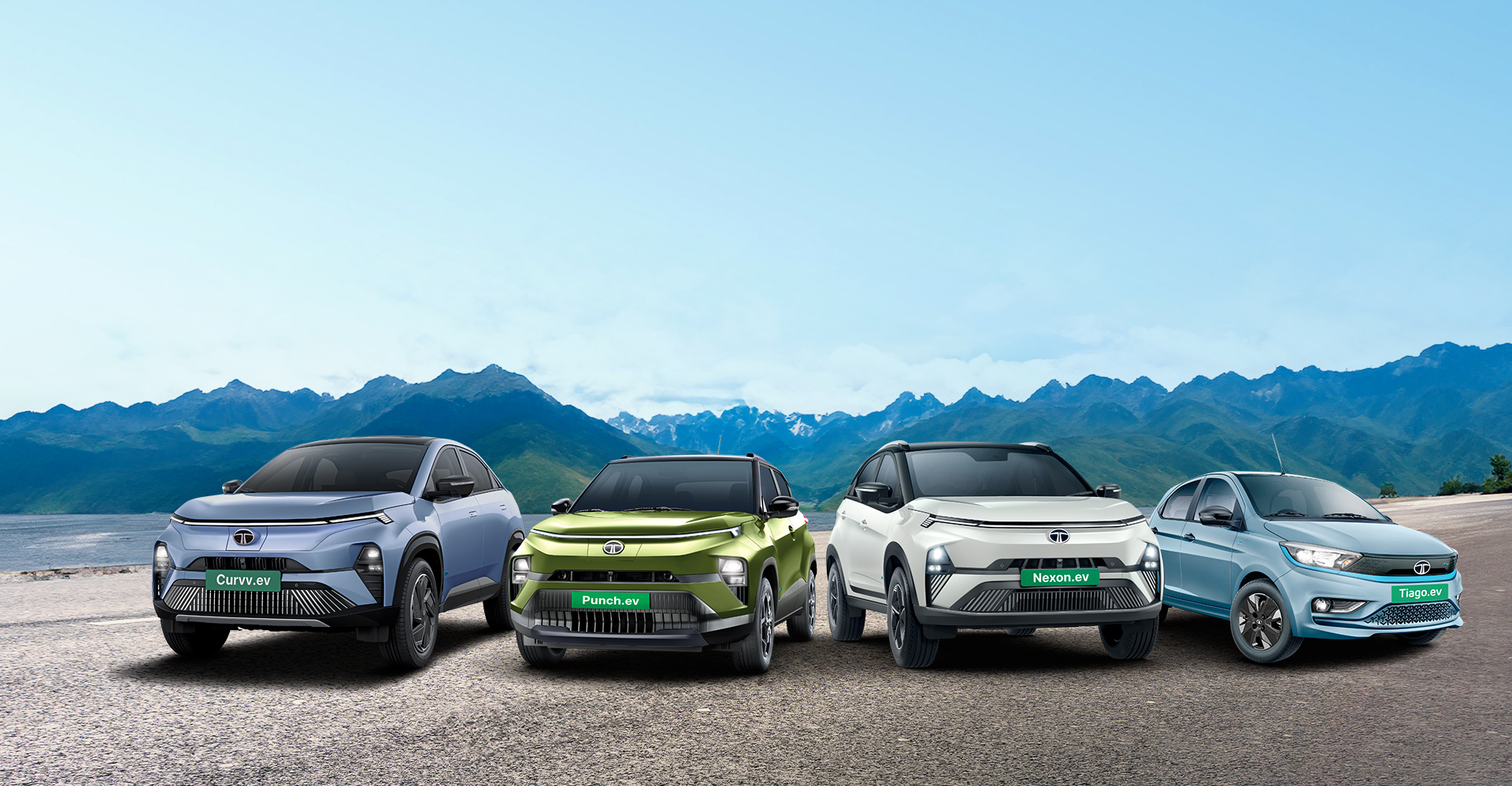
Tata's EV lineup currently spans the Tiago EV (GEN 1), Nexon EV (GEN 2 / Ziptron), and Punch EV (GEN 2). The Avinya platform represents GEN 3, and Tata has indicated it will be "fairly accessible to a majority of customers of fast-growing, high-volume segments" — suggesting the pricing will not be ultra-premium despite the premium positioning of the concept.
The platform is also described as a global platform, meaning Tata intends to sell Avinya-based vehicles in international markets, not just India. This global ambition is significant because it means the engineering investment is spread across a larger volume base, which typically translates to better component quality and more competitive pricing than a purely domestic platform would allow.
How does the Avinya platform approach safety?
Tata's official description characterises the GEN 3 architecture as offering "high structural safety" with EV-optimised construction. The platform uses next-generation materials and an optimised structure specifically designed for an electric-only powertrain — meaning the structural engineering does not need to accommodate an engine bay, transmission tunnel, or exhaust routing, all of which constrain safety cell design in adapted platforms.
The enhanced waterproofing and dust protection mentioned in Tata's documentation is a practical safety consideration for Indian conditions, where monsoon flooding and dusty roads are routine challenges that can affect battery integrity and electrical system reliability.
Tata's safety credentials with its current lineup are strong. The Nexon EV holds a 5-star Bharat NCAP rating, and the company has built a reputation for structural safety in the Indian market. Avinya-platform vehicles are expected to meet or exceed this standard, though no crash test data exists yet for a platform still in testing.
The ADAS suite planned for Avinya-platform vehicles is described as "next-generation" — a step beyond the Level 2 systems currently offered in the Nexon EV and the e Vitara. The specifics of what "next-generation ADAS" means in production terms — whether it implies Level 2+, Level 3, or something more ambitious — have not been officially detailed. Buyers interested in the best electric cars with ADAS in India in 2026 will need to wait for production specifications.
What does the Avinya platform mean for the broader Indian EV market?
The Avinya platform's development is significant beyond Tata's own product lineup. It represents India's most ambitious domestic attempt to build a globally competitive pure-EV architecture from scratch — a contrast to the more common approach of licensing or co-developing platforms with established international partners.
The Maruti Suzuki e Vitara's Suzuki-Toyota platform exemplifies the partnership model: it brings proven technology to market faster and with lower development risk, but the platform's evolution is governed by a joint committee rather than a single brand's vision. Tata's in-house approach gives TPEM full control over the platform's roadmap, which matters when EV architecture is evolving rapidly and the ability to iterate quickly is a competitive advantage.
For the Indian EV market specifically, the Avinya platform's "pioneered out of India for the world" positioning has supply chain implications. Tata has been investing in domestic battery cell manufacturing through Agratas Energy Storage Solutions, its battery subsidiary. If Avinya-platform vehicles use domestically produced cells, it would reduce import dependency and qualify for stronger government incentives — both of which could affect the final on-road price.
The Battery as a Service model is another dimension worth watching. Tata has not confirmed whether Avinya-platform vehicles will support BaaS, but the modular nature of a skateboard architecture makes battery swapping or leasing technically more feasible than with adapted platforms. This is speculative for now, but it is a question worth asking when production specifications are eventually confirmed.
Should you wait for the Avinya, or buy an EV now?
This is the practical question that most readers are actually asking. The honest answer depends on your timeline and risk tolerance.
If you need a vehicle in 2026, the Avinya is not an option. The platform is in testing, production models have not been announced, and the stated launch window is 2027 — which in the Indian automotive context could reasonably mean late 2027 or even 2028 for widespread availability. Waiting for the Avinya means waiting at least 18–24 months, possibly longer.
If you are buying now, the relevant comparison is between the vehicles that exist: the Nexon EV, the Punch EV, the Tata Curvv EV, the Maruti Suzuki e Vitara, the MG ZS EV, the Hyundai Creta Electric, and others. The best electric cars to buy in India in 2026 guide covers this space in detail. The e Vitara is a strong contender in the mid-size SUV segment, offering the credibility of Suzuki-Toyota engineering with competitive range and a growing service network.
The Avinya platform is most relevant to your buying decision as a signal of Tata's long-term commitment to EVs. If you are buying a Nexon EV or Punch EV today, the existence of a serious GEN 3 platform in testing suggests that Tata's EV space — software updates, charging infrastructure, service network — will remain invested in and developed. That is a meaningful consideration when evaluating after-sales service network quality for a vehicle you plan to own for five or more years.
If you are specifically waiting for a premium, technology-forward EV in the ₹25–40 lakh range and can defer your purchase to 2027–2028, the Avinya platform is worth tracking. The combination of 500+ km range, ultra-fast charging, and a purpose-built pure-EV architecture would represent a genuine step change from what is currently available — not an incremental improvement.
What should buyers watch for as Avinya testing progresses?
Several data points will significantly clarify the Avinya's value when they are eventually confirmed:
Production battery capacity and chemistry will determine whether the 500 km range claim holds up in real-world Indian conditions, where highway speeds, air conditioning loads, and road quality all reduce range from ARAI figures. A 500 km ARAI claim typically translates to 350–400 km in mixed real-world use.
Charging infrastructure compatibility matters as much as the vehicle's charging capability. Ultra-fast charging at 200+ kW requires chargers that do not yet exist at scale in India. Tata's charging network expansion plans — and whether they will include ultra-fast chargers at highway locations — will determine whether the 30-minute charge claim is practically usable at launch.
Price positioning will determine whether the Avinya platform delivers on its promise of being "fairly accessible." A GEN 3 architecture with this specification level could easily command ₹35–50 lakh in the market; whether Tata can bring it in below ₹30 lakh will define its volume potential.
The screenless interior concept is the most uncertain element for production. Voice-activated and AI-driven interfaces are improving rapidly, but Indian buyers have shown a strong preference for touchscreen-based infotainment. Watch for whether Tata retains the screenless philosophy or introduces a hybrid approach with minimal screens for essential functions.
Finally, ADAS specifications in production will matter for buyers who prioritise active safety technology. The best electric cars with ADAS in India in 2026 currently top out at Level 2 systems. If Avinya-platform vehicles deliver Level 2+ or Level 3 capability at accessible price points, it would be a genuine market differentiator.
The Avinya platform is Tata's clearest statement yet about where Indian EV architecture is heading: toward purpose-built, globally competitive, software-defined vehicles that do not compromise on range, charging speed, or interior experience. Whether the production reality matches the concept's ambition will become clearer as 2027 approaches. For now, the testing phase confirms that this is not a concept car exercise — it is a serious engineering programme with a real launch timeline, and it deserves to be tracked by anyone making long-term EV purchase decisions in India.
Sources
- Tata Motors begins platform testing for Avinya models — Autocar India
- Tata Avinya | Futuristic Electric Concept Car by Tata.ev (Official)
- Which 5-Star Bharat NCAP Electric Cars in India Are Worth Buying in 2026? — EV Index India
- Best Electric Cars with ADAS in India in 2026 — EV Index India
- Best Electric Cars to Buy in India in 2026 — EV Index India
- Best Electric Cars for Long Trips in India in 2026 — EV Index India
- Best Electric SUVs in India in 2026 — EV Index India
- Which Electric Cars Offer Battery as a Service (BaaS) in India and Are They Worth Buying? — EV Index India
- Which Electric SUV Has the Best After-Sales Service Network in India? — EV Index India