Best Electric SUVs in India in 2026
India's best electric SUVs in 2026 range from ₹15.99 lakh (Maruti e Vitara) to ₹30.50 lakh (Mahindra XEV 9e), with ARAI ranges of 440–683 km and fast-charging times as low as 20 minutes for 0–80%.
Best Electric SUVs in India in 2026
India's electric SUV segment is defined as a group of battery-electric vehicles with an elevated ride height, SUV or crossover body style, and a minimum ARAI-certified range of 300 km — a threshold that separates practical daily drivers from urban-only runabouts. As of May 2026, at least eight models compete directly in this space, priced from ₹15.99 lakh to ₹30.50 lakh ex-showroom, with ARAI ranges stretching from 440 km to 683 km.
The segment has matured fast. In 2025, seven all-new electric cars entered the Indian mass market. 2026 adds more, including the Maruti Suzuki e Vitara — the first electric SUV from India's largest carmaker and the first electric SUV in India to earn a 5-star Bharat NCAP safety rating.
Before diving into each model, here is a side-by-side comparison of the eight strongest electric SUV contenders across every price tier.
Quick-Reference Comparison Table
| Model | Price (ex-showroom) | ARAI Range | Battery Options | Fast Charge (DC) | Boot Space | AWD Available | NCAP Rating |
|---|---|---|---|---|---|---|---|
| Maruti e Vitara | ₹15.99–19.79 lakh | 440–543 km | 49 kWh / 61 kWh | ~60 kW | ~390 L | Yes (61 kWh) | 5-star Bharat NCAP |
| Hyundai Creta Electric | ₹18.02–23.50 lakh | 473–531 km | 42 kWh / 51.4 kWh | 50 kW | 433 L | No (FWD only) | 5-star Global NCAP |
| Mahindra BE 6 | ₹18.90–26.90 lakh | 535–683 km | 59 kWh / 79 kWh | 175 kW | 455 L | Yes (79 kWh) | 5-star Global NCAP |
| Tata Curvv EV | ₹17.49–22.24 lakh | 502–585 km | 45 kWh / 55 kWh | 70 kW | 500 L | No | Not tested (2026) |
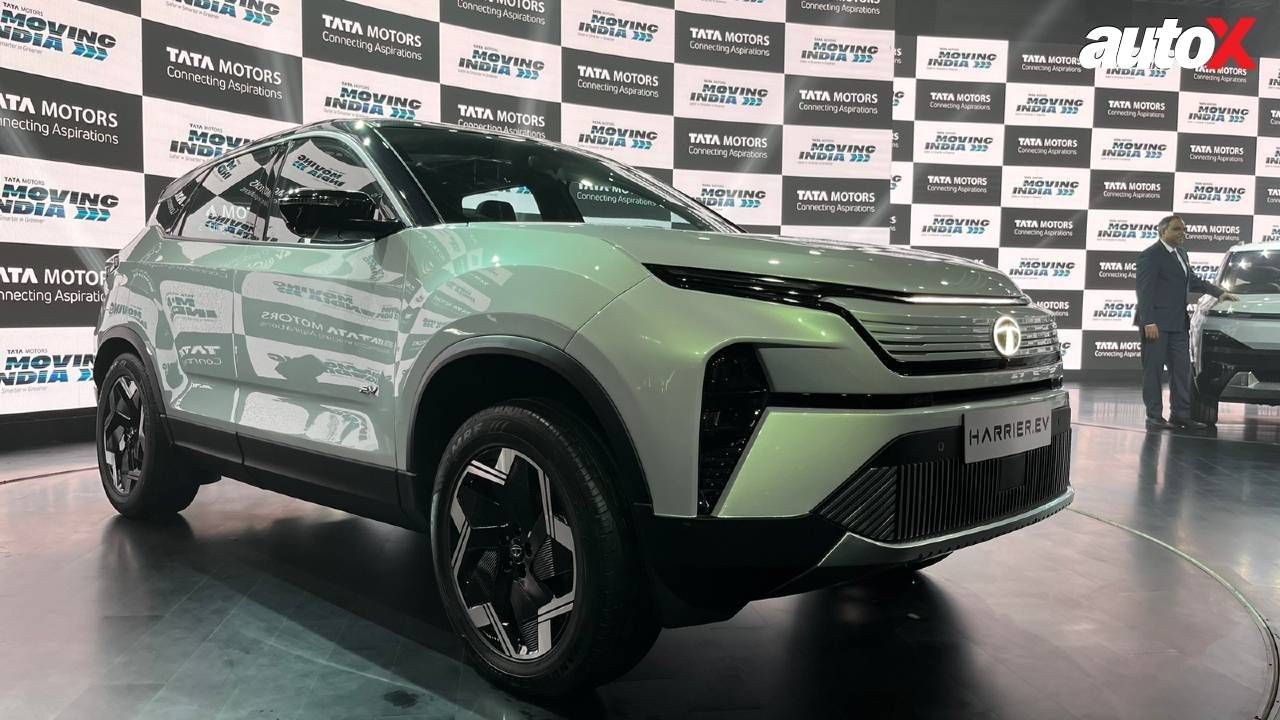
| Tata Harrier EV | ₹21.49–28.99 lakh | 538–627 km | 65 kWh / 75 kWh | 100 kW | 510 L | Yes (75 kWh) | Not tested (2026) |
| Mahindra XEV 9e | ₹21.90–30.50 lakh | 542–656 km | 59 kWh / 79 kWh | 175 kW | 663 L | Yes (79 kWh) | 5-star Global NCAP |
| MG ZS EV | ₹17.99–20.50 lakh | 461 km | 50.3 kWh | 76 kW | 448 L | No | Not tested (2026) |
| BYD Atto 3 | ~₹24.99–33.99 lakh | 521 km | 60.48 kWh | 80 kW | 440 L | No | 5-star Euro NCAP |
Prices and ranges sourced from Autocar India and brand pages. Real-world range is typically 15–25% below ARAI figures in mixed Indian driving.
What Counts as an Electric SUV — and How Is It Different from a Crossover?
An electric SUV, in the Indian market context, is defined as a vehicle with a body-on-frame or monocoque construction featuring a raised ride height (typically above 170 mm ground clearance), an upright windscreen, and seating for five or more occupants. A crossover, by contrast, is defined as a car-derived vehicle that borrows SUV styling cues — higher seating position, squared-off roofline — but is built on a passenger-car platform with car-like ride and handling.
In practice, the distinction matters less for EV buyers than it once did. Every model in this guide is a monocoque crossover-SUV. None uses a body-on-frame ladder chassis. The Tata Harrier EV comes closest to a traditional SUV in size and stance, while the Mahindra BE 6 and XEV 9e use a dedicated EV skateboard platform (INGLO) and are more accurately described as coupe-SUVs. The Maruti e Vitara and Hyundai Creta Electric are compact crossover-SUVs — the body style most buyers in the ₹15–25 lakh segment are shopping.
For a broader look at the full electric car market beyond SUVs, see our guide to the best electric cars to buy in India in 2026.
Which Electric SUVs Offer AWD in India?
All-wheel drive (AWD) in an electric SUV is defined as a dual-motor configuration where one motor drives the front axle and a second drives the rear axle, enabling torque vectoring and improved traction on wet or loose surfaces. As of May 2026, four models in this segment offer AWD:
- Mahindra BE 6 (79 kWh variant): dual-motor AWD, claimed 0–100 km/h in ~5.7 seconds
- Mahindra XEV 9e (79 kWh variant): same INGLO platform AWD setup
- Maruti Suzuki e Vitara (61 kWh variant): AWD available, shared with the Toyota Urban Cruiser EV platform
- Tata Harrier EV (75 kWh top variant): AWD configuration
The Hyundai Creta Electric, MG ZS EV, Tata Curvv EV, and BYD Atto 3 are front-wheel-drive only. For most Indian buyers — urban commuters and highway travellers on paved roads — FWD is adequate. AWD adds weight, reduces range by roughly 5–8%, and adds ₹2–4 lakh to the purchase price. It makes sense if you regularly drive on unpaved roads, in heavy monsoon conditions, or simply want the performance headroom.
Maruti Suzuki e Vitara: India's Safest Electric SUV
The Maruti Suzuki e Vitara is the first electric SUV from India's largest carmaker by volume, and it carries a specific distinction no other model in this segment can claim: it is the first electric SUV in India to earn a 5-star Bharat NCAP safety rating. That result matters because Bharat NCAP tests are conducted under Indian conditions with India-spec vehicles — a more relevant benchmark for local buyers than Euro NCAP scores on export-spec cars.
Autocar India confirmed the e Vitara's 5-star Bharat NCAP result alongside its launch details. The car is priced at ₹15.99–19.79 lakh ex-showroom and comes in three variants across two battery options: a 49 kWh pack with an ARAI range of 440 km and a 61 kWh pack with a claimed ARAI range of 543 km. The larger battery variant is also the one that gets AWD.
Real-world range: Expect 370–420 km from the 61 kWh variant in mixed city-highway driving — consistent with the 15–20% real-world discount typical of Indian ARAI figures.
Charging: The e Vitara supports DC fast charging. Exact kW figures for the India-spec car are not yet officially confirmed by Maruti Suzuki India, but the global Suzuki e Vitara supports up to 150 kW DC charging, which would put a 20–80% charge at around 25–30 minutes on the 61 kWh pack. Treat this figure with caution until Maruti India publishes official charging specs.
ADAS: The e Vitara is expected to offer Level 2 ADAS features including adaptive cruise control, lane-keep assist, and automatic emergency braking — details aligned with the global Suzuki e Vitara specification.
Boot space: Approximately 390 litres — competitive for the compact SUV class.
Who it's for: Buyers who want the Maruti service network (the largest in India), a 5-star safety rating, and a sub-₹20 lakh entry price for an electric SUV. The e Vitara's biggest advantage over the Hyundai Creta Electric at similar prices is the Bharat NCAP 5-star result and AWD availability. Its disadvantage is that Maruti's service infrastructure for its first EV is newer than Tata's or Hyundai's.
For a detailed safety comparison, see which 5-star Bharat NCAP electric cars in India are worth buying in 2026.
Hyundai Creta Electric: The Volume Leader
The Hyundai Creta Electric has been the best-selling electric SUV in India through most of 2025 and into 2026, priced at ₹18.02–23.50 lakh. It is the electric version of India's best-selling compact SUV, which gives it an immediate familiarity advantage with buyers upgrading from the petrol or diesel Creta.
Battery and range: Two packs — 42 kWh (ARAI range ~473 km) and 51.4 kWh (ARAI range ~531 km). The smaller pack suits city-heavy buyers; the larger pack is the one to choose for highway-heavy use. Real-world range from the 51.4 kWh variant in mixed driving lands around 400–430 km based on owner reports and media tests.
Charging: The Creta Electric supports 50 kW DC fast charging, putting a 10–80% charge at approximately 58 minutes. This is slower than the Mahindra BE 6's 175 kW capability and slower than the Tata Harrier EV's 100 kW — a genuine disadvantage on long highway trips. For daily home charging via an 11 kW AC wallbox, a full charge takes around 4–5 hours.
ADAS: The top variants of the Creta Electric offer Level 2 ADAS — forward collision warning, automatic emergency braking, lane-keeping assist, blind-spot monitoring, and driver attention warning. This is among the more complete ADAS packages in the sub-₹25 lakh segment. See our full guide to best electric cars with ADAS in India in 2026.
NCAP: The Hyundai Creta Electric carries a 5-star Global NCAP rating — earned on the ICE Creta platform, which shares its structure with the EV.
Boot space: 433 litres — practical for a family of four.
Who it's for: Buyers who want a proven platform, a large Hyundai service network, strong resale value (Creta brand equity is high), and Level 2 ADAS at a competitive price. The 50 kW DC charging limit is the main reason to consider alternatives if you plan frequent long-distance drives.
Mahindra BE 6: The Range and Performance Leader
The Mahindra BE 6 is priced at ₹18.90–26.90 lakh and is built on Mahindra's dedicated INGLO skateboard platform — the same architecture that underpins the XEV 9e. It is a coupe-SUV in body style, meaning the roofline slopes sharply toward the rear, which reduces rear headroom relative to a conventional SUV but improves aerodynamics and therefore range.
Battery and range: 59 kWh (ARAI range ~535 km) and 79 kWh (ARAI range ~683 km). The 683 km ARAI figure is the highest in this segment. Real-world range from the 79 kWh pack in mixed driving is approximately 520–560 km — still class-leading.
Charging: The BE 6 supports up to 175 kW DC fast charging on the 79 kWh variant, which enables a 20–80% charge in approximately 20 minutes. This is the fastest charging capability of any electric SUV under ₹30 lakh in India as of mid-2026. The 59 kWh variant supports up to 140 kW DC.
ADAS: The BE 6 offers a full Level 2+ ADAS suite on top variants — adaptive cruise control with stop-and-go, lane-centring, automatic emergency braking, blind-spot detection, and a 360-degree surround-view camera.
NCAP: 5-star Global NCAP rating.
Boot space: 455 litres — respectable for a coupe-SUV where the sloping roofline typically eats into cargo volume.
AWD: Available on the 79 kWh variant. The dual-motor setup produces approximately 282 kW (380 hp) combined, with a 0–100 km/h time of around 5.7 seconds.
Who it's for: Buyers who prioritise maximum range, the fastest charging in the segment, and performance. The coupe roofline means rear passengers over 5'10" may find headroom tight on longer journeys. If rear passenger space is the priority, the Harrier EV or XEV 9e is a better fit.
Mahindra XEV 9e: The Spacious Flagship
The Mahindra XEV 9e is priced at ₹21.90–30.50 lakh and shares the INGLO platform with the BE 6 but wears a larger, more upright body. It is Mahindra's flagship electric SUV for 2026 and the most expensive model in this guide.
Battery and range: Same 59 kWh and 79 kWh options as the BE 6. ARAI range is 542 km (59 kWh) and 656 km (79 kWh). The slightly lower range versus the BE 6 reflects the XEV 9e's larger, heavier body.
Charging: Identical 175 kW DC fast-charging capability to the BE 6 — 20–80% in approximately 20 minutes on the 79 kWh pack.
ADAS: Full Level 2+ suite, same as the BE 6.
NCAP: 5-star Global NCAP.
Boot space: 663 litres — the largest boot in this comparison by a significant margin. The XEV 9e's longer wheelbase and upright roofline translate directly into usable cargo space.
AWD: Available on the 79 kWh variant.
Who it's for: Buyers who want the BE 6's powertrain and charging speed but need more rear passenger space and boot volume. The XEV 9e is the better choice for families with children or frequent airport runs. At ₹30.50 lakh for the top variant, it is the most expensive model in this guide, but it delivers a premium-segment experience at a mass-market price point relative to European alternatives.
Tata Harrier EV: The Largest Family Electric SUV
The Tata Harrier EV is priced at ₹21.49–28.99 lakh and is the electric version of one of Tata's most established SUVs. It is the physically largest model in this comparison — longer, wider, and taller than the Creta Electric or e Vitara — and the only one in this guide that genuinely competes on interior space with the XEV 9e.
Battery and range: 65 kWh (ARAI range ~538 km) and 75 kWh (ARAI range ~627 km). Real-world range from the 75 kWh variant in mixed driving is approximately 480–520 km.
Charging: 100 kW DC fast charging — faster than the Creta Electric's 50 kW but slower than the Mahindra twins' 175 kW. A 20–80% charge on the 75 kWh pack takes approximately 35–40 minutes.
ADAS: The Harrier EV offers Level 2 ADAS on higher variants — adaptive cruise control, automatic emergency braking, lane-departure warning, and blind-spot monitoring. The suite is broadly comparable to the Creta Electric's.
NCAP: Not independently tested as of May 2026, though the ICE Harrier earned a 5-star Global NCAP rating, and the EV shares its body structure.
Boot space: 510 litres — the second-largest in this comparison after the XEV 9e.
AWD: Available on the 75 kWh top variant.
Who it's for: Buyers who want the largest cabin in the sub-₹30 lakh electric SUV space, a well-established Tata service network, and AWD capability. The Harrier EV's 100 kW charging is a reasonable compromise between the Creta Electric's slow 50 kW and the Mahindra twins' class-leading 175 kW. If you regularly carry four adults and luggage, the Harrier EV's interior dimensions are hard to beat at this price.
For a detailed look at family practicality across these models, see our guide to electric SUVs most practical for India's current charging infrastructure.
Tata Curvv EV: The Sweet Spot for Value
The Tata Curvv EV is priced at ₹17.49–22.24 lakh — the most affordable entry point among the five-seater coupe-SUV options — and uses Tata's acti.ev platform. It is a coupe-SUV like the BE 6, with a sloping roofline, but its proportions are more compact.
Battery and range: 45 kWh (ARAI range ~502 km) and 55 kWh (ARAI range ~585 km). The 55 kWh variant's 585 km ARAI figure is strong for the price, though real-world range in mixed driving is closer to 440–470 km.
Charging: 70 kW DC fast charging — adequate for highway stops but not as quick as the Mahindra twins. A 10–80% charge on the 55 kWh pack takes approximately 45–50 minutes.
ADAS: Level 2 ADAS on top variants — adaptive cruise, automatic emergency braking, lane-keep assist, and a 360-degree camera.
NCAP: Not independently tested as of May 2026.
Boot space: 500 litres — good for a coupe-SUV, aided by the flat EV floor.
AWD: Not available.
Who it's for: Buyers who want a coupe-SUV aesthetic, a sub-₹22 lakh price, and Tata's established EV service network. The Curvv EV undercuts the BE 6 by ₹1.41–4.66 lakh depending on variant and delivers competitive range. Its 70 kW charging is the main compromise versus the Mahindra twins. For buyers who charge primarily at home overnight, this is a non-issue.
MG ZS EV: The Practical City-Friendly Option
The MG ZS EV is priced at ₹17.99–20.50 lakh and is one of the longest-running electric SUVs in India — the current generation has been on sale since 2022 with incremental updates. It sits on a conventional monocoque platform rather than a dedicated EV skateboard.
Battery and range: A single 50.3 kWh battery option with an ARAI range of 461 km. Real-world range in mixed city-highway driving is approximately 360–390 km — lower than the ARAI figure suggests, partly because the ZS EV's older platform is less aerodynamically optimised than newer dedicated-EV architectures.
Charging: 76 kW DC fast charging — a 10–80% charge takes approximately 42 minutes.
ADAS: The ZS EV offers basic driver-assist features — forward collision warning, lane-departure warning, and a 360-degree camera on top variants. It does not offer the full Level 2 adaptive cruise suite found on the Creta Electric or BE 6.
NCAP: Not independently tested under current protocols.
Boot space: 448 litres — competitive.
AWD: Not available.
Who it's for: Buyers who want a known quantity at a mid-range price, with MG's iSMART connected-car suite and a spacious cabin. The ZS EV's main weakness in 2026 is that its platform and range figures are showing their age against newer competitors. MG's Battery as a Service (BaaS) subscription model — available on the Windsor EV — is not offered on the ZS EV, which means the full upfront cost applies.
BYD Atto 3: The Premium Chinese Contender
The BYD Atto 3 is priced at approximately ₹24.99–33.99 lakh ex-showroom and is the only model in this comparison from a Chinese manufacturer. It uses BYD's Blade LFP battery — a lithium iron phosphate chemistry that BYD defines as offering superior thermal stability and a longer cycle life compared to NMC (nickel-manganese-cobalt) cells.
Battery and range: A single 60.48 kWh Blade battery with an ARAI range of 521 km. Real-world range in Indian conditions is approximately 420–450 km.
Charging: 80 kW DC fast charging — a 10–80% charge takes approximately 50 minutes.
ADAS: The Atto 3 offers a full ADAS suite including adaptive cruise control, automatic emergency braking, lane-centring, blind-spot detection, and rear cross-traffic alert — one of the more complete packages in this price range.
NCAP: 5-star Euro NCAP rating on the global-spec Atto 3.
Boot space: 440 litres.
AWD: Not available on the India-spec Atto 3.
Who it's for: Buyers who want LFP battery chemistry (lower degradation risk in Indian heat), a premium interior with BYD's distinctive design language, and a strong ADAS package. The Atto 3's higher price versus the Mahindra BE 6 or Creta Electric is harder to justify purely on spec — the BE 6 offers more range, faster charging, and AWD at a similar or lower price. The Atto 3's appeal is its LFP battery and BYD's global reputation for battery technology. Resale value and service network depth remain thinner than Tata, Hyundai, or Mahindra.
Which Electric SUV Is Best for Family Use?
Family practicality in an electric SUV is defined by four factors: rear passenger legroom, boot volume, charging speed on road trips, and safety rating. Mapping these against the models in this guide:
Best rear passenger space: Tata Harrier EV and Mahindra XEV 9e. Both offer genuine three-adult rear seating. The coupe-SUV rooflines of the BE 6 and Curvv EV reduce rear headroom.
Best boot: Mahindra XEV 9e at 663 litres, followed by the Tata Harrier EV at 510 litres and Tata Curvv EV at 500 litres.
Best charging for road trips: Mahindra BE 6 and XEV 9e at 175 kW DC — 20 minutes for 20–80% on the 79 kWh pack. This is the single biggest practical advantage these models have over the competition on long-distance family travel.
Best safety rating for family buyers: Maruti e Vitara (5-star Bharat NCAP — tested on India-spec vehicle), Hyundai Creta Electric and Mahindra BE 6/XEV 9e (5-star Global NCAP).
For families doing mostly urban driving with occasional highway trips, the Hyundai Creta Electric at ₹18.02 lakh is the value-optimised choice. For families who regularly do 300+ km highway runs, the Mahindra XEV 9e's 175 kW charging makes it worth the premium.
Which Electric SUV Has the Best Real-World Range?
Real-world range is defined as the distance an EV covers in mixed Indian driving conditions (approximately 60% city, 40% highway) at an average speed of 50–70 km/h, with air conditioning running. ARAI figures are measured under controlled conditions and typically exceed real-world performance by 15–25%.
Estimated real-world ranges for the 79/75/61 kWh top variants:
- Mahindra BE 6 (79 kWh): ~520–560 km
- Mahindra XEV 9e (79 kWh): ~490–530 km
- Tata Harrier EV (75 kWh): ~480–520 km
- Maruti e Vitara (61 kWh): ~420–460 km
- Hyundai Creta Electric (51.4 kWh): ~400–430 km
- BYD Atto 3 (60.48 kWh): ~420–450 km
- Tata Curvv EV (55 kWh): ~440–470 km
- MG ZS EV (50.3 kWh): ~360–390 km
For a deeper analysis of real-world range across all electric cars in India, see electric cars with the best real-world range in India in 2026. For long-trip planning specifically, see best electric cars for long trips in India in 2026.
Which Electric SUV Has the Best ADAS?
ADAS (Advanced Driver Assistance Systems) in the Indian electric SUV segment is defined as a suite of electronic systems that assist the driver in avoiding collisions and maintaining lane position, ranging from basic forward collision warning (Level 1) to hands-on-wheel adaptive cruise with lane-centring (Level 2).
The most complete Level 2 ADAS packages in the sub-₹30 lakh electric SUV segment are found on:
- Mahindra BE 6 / XEV 9e: Adaptive cruise with stop-and-go, lane-centring, automatic emergency braking, blind-spot monitoring, rear cross-traffic alert, driver drowsiness detection
- Hyundai Creta Electric: Adaptive cruise with stop-and-go, lane-keeping assist, automatic emergency braking, blind-spot collision warning, driver attention warning
- BYD Atto 3: Adaptive cruise, automatic emergency braking, lane-centring, blind-spot detection, rear cross-traffic alert
- Maruti e Vitara: Adaptive cruise, automatic emergency braking, lane-keep assist (global spec confirmed; India-spec details pending full official disclosure)
The MG ZS EV and Tata Curvv EV offer more basic ADAS suites — forward collision warning and lane-departure alert without full adaptive cruise on most variants.
For a full breakdown of ADAS features by model and variant, see best electric cars with ADAS in India in 2026.
Segment Leaders by Criterion
A quick summary for buyers who want a direct answer:
- Lowest price: Maruti e Vitara from ₹15.99 lakh
- Longest ARAI range: Mahindra BE 6 at 683 km (79 kWh)
- Fastest charging: Mahindra BE 6 / XEV 9e at 175 kW DC
- Largest boot: Mahindra XEV 9e at 663 litres
- Best safety rating (Bharat NCAP): Maruti e Vitara — 5 stars
- Best ADAS package: Mahindra BE 6 / XEV 9e
- Best family SUV (space + range + charging): Mahindra XEV 9e
- Best value under ₹20 lakh: Maruti e Vitara (61 kWh) or Hyundai Creta Electric (42 kWh base)
- Best for highway road trips: Mahindra BE 6 (175 kW charging + 683 km range)
- Best LFP battery: BYD Atto 3
What About Ownership Costs?
Ownership cost for an electric SUV is defined as the total of purchase price, electricity cost per kilometre, insurance, scheduled maintenance, and battery warranty terms over a five-year period.
Electricity cost is the most consistent advantage of EVs. At ₹8 per kWh (a reasonable average for home charging in India), the Mahindra BE 6's 79 kWh pack costs approximately ₹632 to fully charge — delivering ~520 km of real-world range, or roughly ₹1.22 per km. A comparable petrol SUV at ₹105/litre and 14 km/l costs approximately ₹7.50 per km. The fuel saving alone is approximately ₹6.28 per km.
Scheduled maintenance costs for EVs are lower than ICE vehicles — no oil changes, fewer brake replacements (regenerative braking reduces pad wear), and simpler drivetrains. Tata Motors and Mahindra both offer annual maintenance packages. Mahindra's INGLO platform models come with a lifetime battery warranty on the high-voltage pack, which is a meaningful ownership cost reducer.
Battery warranty terms across the segment:
- Mahindra BE 6 / XEV 9e: Lifetime warranty on HV battery
- Tata Harrier EV / Curvv EV: 8 years / 1.6 lakh km
- Hyundai Creta Electric: 8 years / 1.6 lakh km
- Maruti e Vitara: Details pending full India launch; global Suzuki e Vitara carries an 8-year/160,000 km battery warranty
- MG ZS EV: 8 years / 1.5 lakh km
- BYD Atto 3: 8 years / 1.6 lakh km
For a detailed breakdown of maintenance costs by model, see which electric SUVs in India have the lowest maintenance cost. For after-sales service network comparisons, see which electric SUV has the best after-sales service network in India.
Last verified: 2026-05-04
Sources
- Electric Cars in India (April 2026), Best EV Car Prices – Autocar India
- Upcoming EV Launches in 2026 – Autocar India
- Maruti Suzuki e Vitara – Autocar India
- Mahindra XEV 9e – Autocar India
- Tata Punch EV Official Page – Tata Motors EV
- Longest Range Electric Cars in India 2026 – MG Motor India
- Top Selling Electric Cars in India 2026 – MG Motor India
- SUV Electric Cars in India 2026 – Team-BHP