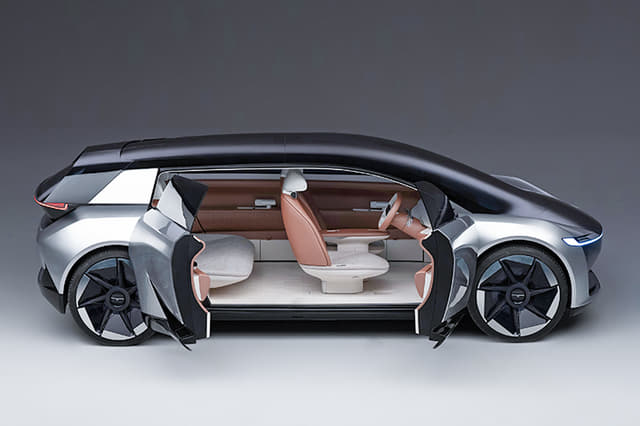
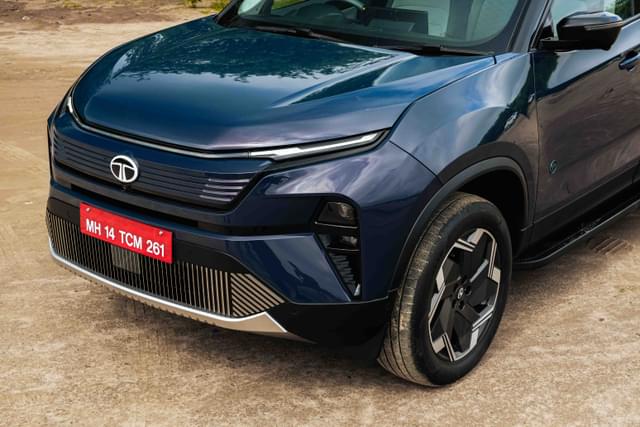
The Tata Avinya is India's most anticipated homegrown premium EV, promising 400–500 km real-world range on a JLR-co-developed Gen 3 platform — a potential segment-defining moment for Tata Motors.
Key specs
| Range (claimed) | 400–500 km (claimed real-world, expected) |
|---|---|
| Real-world range | 400–500 km combined (Tata Motors claimed target; no independent test conducted as of May 2026) |
| Battery | Not officially confirmed; expected 70–90 kWh (estimated) |
| Fast charging | Ultra-fast DC charging supported (exact kW TBC) |
| Home charging | AC home charging supported (exact kW TBC) |
| Motor | Not officially confirmed; expected single or dual motor options |
| Drivetrain | FWD / AWD (expected, variant-dependent) |
| Top speed | Not officially confirmed |
| 0–100 km/h | Not officially confirmed |
| Seating | 5 (SUV variant, expected) |
The Tata Avinya is Tata Motors' most ambitious electric vehicle programme to date, expected to launch in India by late 2026 with a starting price of around ₹40 Lakh (expected). Built on a next-generation Gen 3 EV architecture co-developed with Jaguar Land Rover, the Avinya promises a claimed real-world driving range of 400–500 km on a single charge, with ultra-fast DC charging support designed to minimise downtime. The first production model, internally codenamed P1, will be manufactured at Tata's Sanand facility in Gujarat and is expected to spawn SUV, MPV, and Crossover body styles under the Avinya nameplate.
The Avinya concept — first revealed in 2022 — represents a clean-sheet approach to premium electric mobility, drawing on lounge-style interior philosophy, a skateboard platform, and advanced ADAS integration. Unlike Tata's existing Gen 1 and Gen 2 EVs such as the Nexon EV and Punch EV, the Avinya targets a higher price bracket and a more discerning buyer who expects European-grade refinement alongside Indian-market practicality. The platform's modular nature means battery sizes and motor configurations can vary across variants.
While full production specifications remain unconfirmed as of May 2026, Tata Motors has officially confirmed the Avinya's launch timeline and its positioning as a flagship premium EV. The programme underscores Tata's stated ambition to capture a significant share of India's fast-growing premium EV segment, competing with the likes of the MG ZS EV, Hyundai Ioniq 5, and BYD Atto 3 in the upper-mid to premium tier.
Range and charging
Tata Motors has targeted a real-world driving range of 400 to 500 kilometres for the Avinya, a figure that would place it comfortably ahead of most rivals currently on sale in India. This is a claimed target, not an ARAI-certified number, and should be treated as aspirational until production specifications are officially released. The Gen 3 platform is expected to accommodate battery packs in the 70–90 kWh range, though Tata has not confirmed exact capacities.
Charging is a key pillar of the Avinya's proposition. Tata has confirmed ultra-fast DC charging support, which in the context of the Gen 3 platform is expected to mean 150 kW or higher peak charging rates — potentially enabling a 20–80% charge in under 30 minutes. AC home charging will also be supported, likely via an 11 kW onboard charger, making overnight top-ups straightforward for urban buyers. Tata's expanding Tata.ev charging network across Indian highways will be a practical advantage for Avinya owners.
It is worth noting that real-world range figures for Indian conditions — factoring in AC usage, traffic, and road quality — typically come in 15–20% below manufacturer claims. Buyers should budget for approximately 340–420 km of practical range in mixed driving, which would still be class-leading if achieved.
Performance and drive
The Avinya is built on a dedicated skateboard-style EV platform co-developed with Jaguar Land Rover, which means it benefits from a low centre of gravity, optimised weight distribution, and the engineering rigour that underpins JLR's own electric vehicle programmes. While Tata has not yet published 0–100 km/h figures, the platform is expected to support both front-wheel-drive and all-wheel-drive configurations, with the AWD variant likely delivering brisk acceleration in the 5–6 second bracket.
The Gen 3 architecture is designed for a more premium driving experience than Tata's current EV lineup. Expect multi-link rear suspension, adaptive damping on higher variants, and a refined NVH (noise, vibration, harshness) profile that brings the Avinya closer to European premium EVs than to the Nexon EV or Punch EV. Tata has emphasised a 'lounge on wheels' interior philosophy, which implies a focus on ride comfort over outright sportiness.
Drive modes — including an Eco mode for maximum range and a Sport mode for sharper throttle response — are expected to be standard, consistent with Tata's current EV lineup. Regenerative braking with adjustable intensity is also anticipated.
Cabin, space, and tech
The Avinya concept showcased a radical interior design centred on a lounge-like experience, with flat floors enabled by the skateboard platform, panoramic glass, and a minimalist dashboard dominated by large touchscreens. The production version is expected to retain much of this philosophy, though with adaptations for Indian road conditions and regulatory requirements. Seating for five is expected in the SUV variant, with generous legroom in both rows.
On the technology front, the Avinya is expected to feature an advanced infotainment system with over-the-air (OTA) update capability, wireless smartphone integration, a premium audio system, and a fully digital instrument cluster. Tata's connected car platform, already mature across the Nexon EV and Harrier EV, will be further developed for the Avinya, potentially including remote climate control, vehicle health monitoring, and integrated navigation with charging-stop planning.
Materials quality is expected to take a significant step up from Tata's current EVs, with soft-touch surfaces, ambient lighting, and possibly vegan leather upholstery on premium variants. The boot space in the SUV body style is expected to be competitive, with a frunk (front trunk) also possible given the platform's layout.
Safety and ADAS
The Avinya is expected to be one of the most safety-equipped Tata vehicles ever produced. The Gen 3 platform has been engineered with a rigid battery enclosure and advanced crumple zones, and Tata has indicated that the Avinya will target a 5-star Bharat NCAP rating. No crash test results are available as of May 2026, as the vehicle has not yet launched.
ADAS (Advanced Driver Assistance Systems) is expected to be a headline feature, with Level 2 autonomy as a minimum — encompassing adaptive cruise control, lane-keep assist, automatic emergency braking, blind-spot monitoring, and rear cross-traffic alert. Higher variants may offer Level 2+ features such as highway pilot assist. Tata has been progressively expanding ADAS across its lineup (Harrier EV, Safari EV), and the Avinya is expected to represent the most comprehensive implementation yet.
Airbag count is unconfirmed but expected to be six or more, consistent with Tata's recent premium offerings. A 360-degree camera system and front and rear parking sensors are also anticipated as standard or near-standard equipment.
Variants and pricing
Tata Motors has not officially announced variant names or a detailed price list for the Avinya as of May 2026. The expected starting price of approximately ₹40 Lakh (ex-showroom) is based on third-party estimates and positions the Avinya in the premium EV segment, above the Tata Curvv EV and Harrier EV. Multiple variants are anticipated — likely two or three — differentiated by battery size, motor configuration (FWD vs AWD), and feature content.
The Avinya is expected to be sold through a dedicated premium retail channel, separate from Tata's mainstream dealership network, reflecting its flagship positioning. Tata has confirmed a launch timeline of late 2026, with some sources pointing to November–December 2026 as the most likely window.
How it compares
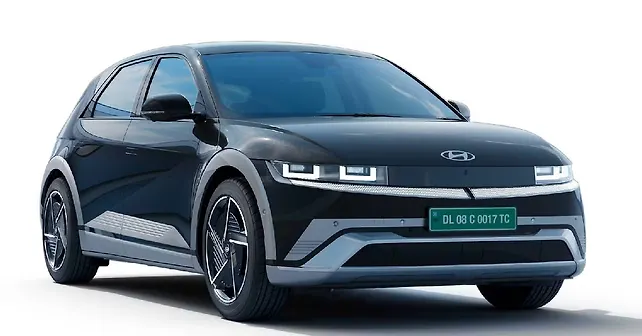
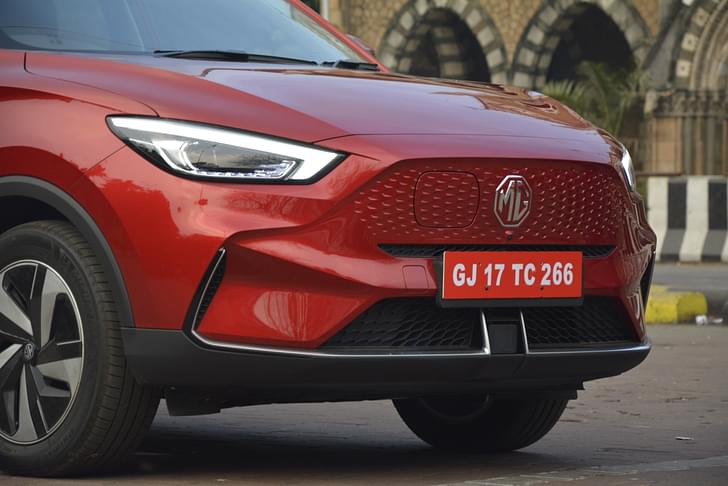
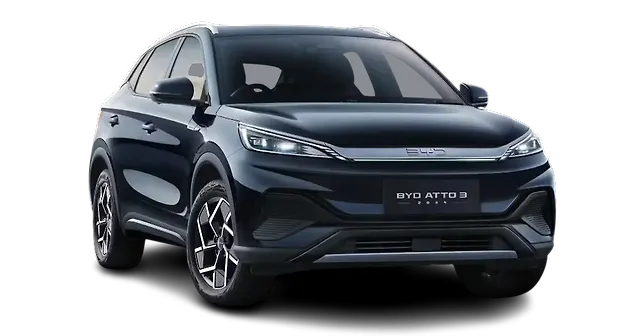
The Avinya's closest current rivals in India are the Hyundai Ioniq 5 (₹44.95–46.05 Lakh), the BYD Atto 3 (₹24.99 Lakh), and the MG ZS EV (₹18.98–25.20 Lakh), though the Avinya's expected ₹40 Lakh starting price places it squarely against the Ioniq 5. Against the Ioniq 5, the Avinya's advantages are expected to be its India-specific engineering, a wider service network, and potentially greater range. The Ioniq 5 currently offers 631 km ARAI range and 800V ultra-fast charging — benchmarks the Avinya will need to match or exceed.
Within Tata's own lineup, the Avinya sits above the Harrier EV (₹21.49–25.49 Lakh) and Curvv EV (₹17.49–21.99 Lakh), targeting buyers who want a premium, future-forward EV without importing a foreign brand. If Tata delivers on its range and technology promises, the Avinya could be the first Indian-brand EV to genuinely challenge European and Korean premium EVs on product merit.
Who should buy it
The Tata Avinya is aimed at premium EV buyers — typically urban professionals or families — who want a long-range electric vehicle with a strong brand ecosystem, wide service network, and India-specific engineering. It is particularly suited to buyers who are currently considering the Hyundai Ioniq 5 or Kia EV6 but prefer a domestic brand with better parts availability and after-sales support.
Buyers who need a vehicle before late 2026, or who have a budget below ₹35 Lakh, should look at the Tata Harrier EV or Curvv EV instead. The Avinya is also worth waiting for if you prioritise cutting-edge ADAS, lounge-style interior space, and ultra-fast charging — features that are expected to be class-leading at launch. Early adopters comfortable with a new platform should register their interest now, as demand is expected to be high at launch.
Safety & ADAS
| Airbags | 6+ (expected) |
|---|---|
| ADAS level | Level 2 / Level 2+ (expected) |
| Notes | No crash test results available as of May 2026; vehicle not yet launched. Tata has indicated a 5-star Bharat NCAP target. 360-degree camera and parking sensors expected as standard. |
Verdict
Best for: Premium EV buyers seeking 400–500 km real-world range, JLR-grade engineering, and a strong India-wide service network — without paying import-brand premiums.
What we like
- Claimed 400–500 km real-world range would be class-leading among Indian-brand EVs
- Gen 3 platform co-developed with JLR brings European engineering rigour to a domestic price point
- Ultra-fast DC charging support expected to enable 20–80% charge in under 30 minutes
- Flat-floor lounge interior enabled by skateboard platform — a segment-first for Tata
- Tata's pan-India service network and Tata.ev charging infrastructure are unmatched by import rivals
What to know
- All specifications remain unconfirmed — buyers are committing to promises, not verified numbers
- Expected ₹40 Lakh+ price is significantly higher than Tata's current EV lineup, narrowing the audience
- Launch timeline of late 2026 means a wait of at least 6 months from May 2026
- Boot space and real-world range will need independent testing to validate Tata's ambitious claims
Variants
| Variant | Price | Range | Notable |
|---|---|---|---|
| Avinya (Base, expected) | ₹40 Lakh (expected) | 400 km (claimed, expected) | FWD, standard battery, entry premium variant |
| Avinya (Long Range / AWD, expected) | ₹45–50 Lakh (estimated) | 500 km (claimed, expected) | AWD, larger battery, full ADAS suite |
Key features
- Gen 3 EV platform co-developed with Jaguar Land Rover
- Claimed real-world range of 400–500 km per charge
- Ultra-fast DC charging support (150 kW+, expected)
- Lounge-style flat-floor interior with panoramic glass
- Level 2+ ADAS including adaptive cruise, lane-keep, and AEB (expected)
- OTA software updates and advanced connected car platform
- Manufactured at Tata's Sanand, Gujarat facility
Competitors
Latest news
Tata Motors Subsidiary Acquires 26% Stake in Mateshwari E-Smart Mobility: What It Signals for India's EV Two-Wheeler Consolidation in 2026
Tata Motors' subsidiary acquired a 26% stake in Mateshwari E-Smart Mobility for ₹2.60 lakh to anchor electric bus operations under TGSRTC, reflecting India's accelerating EV consolidation in 2026.
Jaguar's India Repositioning Under Tata Motors: What It Means for Premium EV Buyers in 2026
Jaguar is going all-electric and ultra-premium (£120,000–£150,000) under Tata Motors, narrowing to 8–9 global markets and explicitly targeting India as a growth opportunity.
Tata Motors' July 2026 Price Hike: How a 1.5% Increase Will Impact EV Buyers in India
Tata Motors is hiking EV and ICE car prices by up to 1.5% from July 1, 2026 — its second increase this year — due to rising raw material and input costs.
FAQs
What is the price of the Tata Avinya?
The Tata Avinya is expected to be priced at approximately ₹40 Lakh (ex-showroom) for the base variant, based on third-party estimates as of May 2026. Tata Motors has not officially announced a price list. Higher variants with larger batteries or AWD could cost ₹45–50 Lakh.
What is the real-world range of the Tata Avinya?
Tata Motors has targeted a real-world driving range of 400 to 500 km for the Avinya. This is a claimed target figure, not an ARAI-certified or independently tested number, as the vehicle has not yet launched. In typical Indian mixed driving conditions, practical range is likely to be 340–420 km.
How long does the Tata Avinya take to charge?
The Tata Avinya is expected to support ultra-fast DC charging at 150 kW or higher, which could enable a 20–80% charge in under 30 minutes. AC home charging via an expected 11 kW onboard charger would take approximately 7–9 hours for a full charge. Exact charging specifications have not been officially confirmed.
Does the Tata Avinya have ADAS?
Yes, the Tata Avinya is expected to feature a comprehensive Level 2 or Level 2+ ADAS suite, including adaptive cruise control, lane-keep assist, automatic emergency braking, blind-spot monitoring, and rear cross-traffic alert. Higher variants may offer highway pilot assist. Full ADAS specifications will be confirmed closer to launch.
Is the Tata Avinya safe?
The Avinya is built on a Gen 3 platform engineered with a rigid battery enclosure and advanced crumple zones, and Tata has indicated a 5-star Bharat NCAP target. No crash test results are available as of May 2026 since the vehicle has not yet launched. At least 6 airbags and a 360-degree camera system are expected.
When will the Tata Avinya launch in India?
Tata Motors has officially confirmed a launch timeline of late 2026, with most sources pointing to November–December 2026. The first production model (codenamed P1) will be manufactured at Tata's Sanand facility in Gujarat.
Is the Tata Avinya worth buying?
The Tata Avinya is a compelling proposition on paper — 400–500 km claimed range, JLR-co-developed platform, and ultra-fast charging at an expected ₹40 Lakh starting price. However, all specifications are unconfirmed as of May 2026, and buyers should wait for official specs and independent tests before committing. It is best suited to premium EV buyers who want a domestic brand with a wide service network.
How does the Tata Avinya compare to the Hyundai Ioniq 5?
The Hyundai Ioniq 5 is currently priced at ₹44.95–46.05 Lakh and offers 631 km ARAI range with 800V ultra-fast charging. The Tata Avinya is expected to start at ₹40 Lakh with a claimed 400–500 km real-world range. The Avinya's key advantages are its India-specific engineering, Tata's wider service network, and potentially lower pricing; the Ioniq 5's advantage is that it is a proven, on-sale product with verified specifications.
Sources
- Tata Avinya – Tata Motors Official EV Page
- Tata Avinya launch date confirmed: Expected price, timeline and key features of the EV
- Tata Avinya Expected Price ₹40 Lakh – CarDekho
- Tata to use JLR's EMA platform for premium electric cars – Autocar India
- Tata Avinya Price – Features, Images & Reviews – CarHP India