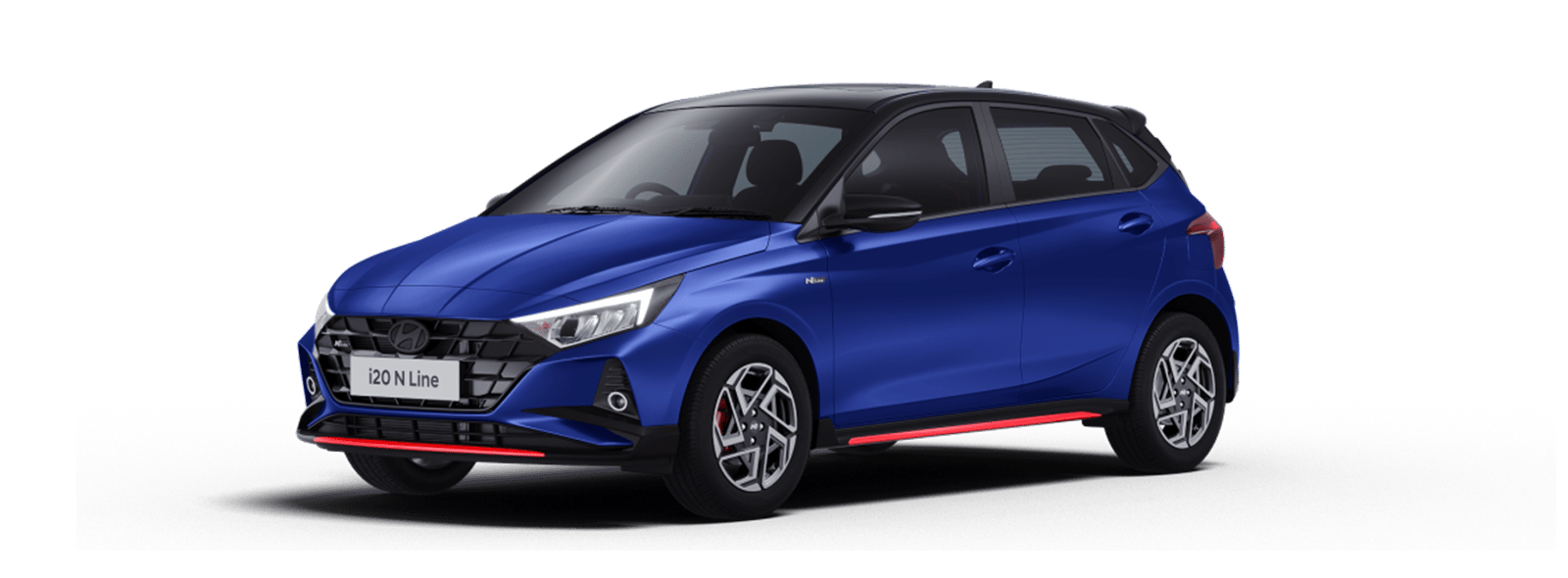

Hyundai Creta Electric's BaaS option cuts the entry price to ₹10.99 lakh by separating battery cost, charging ₹3.90/km instead — making it India's most aggressively priced mid-size electric SUV in 2026.
Hyundai Creta Electric Now Starts at ₹10.99 Lakh With Battery-as-a-Service in India 2026
Hyundai's Creta Electric is now available from ₹10.99 lakh (ex-showroom) under a Battery-as-a-Service (BaaS) ownership model, making it the most aggressively priced mid-size electric SUV in India as of mid-2026. The catch is that buyers pay ₹3.90 for every kilometre they drive, as the battery pack is leased rather than owned outright.
This pricing move marks a turning point in the Indian EV market. For comparison, the Creta Electric's standard (battery-included) variants start at approximately ₹17.99 lakh, meaning BaaS cuts roughly ₹7 lakh from the sticker price. The trade-off converts a capital expense into an operational one — a model already well-established in two-wheeler EVs (Ola, Ather, Ampere) but only now gaining traction in the passenger car segment.
Here is a quick snapshot of how the Creta Electric BaaS option compares with its closest rivals in the mid-size electric SUV space:
| Model | Entry Price (BaaS / Standard) | Battery Size | Claimed Range (ARAI/MIDC) | Key BaaS / Ownership Note |
|---|---|---|---|---|
| Hyundai Creta Electric (BaaS) | ₹10.99 lakh | 42 kWh / 51.4 kWh | 390 km / 473 km | ₹3.90/km battery usage fee |
| Hyundai Creta Electric (Standard) | ~₹17.99 lakh | 42 kWh / 51.4 kWh | 390 km / 473 km | Battery owned outright |
| Maruti Suzuki e Vitara | ~₹17.49 lakh (expected) | 49 kWh / 61 kWh | ~500 km (est.) | Standard ownership; no BaaS announced |
| Tata Nexon EV | ~₹14.79 lakh | 30 kWh / 40.5 kWh | 325 km / 465 km | Standard ownership; no BaaS |
| MG ZS EV | ~₹18.98 lakh | 50.3 kWh | 461 km | Standard ownership; no BaaS |
Prices are ex-showroom India, indicative as of July 2026. Maruti e Vitara pricing is based on pre-launch estimates.
At ₹10.99 lakh, the Creta Electric undercuts even the Tata Nexon EV's base variant — a car with a significantly smaller battery — by nearly ₹4 lakh on sticker price alone.
What exactly is Battery-as-a-Service, and how does it work for the Creta Electric?
Battery-as-a-Service is an ownership model in which the buyer purchases the electric vehicle without the battery pack, paying only for the vehicle's body, electronics, motor, and chassis. The battery — typically the single most expensive component in an EV, accounting for 30–40% of total vehicle cost — is leased from the manufacturer or a financing partner, with customers paying a usage-linked fee rather than a lump-sum capital cost.
For the Hyundai Creta Electric, BaaS brings the entry price to ₹10.99 lakh, with a per-kilometre charge of ₹3.90. Hyundai has not yet published a detailed breakdown of the monthly billing structure — whether there is a minimum monthly commitment, a cap on per-km charges, or a buyout option after a certain period. Prospective buyers must clarify these critical details with a Hyundai dealership before signing.
The primary advantage of BaaS is removing the largest psychological and financial barrier to EV adoption: fear of battery degradation and replacement costs. Under this arrangement, the battery remains the manufacturer's asset and responsibility. If the battery degrades beyond a specified threshold, the manufacturer is obligated to replace or service it at no additional cost to the owner. This represents a meaningful warranty upgrade over standard EV ownership, where battery replacement can cost ₹3–6 lakh depending on pack size.
You can read a broader analysis of which electric cars offer Battery-as-a-Service in India and whether they are worth buying on our dedicated guide.
Is ₹10.99 lakh genuinely affordable, or does the per-km fee make it expensive over time?
The answer depends almost entirely on how many kilometres you drive annually.
At ₹3.90/km:
- 10,000 km/year → ₹39,000/year in battery fees → ₹3,250/month
- 15,000 km/year → ₹58,500/year → ₹4,875/month
- 20,000 km/year → ₹78,000/year → ₹6,500/month
- 30,000 km/year → ₹1,17,000/year → ₹9,750/month
Consider the cost of owning the standard Creta Electric at ₹17.99 lakh. Assuming a 7-year loan at 9% interest with a 20% down payment of ~₹3.6 lakh, the EMI works out to roughly ₹10,500–₹11,000/month. Under BaaS at ₹10.99 lakh (same loan structure, 20% down of ~₹2.2 lakh), the EMI drops to approximately ₹6,500–₹7,000/month — but you add the per-km battery fee on top.
The break-even point — where BaaS becomes more expensive than standard ownership — is approximately 18,000–20,000 km/year for a typical 7-year ownership cycle. Drivers covering less than that find BaaS financially advantageous. High-mileage drivers (cab aggregators, inter-city commuters) will almost certainly prefer standard ownership.
Electricity costs add another layer. The Creta Electric's 42 kWh variant consumes roughly 15–16 kWh per 100 km in real-world conditions. At ₹8/kWh (a reasonable home-charging average in India), that's ₹1.20–₹1.28 per km in energy costs. The BaaS fee of ₹3.90/km is on top of this, making the total running cost approximately ₹5.10–₹5.18/km — still significantly cheaper than a comparable petrol SUV (₹8–10/km), but not as cheap as standard EV ownership (₹1.20–₹1.50/km all-in).
Which Creta Electric variants are available under BaaS, and what do you get?
Hyundai has not yet confirmed whether BaaS applies to all Creta Electric variants or only the entry-level trims. Based on the Autocar India report, the ₹10.99 lakh price point corresponds to the base configuration, likely paired with the smaller 42 kWh battery pack (390 km ARAI range) rather than the larger 51.4 kWh pack (473 km ARAI range).
The standard Creta Electric lineup spans these key variants:
- Executive (42 kWh): ~₹17.99 lakh — basic features, single motor, front-wheel drive
- Smart (42 kWh): ~₹18.99 lakh — connected car features, larger touchscreen
- Premium (51.4 kWh): ~₹20.99 lakh — larger battery, more range, Level 2 ADAS
- Excellence (51.4 kWh): ~₹23.99 lakh — top-spec, panoramic sunroof, advanced ADAS
Whether BaaS will eventually extend to higher trims with the 51.4 kWh pack remains unclear. Hyundai's stated intent appears to be using BaaS as a volume driver for the entry-level segment — competing directly with the Tata Nexon EV and the upcoming Maruti Suzuki e Vitara in the sub-₹18 lakh bracket.
For buyers who want ADAS features on their Creta Electric, our guide on best electric cars with ADAS in India in 2026 covers which variants and competitors offer the most comprehensive driver assistance systems.
How does the Creta Electric BaaS compare with the Maruti Suzuki e Vitara?
The Maruti Suzuki e Vitara is Maruti's first mass-market electric SUV for India, developed on the Suzuki-Toyota global BEV platform and positioned squarely in the mid-size SUV segment. Expected to launch in late 2025 or early 2026, the e Vitara is anticipated to be priced between ₹17 lakh and ₹22 lakh (ex-showroom) depending on variant and battery size (49 kWh or 61 kWh options).
Here is where the Creta BaaS move becomes strategically significant: Maruti has not announced any BaaS or alternative financing model for the e Vitara. If Maruti launches the e Vitara at ₹17.49–₹18 lakh as a standard purchase, the Creta Electric's ₹10.99 lakh BaaS entry point will dominate headlines and showroom conversations — even if the total cost of ownership over 5–7 years is comparable or even higher for BaaS buyers.
Perception matters enormously in the Indian market. A ₹10.99 lakh sticker price on a Hyundai Creta — a nameplate with massive brand equity — will attract buyers who would otherwise stretch to afford the e Vitara or the Nexon EV. Maruti will need to either match the BaaS model, offer aggressive EMI schemes, or lean heavily on its unmatched service network (over 4,000 touchpoints across India) to counter this pricing narrative.
The e Vitara has its own compelling advantages: Maruti's legendary after-sales reach, the trust of first-time EV buyers who are already Maruti loyalists, and superior battery capacity in the 61 kWh variant. Our analysis of which electric SUV has the best after-sales service network in India explores this dimension in detail.
What are the real-world range and charging capabilities of the Creta Electric?
The Creta Electric is available with two battery configurations:
42 kWh (Standard Range)
- ARAI-claimed range: 390 km
- Real-world range (mixed driving): approximately 280–320 km
- AC charging (11 kW onboard charger): 0–100% in approximately 4 hours
- DC fast charging (50 kW): 10–80% in approximately 58 minutes
51.4 kWh (Long Range)
- ARAI-claimed range: 473 km
- Real-world range (mixed driving): approximately 350–400 km
- AC charging (11 kW onboard charger): 0–100% in approximately 4.5 hours
- DC fast charging (50 kW): 10–80% in approximately 58 minutes
For long-distance travel, the 51.4 kWh variant is the more practical choice. Our roundup of best electric cars for long trips in India in 2026 puts the Creta Electric's real-world highway performance in context against competitors like the Tata Curvv EV and MG ZS EV.
One practical note: the BaaS entry variant at ₹10.99 lakh almost certainly comes with the 42 kWh pack. Buyers needing 400+ km of real-world range will need to step up to a higher variant — and at that point, the calculus of BaaS vs. standard ownership becomes even more critical to evaluate.
Is the Creta Electric safe? What do crash test ratings say?
Safety is a non-negotiable baseline for any family SUV purchase, and the Creta Electric performs well on this front. The car has received a 5-star rating under the Bharat NCAP crash test protocol, which evaluates adult occupant protection, child occupant protection, and safety assist systems.
Standard safety features across variants include:
- 6 airbags (driver, co-driver, side, curtain)
- Electronic Stability Control (ESC)
- Hill-start assist
- Tyre Pressure Monitoring System (TPMS)
- Rear parking camera with sensors
- ISOFIX child seat anchors
Higher variants add Level 2 ADAS features including Forward Collision Warning, Lane Keep Assist, Blind Spot Collision Warning, and Rear Cross-Traffic Alert.
For a full breakdown of 5-star rated EVs in India, see our guide on which 5-Star Bharat NCAP electric cars in India are worth buying in 2026.
Who should buy the Creta Electric under BaaS, and who should avoid it?
BaaS makes sense if you:
- Drive fewer than 18,000 km per year
- Want to minimise upfront capital outlay and prefer predictable monthly costs
- Are a first-time EV buyer anxious about battery degradation and replacement costs
- Live in a metro or Tier-1 city where Hyundai's charging and service infrastructure is dense
- Plan to keep the car for 5 years or less
BaaS may not make sense if you:
- Drive more than 20,000 km per year (the per-km fee compounds quickly)
- Are a commercial or semi-commercial user (cab aggregator, inter-city travel)
- Want to own the asset outright for resale value purposes — a BaaS vehicle's resale dynamics are unclear since the battery (a key value component) is not owned
- Prefer the simplicity of a single EMI with no variable monthly charges
The resale question is particularly underexplored. In most markets, BaaS means the battery remains the manufacturer's property throughout the vehicle's life. A used Creta Electric sold under BaaS will either need to be transferred with the BaaS contract (requiring the new buyer to continue paying per-km fees) or the battery will need to be purchased outright at the time of resale. Hyundai has not clarified this process publicly, and it is a significant gap in the current announcement.
How does BaaS affect the Creta Electric's total cost of ownership vs. petrol alternatives?
Let's compare a 5-year, 15,000 km/year scenario across three options: Creta Electric BaaS, Creta Electric Standard, and a comparable petrol SUV (Hyundai Creta 1.5 Turbo petrol, ~₹15.5 lakh ex-showroom).
| Cost Head | Creta Electric (BaaS) | Creta Electric (Standard) | Creta Petrol (1.5T) |
|---|---|---|---|
| Ex-showroom price | ₹10.99 lakh | ₹17.99 lakh | ₹15.50 lakh |
| Down payment (20%) | ₹2.20 lakh | ₹3.60 lakh | ₹3.10 lakh |
| Loan amount | ₹8.79 lakh | ₹14.39 lakh | ₹12.40 lakh |
| EMI (7yr, 9%) | ~₹5,500/mo | ~₹9,000/mo | ~₹7,750/mo |
| Battery fee (15k km/yr) | ₹4,875/mo | Nil | Nil |
| Fuel/energy (15k km/yr) | ~₹1,500/mo | ~₹1,500/mo | ~₹9,000/mo |
| Maintenance (est.) | ~₹500/mo | ~₹500/mo | ~₹1,500/mo |
| Total monthly outgo | ~₹12,375 | ~₹11,000 | ~₹18,250 |
Estimates based on ₹8/kWh home charging, ₹105/litre petrol, 12 km/litre petrol efficiency. Loan calculations are indicative.
The Creta Electric BaaS is actually more expensive per month than the standard Creta Electric at 15,000 km/year — but both are significantly cheaper than the petrol Creta. The BaaS model's advantage lies entirely in the lower upfront capital requirement and down payment, which matters enormously for buyers with limited liquidity.
What does this mean for the broader Indian EV market in 2026?
Hyundai's BaaS launch for the Creta Electric signals a structural shift in how the Indian EV market is evolving.
Pricing pressure is intensifying across the segment. The Tata Nexon EV, MG ZS EV, and the incoming Maruti Suzuki e Vitara all compete for the same ₹15–22 lakh buyer. Hyundai is using financial innovation — not just product features — to differentiate. This is a mature market tactic, suggesting Hyundai sees BaaS as a long-term pillar, not a promotional gimmick.
Alternative ownership models are going mainstream. BaaS has existed in India's two-wheeler EV market for several years, but its arrival in passenger cars signals a structural shift. If the Creta Electric BaaS sees strong uptake, expect Tata Motors, MG, and eventually Maruti to explore similar models for the Nexon EV, ZS EV, and e Vitara respectively.
The battery anxiety narrative is being directly addressed. One of the top three reasons Indian consumers cite for not buying an EV is fear of battery replacement costs. BaaS structurally eliminates this fear by making the battery the manufacturer's problem rather than the owner's.
Resale and used EV markets will get complicated. As more EVs enter the market under non-standard ownership models, the used car space — already nascent for EVs — will need to evolve. Platforms, financiers, and insurers will need clear frameworks for BaaS vehicle transfers.
For buyers evaluating the full space of mid-size electric SUVs, our full guide on best electric SUVs in India in 2026 and best electric cars to buy in India in 2026 provide broader context. If your budget is capped at ₹20 lakh, the best electric cars under ₹20 lakhs in India in 2026 guide is particularly relevant given how BaaS reshapes the competitive set.
What should you do before booking a Creta Electric under BaaS?
Before signing a BaaS agreement, get clear answers to these questions from your Hyundai dealer:
-
Is there a minimum monthly kilometre commitment or a minimum monthly fee? Some BaaS models charge a floor fee even if you drive very little in a given month.
-
What happens to the BaaS contract if you sell the car? Can the new buyer take over the contract, or must the battery be purchased outright?
-
What is the battery health threshold below which Hyundai will replace the battery at no cost? Most manufacturers use 70–80% State of Health (SoH) as the trigger.
-
Is there a buyout option? Can you purchase the battery outright at any point during ownership, and at what price?
-
Does the BaaS fee change over time? Is it fixed for the contract duration, or can Hyundai revise the per-km rate?
-
Which variants are eligible for BaaS? Confirm whether the 51.4 kWh long-range variant is available under BaaS or only the 42 kWh standard-range pack.
-
How is the per-km usage tracked? Is it via odometer readings, a telematics system, or a connected app — and what happens if the system malfunctions?
These are not hypothetical concerns. BaaS is relatively new in the Indian passenger car market, and the contractual fine print will determine whether it is genuinely advantageous for your specific usage pattern. Approach it with the same diligence you would apply to a home loan or a long-term lease agreement.
Bottom line: Is the Creta Electric BaaS worth it in 2026?
The Hyundai Creta Electric's BaaS option is a genuine innovation in India's EV market. At ₹10.99 lakh, it brings a premium, well-equipped electric SUV within reach of buyers who were previously priced out of the segment. The ₹3.90/km battery fee is transparent and predictable, which is more than can be said for the hidden costs of petrol ownership (fuel price volatility, service intervals, clutch and gearbox wear).
For urban buyers driving 10,000–15,000 km per year who want a Creta Electric but baulk at the ₹17.99 lakh starting price, BaaS is worth serious consideration. For high-mileage drivers, fleet operators, or buyers who prioritise clean resale value, standard ownership remains the better financial choice.
The Maruti Suzuki e Vitara's imminent arrival will test whether BaaS gives Hyundai a durable competitive edge or merely a temporary pricing headline. If Maruti responds with its own alternative ownership model — or undercuts on standard pricing — the mid-size EV SUV segment in India will become one of the most competitive automotive battlegrounds of 2026.
What is certain is that the era of "EVs are too expensive" as a blanket objection is ending. Hyundai has just made a compelling argument for that.
Sources
- Hyundai Creta Electric prices now start at Rs 10.99 lakh with BaaS — Autocar India
- Hyundai Creta Electric — Official Hyundai India Page
- Which Electric Cars Offer Battery as a Service (BaaS) in India and Are They Worth Buying? — EVIndex India
- Best Electric SUVs in India in 2026 — EVIndex India
- Best Electric Cars Under ₹20 Lakhs in India in 2026 — EVIndex India
- Which 5-Star Bharat NCAP Electric Cars in India Are Worth Buying in 2026? — EVIndex India
- Best Electric Cars for Long Trips in India in 2026 — EVIndex India
- Best Electric Cars with ADAS in India in 2026 — EVIndex India
- Which Electric SUV Has the Best After-Sales Service Network in India? — EVIndex India
- Best Electric Cars to Buy in India in 2026 — EVIndex India