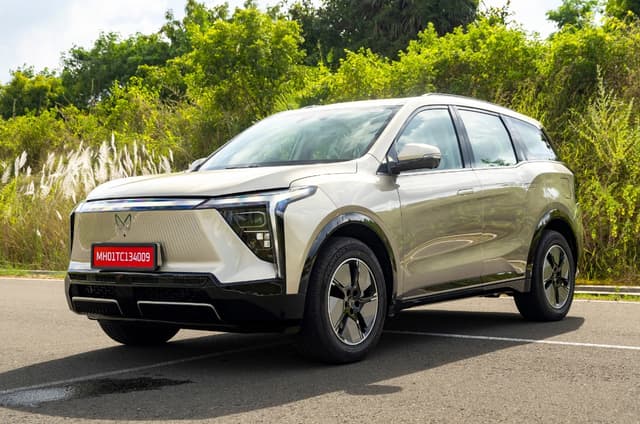
The XEV 9S is India's only electric three-row SUV under ₹30 lakh, combining a 679 km claimed range, a 150-litre frunk, and a lounge-like cabin that makes it a genuine family EV for the masses.
Key specs
| Range (claimed) | 502–679 km (ARAI claimed, depending on variant) |
|---|---|
| Real-world range | ~450 km (estimated real-world, 79 kWh pack; Evo India first-drive assessment) |
| Battery | 59 kWh / 70 kWh / 79 kWh |
| Fast charging | Up to 175 kW DC (claimed); 20–80% in ~20 min (79 kWh pack) |
| Home charging | 7.2 kW AC onboard charger standard; 11 kW AC optional on higher variants |
| Motor | Single rear motor; 167 bhp (59 kWh) / 241 bhp (70 kWh & 79 kWh) |
| Drivetrain | RWD |
| Top speed | 180 km/h (claimed, 79 kWh) |
| 0–100 km/h | 6.8 s (claimed, 79 kWh / 241 bhp variant) |
| Seating | 7 |
The Mahindra XEV 9S is India's first electric three-row, seven-seater SUV built on Mahindra's purpose-built INGLO platform, priced from ₹19.95 lakh to ₹30.20 lakh (ex-showroom). It offers a claimed ARAI range of up to 679 km on the top-spec 79 kWh battery pack, making it the longest-range seven-seater electric SUV in India at launch. The XEV 9S is the third model on the INGLO architecture and arguably the most family-friendly, combining the platform's advanced technology with a conventional three-row SUV format that Indian buyers are already comfortable with.
Powered by battery options of 59 kWh, 70 kWh, and 79 kWh, the XEV 9S supports DC fast charging at up to 175 kW (claimed), enabling a 20–80% charge in approximately 20 minutes on the larger pack. The cabin features a coast-to-coast triple 12.3-inch screen setup, a 16-speaker Harman Kardon audio system with Dolby Atmos, ventilated seats across the first two rows, and a powered Boss Mode function for second-row passengers. A 150-litre frunk and up to 527 litres of boot space round out the practicality credentials.
Positioned as the electric successor to the XUV700 in spirit, the XEV 9S is powered by Mahindra's MAIA (Mahindra AI Architecture) intelligent vehicle brain, bringing over-the-air updates, advanced ADAS, and connected car features to the segment. It competes directly with the Kia EV6 (on range and tech), the Tata Curvv EV (on price), and the MG ZS EV (on seven-seat practicality), while carving out a unique position as the only electric three-row SUV under ₹30 lakh in India.
Range and charging
The Mahindra XEV 9S is available with three battery pack options: 59 kWh, 70 kWh, and 79 kWh. ARAI-claimed ranges are approximately 502 km, 601 km, and 679 km respectively, though real-world usable range on the 79 kWh pack is estimated at around 450 km by Evo India's first-drive team — a figure that is still class-leading for a seven-seater electric SUV in India. The 59 kWh entry variant is best suited for city and short-highway use, while the 79 kWh pack is the one to choose for long-distance family travel.
DC fast charging on the 79 kWh pack tops out at 175 kW (claimed), which Mahindra says can take the battery from 20% to 80% in approximately 20 minutes — a significant advantage over rivals like the MG ZS EV that are limited to 50 kW DC. AC home charging is handled by a standard 7.2 kW onboard charger, with an 11 kW AC option available on Pack Two Above and Pack Three Above variants. A full AC charge from near-empty on the 79 kWh pack takes approximately 11–12 hours on a 7.2 kW wallbox.
The XEV 9S also features a 150-litre frunk (front trunk), which is a practical bonus for families who need to store charging cables separately from luggage. Mahindra's INGLO platform uses an 800V-compatible architecture on higher variants, future-proofing the car for India's expanding fast-charging network.
Performance and drive
The entry 59 kWh variant uses a single rear motor producing 167 bhp and 280 Nm of torque, which is adequate for city driving but noticeably less spirited on highways. The 70 kWh and 79 kWh variants step up to a more potent 241 bhp and 380 Nm motor, cutting the 0–100 km/h sprint to a claimed 6.8 seconds — brisk for a seven-seater family SUV. All variants are rear-wheel drive, which gives the XEV 9S a more engaging character than front-wheel-drive rivals.
The INGLO platform's low centre of gravity (thanks to a floor-mounted battery) contributes to composed handling, with reviewers noting that body roll is well-controlled for a vehicle of this size. Mahindra's MAIA system offers multiple drive modes including Everyday, Range, and a customisable Custom mode, with regenerative braking adjustable across three levels. The ride quality on R18 alloys with aero covers is reported to be comfortable over broken surfaces, though the third row does transmit more road noise than the first two rows due to its position over the rear axle.
The XEV 9S uses laminated acoustic glass on the front and second-row windows, which significantly reduces wind and road noise in the first two rows. NVH (noise, vibration, harshness) levels are among the best in the segment, befitting a premium electric SUV.
Cabin, space, and tech
The interior of the XEV 9S is centred around a coast-to-coast triple 12.3-inch screen layout — driver display, central infotainment, and a passenger-side screen — all running Mahindra's MAIA-powered software. The system supports wireless Apple CarPlay and Android Auto, over-the-air updates, and Mahindra's BYOD (Bring Your Own Device) integration. The 16-speaker Harman Kardon audio system with Dolby Atmos is a segment-first feature at this price point.
Second-row passengers benefit from powered Boss Mode recline and slide functions, ventilated seats, and dedicated climate controls. The third row features a 50:50 split-fold design and is described by reviewers as genuinely usable for adults on shorter journeys, rather than the token third row found in many rivals. Total cabin volume is cited at 4,076 litres with all seats up. Boot space with the third row folded is up to 527 litres, and the 150-litre frunk adds meaningful storage for charging cables or a small carry-on bag.
The panoramic Skyroof (fixed glass roof) is standard on Pack Two Above and above, flooding the cabin with light. Leatherette upholstery, soft-touch dashboard trims, and ambient lighting are standard across most variants. The overall material quality represents a step up from Mahindra's previous electric offerings and is competitive with the Kia EV6 at similar price points.
Safety and ADAS
The Mahindra XEV 9S has not yet been rated by Bharat NCAP or Euro NCAP as of May 2026, but it is built on the INGLO platform which was engineered with a five-star safety target. The XEV 9S comes with up to 7 airbags (driver, front passenger, side, curtain, and driver knee airbag on top variants), electronic stability control, hill-hold assist, and tyre pressure monitoring as standard.
ADAS (Advanced Driver Assistance Systems) on the Pack Two Above and Pack Three Above variants includes Level 2 features: adaptive cruise control with stop-and-go, lane keep assist, lane departure warning, automatic emergency braking, blind-spot monitoring, rear cross-traffic alert, and a 360-degree surround-view camera. The MAIA platform enables over-the-air ADAS updates, meaning the system can improve post-purchase — a feature previously seen only on premium EVs in India.
Variants and pricing
The XEV 9S is offered in four variants across three battery sizes. Pack One Above with the 59 kWh battery starts at ₹19.95 lakh (ex-showroom), making it the most accessible entry point. The 79 kWh version of Pack One Above is priced at approximately ₹21.95 lakh. Pack Two Above with the 70 kWh battery is priced around ₹24–25 lakh, while the range-topping Pack Three Above with the 79 kWh pack tops out at ₹29.45–30.20 lakh (ex-showroom, prices vary by source and city). All prices are indicative and subject to state-level road tax and registration charges.
Mahindra offers the XEV 9S in multiple colour options including a distinctive Deep Red, Everest White, and Stealth Black. The top Pack Three Above variant adds features like a powered tailgate, premium ambient lighting, and the full ADAS suite that are absent on lower trims.
How it compares
The XEV 9S's closest rivals are the Tata Curvv EV (₹17.49–21.99 lakh, 5-seater), the MG ZS EV (₹18.98–25.20 lakh, 5-seater), and the Kia EV6 (₹60+ lakh, 5-seater). The XEV 9S is the only three-row, seven-seat electric SUV in its price band, which is its strongest differentiator. Against the Curvv EV, it offers significantly more space, a longer range, and faster DC charging, but at a higher price. Against the MG ZS EV, it wins on range, charging speed, technology, and the third row, though the ZS EV has a more established service network.
For buyers cross-shopping with the Kia EV6, the XEV 9S offers comparable real-world range and ADAS at roughly half the price, though the Kia's build quality and driving dynamics remain benchmarks. The XEV 9S's 175 kW DC fast-charging capability is superior to both the Curvv EV (50 kW) and MG ZS EV (50 kW), making it a more practical choice for highway travel.
Who should buy it
The Mahindra XEV 9S is the right choice for families of five to seven who want to transition to electric mobility without compromising on space, range, or technology. The 79 kWh Pack Three Above is the variant to choose for buyers who regularly travel intercity, given its ~450 km real-world range and 175 kW fast-charging capability. The entry 59 kWh Pack One Above is a compelling proposition for urban families who want a premium seven-seater EV at under ₹20 lakh.
Buyers who prioritise driving dynamics over practicality, or who need a compact EV for tight city parking, may find the XEV 9S's size and weight a drawback. Those requiring a proven service network should note that Mahindra's EV service infrastructure is still expanding, though the brand has committed to dedicated EV service centres in major cities. Overall, the XEV 9S represents exceptional value for a family-focused electric SUV in India.
Safety & ADAS
| Airbags | Up to 7 (driver, front passenger, side, curtain, driver knee — top variants) |
|---|---|
| ADAS level | Level 2 (adaptive cruise, lane keep assist, AEB, blind-spot monitoring, 360° camera — Pack Two Above and above) |
| Notes | Not yet rated by Bharat NCAP or Euro NCAP as of May 2026. Built on INGLO platform engineered to five-star safety target. ESC, hill-hold, and TPMS standard across all variants. |
Verdict
Best for: Families of 5–7 seeking a long-range, tech-rich electric SUV with genuine third-row usability under ₹30 lakh
What we like
- Only electric three-row SUV in India under ₹30 lakh — unique segment position
- 679 km ARAI-claimed range (79 kWh) and 175 kW DC fast charging are class-leading for the price
- Triple 12.3-inch screens, Harman Kardon 16-speaker Dolby Atmos audio, and OTA updates rival cars costing twice as much
- 150-litre frunk plus 527-litre boot offers best-in-class total storage for a 7-seater EV
- Level 2 ADAS with OTA upgrade path on Pack Two Above and above
What to know
- Third-row comfort is adequate for shorter journeys but cramped for tall adults on long trips
- Entry 59 kWh variant's 167 bhp motor feels underpowered relative to the car's 2,100+ kg kerb weight
- Mahindra's EV-dedicated service network is still expanding — after-sales support patchy outside top-10 cities
- No AWD option available at launch, unlike some international INGLO-platform derivatives
Variants
| Variant | Price | Range | Notable |
|---|---|---|---|
| Pack One Above – 59 kWh | ₹19.95 Lakh | 502 km (ARAI claimed) | Entry variant; 167 bhp motor; 7.2 kW AC charging |
| Pack One Above – 79 kWh | ₹21.95 Lakh | 679 km (ARAI claimed) | Long-range entry; 241 bhp motor; DC fast charge up to 175 kW |
| Pack Two Above – 70 kWh | ₹24.95 Lakh (approx.) | 601 km (ARAI claimed) | Mid variant; 241 bhp; panoramic Skyroof; Level 2 ADAS; 11 kW AC option |
| Pack Three Above – 79 kWh | ₹29.45 – 30.20 Lakh | 679 km (ARAI claimed) | Top variant; full ADAS suite; powered tailgate; Harman Kardon 16-speaker; ventilated 2nd row |
Key features
- India's only electric three-row, seven-seater SUV under ₹30 lakh
- Up to 679 km ARAI-claimed range (79 kWh pack)
- 175 kW DC fast charging — 20–80% in ~20 minutes (claimed)
- Triple 12.3-inch coast-to-coast screen with MAIA AI architecture
- 16-speaker Harman Kardon audio with Dolby Atmos
- 150-litre frunk + up to 527-litre boot space
- Level 2 ADAS with OTA update capability on top variants
Competitors
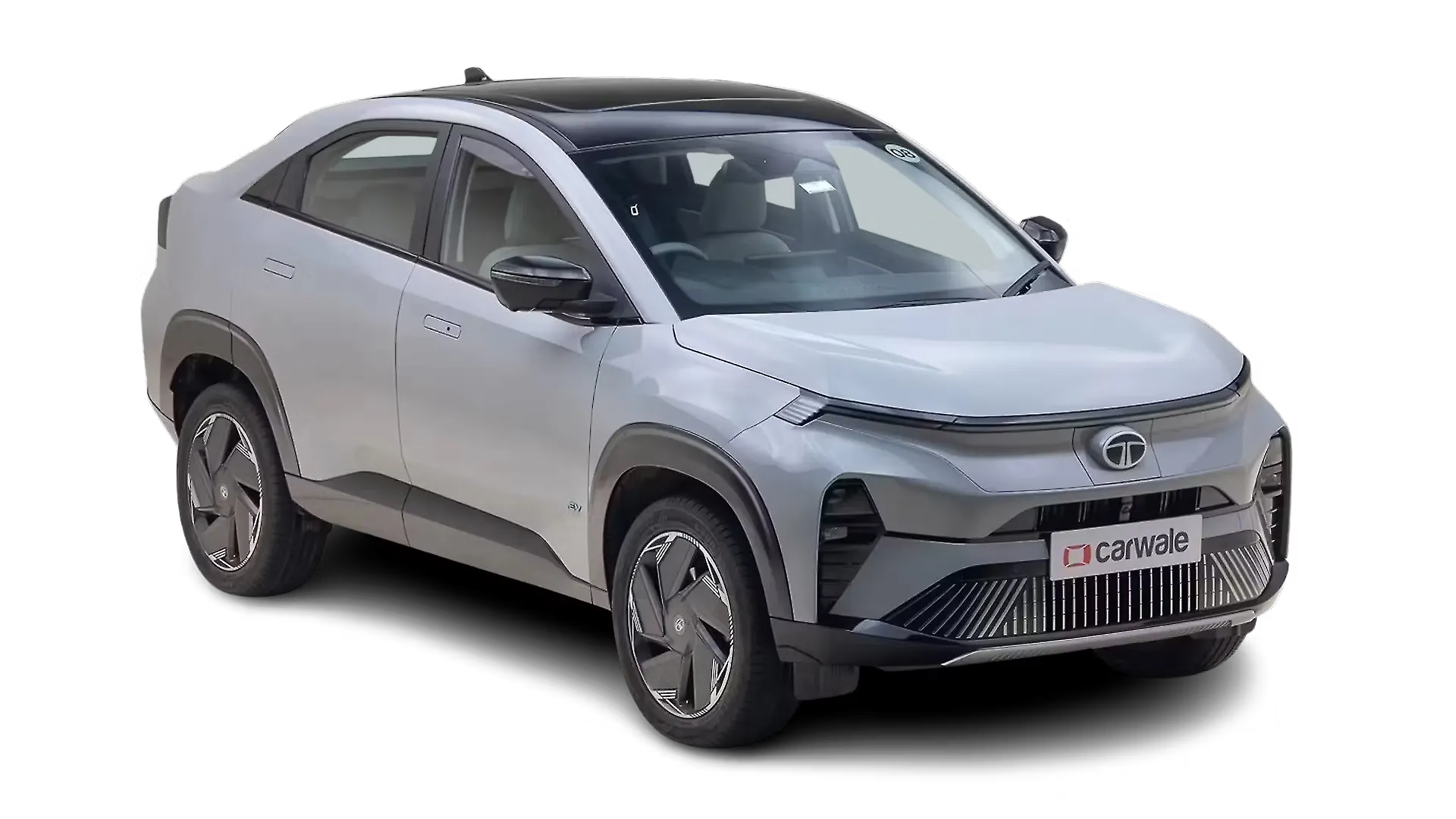 Coupe · On Sale
Tata Motors
Tata Curvv EV
₹17.49 – 22.24 Lakh (ex-showroom)
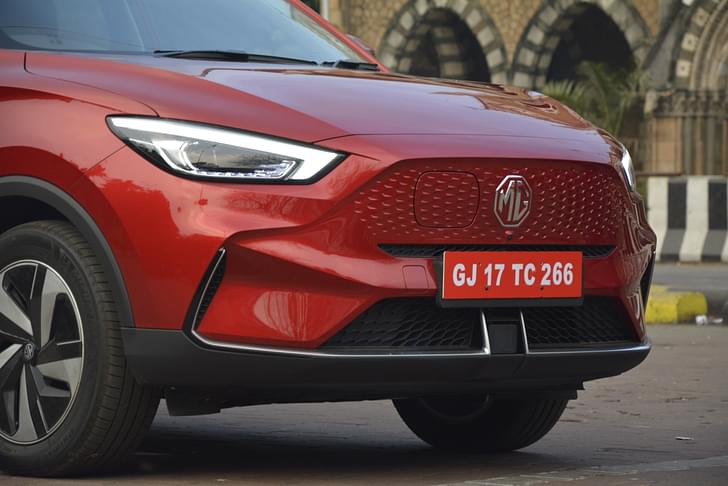 SUV · On Sale
JSW MG Motor India
MG ZS EV
₹17.99 – 20.50 Lakh (ex-showroom)
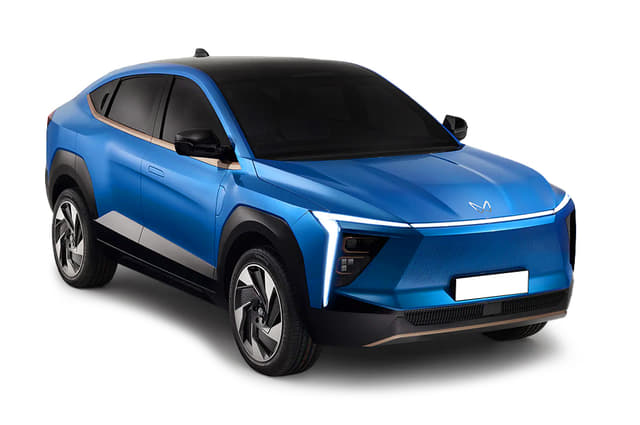 SUV · On Sale
Mahindra
Mahindra XEV 9e
₹21.90 – 31.25 Lakh (ex-showroom, indicative)
 SUV · On Sale
Hyundai Motor India
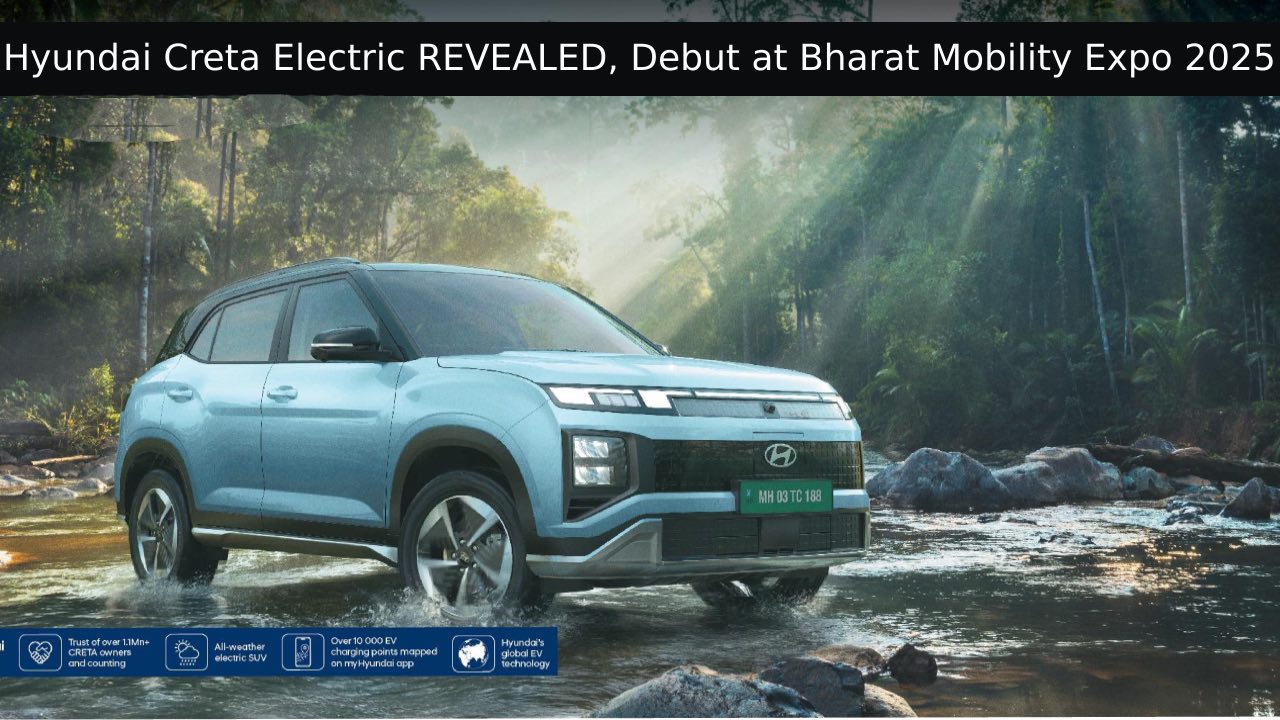
Hyundai Creta Electric
₹18.02 – 24.70 Lakh (ex-showroom)
Latest news
MG Hector Tomahawk EV vs Mahindra XEV 9S: Real-World Range Test in India 2026
The Mahindra XEV 9S beats the MG Hector Tomahawk EV in real-world average range (477.5 km vs 446 km), though the MG leads in city efficiency. The XEV 9S costs more but offers a larger battery and faster charging.
Mahindra XEV 9S vs MG Hector Tomahawk EV: Which 3-Row Electric SUV Delivers Better Performance in India 2026?
The Mahindra XEV 9S is faster, longer-ranged, and charges quicker than the MG Hector Tomahawk EV, but costs Rs 6–10 lakh more; the MG edges it only in conventional braking distance.
Mahindra XUV 3XO CNG vs Tata Nexon iCNG vs Maruti Brezza CNG: Which Compact CNG SUV Offers Best Value in India 2026?
The XUV 3XO CNG (from Rs 9.99 lakh) offers the strongest CNG performance; the Brezza CNG is the most fuel-efficient; the Nexon iCNG packs the most features but costs more at the top.
FAQs
What is the price of the Mahindra XEV 9S?
The Mahindra XEV 9S is priced from ₹19.95 lakh (ex-showroom) for the entry Pack One Above with the 59 kWh battery, going up to approximately ₹30.20 lakh for the top-spec Pack Three Above with the 79 kWh pack. All prices are ex-showroom and subject to state road tax and registration charges.
What is the real-world range of the Mahindra XEV 9S?
Mahindra claims an ARAI range of up to 679 km for the 79 kWh pack. In real-world conditions, Evo India's first-drive assessment estimates approximately 450 km of usable range from the 79 kWh variant — still the best figure for a seven-seater electric SUV in India at this price point.
How long does the Mahindra XEV 9S take to charge?
On a 175 kW DC fast charger, the 79 kWh pack can charge from 20% to 80% in approximately 20 minutes (claimed). On a standard 7.2 kW AC home wallbox, a full charge from near-empty takes approximately 11–12 hours. An 11 kW AC onboard charger is available as an option on Pack Two Above and Pack Three Above variants.
Does the Mahindra XEV 9S have ADAS?
Yes, the Pack Two Above and Pack Three Above variants come with Level 2 ADAS including adaptive cruise control with stop-and-go, lane keep assist, automatic emergency braking, blind-spot monitoring, rear cross-traffic alert, and a 360-degree surround-view camera. The MAIA platform supports over-the-air ADAS updates post-purchase.
Is the Mahindra XEV 9S safe?
The XEV 9S has not yet been rated by Bharat NCAP or Euro NCAP as of May 2026. It is built on the INGLO platform, which Mahindra engineered with a five-star safety target. Top variants come with up to 7 airbags, electronic stability control, hill-hold assist, and tyre pressure monitoring as standard.
Is the Mahindra XEV 9S worth buying?
For families needing a seven-seater electric SUV, the XEV 9S is the only option under ₹30 lakh in India and offers a compelling combination of 679 km claimed range, 175 kW fast charging, and a premium tech-laden cabin. The 79 kWh Pack Three Above at ~₹30 lakh is the best value for intercity families, while the 59 kWh Pack One Above at ₹19.95 lakh is excellent for urban use.
How many seats does the Mahindra XEV 9S have?
The Mahindra XEV 9S is a seven-seater SUV with three rows of seats. The third row features a 50:50 split-fold design and is described by reviewers as genuinely usable for adults on shorter journeys. Second-row passengers get powered Boss Mode recline and slide functions.
What battery options are available in the Mahindra XEV 9S?
The XEV 9S is available with three battery pack sizes: 59 kWh (ARAI range ~502 km), 70 kWh (ARAI range ~601 km), and 79 kWh (ARAI range ~679 km). The 70 kWh and 79 kWh packs are paired with the more powerful 241 bhp motor, while the 59 kWh entry variant uses a 167 bhp motor.