EV market stance
Mahindra is an emerging challenger in India's electric passenger SUV segment, leveraging its SUV heritage and a dedicated EV platform to compete in the premium mass-market space against Tata Motors and global entrants.
EV strategy
Mahindra & Mahindra has positioned itself as a serious contender in India's electric passenger vehicle segment through its dedicated 'Electric Origin' SUV platform, INGLO. Developed in-house, INGLO underpins the brand's new generation of born-electric SUVs under two sub-brands: the lifestyle-oriented BE series and the family-focused XEV series. The platform supports multiple battery configurations, including LFP (lithium iron phosphate) chemistry for cost efficiency, and is designed to scale across a range of body styles and price points.
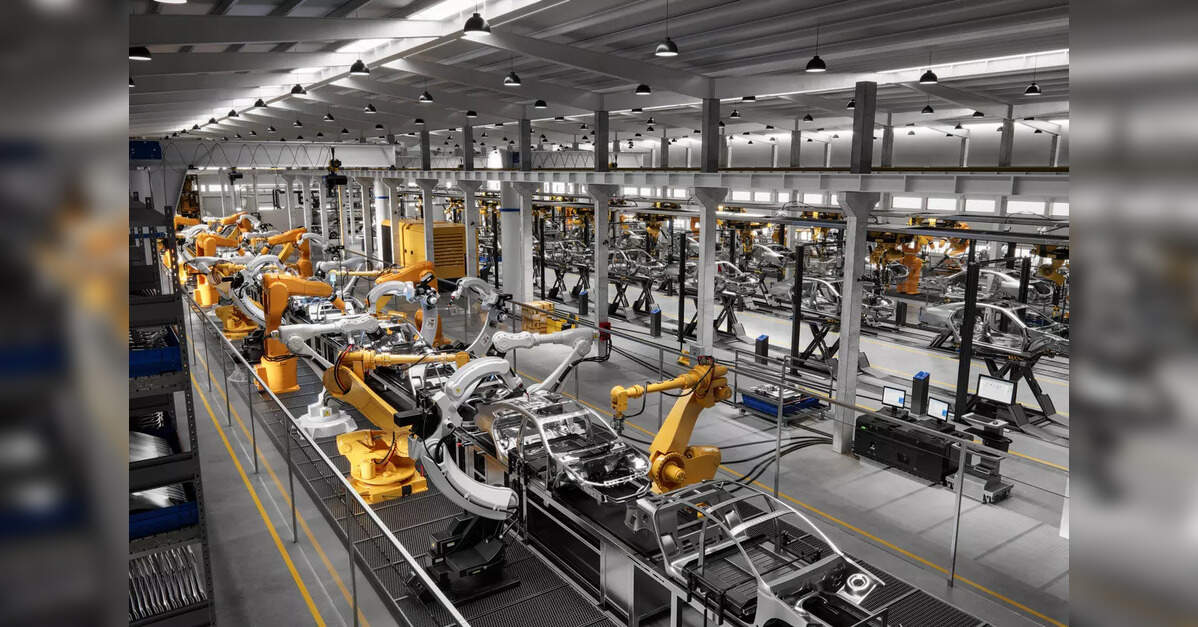
Mahindra inaugurated a dedicated EV manufacturing and battery assembly facility at its Chakan plant (Pune) in January 2025, signalling a major capacity commitment. The company has (claimed) plans to launch seven battery electric vehicles by 2030, starting with the BE 6 and XEV 9e in early 2025, followed by the XEV 9S (a seven-seater variant, launched November 2025 at a starting price of approximately ₹20 lakh), and the production version of the BE.07 concept confirmed for 2027.
On the partnership front, Mahindra secured a battery supply agreement with Volkswagen Group for MEB-compatible cells, and has collaborated with global technology suppliers to strengthen its software and charging ecosystem. The company is also exploring hybrid powertrain options for segments where full electrification may be premature, reflecting a pragmatic, multi-technology approach.
Mahindra's EV positioning targets the premium mass-market and upper-mid SUV segments, directly competing with Tata Motors' electric lineup and emerging global entrants. With a legacy in commercial EVs (through the erstwhile Mahindra Reva and electric three-wheelers), the brand is now making a decisive push into high-margin electric passenger SUVs, leveraging its dominant presence in India's overall SUV market.
Models from Mahindra
 SUV · On Sale
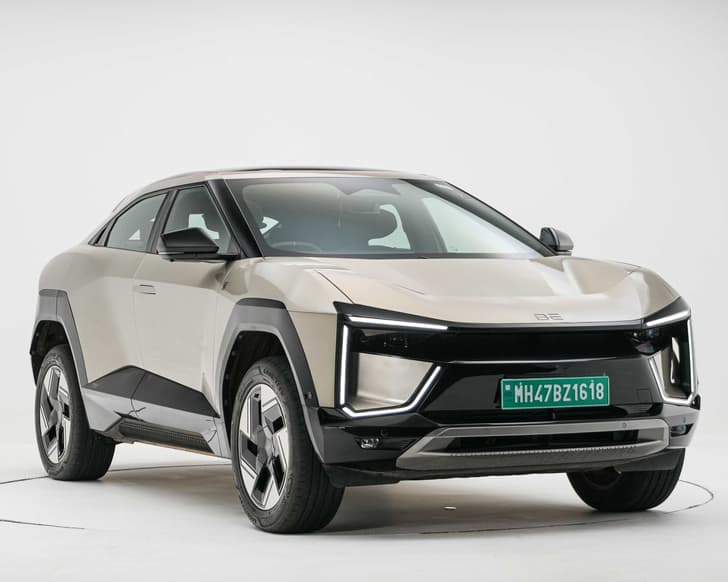
Mahindra BE 6
The Mahindra BE 6 brings supercar-rivalling design, 450–500 km real-world range, and 175 kW fast charging to the sub-₹30 lakh segment — a combination no rival currently matches.
₹18.90 – 28.49 Lakh (ex-showroom, indicative)
 SUV · On Sale
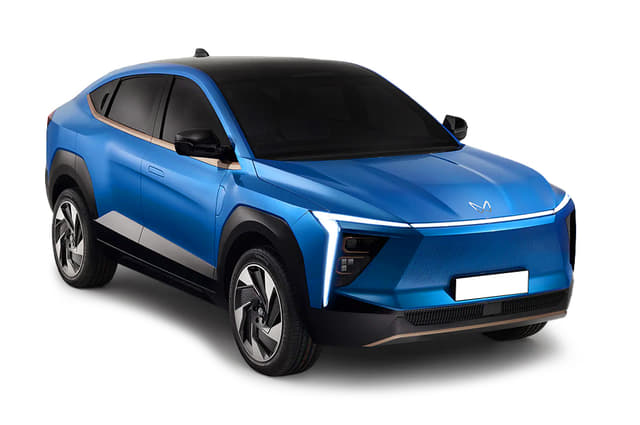
Mahindra XEV 9e
The XEV 9e delivers flagship-grade range (656 km ARAI claimed), coupe-SUV styling, and a triple-screen cabin at a starting price of ₹21.90 lakh — redefining value in India's premium EV segment.
₹21.90 – 31.25 Lakh (ex-showroom, indicative)
 SUV · On Sale
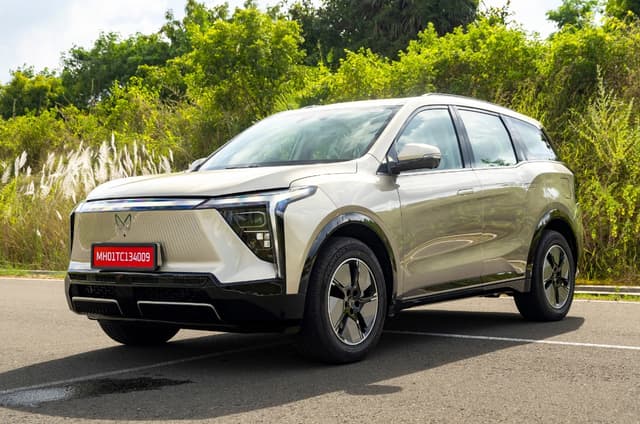
Mahindra XEV 9S
The XEV 9S is India's only electric three-row SUV under ₹30 lakh, combining a 679 km claimed range, a 150-litre frunk, and a lounge-like cabin that makes it a genuine family EV for the masses.
₹19.95 – 30.20 Lakh (ex-showroom, indicative)
 SUV · Pre-launch
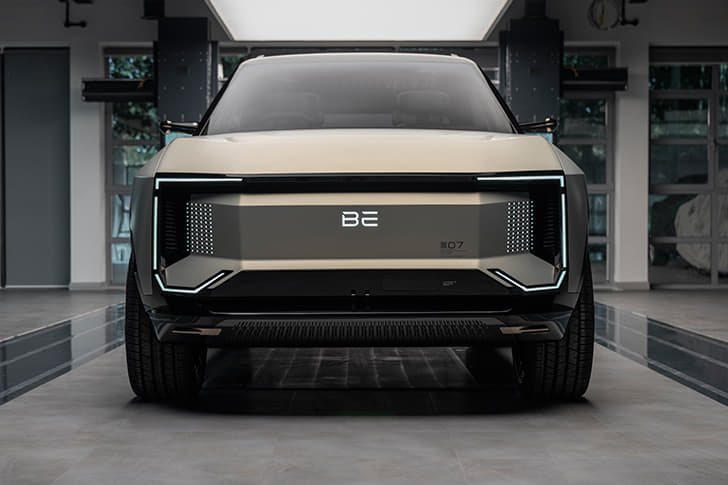
Mahindra BE 07
The Mahindra BE 07 is the brand's most anticipated Born Electric SUV, promising a ground-up EV platform, up to 500 km claimed range, and premium tech at a ₹25–30 Lakh price point that could reshape India's premium EV segment in 2027.
₹25.00 – 30.00 Lakh (indicative, ex-showroom)
Latest news mentioning Mahindra
MG Hector Tomahawk EV vs Mahindra XEV 9S, Kia Carens Clavis: Which 7-Seater EV Offers Best Value Under ₹30 Lakh in India 2026?
The MG Hector Tomahawk EV offers the lowest entry price (₹19.49 lakh) in the 3-row EV segment, but the Mahindra XEV 9S leads on range, power, and charging speed, while the Kia Carens Clavis EV is the most affordable overall.
Mahindra XEV 9S 6-Seat Option Launched at ₹25.25 Lakh: What India's 3-Row EV Buyers Get in 2026
Mahindra XEV 9S 6-seat captain-seat option starts at ₹25.25 lakh, just ₹25,000 over the 7-seat version, with up to 679 km claimed range.
Mahindra BE 07 Spied: What India's Next Mid-Size Electric SUV Design Reveals About 2026 Competition
Mahindra BE 07 spy shots reveal a near-production coupe-SUV design set to challenge the Maruti Suzuki e Vitara and Creta Electric in India's crowded 2026 mid-size EV segment.