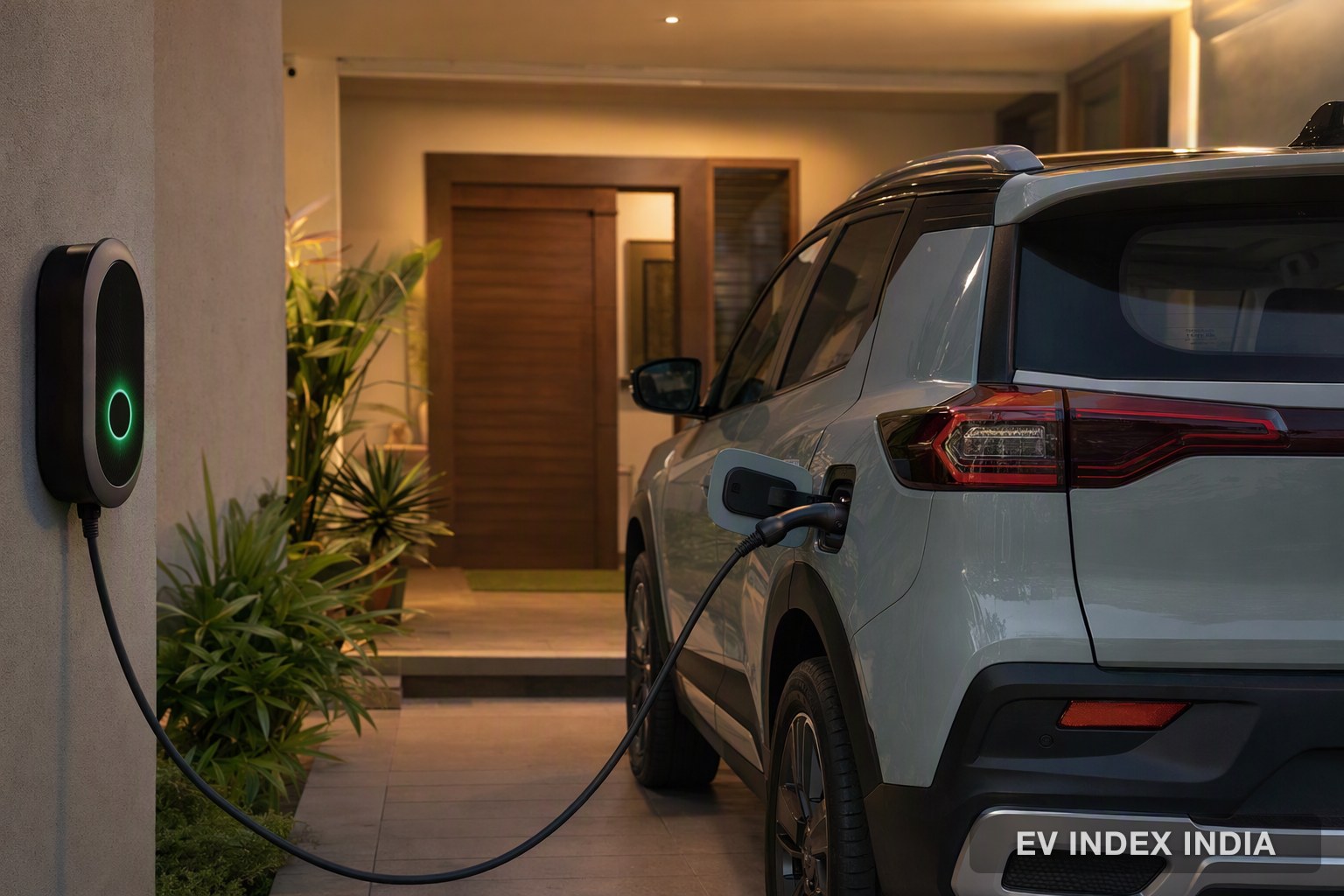
Electric SUVs With the Lowest Running Cost Per Km in India (2026)
Running cost per kilometer follows efficiency, not battery size. The Tata Punch EV leads at about Rs 0.68 per km on home charging at Rs 8 a unit, followed by the Nexon EV (Rs 0.74), Creta Electric (Rs 0.80), Curvv EV (Rs 0.88), Maruti e Vitara (Rs 0.90), Mahindra BE 6 (Rs 0.93) and MG Windsor EV (Rs 0.94). The BE 6 has the longest range here yet costs more per km than the Nexon EV.
The Tata Punch EV is the cheapest electric SUV to run in India at about Rs 0.68 per kilometer on home charging, because its 40 kWh pack returns roughly 11.7 km per unit of electricity, the best efficiency here. The Tata Nexon EV follows at Rs 0.74 and the Hyundai Creta Electric at Rs 0.80, while the Maruti Suzuki e Vitara sits mid-pack at about Rs 0.90 with a 543 km certified range. Every one of them costs roughly 85 to 90 percent less per kilometer than a petrol SUV at about Rs 7 per km.
Key takeaways
- Running cost per km is set by efficiency, measured in kilometers per unit of electricity, so the most efficient SUV is the cheapest to run.
- On certified range and battery size, the Tata Punch EV (about ₹0.68 per km), Tata Nexon EV (₹0.74) and Hyundai Creta Electric (₹0.80) come out cheapest.
- The Maruti Suzuki e Vitara works out to about ₹0.90 per km, between the Tata Curvv EV (₹0.88) and the Mahindra BE 6 79 kWh (₹0.93).
- All of them cost roughly 85 to 90 percent less per kilometer than a petrol SUV at about ₹7 per km.
Electric SUVs ranked by running cost per km
The figures below assume home charging at ₹8 per unit. Efficiency is each car's certified range divided by its battery capacity, and running cost per km is ₹8 divided by that efficiency. Real-world cost runs higher once charging losses and driving conditions are included.
| Model | Pack used | Certified range | Efficiency | Running cost at home | Price range |
|---|---|---|---|---|---|
| Tata Punch EV | 40 kWh | 468 km | 11.7 km per kWh | ₹0.68 per km | ₹9,79,000 to ₹12,99,000 |
| Tata Nexon EV | 45 kWh | 489 km | 10.9 km per kWh | ₹0.74 per km | ₹12,49,000 to ₹17,89,000 |
| Hyundai Creta Electric | 42 kWh | 420 km | 10.0 km per kWh | ₹0.80 per km | From ₹18,02,800 |
| Tata Curvv EV | 55 kWh | 502 km | 9.1 km per kWh | ₹0.88 per km | ₹17,19,000 to ₹19,69,000 |
| Maruti Suzuki e Vitara | 61 kWh | 543 km | 8.9 km per kWh | ₹0.90 per km | ₹16,19,000 to ₹19,99,000 |
| Mahindra BE 6 | 79 kWh | 683 km | 8.6 km per kWh | ₹0.93 per km | ₹19,45,000 to ₹26,95,000 |
| MG Windsor EV | 52.9 kWh | 449 km | 8.5 km per kWh | ₹0.94 per km | ₹14,84,800 to ₹19,14,800 |
| All prices mentioned in this article are ex-showroom for Delhi, as on 21 October 2026, and are subject to change. Prices may also vary in other cities. Please check with your nearest dealer for current, location-specific pricing. |
What decides an electric SUV's running cost per km
- Efficiency: The figure that matters is how many kilometers the SUV travels per unit of electricity, so a car that does more kilometers per unit costs less per kilometer, whatever its battery size.
- Weight and size: A heavier, larger SUV uses more energy to move, so battery size and cost per kilometer do not rise together. See the best electric SUVs under 25 lakh by range.
- Where you charge: Charging at home is cheaper than a public fast charger, so the lowest running cost assumes mostly home charging. See which electric SUVs suit India's charging infrastructure and which are the fastest charging.
- Maintenance: An EV has fewer moving parts than a petrol SUV, so lower service costs add to the saving. See the lowest maintenance cost electric SUVs.
7 electric SUVs with the lowest running cost per km
These are ordered from the cheapest to run upward, on certified range and battery size.
1. Tata Punch EV
Price range: ₹9,79,000 to ₹12,99,000
Variants and efficiency:
- 30 kWh and 40 kWh: the 40 kWh pack carries 468 km certified, about 11.7 km per kWh
The Punch EV is the cheapest to run in this group, at roughly ₹0.68 per kilometer at home, and it is also the most affordable to buy.
Running cost and efficiency:
- About ₹0.68 per kilometer at home on the 40 kWh pack
- Fast charging from 20 to 80 percent in about 26 minutes
- A battery-as-a-service option that can lower the entry price
Other features:
- A 5-star Bharat NCAP rating across all variants (July 2026)
- Six airbags and ESP as standard
Bottom line: The Punch EV is the pick for the lowest overall outlay, pairing the cheapest price with the lowest running cost here.
2. Tata Nexon EV
Price range: ₹12,49,000 to ₹17,89,000
Variants and efficiency:
- 30 kWh and 45 kWh: the 45 kWh pack carries 489 km certified, about 10.9 km per kWh
The Nexon EV is a compact SUV that works out to about ₹0.74 per kilometer at home, with a long certified range for its price.
Running cost and efficiency:
- About ₹0.74 per kilometer at home on the 45 kWh pack
- A 350-litre boot in a five-seat body
Other features:
- A 5-star Bharat NCAP rating across all variants
- Six airbags as standard
Bottom line: The Nexon EV combines a low running cost with a 489 km certified range and a 5-star rating.
3. Hyundai Creta Electric
Price range: From ₹18,02,800
Variants and efficiency:
- 42 kWh: 420 km certified, 10.0 km per kWh
- 51.4 kWh: 510 km certified, about 9.9 km per kWh
The Creta Electric works out to about ₹0.80 per kilometer at home on either battery, and it is the electric version of a popular petrol SUV.
Running cost and efficiency:
- About ₹0.80 per kilometer at home on both batteries
- DC fast charging from 10 to 80 percent in 39 minutes
Other features:
- Six airbags and dual 10.25-inch screens on every variant
- Hyundai SmartSense Level 2 ADAS on the higher trims
- A 22-litre front storage compartment
Bottom line: The Creta Electric offers a low running cost on both batteries, in a familiar body.
4. Tata Curvv EV
Price range: ₹17,19,000 to ₹19,69,000
Variants and efficiency:
- 55 kWh: 502 km certified, about 9.1 km per kWh
The Curvv EV is a coupe-SUV that works out to about ₹0.88 per kilometer at home, with a 55 kWh battery for longer trips.
Running cost and efficiency:
- About ₹0.88 per kilometer at home on the 55 kWh pack
- DC fast charging from 10 to 80 percent in about 40 minutes
Other features:
- A 5-star Bharat NCAP rating
- A 500-litre boot and six airbags as standard
- Level 2 ADAS on the higher trims
Bottom line: The Curvv EV suits a buyer who wants standout styling and a large boot at a running cost under ₹0.90 per kilometer.
5. Maruti Suzuki e Vitara
Price range: ₹16,19,000 to ₹19,99,000
Variants and efficiency:
- Delta 49 kWh: ₹16,19,000, 440 km certified, about 9.0 km per kWh
- Zeta 61 kWh: ₹17,94,000, 543 km certified, about 8.9 km per kWh
- Alpha 61 kWh: ₹19,99,000, 543 km certified, about 8.9 km per kWh
The e Vitara works out to roughly ₹0.90 per kilometer at home, with both battery sizes returning about 9 kilometers per kWh. It costs a little more per kilometer than the Tata and Hyundai models above it in this list, and a little less than the BE 6 and Windsor EV.
Running cost and efficiency:
- About ₹0.90 per kilometer at home on the 61 kWh pack, and ₹0.89 on the 49 kWh Delta
- DC fast charging from 10 to 80 percent in 45 minutes, and a Type-2 AC inlet for home charging
- A single-speed electric drivetrain
Other features:
- Adaptive cruise control, automatic emergency braking, lane keep assist, a 360-degree view camera and ventilated front seats on the Alpha
- Rear AC vents, a 10.1-inch touchscreen and a 10.25-inch driver display across the range, and a wireless charger on the Zeta and Alpha
- Seven airbags, ESP, ISOFIX anchorages and Suzuki Connect on every variant, and a 5-star Bharat NCAP rating
Bottom line: The e Vitara costs about ₹0.90 per kilometer to run at home, and it is the one car here that pairs that with a 543 km certified range and seven airbags.
6. Mahindra BE 6
Price range: ₹19,45,000 to ₹26,95,000
Variants and efficiency:
- 79 kWh: 683 km certified, about 8.6 km per kWh
- 59 kWh and 70 kWh versions are also offered
The BE 6 works out to about ₹0.93 per kilometer at home on the 79 kWh pack, with the longest certified range in this group.
Running cost and efficiency:
- About ₹0.93 per kilometer at home on the 79 kWh pack
- Fast charging from 20 to 80 percent in under 20 minutes on a 175 kW DC charger
Other features:
- A 5-star Bharat NCAP rating, with 31.97 out of 32 for adult occupants
- Six airbags as standard
Bottom line: The BE 6 is the pick for the longest range, with a running cost near ₹0.93 per kilometer.
7. MG Windsor EV
Price range: ₹14,84,800 to ₹19,14,800
Variants and efficiency:
- 52.9 kWh Pro: 449 km certified, about 8.5 km per kWh
The Windsor EV works out to about ₹0.94 per kilometer at home on the 52.9 kWh pack, in a crossover with a 604-litre boot.
Running cost and efficiency:
- About ₹0.94 per kilometer at home on the 52.9 kWh Pro
- Prices from ₹14,84,800 for the Excite to ₹19,14,800 for the Essence Pro
Other features:
- Six airbags as standard
- A 15.6-inch touchscreen from the Exclusive trim and a glass roof from the Essence trim
- Level 2 ADAS on the Essence Pro
Bottom line: The Windsor EV is the pick for boot space, with a running cost just under ₹1 per kilometer.
Conclusion
Every electric SUV here costs a fraction of a petrol SUV to run, and the cheapest to run is the most efficient one. Before you buy:
- Judge an EV on efficiency: The kilometers it does per unit of electricity decide the cost per kilometer.
- Factor in where you charge: Home charging is where the low cost per kilometer comes from, so a home charger makes the biggest difference to your running bill.
- Weigh running cost against range: If you mostly drive in and around the city, a highly efficient SUV keeps costs lowest, while a bigger battery is worth it if you regularly need the range.
- Check safety: Compare ratings on the Bharat NCAP and Global NCAP result pages, and browse the 5-star Bharat NCAP electric cars.
Work out how far you drive and where you will charge, then pick the electric SUV whose efficiency and range fit that pattern.
FAQs
How is an electric SUV's running cost per km calculated?
It is the cost of the electricity divided by the car's efficiency. If electricity costs ₹8 per unit and the SUV does 8 kilometers per unit, the running cost is ₹1 per kilometer. A more efficient SUV that does more kilometers per unit costs less per kilometer.
Which electric SUV is the cheapest to run per km?
On certified range and battery size, the Tata Punch EV is the cheapest at about ₹0.68 per kilometer at home, followed by the Tata Nexon EV (₹0.74) and the Hyundai Creta Electric (₹0.80). The Maruti Suzuki e Vitara comes in at about ₹0.90.
How much cheaper is an electric SUV to run than a petrol one?
A petrol SUV costs about ₹7 per kilometer in fuel at roughly 13 km/l and ₹95 a liter, while the electric SUVs here cost ₹0.68 to ₹0.94 per kilometer at home. That is a saving of roughly 85 to 90 percent on fuel, before counting lower maintenance. Actual figures depend on your tariff, fuel price and driving.
Does a bigger battery mean a lower running cost?
No. A bigger battery lets an SUV travel further on a charge, but the running cost depends on how many kilometers the car does per unit of electricity. The BE 6 79 kWh, for example, has the longest range here but costs more per kilometer than the Nexon EV.
Last verified: 2026-10-21