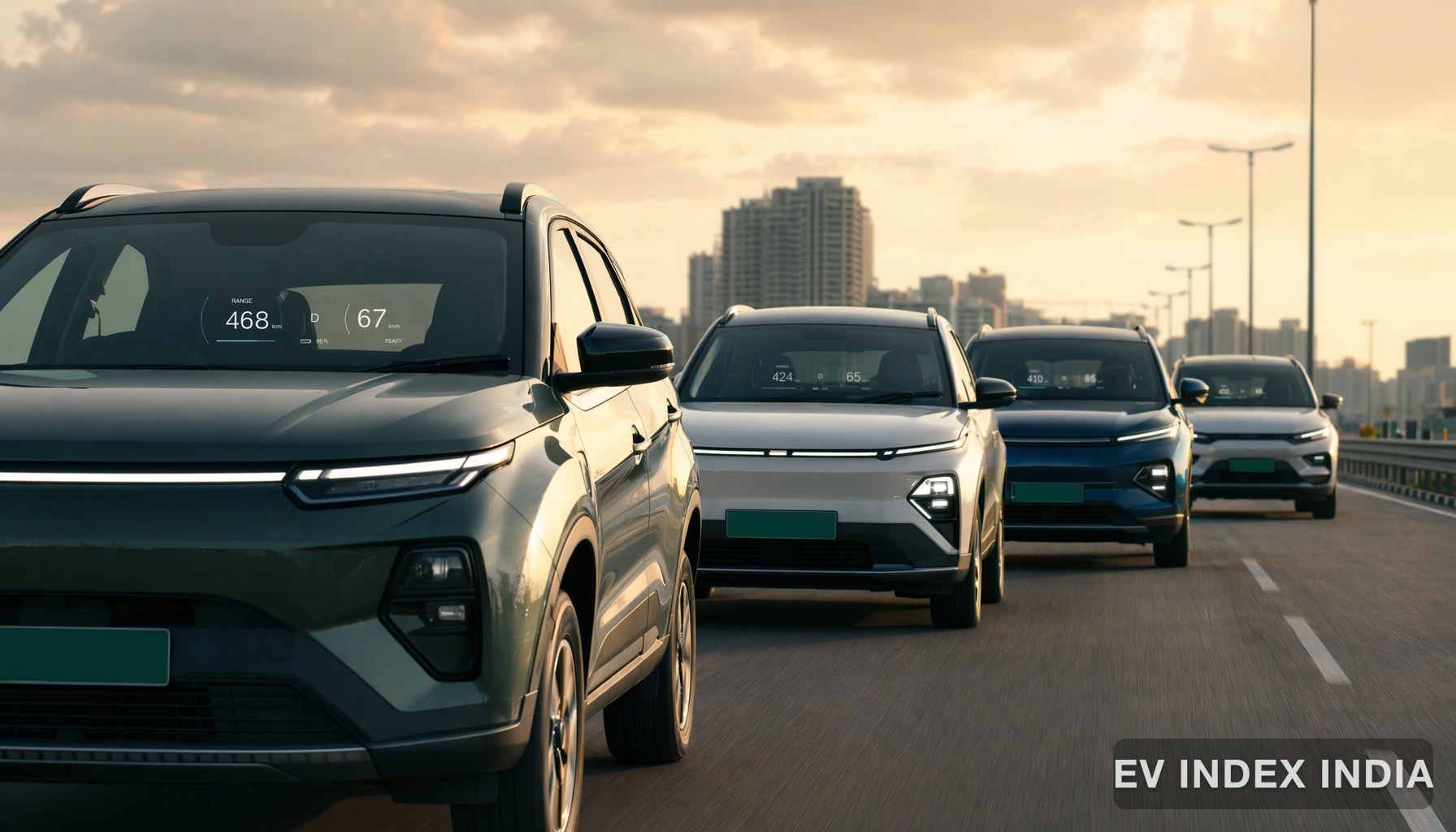
EVs with Best Real-World Range in India Under 25 Lakhs
Maruti e Vitara: cheapest 400+ km real-world EV (₹17.49 lakh, ~400–420 km, 61 kWh) backed by India's largest service network. Mahindra BE 6: highest absolute real-world range (~449 km, 79 kWh, ₹23.50 lakh). Tata Harrier EV: 438 km verified by CarWale (75 kWh, ₹24.99 lakh). Hyundai Creta Electric: best efficiency per kWh at 432 km from 51.4 kWh. Six cars compared on independently tested real-world data, not ARAI claims.
Every EV in India comes with an ARAI-certified range figure. It is the number you see in advertisements, on spec sheets, and on dealership brochures. It is also almost never the range you get to see in real life.
ARAI testing happens under controlled conditions — a specific temperature, a specific speed cycle, no AC, no highway driving at 100 km/h. The moment you take the car onto Indian roads with the AC running and four people inside, that number starts to drop. For most EVs, real-world range lands 20 to 30 percent below the ARAI claim.
That is exactly what this guide is based on. Every car here has been ranked by independently tested or well-documented real-world range, not ARAI claims.
Top Picks at a Glance
Each car on this list earns its place differently. The short version:
- Best real-world range per rupee: Maruti e Vitara 61 kWh — ~400–420 km real-world from ₹17.49 lakh, the cheapest 400+ km real-world EV under ₹25 lakh, backed by 5,780+ NEXA service touchpoints (3.8x larger than the next-largest brand on this list)
- Highest absolute real-world range: Mahindra BE 6 79 kWh — ~449 km verified by Autocar India, from ₹23.50 lakh
- Most credible long-range test: Tata Harrier EV 75 kWh — 438 km in a CarWale full-charge-to-zero drain test, from ₹24.99 lakh (the only AWD on this list at the QWD trim)
- Best efficiency per kWh: Hyundai Creta Electric 51.4 kWh — 432 km real-world from a smaller pack (Autocar India test)
- Cheapest 350+ km real-world EV: Tata Nexon EV 45 kWh — ~350 km from ₹13.99 lakh, the lowest cost of entry into a long-range EV in India
- Fastest DC charging in this segment: Mahindra BE 6 — 175 kW peak, 20% to 80% in ~20 minutes
The full ranking by real-world range follows below.
How We Ranked These Cars
Real-world range first: All rankings are based on independently tested range figures from Autocar India and CarWale, not ARAI-certified claims.
Under Rs 25 lakh filter: Only variants under Rs 25 lakh are considered. Where a car has multiple battery options, only the variant available within this budget is counted.
Mixed driving conditions: Range figures used are from combined city and highway tests, not pure city or pure highway results, since most Indian buyers drive a mix of both.
Source transparency: The test source is included in the comparison table so you know exactly where each number comes from.
6 Electric Cars with the Best Real-World Range Under 25 Lakhs in 2026
| Car | Starting Price | Battery | ARAI Range | Real-World Range | Source |
|---|---|---|---|---|---|
| Maruti e Vitara | ₹15.99 Lakh | 61 kWh | 543 km | ~400–420 km | Autocar India efficiency data |
| Mahindra BE 6 | ₹18.89 Lakh | 79 kWh | 682 km | ~449 km | Autocar India test |
| Tata Harrier EV | ₹21.49 Lakh | 75 kWh | 627 km | ~438 km | CarWale test |
| Hyundai Creta Electric | ₹18.02 Lakh | 51.4 kWh | 473 km | ~432 km | Autocar India test |
| Tata Curvv EV | ₹16.99 Lakh | 55 kWh | 502 km | ~365 km | Autocar India test |
| Tata Nexon EV | ₹12.49 Lakh | 45 kWh | 489 km | ~350 km | Autocar India test |
1. Maruti e Vitara
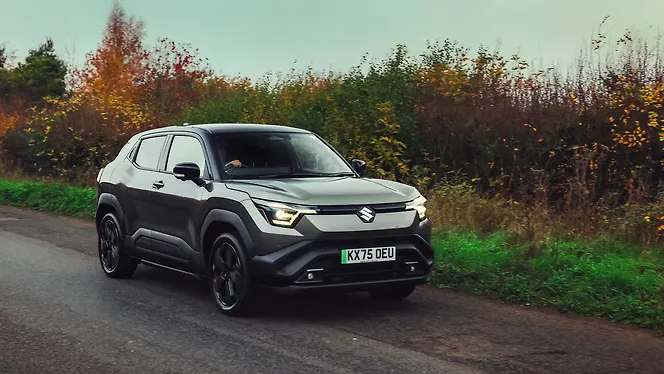
Best for: Buyers who want the cheapest 400+ km real-world EV on this list (₹17.49 lakh, 61 kWh) backed by India's largest service network.
The e Vitara leads this list not because it has the highest absolute real-world range but because of what it delivers relative to what you pay for it. At Rs 15.99 lakh for the base Delta variant and Rs 17.49 lakh for the Zeta with the 61 kWh battery, no other car on this list gets you 400+ km of real-world range at anywhere close to this price. Autocar India's efficiency data on the 61 kWh pack shows city efficiency of 7 km/kWh and highway efficiency of around 4.8 km/kWh, putting real-world range between 400 and 420 km in mixed conditions. For a buyer whose primary concern is getting the most range per rupee spent, the e Vitara is the strongest answer under Rs 25 lakh.
Price range: ₹15.99 Lakh – ₹20.01 Lakh (ex-showroom) | ₹10.99 Lakh – ₹14.51 Lakh (BaaS) Visit nexaexperience.com for the full list.
A note on BaaS: BaaS, or Battery-as-a-Service, lets you buy the car without paying for the battery upfront. Instead, you pay a per-km usage fee of Rs 3.99/km for the 49 kWh pack and Rs 4.39/km for the 61 kWh pack. This brings the starting price down to Rs 10.99 lakh. It works best if you drive under 1,200 km a month.
Specifications and Safety:
- Motor: 144 PS (49 kWh) / 174 PS (61 kWh), FWD
- Boot space: 310 litres (expandable with 40:20:40 split rear seats)
- Seating: 5
- Bharat NCAP: 5 Star
- Airbags: 7 (standard across all variants)
- ADAS: Level 2 (from Zeta variant)
Warranty: 8 years / 1,60,000 km on battery and motor. 3 years standard on the vehicle, extendable up to 8 years.
2. Mahindra BE 6
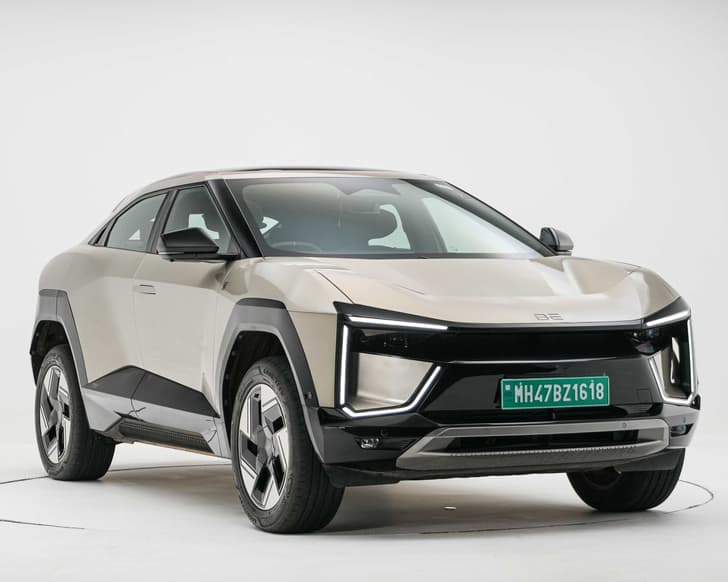
Best for: Buyers who want the highest absolute real-world range on this list (~449 km, 79 kWh) plus the fastest DC charging at 175 kW.
The BE 6 delivers the highest independently tested real-world range on this list at around 449 km, achieved by Autocar India on the 79 kWh pack. The 79 kWh Pack Two variant is available at Rs 23.50 lakh, which falls within the Rs 25 lakh budget. City efficiency from the test came in at 5.55 km/kWh and highway efficiency at 5.81 km/kWh, which are strong results for a car with 281 PS and a rear-wheel drive setup. The 175 kW DC fast charger means a 20-minute stop at a fast charger adds well over 200 km of range, making the BE 6 the most highway-capable EV on this list in terms of how little time you spend waiting at chargers relative to how far you go.
Price range: ₹18.89 Lakh – ₹26.90 Lakh (ex-showroom) Visit mahindraelectricsuv.com for the full list.
Specifications and Safety:
- Motor: 228 PS (59 kWh) / 281 PS (79 kWh), RWD
- Boot space: 455 litres + 45-litre frunk
- Seating: 5
- Bharat NCAP: 5 Star
- Airbags: 7
- ADAS: Level 2+ (Mobileye EyeQ6, standard from Pack One)
Warranty: Lifetime battery warranty for first-time private owners (15 years). 10 years / 2,00,000 km on ownership change.
3. Tata Harrier EV
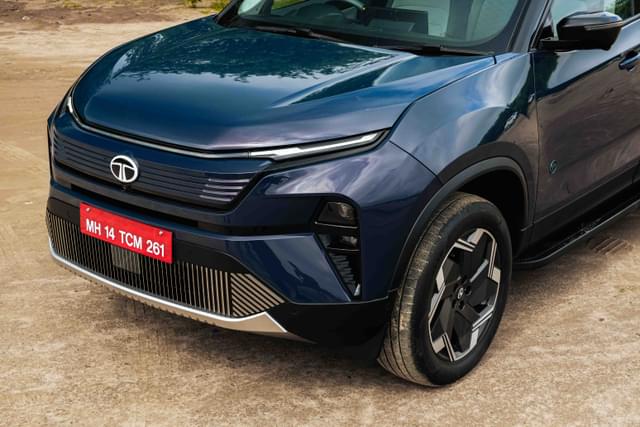
Best for: Buyers who want the most rigorously tested real-world range on this list — 438 km in a CarWale full-charge-to-zero drain test — in a family-ready cabin.
CarWale drove the 75 kWh QWD variant from a full charge until the battery reached zero, a complete drain test that leaves no room for optimistic methodology. The result was 438 km. The 75 kWh Fearless+ 75 RWD variant is available at Rs 24.99 lakh, just under the budget. With a RWD setup instead of AWD, real-world range on that variant should be marginally better than the 438 km figure from the heavier QWD test car. The 120 kW DC fast charger gets it to 80% in about 25 minutes, and the cabin is the most premium on this list with boss mode, panoramic sunroof with voice control, and a 14.53-inch Samsung Neo QLED display.
Price range: ₹21.49 Lakh – ₹28.99 Lakh (ex-showroom) Visit ev.tatamotors.com for the full list.
Specifications and Safety:
- Motor: 238 PS (RWD) / 313 PS (AWD)
- Boot space: 502 litres + 67-litre frunk
- Seating: 5
- Bharat NCAP: 5 Star
- Airbags: 7
- ADAS: Level 2 (from Empowered 75 variant)
Warranty: Specific battery warranty terms available at Tata dealerships. Confirm before purchase.
4. Hyundai Creta Electric

Best for: Buyers who want 400+ km real-world range without paying for a large battery — the best efficiency per kWh on this list (432 km from 51.4 kWh).
The Creta Electric's real-world range story is about efficiency more than battery size. Its 51.4 kWh battery is the smallest among the top four on this list, yet it returned 432 km in Autocar India's real-world range test. That is a result of Hyundai's powertrain calibration and the aerodynamic efficiency of the Creta platform. The 51.4 kWh Excellence LR variant is available at Rs 23.66 lakh. For buyers who want 400+ km of real-world range without spending close to Rs 25 lakh on battery size, the Creta Electric delivers it efficiently.
Price range: ₹18.02 Lakh – ₹24.69 Lakh (ex-showroom) Visit hyundai.com/in for the full list.
Specifications and Safety:
- Motor: 135 PS (42 kWh) / 171 PS (51.4 kWh), FWD
- Boot space: 433 litres
- Seating: 5
- Euro NCAP: 5 Star (Bharat NCAP not tested yet)
- Airbags: 6
- ADAS: Level 2 (from Premium variant)
Warranty: Warranty terms vary by variant. Confirm with your nearest Hyundai dealer before purchase.
5. Tata Curvv EV
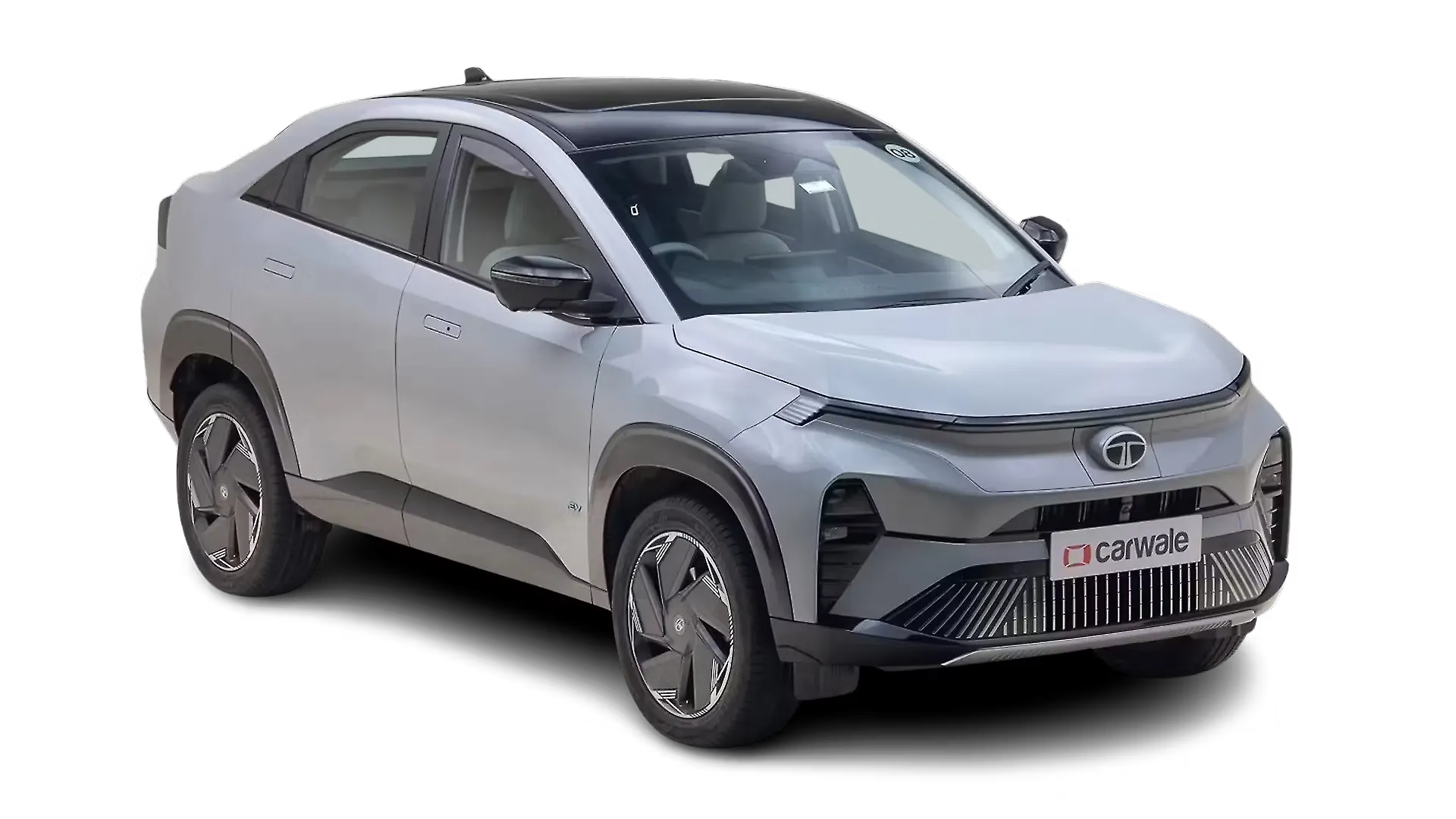
Best for: Buyers who want the largest boot in this segment (500 litres) and a distinctive coupe-SUV design from ₹16.99 lakh.
The Curvv EV returned 365 km in Autocar India's real-world range test on the 55 kWh pack. It is a respectable result for a coupe-SUV body style that is inherently less aerodynamically efficient than a conventional SUV. As of May 2026, the Curvv EV is available only with the 55 kWh battery across its SeriesX variants, starting from Rs 16.99 lakh for the Accomplished X 55. That makes it one of the most affordable ways to access a 55 kWh battery in India. The real-world range trails the cars above it on this list, but the Curvv EV brings compensating strengths. It has a large boot space at 500 litres, a 5-star Bharat NCAP rating, V2L and V2V charging, and a distinctive design that stands out in the segment.
Price range: ₹16.99 Lakh – ₹19.19 Lakh (ex-showroom) Visit ev.tatamotors.com for the full list.
Specifications and Safety:
- Motor: 167 PS / 280 Nm, FWD (55 kWh)
- Boot space: 500 litres + 11.6-litre frunk
- Seating: 5
- Bharat NCAP: 5 Star
- Airbags: 6
- ADAS: Level 2 (top variant only)
Warranty: Lifetime high-voltage battery warranty for first-time private owners from date of first registration.
6. Tata Nexon EV
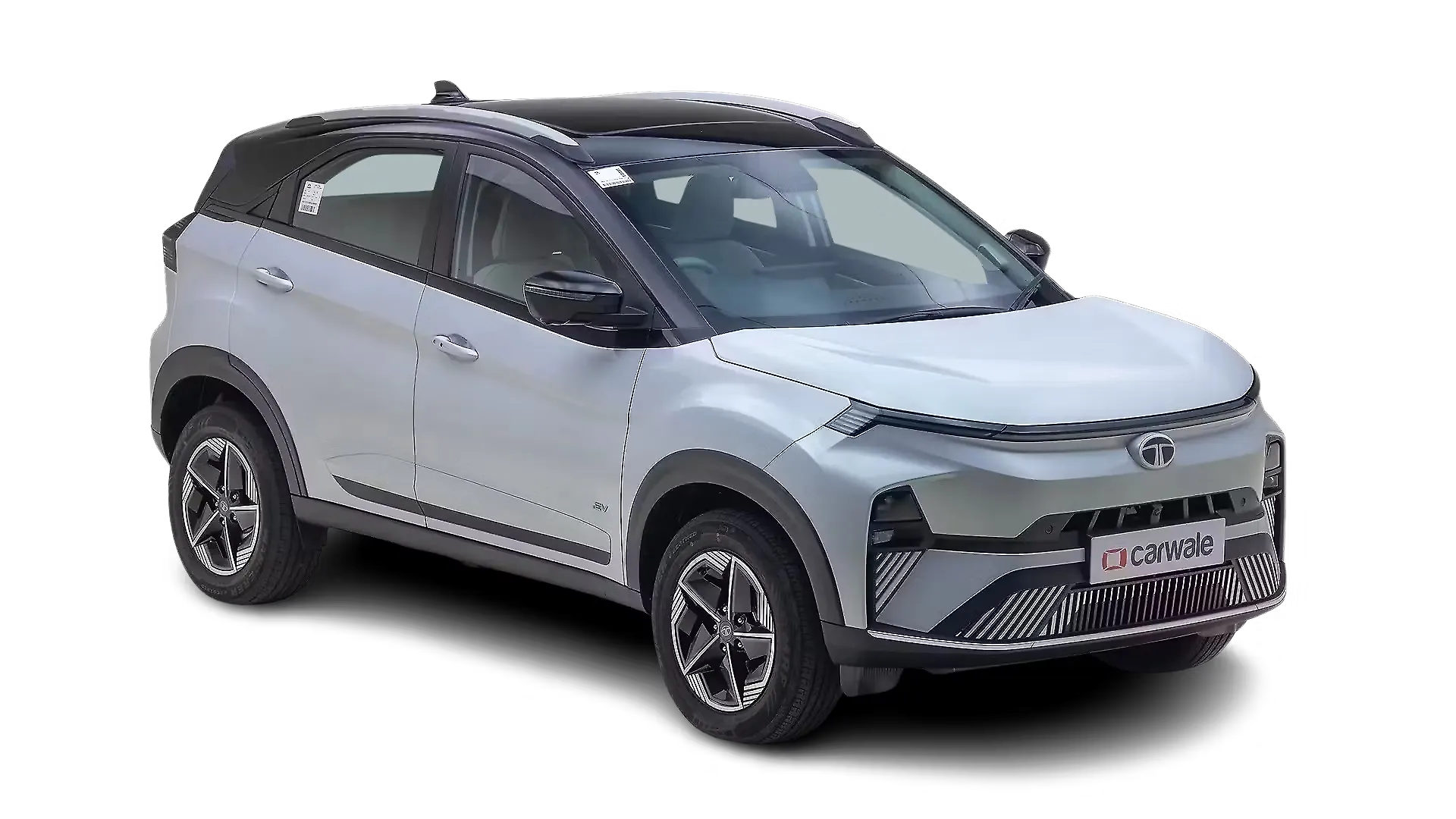
Best for: Buyers who want the lowest cost of entry into a 350+ km real-world range EV in India (₹13.99 lakh, 45 kWh).
Autocar India's real-world range test of the 45 kWh pack returned 350 km, with an average efficiency of 7.79 km/kWh. That means in pure city driving, the Nexon EV will consistently outperform its combined test figure. The 45 kWh variants are available from Rs 13.99 lakh, making this the lowest cost of entry for a 350+ km real-world range EV in India. For buyers whose primary use is city driving with the occasional highway trip, the Nexon EV delivers the range that matters most where they drive most.
Price range: ₹12.49 Lakh – ₹17.19 Lakh (ex-showroom) Visit ev.tatamotors.com for the full list.
Specifications and Safety:
- Motor: 129 PS (30 kWh) / 145 PS (45 kWh), FWD
- Boot space: 350 litres + 11.6-litre frunk
- Seating: 5
- Bharat NCAP: 5 Star (all variants)
- Airbags: 6
- ADAS: Level 2 (top variant only)
Warranty: Lifetime battery warranty on 45 kWh variants from date of first registration.
Which One Should You Buy?
If you want the best real-world range for the money: The Maruti e Vitara delivers 400–420 km from a 61 kWh battery starting at Rs 17.49 lakh. No other car on this list gets you this much real-world range at this price. Add the 5-star Bharat NCAP rating and India's largest service network at 5,780+ touchpoints, and it is the most complete range-focused EV under Rs 25 lakh.
If you want the highest absolute real-world range under Rs 25 lakh: The Mahindra BE 6 at Rs 23.50 lakh for the 79 kWh pack returned 449 km in an independent Autocar India test. The 175 kW fast charging means your stops are short even when you do need to charge.
If you want proven, credible real-world range in a family SUV: The Tata Harrier EV's 438 km was tested in a complete drain test driven to zero. The 75 kWh Fearless+ 75 at Rs 24.99 lakh is the most capable long-range family SUV available under Rs 25 lakh.
If battery efficiency matters more than battery size: The Hyundai Creta Electric returns 432 km from just 51.4 kWh — the best range per kWh on this list. For buyers who want 400+ km without paying for a large battery, this is the most efficient route to get there.
All prices are ex-showroom and indicative as of May 2026. Verify with your nearest dealership before purchase. Real-world range figures are sourced from independent tests by Autocar India and CarWale unless otherwise noted. ARAI figures are manufacturer-claimed.
Last verified: 2026-05-07
Sources
- Autocar India — Maruti e Vitara real-world efficiency data
- Autocar India — Mahindra BE 6 79 kWh real-world test
- CarWale — Tata Harrier EV 75 kWh full-charge-to-zero test
- Autocar India — Hyundai Creta Electric long-range test
- Autocar India — Tata Curvv EV 55 kWh real-world test
- Autocar India — Tata Nexon EV 45 kWh real-world test
- Maruti Suzuki NEXA — e Vitara
- Tata.ev — official EV portfolio (Harrier EV, Curvv EV, Nexon EV)
- Mahindra Electric SUV — BE 6
- Hyundai India — Creta Electric
Related Articles
- Best Electric SUVs Under 25 Lakhs in India 2026
- Best Electric SUVs Under 20 Lakhs in India 2026
- Electric Cars with the Biggest Battery in India Under Rs 25 Lakhs
- Electric Cars with the Best Real-World Range in India in 2026
- Which Electric SUVs in India Have the Lowest Maintenance Cost?
- Electric Cars with the Best Real-World Range in India Under 20 Lakhs in 2026