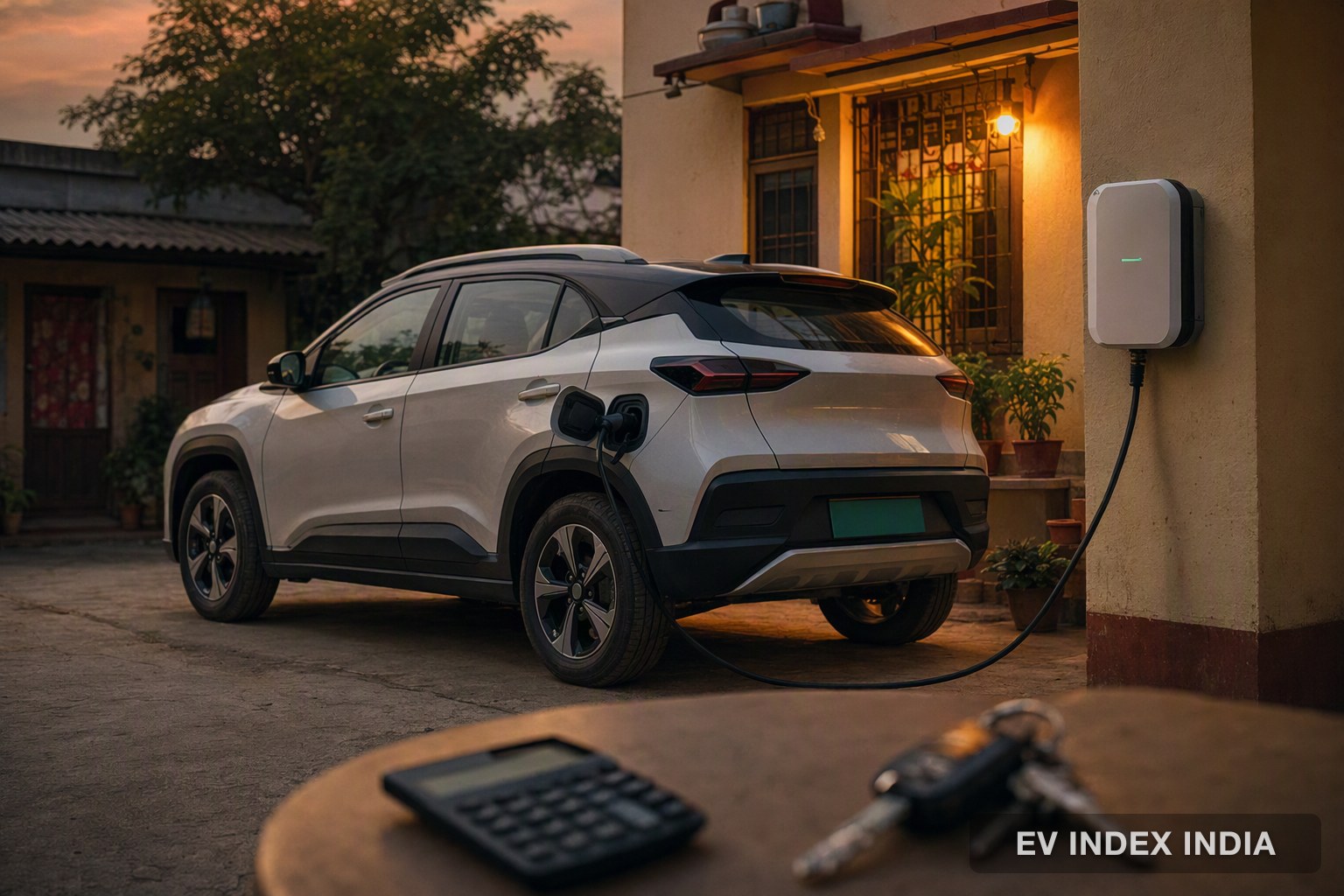
Most Affordable Way to Own an Electric SUV in India (2026)
Five electric SUVs make a realistic affordable buy, led by the Tata Punch EV at Rs 9,79,000, then the Nexon EV, MG Windsor EV, Maruti e Vitara and Hyundai Creta Electric. Battery subscription cuts the day-one price sharply on the Punch EV, Windsor EV and e Vitara but adds a per-kilometre rental, so low-mileage drivers gain most. Electric cars are taxed at 5 percent GST, while PM E-DRIVE does not cover private cars.
The cheapest way into an electric SUV in India is the Tata Punch EV on battery subscription, at around Rs 6.5 lakh plus Rs 2.6 per kilometre, against Rs 9,79,000 to buy it outright. Battery as a service is the single biggest lever on the entry price across the segment: the MG Windsor EV Excite drops to Rs 9,99,000 plus Rs 3.99 per km and the Maruti Suzuki e Vitara Delta had an introductory Rs 10,99,000 plus Rs 3.99 per km against its Rs 16,19,000 sticker. The catch is that a per-kilometre rental overtakes the upfront saving somewhere past a lakh of kilometres, so the right route depends on how far you drive.
Key takeaways
- The most affordable way to own an electric SUV combines a well-priced model with the routes that cut the real cost: battery subscription, low home-charging costs, cheaper maintenance and tax benefits.
- The Tata Punch EV has the lowest sticker price (from ₹9,79,000) and, on battery subscription, the lowest upfront price here at around ₹6.5 lakh plus ₹2.6 per km.
- The Maruti Suzuki e Vitara starts at ₹16,19,000, and its introductory battery-subscription price was ₹10,99,000 plus ₹3.99 per km.
- Battery subscription lowers the day-one price but adds a per-kilometer rental, so the cheapest route depends on how far you drive.
Most affordable electric SUVs compared
| Model | Cheapest variant | Battery | Certified range | How it keeps cost down | Price |
|---|---|---|---|---|---|
| Tata Punch EV | Smart | 30 kWh | 365 to 375 km | Lowest sticker price; subscription from about ₹6.5 lakh plus ₹2.6/km | From ₹9,79,000 |
| Tata Nexon EV | Entry trim | 30 kWh | 275 km | Lifetime battery warranty on the 45 kWh pack | From ₹12,49,000 |
| MG Windsor EV | Excite | 38 kWh | 331 km | Subscription at ₹9,99,000 plus ₹3.99/km | From ₹14,84,800 |
| Maruti Suzuki e Vitara | Delta | 49 kWh | 440 km | Introductory subscription at ₹10,99,000 plus ₹3.99/km | From ₹16,19,000 |
| Hyundai Creta Electric | Executive | 42 kWh | 420 km | A mid-size SUV with a low entry price | From ₹18,02,800 |
| All prices mentioned in this article are ex-showroom for Delhi, as on 21 October 2026, and are subject to change. Prices may also vary in other cities. Please check with your nearest dealer for current, location-specific pricing. |
Ways to make owning an electric SUV more affordable
The sticker price is only one part of what an electric SUV costs. These are the main routes that bring the total down:
- Buy on a battery subscription: With battery as a service, the battery is not part of the purchase price. You pay a lower upfront price plus a per-kilometre charge for the battery. This suits buyers who drive modestly and want a smaller first outlay. Heavy drivers should total up the per-km charge before choosing it. See which cars offer battery as a service and whether it is worth it.
- Pick the right battery size: A larger battery adds range and cost. If your daily driving is short and you charge at home, the smaller battery option can cut the price without affecting your routine. Check your real daily and occasional long-trip distances before paying for extra range.
- Charge at home: Home charging overnight is usually the cheapest way to refuel. Public fast charging typically costs more per unit. A home charger or a point on your own meter keeps the per-km cost low.
- Count running and maintenance costs: Fewer moving parts mean fewer servicing items than in a petrol or diesel SUV. Compare the full cost over the years you plan to keep the car, not only the purchase price. See the electric SUVs with the lowest maintenance cost.
- Use the tax advantage: Electric cars attract a 5 percent GST, according to the Press Information Bureau. The central PM E-DRIVE scheme covers two-wheelers, three-wheelers, trucks, buses and ambulances, not private cars. State-level incentives vary, so check your own state's current policy before you buy.
- Choose the variant that fits: Higher trims add features you may not need. Compare the lower and mid variants against the features you will use, and compare the cheapest options in the segment, such as the cheapest electric cars in India.
Add up the purchase price, the battery choice, charging costs and servicing over the years you plan to own the car, then pick the route that gives the lowest total.
5 affordable electric SUVs
These are ordered by entry price, cheapest first.
1. Tata Punch EV
Price range: From ₹9,79,000
Cheapest variant:
- Smart 30 kWh: from ₹9,79,000, or around ₹6.5 lakh plus ₹2.6 per km on battery subscription
The Punch EV is the most affordable electric SUV here, both to buy outright and on battery subscription.
How it keeps ownership affordable:
- The lowest sticker price and the lowest subscription price in this list
- A 40 kWh version with a 468 km certified range for buyers who want more range
- A lifetime high-voltage battery warranty on the 40 kWh pack for private first owners
Other features:
- A 5-star Bharat NCAP rating across all variants (July 2026)
- Six airbags and ESP as standard
Bottom line: The Punch EV is the cheapest electric SUV to own, on either route, with a 5-star rating.
2. Tata Nexon EV
Price range: From ₹12,49,000
Cheapest variant:
- Entry trim 30 kWh: from ₹12,49,000, 275 km certified
The Nexon EV is a compact SUV with a longer-range 45 kWh option, and Tata backs the 45 kWh pack with a lifetime battery warranty.
How it keeps ownership affordable:
- The 45 kWh pack carries a 489 km certified range for buyers who drive further
- A lifetime battery warranty (15 years from registration) on the 45 kWh version for private first owners
- A battery-subscription plan from around ₹8.99 lakh plus ₹4.4 per km
Other features:
- A 5-star Bharat NCAP rating across all variants
- A 350-litre boot and six airbags
Bottom line: The Nexon EV is the pick for a buyer who wants a long battery warranty and a range choice at a modest price.
3. MG Windsor EV
Price range: From ₹14,84,800, or ₹9,99,000 on battery subscription
Cheapest way in:
- Excite on battery subscription: ₹9,99,000 plus ₹3.99 per km
The Windsor EV's battery subscription cuts the Excite's upfront price by about ₹4.86 lakh.
How it keeps ownership affordable:
- A battery subscription at ₹9,99,000 plus ₹3.99 per km, with a lifetime battery warranty for the first owner
- A 52.9 kWh Pro version with a 449 km certified range, from ₹18,04,800
Other features:
- A 604-litre boot and six airbags as standard
- A 15.6-inch touchscreen from the Exclusive trim and a glass roof from the Essence trim
Bottom line: The Windsor EV suits a buyer who wants a large boot and a low upfront price, best for lower-mileage drivers.
4. Maruti Suzuki e Vitara
Price range: From ₹16,19,000
Cheapest variant:
- Delta 49 kWh: ₹16,19,000, 440 km certified
The e Vitara's entry Delta is the affordable way into Maruti's electric SUV, and it comes with a long list of safety and comfort features even at the base price.
How it keeps ownership affordable:
- A running cost of about ₹0.89 per kilometer at home charging at ₹8 per unit
- Maruti's introductory battery-as-a-service price of ₹10,99,000 plus ₹3.99 per km on the 49 kWh version (announced February 2026, so confirm the current offer with your nearest NEXA dealer). Maruti also lists an assured buyback of up to 60 percent of the value after 3 years or 45,000 km, with terms applying
- An 8-year or 1,60,000 km battery warranty
- DC fast charging from 10 to 80 percent in 45 minutes
Other features:
- Seven airbags, ESP, ISOFIX anchorages and tyre-pressure monitoring on the Delta
- A 10.1-inch touchscreen, a 10.25-inch driver display, rear AC vents and LED projector headlamps
- Suzuki Connect with remote charging, vehicle tracking and emergency alerts
- A 5-star Bharat NCAP rating
Bottom line: The e Vitara Delta is the affordable Maruti route, with a battery-subscription option and a 5-star rating. Read Maruti's battery-as-a-service announcement to know more.
5. Hyundai Creta Electric
Price range: From ₹18,02,800
Cheapest variant:
- Executive 42 kWh: from ₹18,02,800, 420 km certified
The Creta Electric is the affordable entry into a mid-size electric SUV, for a buyer who wants more space than the compact models offer.
How it keeps ownership affordable:
- A 42 kWh battery with a 420 km certified range at the lowest price
- DC fast charging from 10 to 80 percent in 39 minutes
- A 51.4 kWh version with a 510 km range for buyers who drive further
Other features:
- Six airbags and dual 10.25-inch screens on every variant
- Hyundai SmartSense Level 2 ADAS on the higher trims
- A 22-litre front storage compartment
Bottom line: The Creta Electric is the affordable step up to a mid-size SUV, with a higher entry price than the compact models.
Conclusion
The most affordable way to own an electric SUV is a well-chosen model combined with the ownership routes that lower the real cost. Before you buy:
- Decide between upfront cost and lifetime cost: A low sticker price and a low running cost can point to different cars, so weigh both over the years you will keep it.
- Check your state's EV benefits: Road-tax and registration concessions vary by state and change often, so confirm what your state offers before you buy.
- Arrange home charging if you can: The biggest running-cost saving comes from charging at home. Browse the 5-star Bharat NCAP electric cars and the best electric SUVs under 25 lakh by range to compare, and see the fastest charging electric cars.
- Consider a battery subscription only if it fits your use: It lowers the upfront cost sharply but adds a per-kilometer rental.
Add up the entry price, your state's benefits, your charging setup and how long you will keep the car, then pick the route that fits.
FAQs
What is the cheapest electric SUV in India?
The Tata Punch EV is the most affordable, from ₹9,79,000 ex-showroom, or around ₹6.5 lakh plus ₹2.6 per km on battery subscription. The MG Windsor EV (₹9,99,000 plus ₹3.99 per km) and the Maruti Suzuki e Vitara (an introductory ₹10,99,000 plus ₹3.99 per km) follow on subscription.
How does a battery subscription make an EV cheaper?
You buy the car without its battery, the most expensive part, and pay a per-kilometer rental instead. As a simplified illustration, the rental overtakes the upfront saving after roughly 1.2 lakh km on the Windsor EV Excite (₹4,85,800 saved at ₹3.99 per km) and about 1.3 lakh km on the e Vitara Delta (₹5,20,000 saved), before counting finance costs and buyback terms.
Is an electric SUV really cheaper to own than a petrol one?
Usually, for the running cost. At roughly ₹1 per kilometer for home charging against about ₹7 for petrol, a family driving 1,000 km a month saves around ₹6,000 a month on fuel, or about ₹3.6 lakh over five years. Your actual savings depend on your tariff, fuel price and driving.
What government benefits are available for electric SUVs in 2026?
EVs are taxed at a concessional 5 percent GST, which is already in the price. The central PM E-DRIVE incentive covers two-wheelers, three-wheelers, buses, trucks and ambulances, but not private electric cars. Some states offer road tax or registration concessions, so check your state's current EV policy. Source: Press Information Bureau.
Last verified: 2026-10-21