Cheapest Electric Cars in India in 2026
The cheapest EV in India in 2026 is the MG Comet EV at ₹7.00 lakh; no EV exists under ₹5 lakh. Six models fall under ₹15 lakh, including the Tata Tiago EV (₹7.99 L) and Tata Punch EV (₹9.69 L).
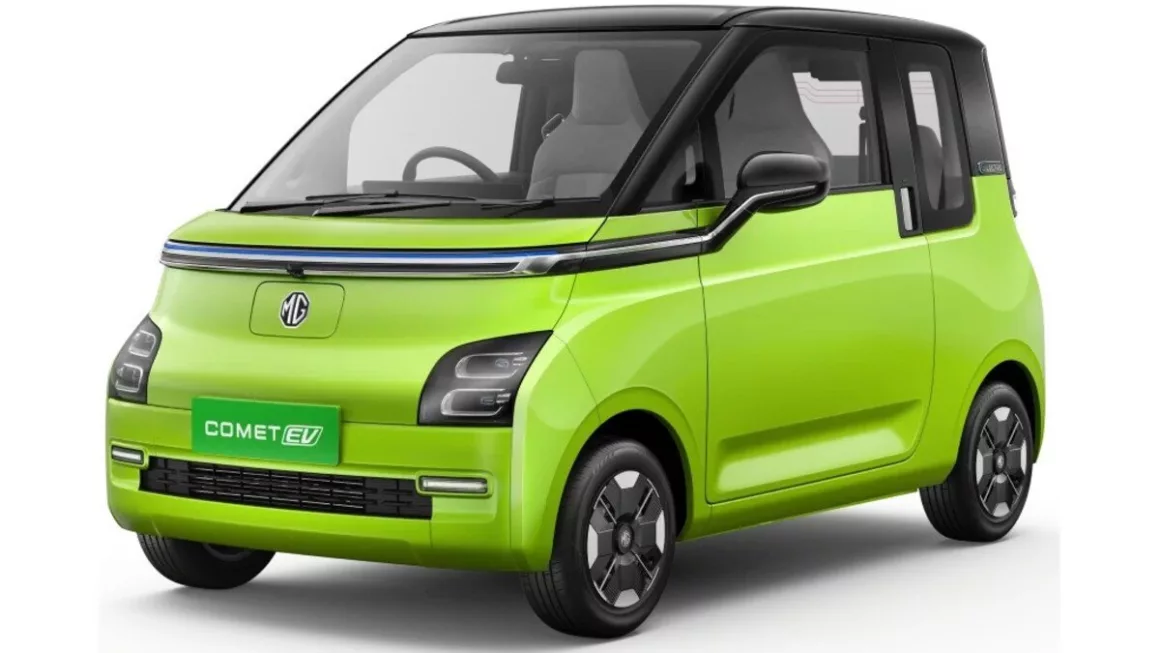
The cheapest electric car in India in 2026 is the MG Comet EV at ₹7.00 lakh (ex-showroom), with the Tata Tiago EV close behind at ₹7.99 lakh — and that is where the affordable EV list begins, because no production electric car is available under ₹5 lakh in India today despite the volume of searches for that price point. The segment has matured considerably: Autocar India's live EV tracker lists 77 electric models, but only a handful sit below ₹15 lakh in any meaningful configuration.
Below is the definitive comparison of the six most affordable electric cars in India in 2026, covering every model a budget buyer should evaluate before signing anything.
| Model | Starting Price (ex-showroom) | ARAI/MIDC Range (best variant) | Battery Size (largest) | DC Fast Charge (20–80%) | Body Type |
|---|---|---|---|---|---|
| MG Comet EV | ₹7.00 lakh | 230 km | 17.3 kWh | ~45 min (7.4 kW AC only) | Hatchback (2-door) |
| Tata Tiago EV | ₹7.99 lakh | 293 km | 24 kWh | ~60 min (DC, select variants) | Hatchback (4-door) |
| Tata Punch EV | ₹9.69 lakh | 468 km | 40 kWh | ~45 min (20–80%) | Micro-SUV |
| Tata Nexon EV (MR) | ₹12.49 lakh | 489 km (45 kWh variant) | 45 kWh | 40 min (10–80%) | Compact SUV |
| MG Windsor EV (BaaS) | ₹9.99 lakh + ₹3.9/km | 449 km | 52.9 kWh | 50 min (20–80%) | MPV-SUV |
| Maruti Suzuki e Vitara (BaaS) | ~₹12.99 lakh + battery rental | 543 km | 61 kWh | ~30 min (DC fast) | SUV |
All prices ex-showroom India. BaaS = Battery as a Service; buyer pays for car upfront, battery billed separately per km or monthly. Range figures are ARAI/MIDC certified; real-world figures are typically 15–25% lower.
Is there any electric car under ₹5 lakh in India?
No. As of May 2026, there is no production electric passenger car available under ₹5 lakh in India. This is one of the most searched queries in the EV category, but it reflects a gap the market has not yet closed. The government's FAME-II scheme and state subsidies have brought prices down, but battery costs mean the floor remains around ₹7 lakh for a new EV with a meaningful warranty.
The closest options are electric two-wheelers and three-wheelers — Ola S1 Air, Ather 450S, and various e-rickshaws — but no four-wheeled passenger car crosses that threshold. Buyers searching for "electric car under 5 lakh" are best advised to look at the MG Comet EV or Tata Tiago EV as the realistic entry points, or to explore the used EV market where early-generation Tiago EVs and Tigor EVs occasionally appear in the ₹5–6 lakh range.
Which is the cheapest electric car in India right now — MG Comet EV or Tata Tiago EV?
The MG Comet EV is the cheapest new electric car in India in 2026, starting at ₹7.00 lakh ex-showroom for the base variant, per Autocar India's affordable EV feature. The top variant reaches ₹9.97 lakh, keeping the entire range under ₹10 lakh.
The Tata Tiago EV starts at ₹7.99 lakh — ₹99,000 more than the Comet's base price — but it is a 4-door hatchback with a larger battery and more conventional packaging. These two cars define the bottom of the EV market, and choosing between them comes down to a single question: do you need four doors?
MG Comet EV — the facts
The Comet runs a 17.3 kWh LFP battery producing 42 hp and 110 Nm. MIDC-certified range is 230 km. The car's 4.2-metre turning radius is its headline city credential — tighter than almost any other car on sale in India. The cabin fits four adults in a 2-door layout, with a 10.25-inch integrated widescreen, wireless Android Auto/Apple CarPlay, and MG's iSmart connected features. Charging from 0–100% takes approximately 7 hours on a 3.3 kW AC charger or 3.5 hours on a 7.4 kW wallbox. There is no DC fast charging option, which is the Comet's most significant limitation for anyone who relies on public charging networks.
The Comet suits urban buyers who park at home or at the office overnight and whose daily commute is under 60–70 km. Its 12-inch wheels mean ride quality on broken roads is noticeably choppy. For a city-only second car, it is hard to beat on price.
Tata Tiago EV — the facts
The Tata Tiago EV is available in two battery configurations: 19.2 kWh (61 hp, 110 Nm, 221 km MIDC range) and 24 kWh (74 hp, 114 Nm, 293 km MIDC range). The larger battery variant supports DC fast charging, which is a meaningful advantage over the Comet. On the included 3.3 kW AC charger, a full charge takes roughly 8–9 hours; a DC fast charger cuts that to around 57–60 minutes for the larger pack.
The Tiago EV's ride quality is genuinely good — Autocar India's review noted it as one of the car's strongest points. The interior is reasonably feature-packed for the price, though performance is sedate: this is not an EV that accelerates with the urgency buyers sometimes expect from electric motors. Think of it as a smooth, quiet, economical city hatchback that happens to be electric.
At ₹7.99–11.14 lakh, the Tiago EV is the more practical choice for buyers who want a family-usable 4-door car and occasional DC fast-charge access.
What does the Tata Punch EV offer at ₹9.69 lakh?
The Tata Punch EV is Tata's most affordable electric SUV, starting at ₹9.69 lakh ex-showroom for the base variant (post-facelift pricing per Autocar India). The range extends to ₹12.59 lakh across six variants.
Two battery options are available: a 30 kWh pack (88 hp, 154 Nm, 375 km MIDC range) and a 40 kWh pack with higher-density prismatic LFP cells (129 hp, 154 Nm, 468 km MIDC range). The larger pack's 468 km certified range is exceptional for this price bracket — it comfortably covers a Delhi–Jaipur run on paper, though real-world range at highway speeds will be closer to 350–380 km.
Charging on the included 3.3 kW AC charger takes 11.9 hours (30 kWh) and 14.8 hours (40 kWh) from 10–100%. DC fast charging brings the 40 kWh pack from 20–80% in approximately 45 minutes. The Punch EV also brings a proper SUV stance, 5-seat capacity, and a feature set that includes ADAS on higher trims — something neither the Comet nor the Tiago EV offers. For buyers who want an SUV body style and are willing to stretch to ₹10 lakh, the Punch EV is the obvious choice. See our best electric cars to buy in India in 2026 guide for a broader comparison.
Is the Tata Nexon EV still affordable in 2026?
The Tata Nexon EV starts at ₹12.49 lakh ex-showroom — the same entry price as the Tata Tigor EV — but it offers considerably more car for the money. It is available in Medium Range (MR: 30 kWh, 129 hp, 275 km MIDC range) and long-range (45 kWh, 144 hp, 489 km MIDC range) configurations.
The Nexon EV's 489 km certified range on the 45 kWh variant is the highest in this sub-₹15 lakh category, per Autocar India's under-₹15 lakh EV roundup. DC fast charging takes 40 minutes (10–80%) on the 45 kWh pack and 56 minutes on the 30 kWh. AC charging from 10–100% takes 6.36 hours and 4.18 hours respectively.
Autocar India's reviewers describe the Nexon EV as "an all-rounder in the compact segment, with good real-world range, a feature-packed interior and strong performance." It is the most complete package under ₹15 lakh if you can stretch to the ₹12.49 lakh entry point. The Nexon EV also has one of the widest service networks among affordable EVs in India — relevant if you are buying outside a metro. For a deeper look at after-sales coverage, see which electric SUV has the best after-sales service network in India.
How does the MG Windsor EV's BaaS pricing change the value equation?
Battery as a Service (BaaS) is a purchase model where the buyer pays for the vehicle body upfront at a reduced price, while the battery is billed separately — either as a monthly rental or on a per-kilometre basis. MG Motor India pioneered this model in India with the Windsor EV, and it changes how you calculate affordability.
The MG Windsor EV without BaaS starts at ₹13.99 lakh (38 kWh) and goes to ₹18.49 lakh (52.9 kWh Pro). Under BaaS, the entry price drops to ₹9.99 lakh, with battery usage billed at ₹3.9–4.5 per km depending on the variant, per Autocar India's under-₹15 lakh EV guide.
This makes the Windsor EV's upfront cost competitive with the Tata Punch EV, but the ongoing per-km charge means total cost of ownership depends entirely on how much you drive. At 1,000 km/month, the battery charge adds ₹3,900–4,500/month on top of your EMI — roughly equivalent to a petrol car's fuel bill for the same distance. At lower mileage (500 km/month), BaaS becomes genuinely economical. At higher mileage (2,000+ km/month), the outright purchase price often works out cheaper over a 5-year period.
The Windsor EV's hardware justifies the interest: 136 hp motor in both variants, 332 km range (38 kWh) and 449 km (52.9 kWh), DC fast charging in 45–50 minutes (20–80%), and a genuinely roomy cabin that Autocar India's review called "practical and relaxed." The Windsor was the highest-selling EV in India in 2025, which speaks to how well the BaaS model resonates with buyers who want a larger car without a large upfront outlay. For a detailed breakdown of BaaS mechanics, see our guide on electric cars that offer Battery as a Service in India.
Why does the Maruti Suzuki e Vitara matter for budget EV buyers?
The Maruti Suzuki e Vitara is not a cheap car in outright terms — it is priced at ₹15.99–19.79 lakh ex-showroom across three variants, per Autocar India's EV listings. But its BaaS pricing makes it the most affordable entry point into the EV segment from a top-3 OEM by volume in India, and that distinction matters for buyers who factor in brand trust, service network density, and resale value.
Maruti Suzuki's BaaS pricing for the e Vitara brings the upfront cost down to approximately ₹12.99 lakh (exact pricing varies by state and variant), with the battery billed separately. This positions the e Vitara's BaaS entry price below the Nexon EV's starting price — a remarkable proposition given the e Vitara's larger 61 kWh battery and 543 km ARAI-certified range on the top variant.
The e Vitara is built on Suzuki's HEARTECT-e platform, shared with the Toyota Urban Cruiser EV. It offers 440–543 km certified range across variants and seats five in a proper SUV body. Maruti's 4,000+ service touchpoints across India give the e Vitara a service network advantage that no other affordable EV can match — the Tata Nexon EV comes closest with Tata's own extensive network, but Maruti's reach into Tier-2 and Tier-3 cities is unmatched.
For a first-time EV buyer in a smaller city who wants the reassurance of a Maruti badge and a nationwide service network, the e Vitara's BaaS pricing is a genuinely compelling proposition. The car also brings features like a panoramic sunroof, ADAS, and a premium interior that budget EVs like the Tiago EV and Comet cannot offer.
One caveat: the e Vitara is a newer launch, and long-term ownership data is still accumulating. Buyers who prioritise proven reliability may want to wait for 12–18 months of real-world ownership reports before committing.
What does BaaS actually cost over 5 years — is it cheaper than buying outright?
BaaS is worth modelling carefully before signing. Here is a worked example using the MG Windsor EV at ₹3.9/km battery charge:
Scenario: 1,200 km/month (14,400 km/year)
- BaaS upfront: ₹9.99 lakh
- Battery charge per year: 14,400 × ₹3.9 = ₹56,160
- Battery charge over 5 years: ₹2,80,800
- Total 5-year cost (excluding EMI interest): ₹9.99 lakh + ₹2.81 lakh = ₹12.80 lakh
Outright purchase (38 kWh Windsor EV): ₹13.99 lakh
At 1,200 km/month, BaaS saves approximately ₹1.19 lakh over 5 years versus buying outright — before accounting for the time value of money and EMI interest on the higher outright loan. At 2,000 km/month, the calculation flips: BaaS costs more over 5 years than the outright price.
The break-even point for the Windsor EV is roughly 1,500–1,600 km/month. Below that, BaaS is cheaper. Above it, outright purchase wins. For the Maruti e Vitara, the same logic applies — check the per-km rate carefully and map it to your actual monthly mileage before deciding.
One important note: under BaaS, the battery is owned by the manufacturer, which means battery replacement risk sits with them, not you. This is a meaningful risk transfer for buyers worried about long-term battery degradation.
How much cheaper is an EV to run than a petrol car in 2026?
Running cost is the per-kilometre cost of energy consumption, excluding insurance, maintenance, and depreciation. On this measure, EVs have a clear and consistent advantage over petrol cars in India.
Petrol car benchmark: A Maruti Swift with 22 km/l fuel efficiency costs approximately ₹4.50–5.00/km at current petrol prices of ₹99–105/litre in major cities.
EV running costs by model:
- MG Comet EV: 17.3 kWh battery, ~230 km range. At ₹8/kWh (home charging), cost per km ≈ ₹0.60. Even at ₹15/kWh (public DC charging), cost per km ≈ ₹1.13.
- Tata Tiago EV (24 kWh): ~293 km range. Home charging cost per km ≈ ₹0.65. Public DC charging ≈ ₹1.23/km.
- Tata Punch EV (40 kWh): ~468 km range. Home charging ≈ ₹0.68/km. Public DC ≈ ₹1.28/km.
- MG Windsor EV (52.9 kWh): ~449 km range. Home charging ≈ ₹0.94/km. BaaS rate: ₹3.9–4.5/km (includes battery amortisation, not just energy).
- Maruti e Vitara (61 kWh): ~543 km range. Home charging ≈ ₹0.90/km.
Even at public charging rates, EVs cost 60–75% less per kilometre than a comparable petrol car. The savings are most pronounced for buyers who can charge at home — a ₹7.99 lakh Tiago EV charging at home costs roughly ₹0.65/km versus ₹4.50–5.00/km for a petrol hatchback. Over 15,000 km/year, that is a saving of approximately ₹57,000–65,000 annually on fuel alone.
Maintenance costs add to the advantage. EVs have no engine oil changes, no timing belt, no clutch, and fewer brake wear events (regenerative braking reduces pad wear). Annual service costs for budget EVs typically run ₹3,000–6,000 versus ₹8,000–15,000 for equivalent petrol cars. For a detailed look at maintenance economics, see which electric SUVs in India have the lowest maintenance cost.
What government subsidies are available on cheap EVs in India in 2026?
Central government support for EVs in India operates through two primary channels in 2026: the PM E-DRIVE scheme (which replaced FAME-II) and the Production Linked Incentive (PLI) scheme for battery manufacturing.
PM E-DRIVE scheme: The scheme provides demand incentives for electric two-wheelers and three-wheelers primarily, with limited direct subsidies for passenger cars. The central government's direct consumer subsidy on passenger EVs has been reduced compared to the FAME-II era, but state-level incentives remain significant.
State subsidies (selected):
- Delhi: Subsidy of ₹1.5 lakh on electric cars plus waiver of road tax and registration fees. This effectively reduces the Tiago EV's on-road price by ₹2–2.5 lakh compared to a petrol equivalent.
- Maharashtra: Road tax exemption on EVs (saves ₹30,000–60,000 depending on car price).
- Gujarat: Subsidy of ₹1.5 lakh on EVs under ₹15 lakh plus road tax exemption.
- Tamil Nadu: Road tax exemption for EVs.
- Karnataka: Road tax and registration fee waiver.
GST advantage: EVs attract 5% GST versus 28% + cess (totalling 43–48%) on petrol cars. This is already baked into the ex-showroom prices quoted above, but it is a structural cost advantage that makes EVs more price-competitive than the sticker price gap suggests.
Buyers should check their state's current EV policy before purchase — incentive structures change annually, and some states have exhausted their subsidy budgets mid-year. The Society of Manufacturers of Electric Vehicles (SMEV) maintains an updated state-wise subsidy tracker.
What do you actually compromise on when buying a cheap EV in India?
Buying an EV under ₹12 lakh in India means accepting real trade-offs. Understanding these upfront prevents buyer's remorse.
Range anxiety is real at this price: The MG Comet EV's 230 km certified range translates to roughly 160–180 km in real-world urban use with air conditioning. The Tata Tiago EV's 293 km certified range gives approximately 210–230 km real-world. These numbers work for daily city commutes of 40–60 km, but they leave little buffer for unplanned detours or highway trips. If you regularly drive 100+ km in a day, the Punch EV's 40 kWh pack is the minimum you should consider.
Charging infrastructure dependency: Budget EVs make the most sense when you have reliable home or workplace charging. Public DC fast charging is available in most metros but remains patchy in Tier-2 cities. The Comet EV's lack of DC fast charging is a genuine constraint — if your apartment society does not allow EV charging installation, the Comet becomes very difficult to own. See our guide on which electric SUVs are most practical for India's current charging infrastructure.
Safety ratings: None of the cars under ₹10 lakh — the Comet EV or base Tiago EV — have been tested by Bharat NCAP or Global NCAP as of May 2026. The Tata Punch EV has received a 5-star Bharat NCAP rating on its ICE variant, which provides some confidence in the platform's structural integrity, though the EV variant has not been independently tested. If safety ratings are a priority, the Tata Nexon EV (5-star Global NCAP on the ICE platform) and the Maruti e Vitara (built on a newer, stiffer platform) are better choices. See our 5-star Bharat NCAP electric cars guide for a full breakdown.
Features and ADAS: Budget EVs are light on driver assistance technology. The Tiago EV and Comet EV have no ADAS. The Punch EV offers ADAS on higher trims. If features like lane-keep assist, automatic emergency braking, or adaptive cruise control matter to you, you need to spend ₹12 lakh or more — and even then, only select variants of the Nexon EV and e Vitara offer meaningful ADAS packages. Our best electric cars with ADAS in India guide covers this in detail.
Highway performance: Budget EVs are tuned for city efficiency, not highway cruising. The Comet EV's 42 hp motor is genuinely strained at 100 km/h. The Tiago EV is more composed at highway speeds but still not comfortable for sustained 120 km/h driving. The Punch EV's 129 hp (40 kWh variant) handles highways confidently. If you plan long-distance trips, see best electric cars for long trips in India in 2026.
Boot space: The Comet EV's 2-door layout and tiny boot (approximately 100 litres) make it impractical for anything beyond a laptop bag and a few grocery bags. The Tiago EV's boot is similarly modest at around 240 litres. The Punch EV's raised SUV body gives it a more usable 366-litre boot.
Which cheap EV is right for which buyer — a quick decision guide
Buy the MG Comet EV (from ₹7.00 lakh) if: You live in a metro, drive under 50 km/day, have home charging access, want the absolute lowest purchase price, and primarily need a second car or a solo commuter. The Comet's 4.2-metre turning radius makes it the easiest car to park in dense urban environments. Accept the 2-door layout and the absence of DC fast charging.
Buy the Tata Tiago EV (from ₹7.99 lakh) if: You want a 4-door hatchback with a slightly longer range, occasional DC fast-charge access (24 kWh variant), and a more conventional family car feel. The Tiago EV is the better all-rounder between the two sub-₹8 lakh options and suits first-time EV buyers who want a familiar hatchback format.
Buy the Tata Punch EV (from ₹9.69 lakh) if: You want an SUV stance, 5-star safety confidence (ICE platform), genuine highway capability, and the longest range in this price bracket (468 km certified). The Punch EV is the most complete package under ₹10 lakh and the one we would recommend most broadly to buyers who are undecided.
Consider the MG Windsor EV via BaaS (from ₹9.99 lakh + ₹3.9/km) if: You drive under 1,500 km/month, want a spacious MPV-SUV body, and are comfortable with the per-km billing model. The Windsor's roomy cabin and 449 km range make it a strong family car choice if the BaaS maths works for your usage pattern.
Consider the Tata Nexon EV (from ₹12.49 lakh) if: You want the best-proven affordable EV in India with the widest service network, up to 489 km certified range, and a feature-rich interior. The Nexon EV is the segment's benchmark for a reason — it is the car that made affordable EVs mainstream in India.
Consider the Maruti Suzuki e Vitara via BaaS (from ~₹12.99 lakh + battery rental) if: You want Maruti's 4,000+ service touchpoints, a proper SUV, 543 km certified range, and the reassurance of a top-3 OEM. The e Vitara's BaaS pricing makes it the most affordable entry point into the EV segment from Maruti Suzuki — a brand that has historically dominated India's mass-market. For buyers in Tier-2 and Tier-3 cities where Tata and MG service centres are sparse, the e Vitara's network advantage is a decisive factor.
What should you check before buying any cheap EV in India?
Home charging feasibility: This is the single most important pre-purchase check. Call your apartment society or housing board and confirm whether EV charging installation is permitted. Without home charging, the economics of EV ownership deteriorate significantly — you become dependent on public infrastructure, which adds time and cost.
State subsidy status: Confirm with your state's transport department or the dealership whether the current subsidy scheme is active and funded. Some states exhaust their EV subsidy budgets before the financial year ends.
Real-world range for your commute: Take a test drive on your actual commute route, not the dealer's demo loop. Ask the salesperson to show you the battery consumption on the in-car display. A 30 km test drive with AC on will give you a reliable extrapolation of real-world range.
Warranty terms: Battery warranty is the most important warranty clause for an EV. Tata offers an 8-year/1.6 lakh km battery warranty on its EVs. MG offers 8 years/1.5 lakh km on the Comet and Windsor. Maruti's e Vitara battery warranty terms should be confirmed with the dealer at the time of purchase.
Resale value: Budget EVs have a shorter resale value track record than petrol cars. Tata's EVs (Nexon, Punch, Tiago) have the most established used market. MG's resale values are improving but still lag Tata. The Maruti e Vitara, being new, has no resale data yet — though Maruti's brand equity historically supports strong residuals.
For buyers who want to go deeper on range comparisons across the full EV market, our electric cars with the best real-world range in India in 2026 guide covers 20+ models with real-world data. And if fast charging is a priority, see fastest charging electric cars in India in 2026.
The affordable EV segment in India in 2026 is the most competitive it has ever been. Six credible models now sit under ₹15 lakh in some configuration, and the MG Comet EV at ₹7.00 lakh has definitively answered the question of how low the floor can go — for now. The ₹5 lakh barrier will likely fall within the next two to three years as battery costs continue to decline, but for buyers making a decision today, the Comet, Tiago EV, and Punch EV represent a genuinely strong set of options that make EV ownership accessible to a far wider slice of Indian buyers than was possible even two years ago.
Last verified: 2026-05-04
Sources
- Electric Cars in India (April 2026), Best EV Car Prices — Autocar India
- 5 most affordable electric cars on sale in India — Autocar India
- Every electric car under Rs 15 lakh — Autocar India
- Tata Tiago EV — Autocar India model page
- Tata Punch EV — Autocar India model page
- MG Comet EV — Autocar India model page
- MG Windsor EV — Autocar India model page
- Maruti Suzuki e Vitara — Autocar India model page
- Tata Nexon EV — Autocar India model page
- Affordable EV Cars in India 2026 — MG Motor India
- EV Cars Under 10 Lakhs in India: Complete Buying Guide — MG Motor India
- Compact Electric Cars in India 2026: A Complete Buyer's Guide — MG Motor India
- Electric cars under 10 lakh in India 2026 — Team-BHP