
VinFast's VF5 facelift design patent filed in India signals a likely launch around ₹12 lakh, targeting the Tata Punch EV, XUV 3XO EV, and Maruti e Vitara in the budget compact EV space.
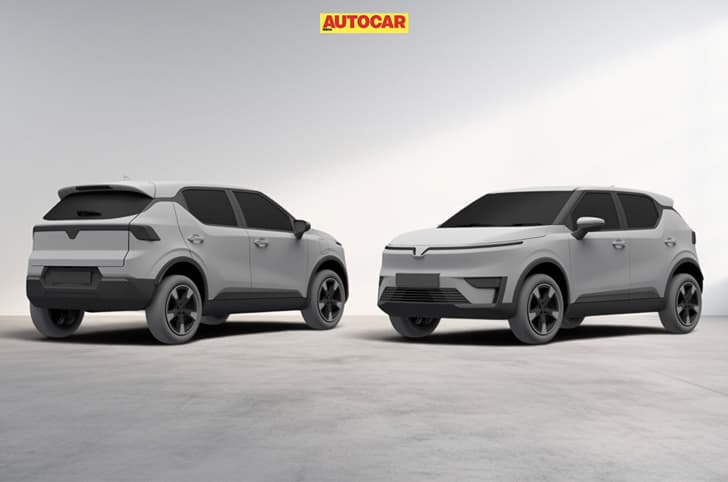
VinFast filed a design patent for the facelifted VF5 electric SUV in India in October 2026, previewing repositioned headlights, a new bonnet, redesigned LED tail-lights, and fresh bumpers — the clearest signal yet that the Vietnamese EV maker is preparing to bring the refreshed compact EV to Indian roads. The India-spec VF5 is expected to be priced at around ₹12 lakh (ex-showroom), which would slot it squarely into one of the most competitive segments in Indian EVs right now.
A design patent filing is a formal intellectual property registration that protects the ornamental or aesthetic aspects of a product — in this context, a strong procedural indicator that a manufacturer intends to commercialise a product in the jurisdiction where the patent is filed.
Before diving into what the facelift changes, here is how the VF5 stacks up against its most likely rivals in the Indian market:
| Model | Expected/Current Price (ex-showroom) | Battery Options | Claimed Range (NEDC/MIDC) | Key Differentiator |
|---|---|---|---|---|
| VinFast VF5 Facelift | ~₹12 lakh (expected) | 29.6 kWh / 37.23 kWh | 268 km / 326 km | Fresh facelift design, fleet + private play |
| Tata Punch EV | ₹9.79 – ₹12.99 lakh | 25 kWh / 35 kWh | ~315 km / ~421 km | Established service network, 5-star Bharat NCAP |
| Tata Nexon EV | ₹12.49 – ₹17.69 lakh | 30.2 kWh / 40.5 kWh | ~325 km / ~489 km | Segment benchmark, widest charging space |
| Mahindra XUV 3XO EV | ₹13.89 – ₹14.96 lakh | 34.5 kWh / 49 kWh | ~375 km / ~461 km | ADAS suite, larger battery at segment entry |
| Maruti Suzuki e Vitara | ~₹17–₹19 lakh (expected) | 49 kWh / 61 kWh | ~500 km+ (est.) | Maruti service network, premium compact SUV |
The Maruti Suzuki e Vitara is Maruti Suzuki's first battery-electric SUV for India, built on the Suzuki-Toyota BEV platform and expected to arrive in the ₹17–19 lakh bracket — a step above the VF5's anticipated price point, but relevant because it will anchor buyer expectations for what a "serious" compact electric SUV should offer in terms of range and brand trust.
What exactly does the VF5 facelift design patent reveal?
Filed and reported by Autocar India on 27 October 2026, the patent shows a front end substantially reworked compared to the current global-spec VF5. The headlights are sleeker and sit lower on the fascia. The thick black sections that previously sat beneath the headlights have been slimmed down and now blend into a blacked-out lower bumper section, giving the front a more modern, edgy character.
The bonnet is new — flatter and more upright than the current model's swooping nose. This aligns with observations from a heavily camouflaged VF5 prototype spotted testing on Indian roads in August 2026, where spy shot analysts noted the more upright clamshell bonnet and lower-mounted headlamp positioning suggesting a split-headlamp design.
At the rear, chunkier, connected LED tail-lights replace the current setup. The reverse light and turn indicator, which live on the bumper in the current model, are now integrated within the tail-lamp cluster itself — a cleaner, more premium look. Spy shots from Vietnam (where the VF5 facelift was photographed without camouflage in September 2026) also confirmed VinFast lettering at the centre of the tailgate and a VF5 badge at the far right corner.
The wheel design appears revised, though the size remains at 16 inches — the same as the current global model.
How has the interior changed on the VF5 facelift?
Interior changes prove more significant than the exterior refresh. Spy shots from Vietnam, corroborated by Autocar India's report, reveal a more upright dashboard layout dominated by a larger, free-standing infotainment touchscreen. The current global-spec VF5 pairs an 8-inch infotainment display with a separate 7-inch digital driver's display. The facelift drops the dedicated driver's display entirely — the infotainment screen now doubles as the instrumentation screen, a design choice that keeps costs down but may divide opinion among buyers who prefer a traditional instrument cluster.
The steering wheel is redesigned with a two-spoke layout featuring a flattened top and bottom — sportier than the current unit. More aggressive creases define the centre console, which now includes a rotary drive selector dial (replacing a more conventional shifter) and two cup holders. Seat upholstery has been upgraded from fabric to leatherette on the spied model, representing a meaningful cabin quality improvement for a car expected at ₹12 lakh.
The cabin colour scheme on the spied Vietnam model is all-black, consistent with the current Vietnam-spec VF5's interior theme.
What powertrain options will the India-spec VF5 carry?
VinFast has not officially confirmed the powertrain specification for the India-spec VF5 facelift. Based on what is available globally, two battery options exist:
- 29.6 kWh battery paired with a front-mounted motor producing 90–95 hp and 135 Nm, with a claimed NEDC range of 268 km. This is the spec sold in Indonesia.
- 37.23 kWh battery paired with a front-mounted motor producing 134–136 hp and 135 Nm, with a claimed NEDC range of 326 km. This is the spec sold in the Philippines and other markets.
The VinFast Philippines page lists 0–100 km/h acceleration at 10.9 seconds for the larger battery variant, and DC fast charging from 10% to 70% in under 33 minutes.
NEDC range figures derive from the New European Driving Cycle, a laboratory test protocol that typically overstates real-world range by 20–30% compared to actual Indian driving conditions. Buyers should factor this in when comparing the VF5's claimed 326 km against rivals' MIDC-rated figures.
Which battery reaches India will significantly determine the VF5's competitive positioning. If VinFast brings only the 29.6 kWh variant, the car competes with the Tata Punch EV's base variants. The 37.23 kWh option would position it closer to the Nexon EV's entry point. Given the ₹12 lakh expected price, the 37.23 kWh spec seems more likely for the primary India variant — though this remains unconfirmed.
Why is the design patent filing significant for Indian buyers?
A design patent filing in India is not a launch confirmation, but it is a meaningful procedural step. Companies typically file design patents in markets where they intend to sell a product, because the patent protects the visual design from being copied by local manufacturers once the product is commercialised.
This filing follows a chain of evidence building through 2026: VinFast was reported to be considering the VF5 for India earlier this year, a test mule was spotted in Bengaluru in August 2026, and now the design patent has been filed. VinFast also intends to use a fleet version of the VF5 as the basis for its Green SM ride-hailing service in India, which means the company has dual commercial motivation — private sales and fleet deployment — to bring the car here.
The combination of private buyer appeal and fleet utility is a strategy VinFast has already deployed with the VF MPV7 in India, and it could give the VF5 a volume base that helps the brand establish service infrastructure faster than a purely retail approach would allow.
How does the VF5 facelift compare to the Tata Punch EV and Nexon EV?
The Tata Punch EV is the most direct price competitor. It starts at ₹9.79 lakh and tops out at ₹12.99 lakh (ex-showroom), offering 25 kWh and 35 kWh battery options with MIDC-rated ranges of approximately 315 km and 421 km respectively. Critically, the Punch EV carries a 5-star Bharat NCAP safety rating and benefits from Tata's extensive service network across India — two factors that matter enormously to first-time EV buyers.
The VF5 has not been crash-tested by any NCAP organisation as of October 2026. This is a genuine gap that VinFast will need to address if it wants to compete seriously with the Punch EV among safety-conscious buyers. The global-spec VF5 does include 6 airbags, ABS with EBD, ESC, hill start assist, and ISOFIX child seat anchorages — a reasonable safety suite for the price — but the absence of an independent crash test result leaves a question mark.
The Tata Nexon EV (₹12.49–₹17.69 lakh) sits at a higher price point but offers a significantly larger 40.5 kWh top-spec battery, a well-established charging space, and Tata's after-sales depth. If the VF5 is priced at ₹12 lakh with the 37.23 kWh battery, it would undercut the Nexon EV's entry price while offering comparable range on paper — a compelling proposition if VinFast can demonstrate reliability and service coverage.
The Mahindra XUV 3XO EV (₹13.89–₹14.96 lakh) brings a more feature-rich package including ADAS, but at a price premium over the expected VF5. For buyers who want maximum features per rupee, the XUV 3XO EV is a strong case; for buyers who prioritise upfront cost, the VF5 could be the answer.
Where does the Maruti Suzuki e Vitara fit in this picture?
The Maruti Suzuki e Vitara is expected to arrive in a higher price bracket — approximately ₹17–19 lakh — which means it does not directly compete with the VF5 on price. However, it matters to this conversation because it will define what Indian buyers consider the "gold standard" for a compact electric SUV from a trusted mass-market brand.
The e Vitara is built on the Suzuki-Toyota BEV platform and is expected to offer battery options of 49 kWh and 61 kWh, with estimated ranges exceeding 500 km on the larger pack. It will also carry the weight of Maruti's 4,000+ service centre network — the most extensive in India. For buyers considering the VF5 facelift at ₹12 lakh, the e Vitara at ₹17–19 lakh represents the "stretch" option: more range, more brand trust, more service coverage, but at a significantly higher cost.
The VF5 facelift positions itself as the alternative for buyers who want a fresh, modern-looking electric SUV without stretching their budget to e Vitara territory. Whether that trade-off makes sense depends heavily on how VinFast prices the car, which battery it brings, and how quickly it builds service infrastructure. You can explore the most affordable ways to own an electric SUV in India to understand how total cost of ownership — not just sticker price — should factor into this decision.
What are the VF5 facelift's dimensions and how does it fit Indian roads?
The current global-spec VF5 measures 3,967 mm in length, 1,723 mm in width, 1,579 mm in height, and has a 2,514 mm wheelbase. Ground clearance is 160 mm, and boot space is 260 litres with both rows up — modest by Indian SUV standards but acceptable for an urban-focused compact.
The India-spec VF5 is expected to remain under 4 metres in length, which is significant because sub-4-metre SUVs attract a lower GST rate in India (28% + 1% cess versus 28% + 17% cess for vehicles over 4 metres). At 3,967 mm, the current model is just 33 mm under that threshold — close enough that VinFast will almost certainly keep the India-spec version within the sub-4-metre bracket to maintain pricing competitiveness.
The 160 mm ground clearance is on the lower side for Indian road conditions, where speed bumps and potholed roads demand at least 165–170 mm ideally. This is worth monitoring as VinFast finalises the India spec — the company may tune the suspension setup for local conditions, as it has done with other markets.
What does VinFast's broader India strategy tell us about the VF5's prospects?
VinFast's India journey has been methodical rather than splashy. The company launched the larger VF6 and VF7 SUVs first to establish a premium brand footprint, then the MPV7 to target fleet and family buyers. The VF5 represents the brand's push into volume territory — the segment where the real numbers are in India's EV market.
The dual strategy of private sales and fleet deployment through the Green SM ride-hailing service is smart. Fleet vehicles accumulate mileage quickly, which means VinFast will get real-world reliability data from Indian roads faster than a purely retail approach would provide. It also means the brand builds a visible presence on Indian streets — every Green SM cab is a moving advertisement for the VF5.
The after-sales service network remains the biggest question mark for any new EV entrant in India. Tata and Mahindra have years of head start in building EV-capable service centres. VinFast will need to demonstrate a credible service expansion plan alongside the VF5 launch to convert interest into purchase decisions among cautious first-time EV buyers.
Should budget EV buyers wait for the VF5 facelift?
The honest answer is: it depends on your timeline and risk tolerance. If you need an EV now and value service network depth and crash-test credentials, the Tata Punch EV is the safer choice at a similar price point. If you can wait and are open to an alternative from a brand still building its India presence, the VF5 facelift offers a genuinely fresh design, an upgraded interior, and competitive expected pricing.
The design patent filing and test mule sightings suggest a 2026–2027 launch window is realistic, but VinFast has not confirmed a date or final specification. Pricing at ₹12 lakh is an expectation, not a commitment — and the actual price will depend on which battery VinFast brings and how much local content it can incorporate to manage import duties.
For buyers exploring the best electric cars under ₹20 lakhs in India in 2026, the VF5 facelift is worth tracking as a potential addition to the shortlist — but not yet a car to wait for at the expense of missing out on today's proven options.
The sub-₹15 lakh compact EV segment is the fastest-growing price band in India's electric passenger vehicle market, where buyers are making their first switch from ICE to electric and prioritising total cost of ownership, charging convenience, and service accessibility over outright performance. The VF5 facelift, if it arrives with the right spec and price, could meaningfully expand the choices available in this segment — and that competition will ultimately benefit every buyer, regardless of which car they choose.
Sources
- Vinfast VF5 facelift previewed via design patent | Autocar India
- Vinfast VF5 Spied Testing in India | Autocar India
- Vinfast VF5 – Expected Price, Launch Date & Specs | Autocar India
- New VinFast VF 5 Spied In Bengaluru – Small Electric SUV | MyCarJunction
- VinFast VF 5 Official Page | VinFast Philippines
- Most Affordable Way to Own an Electric SUV in India (2026) | EV Index India
- Which 5-Star Bharat NCAP Electric Cars in India Are Worth Buying in 2026? | EV Index India
- Which Electric SUV Has the Best After-Sales Service Network in India? | EV Index India
- Best Electric Cars Under ₹20 Lakhs in India in 2026 | EV Index India