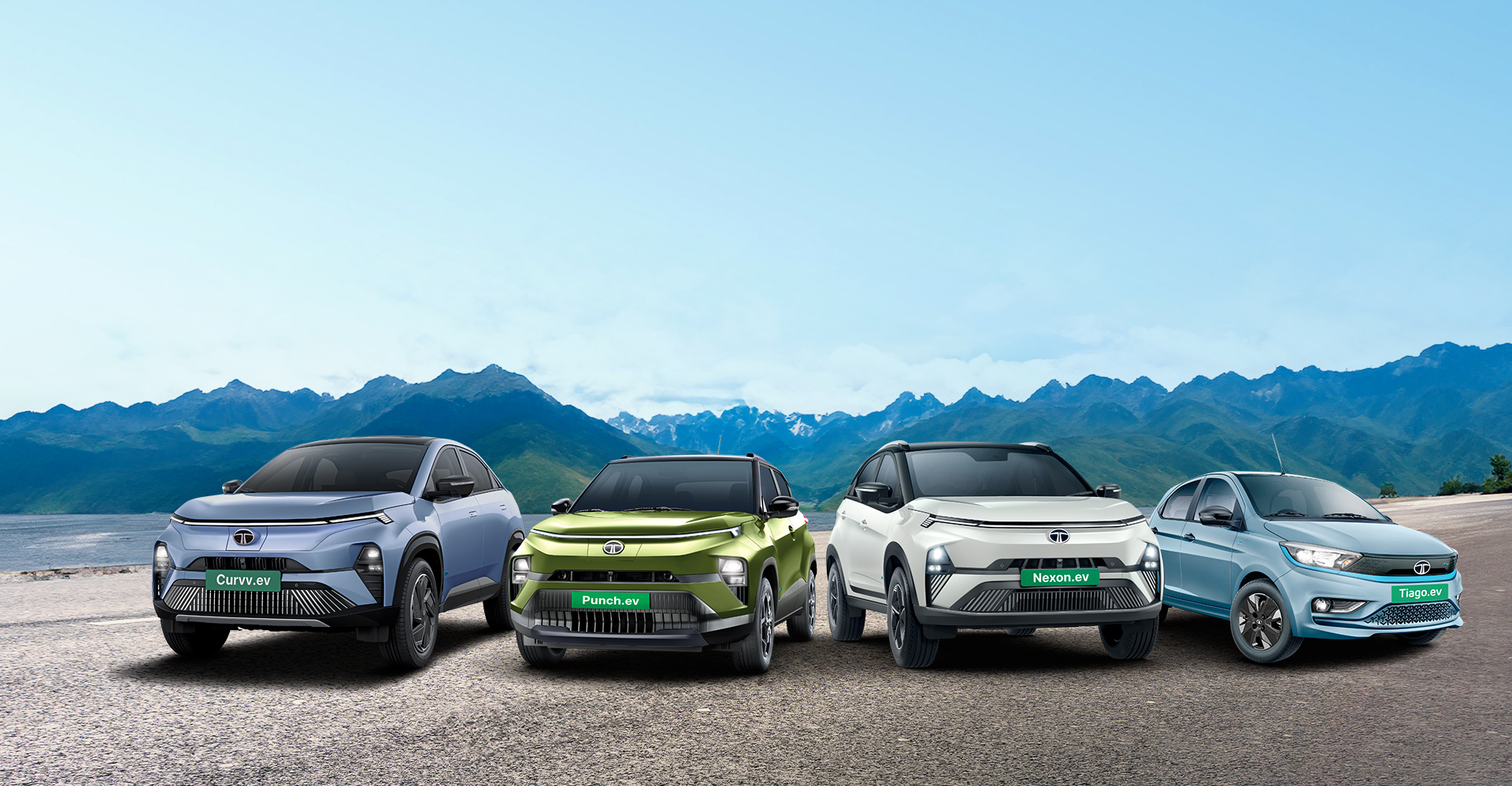

The Tata Tiago EV leads on range and service network; the Citroen eC3X wins on cabin space and design. Both offer BaaS below ₹8 lakh, making them India's most affordable EVs in 2026.
Citroen eC3X vs Tata Tiago EV: Which Budget EV Should You Buy in 2026?
India's most affordable electric passenger cars in 2026 are the Citroen eC3X and Tata Tiago EV, both priced under ₹10 lakh at their base variants. With Battery-as-a-Service (BaaS) options now available, entry prices have dropped below ₹8 lakh. After receiving updates in 2026 — including revised range figures, new features, and the BaaS option — these two models have renewed the debate over which budget EV delivers genuine daily-use value for Indian buyers.
Here is a head-to-head snapshot before we go deeper:
| Specification | Citroen eC3X (2026) | Tata Tiago EV (2026) |
|---|---|---|
| Starting price (own battery) | ~₹9.00 lakh (ex-showroom) | ~₹8.69 lakh (ex-showroom) |
| Starting price (BaaS) | ~₹7.50 lakh (ex-showroom) | ~₹7.49 lakh (ex-showroom) |
| Battery capacity | 29.2 kWh | 19.2 kWh / 24 kWh |
| ARAI-certified range | ~320 km | ~250 km / ~315 km |
| Motor output | 57 kW (77 PS) | 55 kW (74 PS) |
| DC fast charging | 30 kW (0–80% ~57 min) | 50 kW (0–80% ~35 min) |
| Boot space | 315 litres | 242 litres |
| NCAP rating | Not rated (Bharat NCAP) | 4-Star Bharat NCAP |
| Warranty (battery) | 8 years / 1.6 lakh km | 8 years / 1.6 lakh km |
Both cars target first-time EV buyers, urban commuters, and households looking for a second car. The differences, however, are meaningful enough to matter depending on how you use the car.
What exactly is Battery-as-a-Service and how does it work on these two EVs?
Battery-as-a-Service (BaaS) is a purchase model where the buyer acquires the vehicle without the battery pack, paying a lower upfront price, and then leases the battery from the manufacturer or a financing partner on a monthly subscription. The monthly fee is typically structured per kilometre driven or as a flat monthly rental, and the battery remains the property of the brand or its financial partner.
For a detailed breakdown of how BaaS works across all Indian EVs, see our guide on which electric cars offer Battery-as-a-Service in India and whether they are worth buying.
Citroen offers BaaS through Stellantis Financial Services India, bringing the ex-showroom price down by roughly ₹1.5 lakh compared to the outright purchase variant. The monthly rental is approximately ₹3,500–₹4,000 for a standard usage plan of around 1,500 km per month. Citroen covers battery health guarantees and replacement under the subscription, which removes range-anxiety about long-term degradation.
Tata's BaaS offering comes via Tata Capital with a similar structure — the upfront price drops by about ₹1.2–₹1.5 lakh, with a monthly rental starting around ₹3,000 for the 19.2 kWh pack. Tata's advantage lies in its existing Ziptron battery warranty infrastructure and larger service network, giving buyers more confidence that the battery-swap or replacement process will be hassle-free.
The critical question is whether BaaS rental costs over a 5-year ownership period outweigh the upfront savings. At ₹3,500/month, BaaS adds ₹2.1 lakh over five years. If the battery's residual value in an outright purchase scenario is lower than that — which is likely given EV battery depreciation — BaaS can make financial sense, especially for buyers who drive high monthly distances and want to avoid battery replacement risk.
How do the range and charging specs compare in real-world Indian conditions?
Range remains the single most anxiety-inducing specification for budget EV buyers, and the two cars take different approaches to solving it.
The Citroen eC3X carries a larger 29.2 kWh battery and claims an ARAI-certified range of approximately 320 km. In real-world urban driving — with AC running, stop-and-go traffic, and typical Indian road conditions — expect 220–250 km. The eC3X supports DC fast charging at 30 kW, which is slower than what the Tiago EV offers. A 0–80% charge takes approximately 57 minutes on a DC charger, and a full charge on a 3.3 kW AC home charger takes around 10–11 hours.
The Tata Tiago EV comes in two battery options: a 19.2 kWh pack (range ~250 km ARAI) and a 24 kWh pack (range ~315 km ARAI). The larger pack is the more popular choice and the one relevant for comparison with the eC3X. Critically, the Tiago EV supports 50 kW DC fast charging, completing a 0–80% charge in approximately 35 minutes — a meaningful advantage for buyers who occasionally need a quick top-up on a highway stop. The 3.3 kW AC home charging time is similar to the eC3X at around 8–9 hours for the 24 kWh pack.
For buyers who primarily drive within city limits and charge overnight at home, the charging speed difference matters less. For anyone who plans to use the car for occasional intercity travel, the Tiago EV's faster DC charging is a genuine advantage. Our guide on best electric cars for long trips in India in 2026 explains why charging speed often matters more than raw range for highway usability.
Which car has better features and cabin quality for the price?
Feature parity between budget EVs has improved dramatically in 2026, and both cars now offer a reasonable set of creature comforts.
The Citroen eC3X draws on its European-influenced design philosophy — a tall, airy cabin with a focus on practicality over gadgetry. The interior offers more headroom and rear legroom than the Tiago EV, and the 315-litre boot is significantly larger than the Tiago's 242 litres. You get a 10.25-inch touchscreen infotainment system with wireless Android Auto and Apple CarPlay, a digital instrument cluster, rear parking sensors, and automatic climate control on the top variant. The seats are well-bolstered and comfortable for longer drives.
The eC3X misses out on several active safety features that its ICE sibling, the C3, offers in some markets. There is no ADAS, no lane-keep assist, and no automatic emergency braking. For buyers who prioritise safety tech, this is a gap worth noting. The Bharat NCAP 5-star rated EVs guide can help contextualise where these budget EVs stand on safety.
The Tata Tiago EV's cabin is more compact, reflecting its hatchback origins. It gets a 7-inch touchscreen on lower variants and a 10.25-inch unit on higher trims, with wired Android Auto and Apple CarPlay (wireless on top variants). The Tiago EV also offers a voice-assisted connected car system via Tata's iRA platform, which allows remote monitoring of charge status, climate pre-conditioning, and geofencing — features that the eC3X does not match. The Tiago EV holds a 4-Star Bharat NCAP rating, giving it a safety credibility edge.
On build quality, community feedback on forums like Team-BHP suggests the Tiago EV feels more solid in terms of panel gaps and switchgear, while the eC3X's interior plastics feel adequate but not premium. Neither car will impress buyers used to mid-segment offerings, but for the price bracket, both deliver acceptable quality.
How do the prices and variants stack up across the range?
Pricing in the budget EV segment requires careful attention because the BaaS option changes the calculus significantly.
The Citroen eC3X offers a simplified 2026 lineup: a base Feel variant and a top-spec Shine+ variant. The Feel starts at approximately ₹9.00 lakh (ex-showroom) with the battery included, and the Shine+ tops out around ₹10.50 lakh. Under BaaS, the Feel drops to approximately ₹7.50 lakh upfront, with a monthly battery rental on top.
The Tata Tiago EV provides more granularity: XE, XT, XZ, and XZ+ variants, with the 19.2 kWh pack available on lower trims and the 24 kWh pack on mid-to-top variants. Prices range from approximately ₹8.69 lakh to ₹12.24 lakh (ex-showroom) for the outright purchase option. Under BaaS, the entry variant starts at approximately ₹7.49 lakh. The top XZ+ with the 24 kWh pack and full features is the sweet spot for most buyers.
One important consideration: the Tiago EV's top variant at ₹12.24 lakh starts to overlap with the entry territory of the Maruti Suzuki e Vitara, which is positioned in the ₹12–17 lakh bracket. The e Vitara is a different proposition — a proper electric SUV with a larger battery (49 kWh on the standard variant), significantly higher real-world range, ADAS features, and a premium cabin — but for buyers stretching their budget, it represents a meaningful upgrade path worth considering. If you're already spending ₹12 lakh on a top-spec Tiago EV, the e Vitara's entry variant deserves a test drive.
Which car is better for city driving versus highway use?
Both these EVs are most at home in city driving, and where the BaaS model makes the most financial sense.
For urban commuters covering 30–60 km per day, both cars are more than adequate. The Citroen eC3X's larger battery means fewer charging cycles per week, which is convenient for buyers without home charging access who rely on public chargers. The eC3X's taller ride height also makes it slightly more comfortable on broken city roads compared to the Tiago EV's lower hatchback stance.
The Tiago EV's advantage in city driving is its connected car features — being able to pre-cool the cabin before getting in, or checking the charge level remotely via the iRA app, adds genuine daily convenience. The Tiago EV also has a slightly tighter turning radius, making it easier to manoeuvre in congested urban parking.
For highway driving, the Tiago EV's 50 kW DC fast charging is the decisive factor. India's public DC fast charging infrastructure is growing but still sparse, and a 35-minute 0–80% charge versus 57 minutes makes a real difference on a 300 km intercity trip. The eC3X's slower charging speed means longer waits at charging stations, which can be frustrating on a road trip.
Neither car is ideal for frequent long-distance travel — that use case is better served by vehicles with larger batteries and faster charging, such as the Tata Nexon EV, the MG ZS EV, or the Maruti Suzuki e Vitara, which combines a 49 kWh battery with DC fast charging support and a more highway-capable suspension setup. For buyers who need a single car that handles both city and highway duties comfortably, the best electric cars under ₹20 lakhs guide offers a broader perspective.
What do real owners and enthusiasts say about these two cars?
Owner sentiment, drawn from community discussions, reveals a consistent pattern: both cars are respected for their value but face criticism for specific shortcomings.
The Citroen eC3X draws praise for its spacious cabin, comfortable ride, and distinctive styling that stands out in a sea of hatchback EVs. Owners appreciate the larger boot and the airy rear seat — useful for families. The criticism centres on the slow DC charging speed, the absence of ADAS features, and Citroen's relatively limited service network in India. As one Team-BHP community member noted, the eC3X "asks too much for what it offers" compared to rivals — a sentiment that was more pointed before the 2026 updates and BaaS introduction, but still has some validity at the top-spec price point.
The Tata Tiago EV earns consistent praise for its reliability, the Ziptron powertrain's proven track record, and Tata's extensive service network — over 400 EV-capable service centres across India. Owners in Tier-2 and Tier-3 cities particularly value the service network depth, since a breakdown or service requirement is far less stressful when a Tata dealer is nearby. The criticism focuses on the smaller boot, the relatively basic cabin materials, and the fact that the top-spec variant's price is approaching territory where more capable EVs exist.
Community polls on enthusiast forums consistently show the Tata Punch EV as the preferred choice when it enters the conversation, which underlines a broader truth: both the Tiago EV and eC3X occupy a price-sensitive segment where buyers are making compromises, and the moment budget allows, many prefer to move up to a more capable vehicle.
How do the after-sales service networks compare?
After-sales service encompasses authorised service centres, spare parts availability, trained technicians, and warranty support that a manufacturer provides post-purchase. In the EV context, this includes battery health monitoring, software updates, and charging infrastructure partnerships.
Tata Motors operates the largest EV service network in India by a significant margin. With over 400 EV-ready service centres and a well-established Ziptron support infrastructure, Tata owners in most Indian cities — and many smaller towns — have access to authorised service within a manageable distance. Tata also has a more mature battery diagnostic and replacement process, which matters for BaaS customers whose battery is technically owned by Tata Capital.
Citroen's service network in India is considerably smaller, concentrated primarily in metro and Tier-1 cities. While the brand has been expanding, buyers in Tier-2 cities or smaller towns may find the nearest Citroen service centre is a significant distance away. This is a meaningful risk factor for budget EV buyers, who are more likely to be first-time EV owners and less equipped to handle service complications. For a deeper look at service network quality across electric SUVs, our best after-sales service electric SUV guide provides useful context.
The Maruti Suzuki e Vitara, positioned above both these cars, benefits from Maruti's unmatched service network of over 4,000 outlets across India — a factor that gives it a significant ownership confidence advantage over both the eC3X and Tiago EV, particularly for buyers in non-metro locations.
Is the Maruti Suzuki e Vitara worth the extra spend over these budget EVs?
The Maruti Suzuki e Vitara is positioned as a mid-segment electric SUV in the ₹12–17 lakh bracket, which means it overlaps with the top-spec Tiago EV and sits above the eC3X's price range. For buyers who are genuinely considering either budget EV but have some flexibility in their budget, the e Vitara deserves serious consideration.
Maruti Suzuki's first all-electric vehicle for the Indian market, the e Vitara is built on the Suzuki-Toyota e-TNGA platform and offered with battery options of 49 kWh and 61 kWh. The 49 kWh variant claims a range of approximately 500 km (ARAI), which is dramatically higher than either the eC3X or Tiago EV. It also supports faster DC charging, offers ADAS features including lane-keep assist and adaptive cruise control, and comes with a premium cabin that includes a panoramic sunroof, ventilated front seats, and a larger touchscreen.
Critically, the e Vitara benefits from Maruti's service network — the widest in India — which eliminates one of the key concerns that budget EV buyers have about Citroen's limited reach. For buyers who are stretching to ₹12 lakh for a top-spec Tiago EV, spending ₹12–13 lakh on an entry e Vitara delivers a substantially better product: more range, more features, better safety, and superior service access. The e Vitara is naturally suited to buyers who want to move beyond the compromises of the budget segment without entering the ₹20 lakh-plus territory of premium EVs.
That said, the e Vitara is an SUV, not a hatchback, and its larger dimensions may not suit buyers specifically looking for a compact city car. For pure city use with a tight budget, the Tiago EV and eC3X remain valid choices.
Which car should you buy — and who is each one for?
The answer depends on four variables: your budget, your primary use case, your location, and how much you value service network depth.
Choose the Tata Tiago EV if:
- You want the most proven, reliable budget EV in India with the widest service network
- You drive occasionally on highways and value faster DC charging (50 kW)
- You are in a Tier-2 or Tier-3 city where Citroen service access is limited
- You want connected car features and remote monitoring via the iRA app
- Safety ratings matter to you (4-Star Bharat NCAP)
Choose the Citroen eC3X if:
- You primarily drive in a metro city with good Citroen service access
- You need more boot space (315 litres vs 242 litres) and a more spacious rear cabin
- You prefer a distinctive design over the conventional hatchback look
- You charge exclusively at home overnight and DC fast charging speed is not a priority
- The larger 29.2 kWh battery's reduced charging frequency appeals to your routine
Consider the Maruti Suzuki e Vitara if:
- Your budget can stretch to ₹12–15 lakh
- You want a single car that handles both city and highway driving without compromise
- Service network reliability is a top priority
- You want ADAS features, a longer range, and a more premium ownership experience
For buyers who are undecided between the budget segment and the mid-segment, our best electric cars to buy in India in 2026 guide covers the full spectrum with detailed recommendations by use case.
What are the key risks to watch for with either car?
No buying guide is complete without an honest look at the risks.
For the Citroen eC3X, the primary risks are: Citroen's uncertain long-term commitment to the Indian market (the brand has had a turbulent history here), the limited service network, and the slower DC charging speed that limits highway usability. The BaaS model also introduces a dependency on Stellantis Financial Services India — if the brand were to exit the market, the battery lease arrangement could become complicated. These are not reasons to avoid the car outright, but they are factors worth weighing, especially for buyers in non-metro locations.
For the Tata Tiago EV, the risks are more manageable: the smaller boot limits practicality for families, the cabin quality is basic, and the top-spec pricing is approaching territory where better alternatives exist. The 19.2 kWh entry variant's range (~250 km ARAI, ~170 km real-world) is genuinely limiting for anything beyond urban use. Buyers should ensure they are considering the 24 kWh variant for adequate real-world range.
On BaaS specifically, both cars carry the risk that monthly rental costs, compounded over 5–7 years, could exceed the upfront battery cost savings. Buyers who plan to keep the car for more than 5 years should run the numbers carefully before committing to BaaS over outright purchase.
Final verdict: which budget EV wins in 2026?
On balance, the Tata Tiago EV (24 kWh, XZ+ variant) is the stronger value for most Indian buyers in 2026. Its faster DC charging, proven Ziptron reliability, wider service network, connected car features, and Bharat NCAP safety rating give it a meaningful edge over the Citroen eC3X in the criteria that matter most for real-world ownership.
The Citroen eC3X is not a bad car — it is a genuinely spacious, comfortable, and well-designed budget EV that suits metro buyers with home charging access and a preference for a distinctive aesthetic. But the service network gap and slower charging speed are real limitations that the eC3X has not fully resolved even with the 2026 updates.
For buyers with even a modest budget stretch, the Maruti Suzuki e Vitara at ₹12–13 lakh represents a step-change in capability, range, features, and ownership confidence — making it the natural next consideration for anyone who finds the budget EV segment's compromises too significant. For those who need ADAS features specifically, our best electric cars with ADAS in India in 2026 guide is worth reading before finalising a decision.
The budget EV segment in India is maturing rapidly, and both the eC3X and Tiago EV are better in 2026 than they were at launch. But the Tiago EV's space advantages — service, charging speed, connectivity, and safety — make it the safer, smarter buy for the majority of Indian buyers today.
Sources
- Citroen eC3X vs Tata Tiago EV: Specs, features and prices compared — Autocar India
- Tata Tiago EV vs Citroen eC3 India — Thatsmyev
- Tata Punch.EV vs Tata Tiago.EV vs Citroen eC3 vs Others — Team-BHP
- Maruti Suzuki e Vitara — Official Page
- Which Electric Cars Offer Battery as a Service (BaaS) in India and Are They Worth Buying? — EV Index India
- Which 5-Star Bharat NCAP Electric Cars in India Are Worth Buying in 2026? — EV Index India
- Best Electric Cars for Long Trips in India in 2026 — EV Index India
- Best Electric Cars Under ₹20 Lakhs in India in 2026 — EV Index India
- Best Electric Cars with ADAS in India in 2026 — EV Index India
- Best Electric Cars to Buy in India in 2026 — EV Index India
- Which Electric SUV Has the Best After-Sales Service Network in India? — EV Index India