
The Hyundai Kona Electric is India's most mature compact electric SUV, combining a 452 km ARAI-claimed range, 50 kW fast charging, and a globally proven platform — making it a benchmark for reliability and refinement in the segment.
Key specs
| Range (claimed) | 452 km (ARAI claimed, 39.2 kWh) |
|---|---|
| Real-world range | Approximately 300–340 km in mixed Indian city/highway conditions based on owner reports; international long-range variant (64.8 kWh) achieves ~420–480 km real-world (Recharged.com, 2026 guide). India-spec 39.2 kWh real-world figure not independently tested by a Tier-1 Indian outlet as of May 2026. |
| Battery | 39.2 kWh lithium-ion (usable ~36.2 kWh) |
| Fast charging | 50 kW DC CCS2 — 10–80% in ~57 min (claimed) |
| Home charging | 11 kW AC onboard charger — 0–100% in ~6 hrs (claimed) |
| Motor | 136 PS / 395 Nm permanent magnet synchronous motor |
| Drivetrain | FWD (single motor) |
| Top speed | 167 km/h (claimed) |
| 0–100 km/h | 9.7 sec (claimed) |
| Seating | 5 |
The Hyundai Kona Electric is one of India's earliest and most established premium electric SUVs, priced at approximately ₹23.79 – 23.99 Lakh (ex-showroom, indicative) for the variant currently available through Hyundai Motor India's official channel. It delivers an ARAI-claimed range of up to 452 km on a single charge from its 39.2 kWh battery, making it one of the more capable compact electric SUVs in its segment. The Kona Electric was first introduced in India in 2019 and received a significant update with the second-generation model, bringing sharper styling, improved technology, and a more refined powertrain.
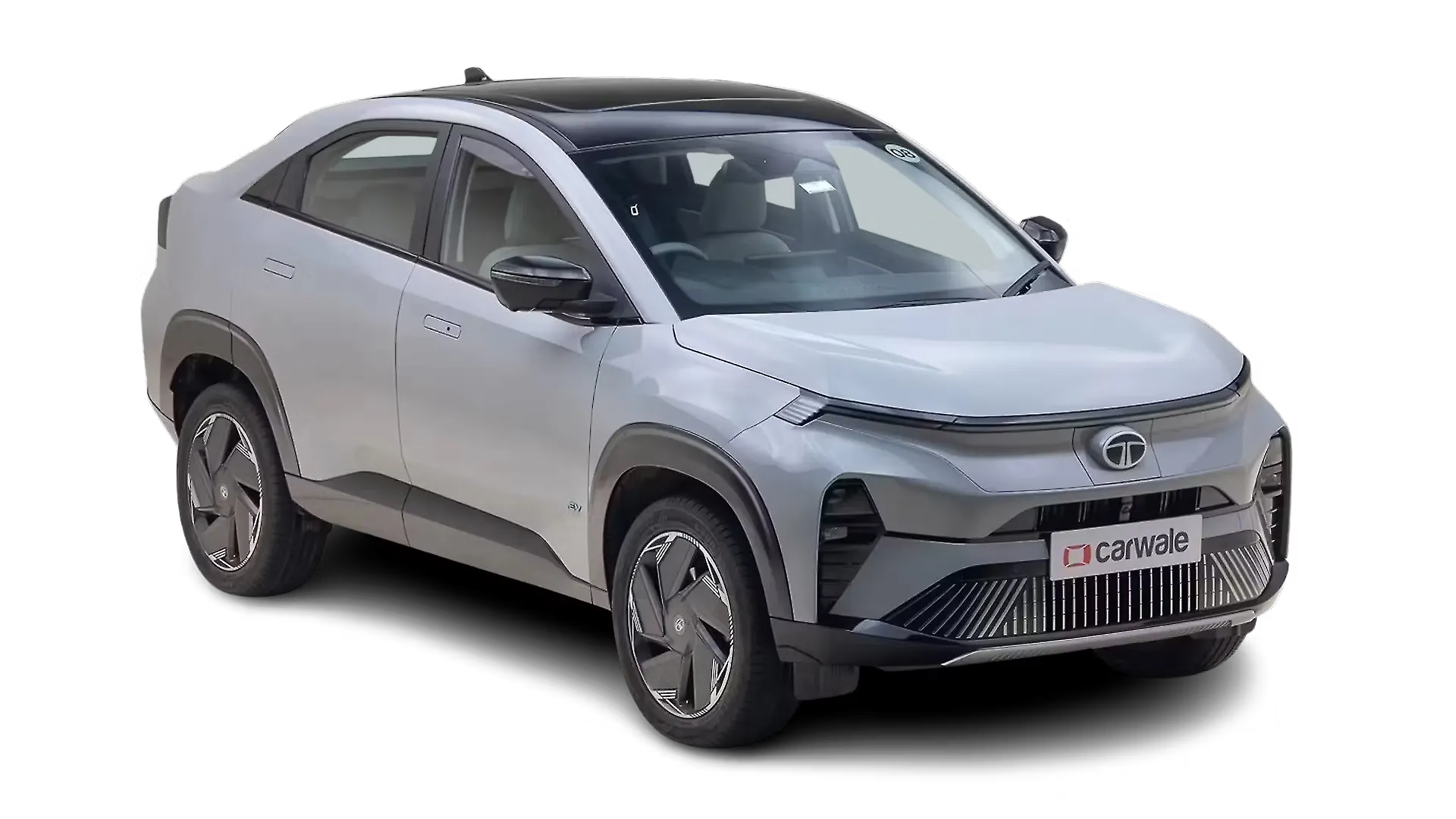
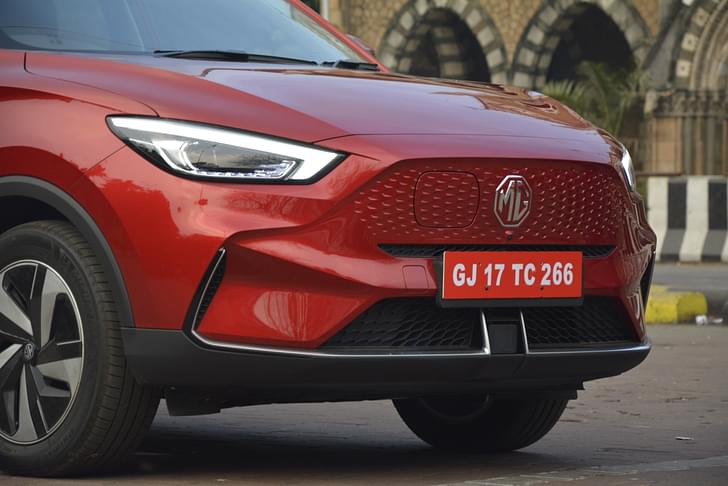
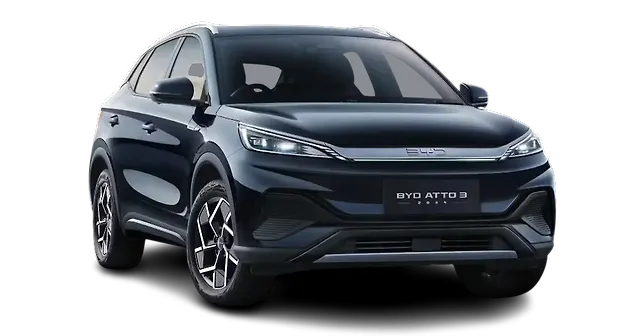
Powered by a 136 PS permanent magnet synchronous motor driving the front wheels, the Kona Electric offers brisk urban performance and a composed highway demeanour. Its 50 kW DC fast-charging capability allows the battery to charge from 10–80% in approximately 57 minutes (claimed), while the standard 11 kW AC onboard charger supports overnight home charging. The car competes in a segment that now includes the Tata Curvv EV, MG ZS EV, and BYD Atto 3, yet the Kona's maturity, build quality, and Hyundai's expanding service network continue to make it a compelling choice.
In the Indian market, the Kona Electric is positioned as a premium, feature-rich offering for urban professionals and tech-forward families who want a proven, globally tested electric SUV with strong after-sales support. Its combination of a well-sorted suspension, a feature-laden cabin, and Hyundai's Blue Link connected car technology gives it a distinct edge over newer but less refined rivals.
Range and charging
The Hyundai Kona Electric sold in India is equipped with a 39.2 kWh lithium-ion battery pack (approximately 36.2 kWh usable), which Hyundai claims delivers up to 452 km on the ARAI test cycle. In real-world Indian conditions — accounting for air conditioning use, city stop-and-go traffic, and highway speeds of 100–120 km/h — most owners report a practical range of 300–340 km per charge. This is still comfortably above the daily commute needs of most Indian urban buyers, where the average round trip is under 60 km.
For fast charging, the Kona Electric supports 50 kW DC input via a CCS2 port, enabling a 10–80% charge in approximately 57 minutes (claimed). The 11 kW AC onboard charger allows a full 0–100% charge in around 6 hours on a home wallbox, making overnight charging entirely practical. Hyundai also provides a 3.3 kW portable EVSE charger for emergency use. The car supports regenerative braking with three adjustable levels via paddle shifters, which meaningfully extends range in city driving.
Hyundai's battery warranty for the Kona Electric in India covers the high-voltage battery for 8 years or 1,60,000 km, whichever comes first — one of the stronger warranty commitments in the segment. An owner who clocked 1.2 lakh km on his Kona EV reported 87% battery health (Green Ride, January 2026), which is an encouraging real-world data point for long-term ownership confidence.
Performance and drive
The Kona Electric's 136 PS (100 kW) permanent magnet synchronous motor produces a substantial 395 Nm of torque, delivered instantaneously from standstill. Hyundai claims a 0–100 km/h time of 9.7 seconds, which feels brisk in everyday traffic. The linear power delivery and absence of gear shifts make urban driving particularly effortless, and the car's composure at highway speeds is a step above most rivals in its price band.
The suspension setup — MacPherson struts up front and a coupled torsion beam at the rear — is tuned for Indian road conditions, absorbing potholes and broken surfaces with reasonable aplomb. The electric power steering is well-weighted, offering good feedback at city speeds and stability at highway velocities. The Kona's 167 km/h top speed (claimed) is electronically limited but more than adequate for Indian expressways.
Three drive modes — Eco, Normal, and Sport — adjust throttle response and steering weight. Sport mode sharpens throttle inputs noticeably, while Eco mode prioritises range by softening acceleration and limiting climate control output. The low centre of gravity from the floor-mounted battery pack gives the Kona a planted, confidence-inspiring feel through corners.
Cabin, space, and tech
The Kona Electric's interior is one of its strongest suits. The dual 10.25-inch screens — one for the digital instrument cluster and one for the infotainment system — dominate the dashboard and give the cabin a premium, modern feel. The infotainment system supports wireless Android Auto and Apple CarPlay, and Hyundai's Blue Link connected car platform enables remote climate control, charging status monitoring, and vehicle location tracking via a smartphone app.
Cabin space is adequate for four adults, though the rear bench is best suited to two passengers for longer journeys — a known limitation of the Kona's compact footprint. Rear legroom is tighter than segment rivals like the MG ZS EV or BYD Atto 3. Boot space stands at 332 litres, which is usable for weekend luggage but smaller than the Tata Curvv EV's 500 litres. A front storage compartment (frunk) is absent on the India-spec model.
Features include a panoramic sunroof, ventilated front seats, a Bose premium audio system (on higher trims), wireless phone charging, and a head-up display. The ambient lighting and soft-touch materials on the dashboard elevate the perceived quality above most rivals at this price point. Climate control is automatic dual-zone, and the driver's seat is electrically adjustable with memory function.
Safety and ADAS
The Hyundai Kona Electric comes equipped with six airbags as standard across all variants — front, side, and curtain — providing solid passive safety coverage. The car has not been tested under Bharat NCAP as of May 2026, but the second-generation global Kona received a 5-star Euro NCAP rating in 2023, which is a strong indicator of structural integrity.
On the active safety front, the Kona Electric offers Hyundai SmartSense ADAS, which includes Forward Collision-Avoidance Assist (FCA), Lane Keeping Assist (LKA), Lane Following Assist (LFA), Driver Attention Warning (DAW), and Blind-Spot Collision Warning (BCW). These features are available on the top variant and represent a Level 2 ADAS suite. Electronic Stability Control (ESC), Vehicle Stability Management (VSM), Hill-Start Assist Control (HAC), and a 360-degree Around View Monitor (AVM) are also included.
Variants and pricing
Hyundai Motor India offers the Kona Electric in a single, fully-loaded variant in India as of May 2026, priced at approximately ₹23.79 Lakh (ex-showroom, indicative). This all-inclusive approach simplifies the buying decision but limits entry-level accessibility. Prices may vary by state due to differing EV subsidies — buyers in Maharashtra, Delhi, and Gujarat may benefit from additional state-level incentives on top of the central FAME-II subsidy (where applicable).
Hyundai periodically offers corporate discounts, exchange bonuses, and finance subvention schemes on the Kona Electric. Prospective buyers should check with their local Hyundai dealer for the most current on-road pricing, as ex-showroom figures do not include registration, insurance, and extended warranty costs.
How it compares
Against the Tata Curvv EV (₹17.49–21.99 Lakh), the Kona Electric is more expensive but offers a more refined drive, superior build quality, and a stronger global pedigree. The Curvv EV has a larger boot (500 L vs 332 L) and more spacious rear seats. The MG ZS EV (₹18.98–25.20 Lakh) is a closer rival in price, offering a larger 50.3 kWh battery and more rear space, but the Kona's ADAS suite and Hyundai's service network are advantages. The BYD Atto 3 (₹24.99 Lakh) has a larger 60.48 kWh battery and more range, but BYD's service network in India remains limited compared to Hyundai's 1,400+ touchpoints.
Who should buy it
The Hyundai Kona Electric is best suited for urban professionals and small families who prioritise build quality, brand reliability, and a feature-rich cabin over outright space or the lowest possible price. If your daily commute is under 150 km and you have access to home charging, the Kona Electric's 39.2 kWh battery is more than adequate. Its mature ADAS suite and Hyundai's pan-India service network make it a particularly strong choice for buyers in Tier-2 cities where after-sales support matters as much as the product itself.
Buyers who need maximum rear-seat space, a larger boot, or a lower entry price should consider the Tata Curvv EV or MG ZS EV instead. But for those who want a proven, globally tested electric SUV with strong long-term ownership data — including 87% battery health at 1.2 lakh km — the Kona Electric remains one of the most trustworthy choices in the Indian EV market.
Safety & ADAS
| NCAP rating | 5-star (Euro NCAP) |
|---|---|
| Airbags | 6 (front, side, curtain — standard across all variants) |
| ADAS level | Level 2 |
| Notes | Euro NCAP 5-star rating for second-generation global Kona (2023). Bharat NCAP test not conducted as of May 2026. SmartSense ADAS includes FCA, LKA, LFA, DAW, BCW, and 360-degree AVM. |
Verdict
Best for: Urban professionals and small families seeking a proven, feature-rich compact electric SUV with strong after-sales support and long-term reliability data
What we like
- 452 km ARAI-claimed range is among the highest in the compact electric SUV segment
- 87% battery health reported at 1.2 lakh km — best-in-class long-term durability evidence
- Level 2 SmartSense ADAS with FCA, LKA, and blind-spot warning as standard on top trim
- Hyundai's 1,400+ service touchpoints across India — widest network among premium EV brands
- 5-star Euro NCAP (2023 global model) and 8-year/1,60,000 km battery warranty
What to know
- Boot space of 332 litres is significantly smaller than the Tata Curvv EV's 500 litres
- Rear legroom is tighter than MG ZS EV and BYD Atto 3 at similar price points
- Single variant with no entry-level option makes it less accessible than rivals starting at ₹17.49 Lakh
- 39.2 kWh battery is smaller than BYD Atto 3 (60.48 kWh) and MG ZS EV (50.3 kWh) at comparable pricing
Variants
| Variant | Price | Range | Notable |
|---|---|---|---|
| Kona Electric (Single Variant) | ₹23.79 Lakh (ex-showroom, indicative) | 452 km (ARAI claimed) | Fully loaded — panoramic sunroof, Bose audio, 10.25-inch dual screens, SmartSense ADAS, ventilated seats, 360-degree AVM |
Key features
- 452 km ARAI-claimed range from 39.2 kWh battery
- 50 kW DC fast charging — 10–80% in ~57 minutes (claimed)
- Dual 10.25-inch screens with wireless Android Auto & Apple CarPlay
- Hyundai SmartSense Level 2 ADAS (FCA, LKA, LFA, BCW)
- Panoramic sunroof, ventilated front seats, Bose premium audio
- Blue Link connected car tech with remote climate & charging control
- 8-year / 1,60,000 km high-voltage battery warranty
Competitors
FAQs
What is the price of the Hyundai Kona Electric in India?
The Hyundai Kona Electric is priced at approximately ₹23.79 Lakh (ex-showroom, indicative) as of May 2026. On-road pricing will be higher after registration, insurance, and applicable state EV subsidies. Buyers in states like Maharashtra, Delhi, and Gujarat may benefit from additional state-level incentives.
What is the real-world range of the Hyundai Kona Electric?
The Kona Electric has an ARAI-claimed range of 452 km from its 39.2 kWh battery. In real-world Indian conditions — with air conditioning and mixed city/highway driving — most owners report a practical range of 300–340 km per charge. An owner who drove 1.2 lakh km reported 87% battery health, suggesting minimal range degradation over time.
How long does the Hyundai Kona Electric take to charge?
With a 50 kW DC fast charger, the Kona Electric charges from 10–80% in approximately 57 minutes (claimed). Using the 11 kW AC onboard charger at home, a full 0–100% charge takes around 6 hours. A 3.3 kW portable EVSE charger is also provided for emergency use.
Does the Hyundai Kona Electric have ADAS?
Yes, the Kona Electric is equipped with Hyundai SmartSense, a Level 2 ADAS suite. It includes Forward Collision-Avoidance Assist (FCA), Lane Keeping Assist (LKA), Lane Following Assist (LFA), Driver Attention Warning (DAW), and Blind-Spot Collision Warning (BCW). A 360-degree Around View Monitor is also included.
Is the Hyundai Kona Electric safe?
The second-generation global Kona received a 5-star Euro NCAP safety rating in 2023. The India-spec model comes with 6 airbags as standard, along with ESC, VSM, and Hill-Start Assist. Bharat NCAP testing has not been conducted as of May 2026, but the global safety credentials are strong.
Is the Hyundai Kona Electric worth buying in 2026?
The Kona Electric is worth buying if you prioritise build quality, long-term reliability, and a mature ADAS suite over outright space or the lowest entry price. Its 87% battery health at 1.2 lakh km and Hyundai's 1,400+ service touchpoints make it one of the most dependable electric SUVs in India. However, buyers needing more boot space or rear legroom should also consider the Tata Curvv EV or MG ZS EV.
How does the Hyundai Kona Electric compare to the MG ZS EV?
The MG ZS EV offers a larger 50.3 kWh battery and more rear passenger space, while the Kona Electric has a more refined drive, superior ADAS, and Hyundai's wider service network. The Kona's 452 km ARAI range is higher than the ZS EV's claimed 461 km (similar), but the Kona's real-world efficiency and long-term battery health data give it an edge for high-mileage buyers.
What is the battery warranty on the Hyundai Kona Electric?
Hyundai offers an 8-year or 1,60,000 km warranty on the high-voltage battery pack of the Kona Electric in India, whichever comes first. This is one of the strongest battery warranty commitments in the Indian EV segment and provides significant peace of mind for long-term ownership.
Sources
- Hyundai Kona Electric – Official Hyundai India Page
- Hyundai Kona Electric Real-World Range 2026 Guide – Recharged
- After 1.2 Lakh KMs: Kona EV Honest Review (87% Battery Health!) – Green Ride
- 2026 Hyundai Kona Review, Pricing, and Specs – Car and Driver
- Why I'd buy one over its newer rivals: 2026 Hyundai Kona Electric review – Tim Rodie Drives Stuff