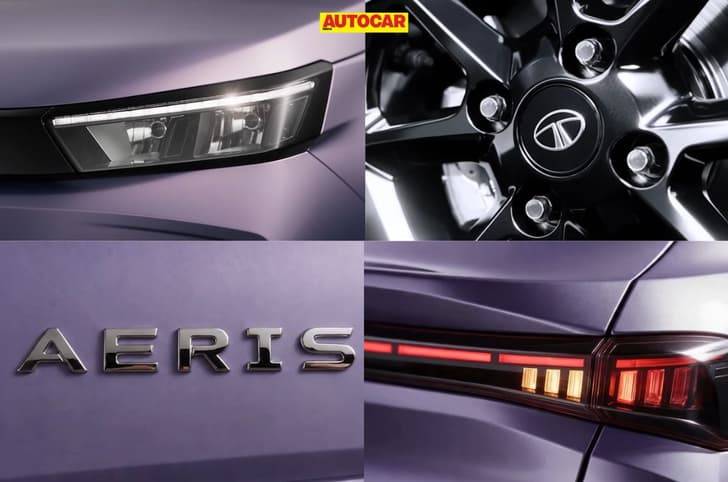

The Tata Aeris EV launches September 25, 2026, priced from ₹9.92 lakh, replacing the Tigor EV as India's most affordable electric sedan with no direct EV rival at launch.
The Tata Aeris EV launches on September 25, 2026, with an expected starting price of ₹9.92 lakh for the 19.2kWh variant and ₹11.13 lakh for the 24kWh variant (on-road, Delhi) — positioning it in a sub-₹10 lakh to ₹11 lakh window where no other electric sedan currently exists in India. It's a comprehensively updated, rebranded successor to the Tigor EV.
The ICE version of the Aeris is expected from around ₹6 lakh, competing against the Maruti Suzuki Dzire, Honda Amaze, and Hyundai Aura. The EV, however, operates in a segment of its own. Here is how the Aeris EV stacks up against the key alternatives a budget EV buyer in India would consider:
| Model | Body Style | Battery / Range | Expected / Actual Price (ex-showroom) | Direct EV Rival? |
|---|---|---|---|---|
| Tata Aeris EV (19.2kWh) | Sub-4m Sedan | 19.2 kWh / TBD | ~₹9.92 lakh | None at launch |
| Tata Aeris EV (24kWh) | Sub-4m Sedan | 24 kWh / TBD | ~₹11.13 lakh | None at launch |
| Tata Tiago EV (24kWh) | Sub-4m Hatchback | 24 kWh / ~250 km | ~₹9–10 lakh | Closest sibling |
| Maruti Suzuki e Vitara | Compact SUV | 49 kWh / ~500 km | ₹10 lakh+ | Different segment |
| Tata Tigor EV (outgoing) | Sub-4m Sedan | 26 kWh / ~315 km | ₹12.49–₹13.75 lakh | Being replaced |
The Aeris EV's ₹9.92 lakh entry point undercuts the outgoing Tigor EV by roughly ₹2.5 lakh by borrowing the Tiago EV's smaller battery packs rather than the Tigor EV's 26kWh unit. The Maruti Suzuki e Vitara, which enters the market at over ₹10 lakh and offers a full-sized compact SUV body with a 49kWh battery, serves a different buyer profile — one prioritising range and road presence over urban affordability. For buyers who specifically want a sedan body style and want to stay as close to ₹10 lakh as possible, the Aeris EV is, as Autocar India notes, without any direct competitors at launch.
What exactly is the Tata Aeris, and how does it differ from the Tigor?
The Tata Aeris is a rebranded facelift of the Tigor — not an all-new ground-up model — but the changes extend well beyond a bumper-and-badge refresh. Autocar India describes it as "one of the most full updates to Tata's compact sedan since its debut almost a decade ago."
The Tigor nameplate is being retired entirely. The Aeris replaces it in both ICE and EV form, with the new name aligning with Tata's broader move to refresh its passenger vehicle portfolio under a unified brand identity. This mirrors the strategy Tata used when it updated the Tiago — the Aeris is expected to borrow heavily from that update in interior design and feature set.
Externally, the changes are substantial enough to involve sheet-metal revisions, not just new lamps and bumpers. Design patent filings confirmed by Autocar India show a sleeker front fascia with slim LED headlamps, thin DRL strips, LED fog lamps, and C-shaped design elements in the front bumper. The tail-lamps are now connected across the boot, and the number plate has been relocated from the boot lid to the rear bumper — a detail that meaningfully changes the car's rear proportions. The notchback roofline, which defines the Tigor's silhouette, is retained.
HT Auto reported on September 21, 2026 that Tata Motors officially confirmed the Aeris name and the September 25 launch date through an official teaser, which also showed the car's updated exterior. New alloy wheel designs and a new purple colour option are also expected.
What does the Aeris cabin look like, and what features does it get?
The interior is where the Aeris makes its biggest leap over the Tigor. While Tata has not officially teased the full cabin, leaked footage and pre-launch information paint a detailed picture.
The dashboard design is inspired by the updated Tiago and Tiago EV, featuring a layered dual-tone theme with piano-black accents. Two free-standing digital displays — a 10.25-inch touchscreen infotainment unit and a fully digital driver's instrument cluster — dominate the fascia. Tata's new two-spoke steering wheel is also expected to carry over.
Hindustan Times Telugu's pre-launch report highlights a dual wireless charging dock capable of charging two smartphones simultaneously — a standout feature at this price point. AMT variants are expected to replace the conventional gear lever with a rotary drive selector, adding a premium feel to the centre console.
The expected feature list across variants includes:
- Wireless Apple CarPlay and Android Auto
- Automatic climate control with rear AC vents
- 360-degree camera system
- Connected car technology
- 6 airbags as standard
- Electronic stability control (ESC)
- Hill-hold control
- ISOFIX child seat anchors
- Blind-view monitor (higher trims)
- Leatherette upholstery (higher trims)
- Push-button start-stop
- Electrically adjustable and foldable ORVMs
- Type-C USB ports
This is a meaningful upgrade over the outgoing Tigor, which offered a more basic feature set. The Tigor EV's top variant at ₹13.75 lakh still lacked some of the features the Aeris EV is expected to offer from a lower price point.
If you are evaluating EVs based on safety credentials, our guide on 5-star Bharat NCAP electric cars in India is worth reading alongside this — the Aeris EV's safety spec (6 airbags, ESC standard) is a strong starting point, though its Bharat NCAP rating has not yet been announced.
What are the Aeris EV's powertrain options, and how do they compare to the Tiago EV?
The Aeris EV is expected to be offered with two battery pack options, both borrowed from the Tiago EV platform rather than the outgoing Tigor EV's single 26kWh pack. Autocar India's pre-launch analysis outlines the two configurations:
19.2kWh variant: Uses a permanent magnet synchronous motor producing up to 75hp and 114Nm of torque. This is the entry-level EV variant, expected at ₹9.92 lakh.
24kWh variant: Uses the same motor type but with higher torque output — 75hp and 170Nm. This is the range-topper, expected at ₹11.13 lakh.
Both variants are expected to offer a multi-mode regenerative braking system and multiple drive modes (City and Sport at minimum). Fast-charging capability, carried over from the Tiago EV, is also expected.
The Aeris EV's official range figures have not been released ahead of launch. The Tiago EV's 24kWh pack delivers approximately 250km of certified range under Indian driving conditions — the Aeris EV, being a slightly heavier sedan body, may return a marginally lower figure, though this is speculative until official ARAI or MIDC data is published.
The Autocar India specs page notes the suspension setup: independent MacPherson strut at the front and a twist beam with dual-path strut at the rear — the same architecture as the Tiago EV platform.
For the ICE Aeris, the powertrain carries over from the Tigor: a 1.2-litre naturally aspirated three-cylinder petrol engine producing 86hp and 113Nm, with CNG reducing output to 76hp and 97Nm. Gearbox options are a 5-speed manual and 5-speed AMT.
What is the Aeris EV's expected price, and is BaaS available?
The expected on-road price in Delhi is ₹9.92 lakh for the 19.2kWh variant and ₹11.13 lakh for the 24kWh variant. These are pre-launch estimates and the official ex-showroom prices will be confirmed at the September 25 launch event.
The outgoing Tigor EV was priced between ₹12.49 lakh and ₹13.75 lakh — making the Aeris EV's entry price a significant reduction, achieved primarily by moving to smaller battery packs.
Battery-as-a-Subscription (BaaS) is expected to be offered with the Aeris EV, following the same model Tata has used for the Tiago EV. BaaS is a financing structure where the buyer purchases the vehicle without the battery pack, paying a lower upfront price, and then subscribes to the battery on a per-kilometre or monthly basis. This can reduce the initial outlay by ₹1.5–2 lakh or more, making the Aeris EV accessible to buyers who might otherwise find even ₹9.92 lakh a stretch. Our detailed guide on Battery as a Service (BaaS) EVs in India explains how the scheme works and whether it makes financial sense for different buyer profiles.
The combustion-powered Aeris ICE is expected to start around ₹6 lakh, with the range extending to approximately ₹9 lakh for top variants — broadly in line with the outgoing Tigor's ₹5.70–₹9.10 lakh spread.
Who are the Aeris EV's rivals, and where does the Maruti Suzuki e Vitara fit?
At launch, the Aeris EV has no direct electric rival in the sub-4-metre sedan segment. This is a structural gap in the Indian EV market: the compact sedan body style — which accounts for a significant share of ICE sales through models like the Dzire, Amaze, and Aura — has almost no electric representation.
The closest electric alternatives a buyer might consider are:
Tata Tiago EV: The Aeris EV's own sibling, in hatchback form. Priced similarly, with the same battery packs. The Aeris EV offers a boot, a slightly more premium positioning, and a sedan silhouette — relevant for buyers who specifically want a notchback or boot-lid separation for luggage security.
Maruti Suzuki e Vitara: The e Vitara enters the market at over ₹10 lakh and is a compact SUV, not a sedan. Its 49kWh battery and approximately 500km range make it a different proposition — better suited to buyers prioritising long-distance capability and higher ground clearance. The e Vitara's ₹10 lakh-plus positioning creates a clear price and segment boundary: buyers who want a sub-₹10 lakh electric vehicle in a sedan body have essentially one option at launch, and that is the Aeris EV. For buyers with a slightly higher budget who want an SUV body and significantly more range, the e Vitara is the natural alternative to evaluate.
Outgoing Tata Tigor EV: Being discontinued. Its 26kWh pack and ₹12.49 lakh starting price made it a harder sell; the Aeris EV addresses both the price and the feature deficit.
The ICE Aeris competes with the Maruti Suzuki Dzire, Honda Amaze, and Hyundai Aura — all of which are strong sellers in the compact sedan segment. None of these currently offer a full-electric variant, which is why the Aeris EV's launch, even with its modest battery packs, is a meaningful market event.
Is the Aeris EV a good buy for long trips, or is it primarily a city car?
This is the honest limitation of the Aeris EV that buyers should understand before committing. The 19.2kWh battery pack is designed primarily for urban and semi-urban use. Based on the Tiago EV's real-world performance with the same pack, expect roughly 150–180km of practical range in mixed city driving — adequate for daily commutes in most Indian cities, but requiring careful planning on highway runs.
The 24kWh variant is more versatile. With fast-charging capability expected to be retained from the Tiago EV, a 0–80% charge on a DC fast charger should be achievable in under an hour, which makes occasional intercity trips manageable if charging infrastructure is available on the route.
For buyers who regularly travel 200km+ between cities, our guide on best electric cars for long trips in India in 2026 will be a more relevant starting point — the Aeris EV is unlikely to feature prominently there. But for the urban buyer who drives 40–60km a day and charges at home overnight, the 19.2kWh variant at ₹9.92 lakh is a genuinely compelling proposition.
What should buyers watch for at the official launch?
Several questions remain open ahead of the September 25 reveal:
Official range figures: ARAI or MIDC-certified range for both battery variants has not been announced. This will be the single most important data point for buyers evaluating the 19.2kWh versus 24kWh choice.
Variant-wise feature breakdown: The full variant matrix — how many trims, which features are standard versus optional, and whether 6 airbags are truly standard across all variants — will be confirmed at launch.
BaaS pricing: If Tata offers BaaS, the per-kilometre or monthly subscription rate will determine whether the scheme is actually cost-effective compared to outright purchase.
Charging specifications: AC charging speed (kW) and DC fast-charging speed (kW) for both battery variants. The Tiago EV supports 7.2kW AC and up to 50kW DC fast charging — the Aeris EV is expected to match this, but confirmation is pending.
Colour options: A new purple colour has been teased. The full colour palette, including whether the EV gets exclusive colours (as is common with Tata's EV lineup), will be revealed at launch.
Warranty terms: Tata typically offers an 8-year/1.6 lakh km battery warranty on its EVs. Whether this carries over to the Aeris EV, and under what conditions, is worth confirming before purchase.
Buyers interested in how the Aeris EV's safety credentials stack up should also watch for Bharat NCAP test announcements. Our tracker of every car crash-tested by Bharat NCAP is updated regularly.
Should sub-₹10 lakh EV buyers wait for the Aeris EV or buy now?
For a buyer who has been waiting for an affordable electric sedan in India, the Aeris EV's launch ends a long wait — the Tigor EV's ₹12.49 lakh entry price kept it out of reach for many. At ₹9.92 lakh (expected), the 19.2kWh Aeris EV is the first electric sedan to breach the psychological ₹10 lakh barrier in India.
The case for buying at launch is straightforward if you drive primarily in the city, have home charging available, and value the sedan body style over an SUV or hatchback. The Aeris EV's feature set — 10.25-inch touchscreen, 6 airbags, ESC, 360-degree camera, wireless charging — is genuinely competitive at this price point, and Tata's established EV after-sales network (the largest among Indian EV makers) reduces ownership risk.
The case for waiting is also reasonable: range figures are unconfirmed, the first-month pricing may include introductory discounts or state-level EV subsidies that take a few weeks to be factored in, and early ownership reviews will clarify real-world range, charging behaviour, and cabin refinement.
If your budget extends to ₹12–15 lakh and you want more range and a larger body, the best electric cars under ₹20 lakh in India in 2026 guide covers the full competitive space including the Tata Nexon EV, MG Windsor, and others.
For the specific buyer this article is written for — someone who wants an electric sedan, wants to stay as close to ₹10 lakh as possible, and is comfortable with city-range limitations — the Tata Aeris EV at launch is the only serious option in the market. That is both its biggest strength and, until a rival emerges, its most durable competitive advantage.
Sources
- All you need to know about Tata Aeris ahead of launch tomorrow | Autocar India
- Tata Aeris EV - Expected Price, Launch Date & Specs | Autocar India
- Tata Tigor to be renamed to Aeris, launch confirmed for Sept 25 | HT Auto
- Tata Aeris interior teased ahead of September 25 launch | Hindustan Times Telugu
- Tata Motors Official Website
- Which Electric Cars Offer Battery as a Service (BaaS) in India and Are They Worth Buying? | EV Index India
- Best Electric Cars for Long Trips in India in 2026 | EV Index India
- Best Electric Cars Under ₹20 Lakhs in India in 2026 | EV Index India
- Which 5-Star Bharat NCAP Electric Cars in India Are Worth Buying in 2026? | EV Index India