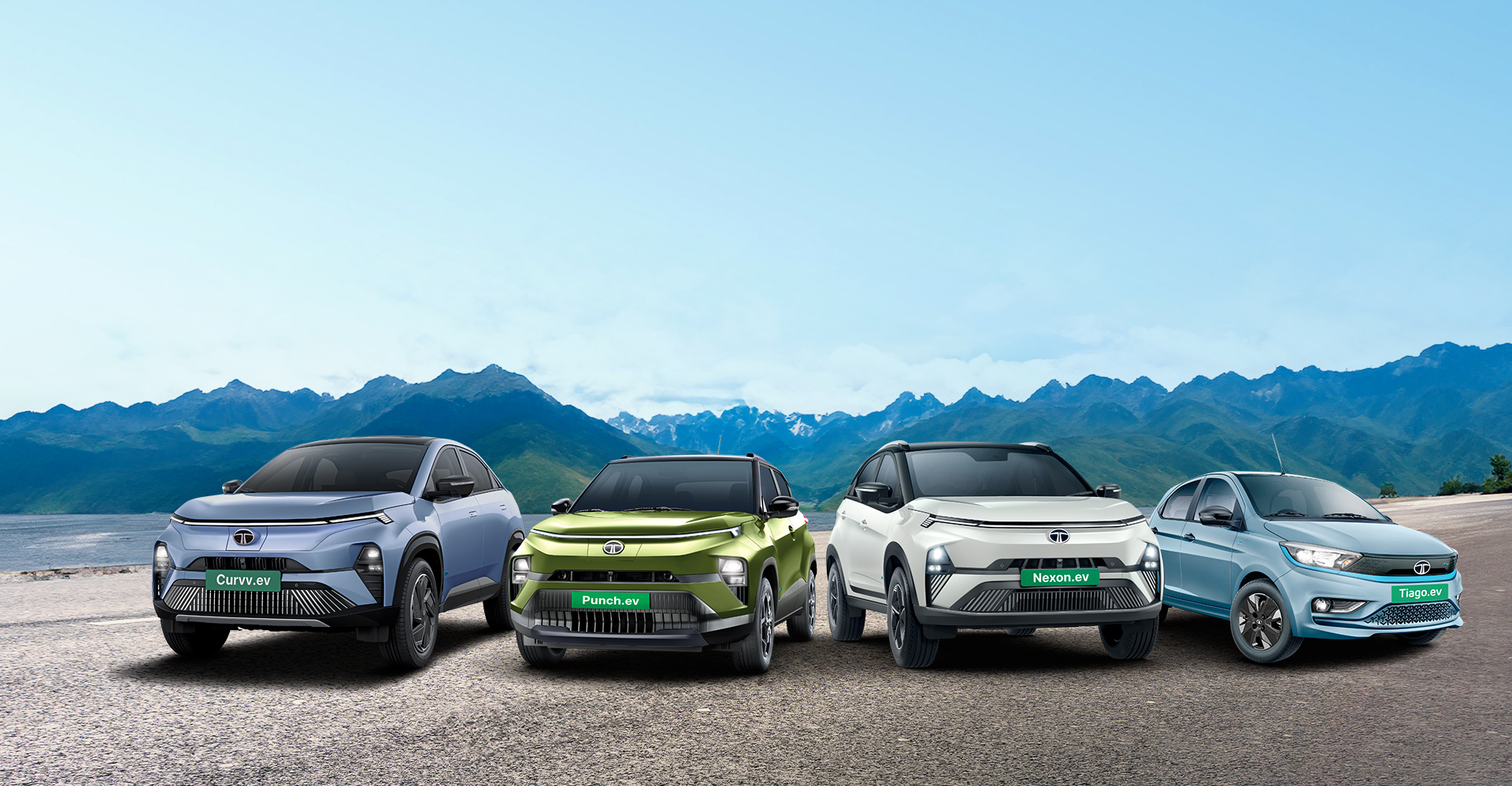

Tata and JSW are investing nearly $1 billion in domestic EV battery R&D — including a $400M+ Agratas facility in Bengaluru — to build homegrown LFP and LMFP battery technology and reduce India's dependence on Chinese supply chains by 2027.
How Tata and JSW's $1 Billion EV Battery R&D Push Will Reduce India's China Dependence by 2027
Tata Group and JSW Group are together committing nearly $1 billion to domestic electric vehicle and battery research and development — the largest coordinated private-sector bet on homegrown battery technology India has seen — with the explicit goal of reducing the country's dependence on Chinese battery expertise and supply chains, according to a Bloomberg report published on 7 May 2026.
The timing is deliberate. China has been tightening controls on advanced technology transfers, particularly in battery chemistries and EV systems, as geopolitical tensions and US-China trade friction reshape global supply chains. For Indian automakers and battery makers, that creates both a risk and a window: build domestic capability now, or remain structurally exposed to a supplier that is simultaneously a geopolitical rival.
Here is a snapshot of what each conglomerate is committing, and how the investments compare:
| Parameter | Tata Group (via Agratas Ltd.) | JSW Group | Combined |
|---|---|---|---|
| Estimated R&D investment | $400 million+ | Undisclosed (part of ~$1B total) | ~$1 billion |
| Primary facility location | Bengaluru, India | TBA | Multiple domestic sites |
| Battery chemistry focus | LFP, LMFP | Advanced EV systems + battery tech | Next-gen cell chemistries |
| Strategic objective | Domestic IP, reduce China cell imports | In-house EV expertise, supply-chain independence | Tech self-reliance by ~2027 |
| Current China dependence area | Cell manufacturing, cathode materials | EV powertrain components | Batteries + EV systems |
Both programmes are being funded separately but reflect the same strategic logic: batteries are defined as the single most expensive and technically complex component in any electric vehicle, accounting for up to 40% of total vehicle cost according to the International Energy Agency, and India currently has almost no domestic cell manufacturing at scale.
Why are Tata and JSW investing in battery R&D now?
Three pressures have been building since 2023 and reached a tipping point in 2026.
China's tightening technology controls are the most immediate trigger. Beijing has progressively restricted exports of advanced battery manufacturing know-how — including cathode material processing, electrolyte formulations, and cell-formation equipment — as part of a broader effort to maintain technological leadership in EVs. For Indian companies that have historically licensed or imported Chinese battery technology, this creates a supply-chain vulnerability that cannot be hedged with contracts alone. As ETAuto reported, the investments come precisely at a time when China is tightening these controls.
India's EV market is scaling fast enough to justify the capital. The country's passenger EV penetration has been climbing steadily, and the government's PLI (Production Linked Incentive) scheme for Advanced Chemistry Cell (ACC) battery manufacturing has already committed ₹18,100 crore to seed domestic cell production. Private R&D investment of this scale builds the intellectual property that makes domestic manufacturing defensible over the long term, not just cost-competitive in the short term.
Geopolitical risk diversification is the third driver. The US-China tariff escalation of 2025-26 has demonstrated to Indian industrialists that supply chains anchored in a single country — even a highly efficient one — carry systemic risk. Tata Group, which sells EVs through Tata Motors and is building battery capacity through Agratas, has particular exposure: a disruption to Chinese cell supply would directly affect its ability to fulfil EV orders. JSW, which entered the EV space through its joint venture with MG Motor India, faces similar risks on the powertrain side.
What exactly is Agratas building in Bengaluru?
Agratas Ltd. is Tata Group's dedicated battery technology subsidiary, spun out to consolidate the conglomerate's cell chemistry, manufacturing, and energy storage ambitions under a single entity. The Bengaluru facility represents an investment of more than $400 million and is focused on two battery chemistries that are currently dominated by Chinese manufacturers: lithium iron phosphate (LFP) and lithium manganese iron phosphate (LMFP).
LFP is a cathode chemistry that trades some energy density for significantly better thermal stability, longer cycle life, and lower cost — characteristics that make it the dominant chemistry for mass-market EVs globally, particularly in China where CATL and BYD have refined it over two decades. LMFP is an evolution of LFP that adds manganese to the cathode, boosting energy density by roughly 10-15% while retaining most of LFP's safety and longevity advantages. Both chemistries suit Indian conditions well: they tolerate high ambient temperatures better than nickel-based chemistries, and their cost trajectory is more favourable for a price-sensitive market.
The Bengaluru R&D centre's mandate goes beyond replicating existing Chinese technology. The goal, according to people familiar with the plans cited by Bloomberg, is to develop proprietary intellectual property — cell designs, manufacturing processes, and material formulations that Tata can own and license, rather than pay royalties on. That distinction matters enormously for long-term cost competitiveness. A company that owns its battery IP can optimise its cells specifically for Indian operating conditions (temperature, road quality, charging infrastructure density) in ways that a licensee cannot.
The facility is also expected to support Tata's long-term plans to manufacture battery cells domestically, particularly in segments where the company currently depends on Chinese technology. Agratas already has a gigafactory under development in the UK (for Jaguar Land Rover), and the Bengaluru centre appears designed to be the technology engine that feeds both that facility and future Indian manufacturing capacity.
What is JSW Group's role in this investment?
JSW Group's specific investment quantum within the ~$1 billion total has not been publicly disclosed, consistent with the group's typically less transparent communication style compared to Tata. What is known, from people with knowledge of the plans cited by Bloomberg, is that JSW is building advanced in-house expertise in EV systems and battery technology — a capability it currently lacks at the level required to compete independently.
JSW's EV exposure comes primarily through JSW MG Motor India, the joint venture formed after SAIC Motor's stake in MG Motor India was restructured to bring in JSW as a major Indian partner. MG's EVs — including the Windsor EV, which has been one of India's better-selling electric cars — currently rely on Chinese-origin battery and powertrain technology from the SAIC space. Building domestic R&D capability is both a strategic and a regulatory imperative for JSW: as India tightens rules around data localisation, component sourcing, and technology transfer, having homegrown expertise reduces regulatory risk.
JSW's investment also signals that the group sees batteries and EV technology as a long-term industrial platform, not just an automotive input. The group's steel and energy businesses create natural adjacencies — steel for battery enclosures and vehicle structures, renewable energy for charging infrastructure — that make vertical integration in EV technology strategically coherent.
How does domestic battery R&D affect EV prices for Indian buyers?
Battery costs are the primary lever for EV affordability in any market. When a domestic manufacturer owns its cell chemistry and manufacturing process, it can optimise for cost in ways that imported cells do not allow. It can also avoid the currency risk and logistics costs embedded in imported cells, which are priced in dollars and subject to freight and customs duties.
The IEA's estimate that batteries account for up to 40% of EV cost means that a 20% reduction in cell cost — achievable through domestic manufacturing at scale with proprietary chemistry — translates to roughly an 8% reduction in total vehicle price. On a ₹15-20 lakh EV, that is ₹1.2-1.6 lakh, which is the difference between a purchase decision and a deferral for many Indian middle-class buyers.
The competitive implications extend across the market. Consider where the action is in India's SUV EV segment right now: Tata's own Nexon EV and Punch EV compete with the Maruti Suzuki e Vitara, which is entering the market with Suzuki's global battery supply chain and Toyota's hybrid/EV technology backing. The e Vitara's pricing and technology positioning will be shaped partly by what Suzuki and Toyota can source globally — but Tata's ability to undercut on battery cost over time, if Agratas delivers on its R&D roadmap, could reshape the competitive calculus in this segment significantly. For buyers evaluating the best electric SUVs in India in 2026, domestic battery cost curves will increasingly influence which brand offers the best value.
Which battery chemistries are being developed, and why do they matter?
The focus on LFP and LMFP is not accidental. These chemistries are strategically important for India specifically:
LFP (Lithium Iron Phosphate) has become the dominant chemistry for mass-market EVs globally because it is cheaper, safer, and longer-lasting than nickel-manganese-cobalt (NMC) alternatives. It does not use cobalt (a supply-chain and ethical concern) and is less prone to thermal runaway. Its main weakness — lower energy density — matters less in city-use EVs where range requirements are moderate. India's urban EV use case, where most charging happens at home overnight and daily distances are under 80 km, is well-suited to LFP.
LMFP (Lithium Manganese Iron Phosphate) is the next evolution. By substituting some iron with manganese in the cathode, LMFP achieves higher voltage and therefore higher energy density — roughly 10-15% more than standard LFP — while retaining most of LFP's cost and safety advantages. CATL has been commercialising LMFP in China, and it is expected to become the dominant mass-market chemistry globally by 2028-2030. Agratas developing LMFP expertise now positions Tata to be a first-mover in India when the chemistry matures.
The strategic importance of owning these chemistries domestically goes beyond cost. India's government has been pushing for Atmanirbhar Bharat (self-reliant India) in critical technology sectors, and batteries have been explicitly identified as a strategic input alongside semiconductors and solar panels. Companies that develop domestic IP in these areas are likely to receive preferential treatment in government procurement, PLI scheme benefits, and export incentives as India positions itself as an alternative battery supply chain to China.
What does China's technology tightening actually mean in practice?
China's approach to controlling battery technology exports has evolved from informal to increasingly formal over the past two years. The mechanisms include:
Export licensing requirements for certain battery manufacturing equipment and processes, which create delays and uncertainty for Indian companies trying to set up cell manufacturing. Technology transfer restrictions embedded in joint venture agreements, which limit what Chinese partners can share with Indian counterparts. Personnel controls that make it harder for Chinese battery engineers to work in India on a long-term basis.
These restrictions are not absolute — Chinese battery companies continue to sell cells to Indian automakers, and joint ventures continue to operate. But the direction is clear: China is tightening its grip on the most valuable parts of the battery value chain (cell chemistry IP, formation processes, BMS software) while remaining willing to export the commodity parts (finished cells, modules). For Indian companies, buying Chinese cells is still possible, but building Chinese-style cell manufacturing capability domestically is getting harder.
This is precisely why Tata and JSW are investing in R&D rather than simply licensing Chinese technology. The window for technology transfer may be closing, and the companies that develop domestic expertise now will be insulated from future tightening in ways that pure importers will not be.
How does this investment fit into India's broader EV supply chain strategy?
India's EV supply chain is the end-to-end network of raw materials, components, manufacturing, and recycling infrastructure required to produce and operate electric vehicles domestically. Currently, India is strong at the assembly end (Tata, Mahindra, and now Maruti Suzuki with the e Vitara all manufacture EVs domestically) but weak at the cell and chemistry end, where China dominates.
The Tata-JSW R&D push addresses the weakest link in that chain. But R&D alone does not build a supply chain — it needs to be followed by manufacturing investment, which requires both capital and policy support. The government's ACC PLI scheme is designed to provide that policy support, and Agratas has been one of the beneficiaries. The Bengaluru R&D centre, if it delivers the IP it is designed to generate, will provide the technology foundation for the gigafactory investments that need to follow.
The broader supply chain picture also includes:
Cathode active materials (CAM): India has limited domestic production of the lithium, manganese, and iron compounds used in LFP/LMFP cathodes. Developing domestic CAM production is a parallel challenge that the R&D investments will need to address — either by developing processes that use Indian mineral resources more efficiently, or by identifying alternative supply chains (Australia for lithium, domestic iron ore for LFP).
Battery management systems (BMS): The software and electronics that manage cell charging, discharging, and thermal management are as important as the cells themselves. Indian companies have growing capability in embedded software and power electronics, and domestic BMS development is an area where India can build competitive advantage without starting from zero.
Recycling infrastructure: As India's EV fleet grows, battery recycling will become economically significant. Companies with domestic cell manufacturing capability will also be better positioned to build closed-loop recycling systems, recovering lithium and other materials from end-of-life batteries.
For buyers considering the best electric cars to buy in India in 2026, the supply chain investments being made today will determine which brands can sustain competitive pricing and warranty support five years from now — a consideration that deserves more weight than it typically gets in purchase decisions.
What are the risks that could delay or derail this R&D push?
Several factors could slow or complicate the Tata-JSW R&D timeline:
Technology development timelines are notoriously hard to predict. Battery chemistry R&D involves significant trial-and-error, and the gap between laboratory results and manufacturable cells at scale is wide. China's dominance in LFP/LMFP is partly a function of two decades of incremental refinement — Agratas is starting from a lower base and will need to compress that learning curve significantly to be competitive by 2027.
Talent constraints are real. India has a growing pool of electrochemical engineers and materials scientists, but the specialised expertise required for cell chemistry development at the frontier is scarce globally, not just in India. Agratas will need to recruit internationally, which takes time and competes with well-funded battery programmes in the US, Europe, and South Korea.
Capital discipline is uncertain. The ~$1 billion figure is a planning estimate from people familiar with the matter, not a publicly committed capital expenditure. Both Tata and JSW are large conglomerates with many competing capital priorities, and R&D spending is typically the first to be cut when business conditions tighten. The actual disbursement will depend on how quickly early R&D results justify continued investment.
Manufacturing scale-up is a separate challenge. R&D success does not automatically translate to competitive manufacturing. Building a gigafactory that can produce cells at costs competitive with CATL requires not just technology but also supply chain development, process engineering, and operational excellence that takes years to build.
These risks do not invalidate the strategic logic of the investment — they are reasons to be realistic about the timeline rather than reasons to not invest. India's choice is not between investing now and having a perfect battery supply chain by 2027, or not investing and maintaining the status quo. It is between investing now and having a fighting chance at supply chain independence by 2030, or not investing and remaining structurally dependent on Chinese technology indefinitely.
What does this mean for the competitive space of India's EV market?
The medium-term competitive implications are significant and cut across multiple dimensions.
For Tata Motors, successful Agratas R&D would strengthen its position as India's dominant EV brand by giving it a cost and technology advantage that foreign competitors cannot easily replicate. Tata's EVs — the Nexon EV, Punch EV, Curvv EV — are already market leaders, and domestic battery IP would deepen that moat. Buyers looking at 5-star Bharat NCAP electric cars will find Tata well-represented, and domestic battery technology would add another dimension to that safety story.
For JSW MG Motor India, the R&D investment signals an ambition to move beyond being a distribution partner for Chinese technology toward being a genuine technology developer. Whether JSW can execute on that ambition — given the complexity of EV systems development — remains to be seen, but the intent is clear.
For new entrants like Maruti Suzuki, the investment space is a double-edged sword. The Maruti Suzuki e Vitara enters the market backed by Suzuki's global supply chain and Toyota's battery technology, which gives it credibility and quality assurance. But as domestic Indian battery technology matures through investments like Agratas's, the cost advantage that global supply chains currently provide will erode. The e Vitara's long-term competitiveness will depend partly on whether Suzuki and Toyota can adapt their battery sourcing to incorporate domestic Indian cells as they become available — or whether they remain anchored to global (and more expensive) supply chains. For buyers comparing the e Vitara against Tata's offerings in the best electric SUVs category, this technology investment story will increasingly matter alongside the immediate metrics of range, features, and price.
For consumers, the most direct benefit will be felt in the best electric cars under ₹20 lakhs segment, where battery cost is the primary barrier to broader adoption. Domestic LFP/LMFP cells, if Agratas can manufacture them at competitive cost, would allow automakers to offer more range at lower prices — or the same range with better margins that can fund improved after-sales service networks and longer-range capability for road trips.
What should EV buyers watch for as this investment unfolds?
If you are buying an EV in India in 2026, the Tata-JSW R&D investment is background context rather than an immediate purchase factor. The cells in cars available today are still predominantly imported or manufactured under Chinese technology licences. But there are leading indicators worth tracking:
Agratas manufacturing announcements will signal when the R&D is translating into production-ready technology. Watch for announcements of domestic cell manufacturing capacity additions, particularly in LFP/LMFP formats.
Battery warranty terms are a proxy for manufacturer confidence in their battery technology. As domestic cells mature, watch for improvements in warranty terms (currently typically 8 years/160,000 km for most Indian EVs) that reflect greater confidence in cell longevity.
Pricing trajectories in the ₹12-20 lakh EV segment will reflect, over time, whether domestic battery manufacturing is delivering the cost reductions the industry is promising. If Tata's EVs maintain or improve their price competitiveness relative to imports over the next 3-4 years, it will be a sign that the R&D investment is working.
Government policy signals around battery import duties and PLI scheme milestones will also indicate whether the policy environment is supporting or constraining the domestic manufacturing buildout that needs to follow this R&D investment.
India's path to EV self-reliance is not a single investment or a single policy — it is a decade-long industrial project. The Tata-JSW $1 billion R&D commitment is one of the most significant private-sector steps in that project to date, and its success or failure will shape the Indian EV market well into the 2030s.
Sources
- Tata, JSW Group plan nearly $1 billion EV, battery R&D push to cut China dependence: Report — ETAuto
- Two Indian Conglomerates to Plow $1 Billion in EV, Battery Tech — Bloomberg
- Tata and JSW boost investments in domestic EV and battery R&D amid push for tech self-reliance — ET Sustainability
- Maruti Suzuki e Vitara — Official Page
- Best Electric SUVs in India in 2026 — eVindex India
- Best Electric Cars to Buy in India in 2026 — eVindex India
- Best Electric Cars Under ₹20 Lakhs in India in 2026 — eVindex India
- Which 5-Star Bharat NCAP Electric Cars in India Are Worth Buying in 2026? — eVindex India
- Best Electric Cars for Long Trips in India in 2026 — eVindex India