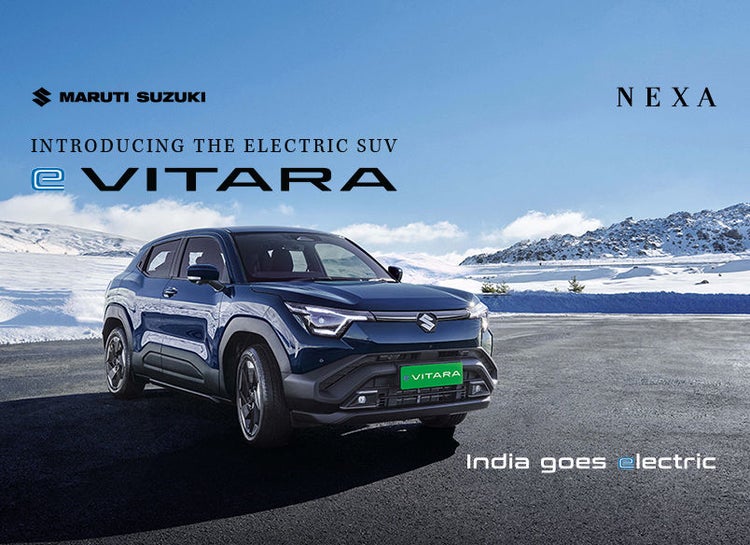

Maruti Suzuki's ₹35,000 crore, 800-acre Kharkhoda plant — inaugurated July 2, 2026 — targets 10 lakh annual capacity by FY31, directly accelerating e Vitara EV production to meet surging demand.
Maruti Suzuki's Kharkhoda manufacturing complex is a ₹35,000 crore greenfield vehicle plant spread across 800 acres at IMT Kharkhoda, Haryana. Prime Minister Narendra Modi and Japanese Prime Minister Sanae Takaichi officially inaugurated it on July 2, 2026 — a facility anchoring India's largest automaker's push toward 40 lakh annual production capacity by FY31.
Two plants within the complex currently produce 5 lakh vehicles per year. When fully built out, the site will deliver 10 lakh units annually, making it one of the largest single-location automotive manufacturing hubs in Asia. The inauguration was more than a ribbon-cutting — it was a statement about the India-Japan industrial partnership and where India's EV future is being physically built.
Kharkhoda Plant: Key Facts at a Glance
| Parameter | Detail |
|---|---|
| Total Investment | ₹35,000 crore |
| Site Area | 800 acres (with integrated supplier park) |
| Full-Scale Annual Capacity | 10 lakh vehicles |
| Current Operational Capacity | 5 lakh vehicles/year (2 plants running) |
| Direct Jobs Created | 21,000+ |
| Plant 1 Commercial Production Start | February 2025 (Brezza, 2.5 lakh units/year) |
| Plant 2 Commercial Production Start | May 18, 2026 (2.5 lakh units/year) |
| Renewable Energy Target | 319 MWp solar by FY31 |
| Biogas Plant | 10 TPD, commissioning FY27 |
| Parent Company's FY31 Capacity Goal | 40 lakh vehicles/year |
The scale of this investment is difficult to overstate. ₹35,000 crore is roughly equivalent to $4.2 billion — a figure that places this among the largest single manufacturing investments in Indian automotive history. The ETAuto report on the inauguration confirms the plant's role as a cornerstone of Maruti Suzuki's long-term capacity roadmap.
What exactly is the Kharkhoda plant, and why does it matter for India's EV future?
Kharkhoda is Maruti Suzuki's first entirely new greenfield manufacturing campus since the company's original Gurugram facility opened decades ago. It is not an expansion of an existing plant but a purpose-built, next-generation complex designed from the ground up to accommodate production demands of the 2030s.
The foundation stone was laid by PM Modi in August 2022. The first plant commenced commercial production in February 2025, dedicated entirely to manufacturing the Brezza compact SUV with an annual capacity of 2.5 lakh units. The second plant at the same campus began commercial production on May 18, 2026, adding another 2.5 lakh units per year and bringing the site's current total to 5 lakh units annually. The July 2, 2026 inauguration marked the formal commissioning of this expanded phase.
For India's EV transition, the plant's significance extends beyond raw numbers. Maruti Suzuki has entered the electric vehicle segment with the e Vitara, its first battery electric vehicle for the Indian market. This mid-size electric SUV was co-developed with Toyota (which sells it as the Urban Cruiser EV) and has generated substantial consumer interest — bookings reportedly doubled in May 2026, signalling demand that the company's existing Gurugram and Manesar plants were not designed to absorb at scale. Kharkhoda's expanding capacity is the structural answer to that demand signal.
How does Industry 5.0 manufacturing work at Kharkhoda?
Industry 5.0 represents the next evolution of smart manufacturing, where artificial intelligence and human workers collaborate rather than compete — moving beyond Industry 4.0's automation-first approach to prioritise human-machine synergy, sustainability, and resilience.
Maruti Suzuki has implemented this through what it calls Suzuki Smart Factory principles. The practical manifestations include:
AI-powered cobots: The plant deploys human-aware collaborative robots that use AI to sense and respond to human workers in shared spaces. Unlike traditional industrial robots operating behind safety cages, cobots at Kharkhoda can work alongside assembly-line workers, handling repetitive or ergonomically demanding tasks while humans manage quality control and complex assembly steps.
100% renewable electricity: The entire facility runs on renewable power. Maruti Suzuki has already expanded its installed solar capacity to 79 MWp across its manufacturing network and has set a target of 319 MWp by FY31. Kharkhoda is central to that solar expansion plan.
Zero liquid discharge: The plant operates with zero liquid discharge, meaning all process water is treated and recycled within the facility. Combined with 100% water recycling, this makes Kharkhoda one of the most water-responsible automotive plants in India — a meaningful credential in a state like Haryana where groundwater stress is a documented concern.
Biogas integration: A 10-tonne-per-day biogas plant is scheduled for commissioning during FY27. At full capacity, this is expected to reduce CO₂ emissions by approximately 9,490 tonnes annually and meet around 20% of the facility's total gas requirement — a meaningful dent in the plant's carbon footprint.
These are not aspirational targets. The first plant has been operational since February 2025, and the sustainability systems described above were built into the facility's original design, not retrofitted.
What does 10 lakh annual capacity actually mean for Indian EV buyers?
Ten lakh vehicles per year from a single campus reshapes competitive dynamics across the Indian auto market. India's total passenger vehicle sales in FY25 were approximately 43 lakh units. A single Maruti Suzuki campus producing 10 lakh units at full scale would account for roughly 23% of the country's current annual passenger vehicle market — from one location.
For EV buyers specifically, this capacity has two direct implications.
First, Maruti Suzuki can scale electric vehicle production without the bottlenecks that have plagued other manufacturers. The e Vitara, which is among the most anticipated electric SUVs in India in 2026, has faced the classic early-EV problem: demand outpacing supply. When bookings double in a single month, a manufacturer without adequate production capacity faces a choice between long waiting periods or turning away orders. Kharkhoda's expanding capacity removes that constraint.
Second, scale drives cost efficiency. Automotive manufacturing is a volume game — higher production volumes spread fixed costs across more units, which creates room to either improve margins or reduce prices. As Maruti Suzuki scales e Vitara production at Kharkhoda, the per-unit economics improve, which could translate into more competitive pricing or better-equipped variants at the same price point. This matters enormously in a market where EV adoption is still price-sensitive, and where buyers are actively comparing the e Vitara against rivals from Tata, Hyundai, and MG.
How does Kharkhoda fit into Maruti Suzuki's 40 lakh unit FY31 target?
Maruti Suzuki's stated goal is to reach 40 lakh annual production capacity by FY31. The company's current manufacturing footprint — Gurugram, Manesar, and the Gujarat plant operated by Suzuki Motor Gujarat — has a combined capacity of approximately 23-25 lakh units per year. Kharkhoda's 10 lakh unit target at full scale is therefore not incremental; it is the primary growth engine for the entire FY31 ambition.
The math is straightforward: without Kharkhoda reaching full capacity, the 40 lakh target is unreachable. The plant's phased ramp-up — 2.5 lakh units from Plant 1 (February 2025), another 2.5 lakh from Plant 2 (May 2026), and further phases to come — reflects a deliberate, staged approach to capacity addition that allows the company to match supply with demand rather than over-building ahead of confirmed orders.
The ETAuto report confirms that Kharkhoda "is expected to matter for helping Maruti Suzuki achieve its long-term overall annual production capacity target of 40 lakh vehicles by FY31." That phrasing understates the arithmetic. Kharkhoda is not a supporting player in that target; it is the lead.
What does the India-Japan angle mean for EV technology transfer?
The joint inauguration by PM Modi and Japanese PM Sanae Takaichi was deliberately framed. Maruti Suzuki is 58.19% owned by Suzuki Motor Corporation of Japan, and the Kharkhoda plant embodies the deepest expression of that partnership to date.
For EV technology specifically, the Japan connection matters because Suzuki's EV development — including the platform underpinning the e Vitara — draws on Japanese engineering expertise and supply chain relationships. The e Vitara uses a battery system developed in partnership with Toyota and Suzuki, and the manufacturing processes at Kharkhoda incorporate Suzuki Smart Factory principles refined at Suzuki's Japanese plants.
Technology transfer — the process by which manufacturing know-how, process engineering, and quality systems developed in one country are adapted and implemented in another — is happening at Kharkhoda at scale. The cobots, the renewable energy systems, the zero-liquid-discharge processes are not locally invented; they are Japanese manufacturing philosophy applied to an Indian context, with modifications for local conditions, local supply chains, and local workforce capabilities.
The 21,000 direct jobs the plant is expected to generate are a domestic dividend from this technology transfer. The integrated supplier park within the 800-acre campus means that component manufacturers — many of them Indian — are co-located with the assembly plant, reducing logistics costs and enabling just-in-time supply chains that are essential for high-volume EV production.
How does Kharkhoda compare to other major EV manufacturing investments in India?
India's EV manufacturing space in 2026 is shaped by a wave of large-scale investments from multiple players. Tata Motors has committed significant capital to its EV-specific manufacturing lines at Pune and Sanand. Hyundai has invested in localising the Creta Electric at its Chennai plant. Mahindra is building a dedicated EV manufacturing campus. Against this backdrop, Kharkhoda stands out.
By raw investment quantum, ₹35,000 crore is among the largest single automotive manufacturing investments in India's history. By capacity target, 10 lakh units from a single campus is unmatched in the Indian market. By technology sophistication — Industry 5.0 principles, 100% renewable electricity, zero liquid discharge — Kharkhoda sets a benchmark that other manufacturers will need to respond to.
For buyers researching the best electric SUVs in India in 2026, the manufacturing investment behind a vehicle matters because it signals the manufacturer's long-term commitment to the segment. A company that has committed ₹35,000 crore to a single campus is not hedging its bets on EVs — it is betting the farm. That commitment has downstream implications for after-sales support, spare parts availability, and software update continuity that buyers should factor into their purchase decisions. When comparing the e Vitara's after-sales service network against rivals, Kharkhoda's scale is part of the answer.
What are the sustainability credentials of the Kharkhoda plant?
Sustainability at Kharkhoda is not a marketing overlay but an engineering constraint built into the plant's design. The key credentials:
Solar power: Maruti Suzuki has increased its installed solar power capacity to 79 MWp across its manufacturing facilities. The target is 319 MWp by FY31, and Kharkhoda is the primary growth driver for that expansion. Running on 100% renewable electricity means that every vehicle assembled at Kharkhoda — including the e Vitara — has a lower manufacturing carbon footprint than vehicles assembled at fossil-fuel-powered plants.
Water management: Zero liquid discharge and 100% water recycling are operational commitments, not aspirations. In a region where industrial water use is a genuine environmental and regulatory concern, these systems make the plant more resilient to future regulatory tightening and more acceptable to local communities.
Biogas: The 10 TPD biogas plant scheduled for FY27 commissioning will reduce CO₂ emissions by approximately 9,490 tonnes annually and cover about 20% of the facility's gas needs. Biogas from organic waste is a circular economy solution — it converts waste into energy rather than releasing methane to the atmosphere.
Supplier integration: The integrated supplier park within the campus reduces transport distances for components, which cuts logistics-related emissions. When a seat manufacturer or a wiring harness supplier is 500 metres from the assembly line rather than 50 kilometres away, the supply chain's carbon footprint shrinks materially.
For buyers who care about the full lifecycle environmental impact of their EV — not just tailpipe emissions — these manufacturing sustainability credentials are relevant. An e Vitara assembled at Kharkhoda on renewable electricity, with components sourced from an on-campus supplier park, has a meaningfully lower cradle-to-gate carbon footprint than an equivalent vehicle assembled at a coal-powered plant with a dispersed supply chain.
What does this mean for e Vitara buyers specifically?
The Maruti Suzuki e Vitara is the company's first battery electric vehicle for the Indian market, and it embodies everything Kharkhoda represents. It is the vehicle that most directly benefits from the plant's expanding capacity, and it is the vehicle whose commercial success most directly justifies the ₹35,000 crore investment.
Bookings for the e Vitara reportedly doubled in May 2026 — a demand signal that is both exciting and logistically challenging. Doubled bookings mean doubled delivery expectations, and meeting those expectations requires production capacity that Maruti Suzuki's legacy plants were not designed to provide at this scale. Kharkhoda's second plant coming online in May 2026 — the same month bookings doubled — is not a coincidence. It reflects planning that anticipated demand growth and positioned production capacity to meet it.
For prospective e Vitara buyers, the practical implication is shorter waiting periods as Kharkhoda ramps up. Early EV adopters in India have grown accustomed to waiting lists measured in months — sometimes exceeding a year for popular models. As Kharkhoda's capacity expands toward the 10 lakh unit ceiling, Maruti Suzuki gains the production flexibility to reduce those waits, allocate more units to high-demand variants, and respond faster to market feedback on specifications and features.
The e Vitara also benefits from Kharkhoda's technology infrastructure. Industry 5.0 manufacturing with AI-powered cobots and 100% renewable electricity is particularly well-suited to EV assembly, which involves more complex battery integration steps than internal combustion engine vehicles. The precision required for battery pack assembly, high-voltage wiring, and thermal management system installation is exactly the kind of task where human-aware cobots add value — handling repetitive, precision-critical steps while human workers manage quality verification and exception handling.
If you're evaluating the e Vitara against other EVs for a long-distance trip, the best electric cars for long trips in India in 2026 guide covers range and charging infrastructure in detail. But the manufacturing story at Kharkhoda is part of the ownership confidence equation — knowing that the vehicle was assembled in a world-class facility with solid quality systems matters when you're committing to a six-figure purchase.
What jobs and economic impact will Kharkhoda generate?
The plant is expected to generate more than 21,000 direct jobs. In the context of Haryana's industrial economy, this is significant — IMT Kharkhoda is a relatively new industrial township, and Maruti Suzuki's presence anchors it as a serious manufacturing hub rather than a speculative development.
The indirect employment multiplier for automotive manufacturing is typically estimated at 5-7 indirect jobs for every direct job — meaning Kharkhoda could support 100,000 to 150,000 total jobs in the regional economy when supplier, logistics, and service sector employment is included. The integrated supplier park within the campus accelerates this multiplier by co-locating component manufacturers, creating immediate employment density around the assembly plant.
For the Indian government, this investment validates the Make in India and Atmanirbhar Bharat frameworks. A Japanese company committing ₹35,000 crore to a greenfield Indian plant — not a joint venture hedge, not a minority stake in an existing facility, but a wholly owned, purpose-built campus — is the kind of foreign direct investment that industrial policy is designed to attract.
What are the remaining uncertainties?
The timeline for Kharkhoda reaching full 10 lakh unit capacity is not publicly confirmed beyond the FY31 overall target. The plant's current 5 lakh unit capacity will need to roughly double through additional plant phases, and the timeline for those phases depends on demand trajectories, capital allocation decisions, and regulatory approvals that are not yet public.
The specific production allocation between EV and ICE models at Kharkhoda is also not fully disclosed. Plant 1 is dedicated to the Brezza (an ICE/mild-hybrid model). Plant 2's model allocation has not been comprehensively detailed in available reporting. As Maruti Suzuki's EV portfolio expands beyond the e Vitara, the question of which models are assembled where will become increasingly important for buyers tracking delivery timelines.
The biogas plant's commissioning is scheduled for FY27 but has not yet occurred. The 319 MWp solar target is a 2031 aspiration. These are credible commitments from a company with a strong track record of delivering on infrastructure investments, but they remain future targets rather than current realities.
Why does this plant matter for India's broader EV transition?
India's EV transition is the structural shift from internal combustion engine vehicles to battery electric vehicles across the passenger, commercial, and two-wheeler segments — a shift that requires not just consumer demand but manufacturing infrastructure, supply chain localisation, and charging network development to proceed at scale.
Kharkhoda matters for this transition because it demonstrates that India can host world-class EV manufacturing at scale. When a company like Maruti Suzuki — which understands Indian market conditions better than almost any other automaker — commits ₹35,000 crore to a greenfield plant with Industry 5.0 technology and 100% renewable electricity, it sends a signal to the entire automotive space: India is a serious EV manufacturing destination, not just a consumption market.
This signal has downstream effects. Suppliers invest in localising EV components when they see anchor customers like Maruti Suzuki committing to long-term production volumes. Battery manufacturers consider Indian plants when they see the scale of demand that Kharkhoda represents. Charging infrastructure operators expand their networks when they see the production volumes that will put more EVs on Indian roads.
For buyers currently researching EVs — whether they're looking at 5-star Bharat NCAP electric cars, evaluating Battery as a Service models, or comparing EVs with ADAS — the Kharkhoda plant is background context that shapes the competitive space they're buying into. A market where Maruti Suzuki can produce 10 lakh vehicles annually from a single campus is a market where EV prices will face sustained downward pressure, where service networks will expand, and where the risk of buying an EV from a manufacturer that subsequently exits the market is materially lower.
The Kharkhoda plant is, in the most literal sense, where India's EV future is being built — one cobot-assembled vehicle at a time, on 100% renewable electricity, with zero liquid discharge, in a facility that will still be producing vehicles when today's EV buyers are on their second or third electric car.
Sources
- Maruti Suzuki Kharkhoda Plant: PM Modi and Japan's Takaichi Open Maruti Suzuki's ₹35,000 Crore Kharkhoda Plant, ETAuto
- Maruti Suzuki e Vitara — Official Model Page
- Best Electric SUVs in India in 2026 — EV Index India
- Best Electric Cars for Long Trips in India in 2026 — EV Index India
- Which Electric SUV Has the Best After-Sales Service Network in India? — EV Index India
- Which 5-Star Bharat NCAP Electric Cars in India Are Worth Buying in 2026? — EV Index India
- Which Electric Cars Offer Battery as a Service (BaaS) in India? — EV Index India
- Best Electric Cars with ADAS in India in 2026 — EV Index India