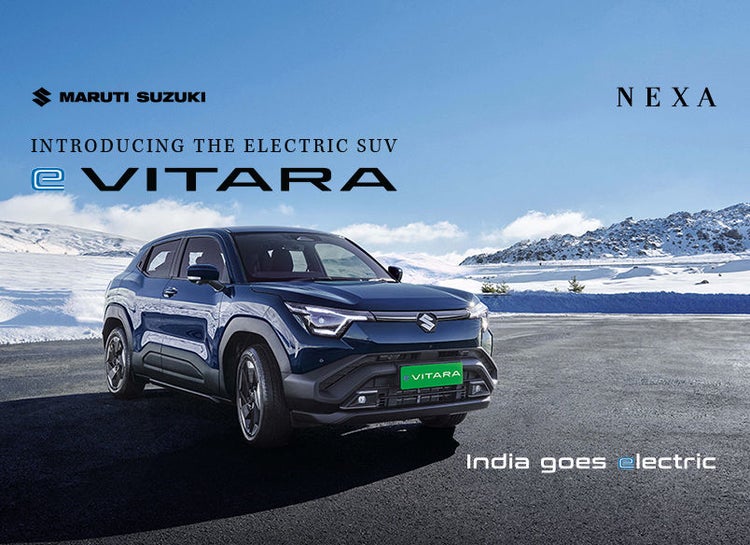

India's EV exports jumped 14x to 15,641 units in Q1 FY27, led by Maruti's e Vitara, with Tata and Mahindra aggressively targeting global right-hand-drive markets next.
How Indian EV Exports Surged 14-Fold in Q1 FY27: What Maruti, Tata & Mahindra's Global Push Means for Domestic Buyers
India's electric vehicle export story is defined as the rapid transition of domestically manufactured EVs from niche overseas shipments to a mainstream global trade category — and Q1 FY27 marked its most dramatic chapter yet. In the three months ended June 2026, India exported 15,641 electric passenger vehicles, a 14-fold jump from 1,122 units in the same period a year earlier, according to industry data. That single quarter already accounts for more than half of the 28,652 units exported across the entirety of FY26.
The headline number is striking, but the story behind it — involving geopolitical fuel-price shocks, trade agreements, capacity investments, and three very different corporate strategies — matters far more to anyone buying or planning to buy an electric car in India today.
| Automaker | Q1 FY27 EV Export Units | Key Markets | Domestic Capacity Plan |
|---|---|---|---|
| Maruti Suzuki (e Vitara) | ~15,210 | UK (No. 1), South Africa, 47 countries total | 4 more EVs by 2030; exports to 120 markets overall |
| Tata Motors | Early-stage (South Asia launch) | South Asia now; UK, Europe, Pacific targeted | ₹40,000 cr investment; capacity to 1.3 mn units by FY31 |
| Mahindra & Mahindra | Development phase | UK (via India-UK CETA), right-hand-drive markets first | BE 6 & XEV 9e UK variants under development |
The table above captures the current state of play. Maruti is already shipping at scale; Tata and Mahindra are mobilising. Each trajectory carries distinct implications for domestic supply, pricing, and wait times.
Why did Indian EV exports spike so sharply in Q1 FY27?
Two forces converged to create this moment. The first is structural: Indian automakers have spent the past two years building EV manufacturing capacity and global homologation credentials. The second is cyclical and geopolitical: elevated global fuel prices driven by the US-Iran conflict and disruptions in the Strait of Hormuz pushed consumers worldwide toward more affordable personal transportation alternatives, accelerating EV demand in markets that were previously slow adopters.
The combination is powerful. When global fuel prices spike, the total-cost-of-ownership argument for EVs strengthens almost overnight. India, with its established manufacturing base, competitive labour costs, and increasingly export-ready EV portfolio, was positioned to capture that demand faster than most.
Rahul Bharti, senior executive officer at Maruti Suzuki, put the scale in perspective: "Maruti Suzuki exports more cars from India than the rest of 17 car manufacturers put together. We exported close to 125,000 cars in Q1 to about 120 markets. We have already exported more than 40,000 units of the e Vitara in less than a year of commencing shipments."
That last figure — 40,000 e Vitara units shipped globally in under a year — is the clearest proof that India can manufacture EVs at a quality and cost point that developed markets will accept.
What role did the Maruti Suzuki e Vitara play in this surge?
The e Vitara is Maruti Suzuki's first battery-electric vehicle for the Indian market, co-developed with Suzuki Motor Corporation and built at the Suzuki Motor Gujarat plant. In Q1 FY27, it emerged as India's third-most exported car overall — not just among EVs — with 15,210 units shipped to 47 countries. The UK was the single largest destination, followed by South Africa.
Maruti entered 20 new markets in Q1 FY27, mostly in Europe, riding the e Vitara's reception. This is not a vanity export exercise. Mint's market analysis notes that Maruti's EV export push could be a winning strategy for investors, given the company's unmatched export infrastructure and the Suzuki parent's deep distribution networks in Europe and Japan.
For domestic buyers, the e Vitara's export success carries a practical implication: Maruti is running its Gujarat EV plant at meaningful volumes, which typically translates into better component supply chains, faster quality iteration, and — over time — more predictable domestic delivery windows. When a plant is producing 40,000+ units for export in under a year, it is not a low-volume operation struggling with teething problems. That production confidence should filter into domestic after-sales support and spare-parts availability as well.
If you are evaluating the e Vitara for a domestic purchase, the export traction is a reasonable proxy for manufacturing maturity. You can explore how it stacks up against peers in our best electric SUVs in India in 2026 guide.
What is Tata Motors' global EV export strategy?
Tata Motors is approaching EV exports with a phased, capacity-first logic. The company recently started EV exports to neighbouring South Asian countries — a deliberate low-risk entry point to build export operations before tackling more demanding regulatory environments. The longer-term ambition is considerably larger.
The company wants to expand EV exports to Asia, Africa, Europe, and the Pacific over the next few years, with the UK expected to be one of the first new major export destinations. Preparations are already underway — including vehicle certification, regulatory compliance, and establishing distribution and after-sales operations.
The capacity underpinning this ambition is substantial. Tata Motors Passenger Vehicles has announced plans to invest up to ₹40,000 crore over the next five years to augment annual production capacity to 1.3 million vehicles by FY31, up from approximately 900,000 units currently. The EV portfolio is also set to expand from six to ten nameplates by the same deadline.
Tata is also working closely with Jaguar Land Rover on vehicle engineering and software development to meet the requirements of advanced automobile markets. The Avinya platform — Tata's next-generation pure-electric architecture — is being positioned for European premium segments within the next two to three years.
For domestic Tata EV buyers, this investment story is directly relevant. A ₹40,000 crore capacity expansion does not happen in a vacuum — it means new assembly lines, better battery supply agreements, and more service infrastructure. If you are on a waiting list for a Nexon EV or Curvv EV, the capacity ramp-up is the most credible signal that wait times should compress over the next 12–18 months. Our guide on best electric cars to buy in India in 2026 covers the current Tata lineup in detail.
How is Mahindra & Mahindra approaching EV exports differently?
Mahindra's export strategy prioritises right-hand-drive markets before scaling to left-hand-drive regions — a deliberately conservative sequencing that aims for high-value outcomes. Rajesh Jejurikar, executive director and CEO of Mahindra's auto and farm sectors, has been explicit about the philosophy: "For exports, we would want to take our EVs out, and we've said that we look at right-hander markets in the world first, and there are two or three of them that we are evaluating. If we succeed there, which we hope we will, then we will look at left-hand drive, western world markets."
The UK is the most concrete near-term target. Mahindra has started work on specific variants of the BE 6 and XEV 9e SUVs for the UK market, with the India-UK full Economic and Trade Agreement (CETA) providing a potential duty-free or reduced-duty pathway that makes Indian-manufactured EVs more price-competitive against European and Chinese rivals.
This sequencing is strategically sound. Right-hand-drive markets — the UK, South Africa, Australia, New Zealand, Japan — share regulatory and driving-culture familiarity with India that reduces the engineering and compliance cost of market entry. Mahindra can validate its export operations in these markets before committing to the far more complex and capital-intensive process of building left-hand-drive variants for continental Europe.
For domestic buyers of the BE 6 or XEV 9e, the export development work is a double-edged signal. On one hand, it confirms that Mahindra is investing in platform longevity and global-standard engineering — good for long-term resale value and software support. On the other hand, export-variant development can temporarily divert engineering bandwidth from domestic feature updates. The net effect is likely positive, but worth watching. Check our best electric cars with ADAS in India in 2026 guide for how the BE 6 and XEV 9e compare on advanced safety features today.
What is driving global demand for Indian-made EVs specifically?
Several factors are converging to make India a preferred EV manufacturing source for global buyers.
Geopolitical fuel price shock. The US-Iran conflict and associated Strait of Hormuz disruptions have pushed global fuel prices sharply higher. When petrol and diesel become expensive, the economic case for EVs strengthens across income brackets. Markets that were deferring EV adoption — including parts of Europe, South Africa, and South Asia — are now accelerating purchase decisions.
India's cost competitiveness. India's Production Linked Incentive (PLI) scheme for the automotive sector, which Reuters reported as expected to attract $14 billion in investment, has helped Indian automakers build scale and reduce per-unit costs. The scheme offers 4–7% cashbacks on eligible sale and export value, with an additional 2% for EV manufacturers — a meaningful margin buffer when competing in price-sensitive export markets.
Quality perception shift. Maruti Suzuki's Bharti specifically noted that India-made vehicles are well-received in developed markets such as Europe and Japan "on the strength of their quality and technology." This is a relatively recent development. Five years ago, Indian-made cars faced significant perception barriers in premium European markets. The e Vitara's reception — entering 20 new European markets in a single quarter — suggests those barriers have materially lowered.
Trade agreement tailwinds. The India-UK Free Trade Agreement and the full Economic and Trade Agreement (CETA) are creating preferential duty structures that make Indian EVs more competitive against Chinese and European alternatives in UK and Commonwealth markets. This is a structural advantage that will compound over time as more agreements are finalised.
What does India's domestic EV market look like alongside this export boom?
The export surge is not happening at the expense of domestic supply — at least not yet. EV penetration in India's passenger vehicle market rose to approximately 6.5% in Q1 FY27, up from 4.6% in FY26, according to ICRA. Passenger vehicle wholesale volumes rose 24% year-on-year to 3.9 lakh units in June 2026, with retail sales up 38% on a low base, supported by GST rate cuts, an extended summer wedding season, and demand for recently launched models.
ICRA projects overall passenger vehicle wholesale volume growth to moderate to 4–6% for the full year FY27, after a strong first quarter. The moderation is expected to reflect the elevated base of FY26, normalisation of pent-up demand, rising vehicle costs, and potential rural demand softness from a weak monsoon.
For EV buyers, the 6.5% penetration figure is significant context. It means that roughly one in every 15 passenger vehicles sold in India is now electric — a threshold that typically triggers meaningful improvements in charging infrastructure investment, insurance product availability, and resale market liquidity. If you are on the fence about EV ownership due to range anxiety or resale concerns, the penetration data suggests the space is maturing faster than most anticipated. Our guide on best electric cars for long trips in India in 2026 addresses the range and charging infrastructure question in detail.
Does the export boom create supply pressure on domestic buyers?
This is the question domestic buyers are most likely to ask, and the honest answer is: it depends on the manufacturer and the timeframe.
In the short term, Maruti's e Vitara production is clearly running at high volumes — 40,000+ units exported in under a year, plus domestic sales. The Gujarat plant appears to be operating at meaningful capacity, which generally means the company is not choosing between domestic and export customers in a zero-sum way. Maruti's plan to introduce four more EVs by 2030 also signals that the company sees domestic demand as a long-term growth driver, not a secondary priority.
For Tata Motors, the ₹40,000 crore capacity expansion to 1.3 million units by FY31 is the key variable. Current capacity of approximately 900,000 units is already under pressure from strong domestic demand. Export ambitions, if pursued aggressively before the capacity expansion is complete, could theoretically tighten domestic supply. However, Tata's own executives have acknowledged this tension: "Right now, demand is very high in the domestic market. But with new investments coming in towards capacity expansion, the company wants to increase its footprint overseas." The sequencing — capacity first, then exports — is the right approach for domestic buyers.
Mahindra's situation is different. The BE 6 and XEV 9e are relatively new launches, and export-variant development is still in progress. The near-term supply constraint for Mahindra buyers is more likely to come from component localisation and battery supply than from export diversion.
The broader point is that export success and domestic availability are not inherently in conflict when manufacturers are investing in capacity. The risk arises only if exports outpace capacity growth — a scenario that bears watching but is not the current trajectory for any of the three players.
What does the India-UK trade deal mean for Indian EV buyers?
The India-UK full Economic and Trade Agreement (CETA) is relevant to domestic buyers in a less obvious but important way. When Indian automakers gain preferential access to the UK market, they have a stronger commercial incentive to invest in right-hand-drive platform development, advanced safety systems, and software quality — all of which eventually benefit domestic variants of the same vehicles.
The UK's regulatory environment for EVs is among the most demanding in the world, covering crash safety, software cybersecurity, charging interoperability, and battery durability. An Indian EV that passes UK homologation is, by definition, engineered to a high standard. Mahindra's BE 6 and XEV 9e UK variants, once developed, will carry that engineering credibility back into the domestic product.
This is a pattern that Indian buyers have benefited from before — export-grade quality standards gradually raising the floor for domestic specifications. The e Vitara's European reception is the most current example: a car built for Indian roads that European buyers are accepting on quality grounds.
If you are evaluating safety as a primary criterion, our guide on 5-star Bharat NCAP electric cars in India covers which models have already achieved top crash-test ratings.
What should domestic EV buyers actually do with this information?
The 14-fold export surge is not just a trade statistic — it is a signal about the maturity and direction of India's EV manufacturing space. Here is what it means in practical terms for buyers at different stages of the decision process.
If you are considering the Maruti Suzuki e Vitara: The export volumes confirm that the platform is production-ready and globally validated. The UK and South Africa are demanding markets; a car selling well there is not a product with unresolved quality issues. Domestic delivery timelines should be relatively predictable given the plant's demonstrated output capacity.
If you are considering a Tata EV (Nexon EV, Curvv EV, or upcoming Avinya-platform models): The ₹40,000 crore capacity investment is the most important number. It signals that Tata is committed to scaling, not just announcing. The export ambitions are real but sequenced after capacity expansion — which is the right order of operations for domestic buyers.
If you are considering Mahindra's BE 6 or XEV 9e: The UK export development work is a long-term positive for platform quality and software investment. Near-term, focus on the domestic delivery and service network, which is still maturing. Our best electric SUV after-sales service network guide has current data on service reach.
If you are budget-constrained: The export boom is primarily happening in the mid-to-premium EV segment. The sub-₹20 lakh EV market is less directly affected by export dynamics, but benefits indirectly from the manufacturing scale-up. See our best electric cars under ₹20 lakhs guide for options in that range.
What comes next for Indian EV exports?
The trajectory points upward, but with important caveats. Maruti Suzuki has committed to four additional EV models by 2030, each of which will likely follow the e Vitara's export-alongside-domestic-launch strategy. Tata's Avinya platform is being positioned for European premium segments within two to three years. Mahindra is targeting the UK as a near-term export market and will evaluate left-hand-drive European markets after establishing a right-hand-drive foothold.
The geopolitical tailwind — elevated global fuel prices from the US-Iran conflict — may or may not persist. If oil prices normalise, some of the urgency driving global EV adoption could ease. But the structural shift toward electrification in Europe, the UK, and key Asian markets is policy-driven, not purely price-driven. Regulatory mandates on internal combustion engine phase-outs create a floor under EV demand that does not disappear when fuel prices fall.
India's PLI scheme for automotive manufacturing, which Reuters reported as designed to attract $14 billion in investment and create 5.8 million jobs over five years, provides the policy scaffolding for sustained export growth. The additional 2% cashback for EV manufacturers and suppliers is a direct incentive to prioritise electric over internal combustion in export planning.
The 15,641 units exported in Q1 FY27 will almost certainly not be the peak. The more interesting question is whether Indian automakers can maintain quality and domestic supply simultaneously as export volumes scale into the hundreds of thousands annually. The early evidence — from Maruti's Gujarat plant output, Tata's investment commitments, and Mahindra's phased market entry — suggests the industry is approaching this challenge with appropriate seriousness.
For domestic buyers, that is ultimately the most reassuring signal: India's EV export boom is being built on manufacturing investment and quality validation, not on diverting domestic supply to chase short-term export revenue. The global push and the domestic opportunity are, for now, pulling in the same direction.
If you are actively comparing EVs for purchase, our best electric cars to buy in India in 2026 guide consolidates the current market across all price points and use cases.
Sources
- More Indian EVs head to distant shores as Maruti, Tata, M&M drive 14-fold export surge — ETAuto
- EV penetration rises to 6.5% in Q1 FY27 as adoption gathers pace: ICRA — ETAuto
- Maruti Suzuki's EV export push: Why it may be a winning strategy — Mint
- India to launch supercharged push for global electric vehicle players — Reuters
- BREAKING: India's EV Exports Jump 14-Fold in Q1 FY27 — BigBreakingWire on X
- Maruti Suzuki e Vitara — Official Page