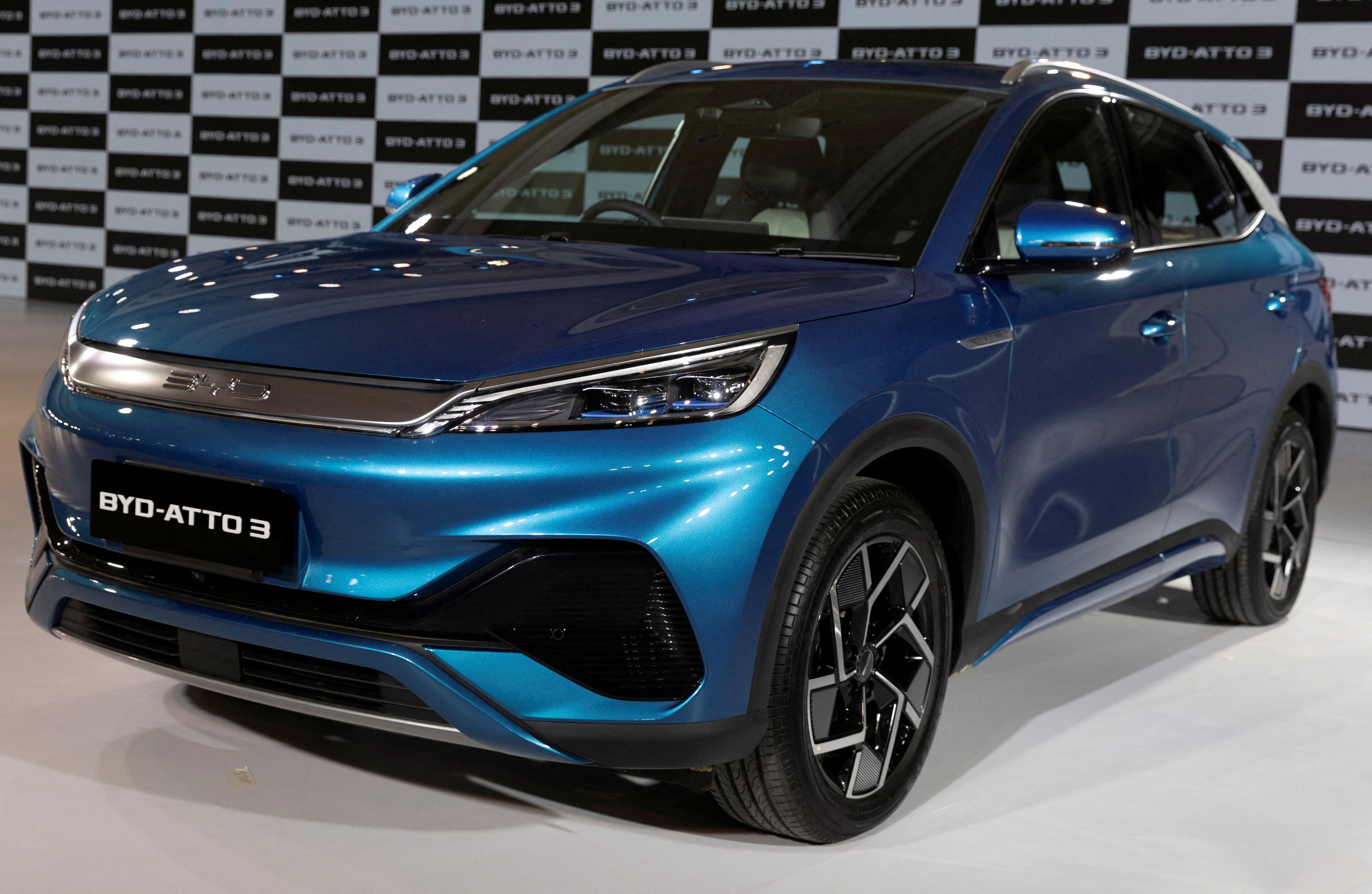

BYD's new Sealion 7 Dynamic enters at ₹41.90 lakh with a 71.8kWh battery, 520km NEDC range, and Level 2 ADAS — undercutting rivals like the Ioniq 5 and BMW iX1 LWB by a significant margin.
BYD Sealion 7 Dynamic Trim Launched at ₹41.90 Lakh in India 2026: How Entry-Level Pricing Reshapes Premium EV Competition
The BYD Sealion 7 Dynamic is the new entry-level variant of the Sealion 7 lineup, launched on August 20, 2026, at ₹41.90 lakh (ex-showroom) — exactly ₹8 lakh cheaper than the existing Premium trim and ₹14 lakh below the top-spec Performance variant. With this move, BYD India has expanded the Sealion 7 portfolio to three variants and planted its flag at a price point that no other imported premium electric SUV currently occupies in the Indian market.
At that price, the Sealion 7 Dynamic sits below the Hyundai Ioniq 5 (₹55.71 lakh), the BMW iX1 LWB (₹52.40 lakh), and the Kia EV6 (₹65.98 lakh) — models that have defined the premium EV segment in India. It also creates competitive pressure on domestically produced mid-premium EVs, including the Maruti Suzuki e Vitara, which positions itself as a value-driven alternative in the ₹18–25 lakh band but now faces a BYD product offering dramatically different scale of technology and range for buyers willing to stretch their budgets further.
How does the Sealion 7 Dynamic compare to its siblings and key rivals?
Here is a side-by-side look at where the Sealion 7 Dynamic sits against the rest of the Sealion 7 family and its primary competitors in India's premium EV space:
| Model | Price (Ex-showroom) | Battery | Claimed Range (NEDC) | Power | Drive |
|---|---|---|---|---|---|
| BYD Sealion 7 Dynamic | ₹41.90 lakh | 71.8kWh Blade | 520km | 231hp | RWD |
| BYD Sealion 7 Premium | ₹49.90 lakh | 82.56kWh Blade | 567km | 313hp | RWD |
| BYD Sealion 7 Performance | ₹55.90 lakh | 82.56kWh Blade | 542km | 530hp | AWD |
| Hyundai Ioniq 5 | ₹55.71 lakh | 72.6kWh | ~481km (WLTP) | 217hp | RWD |
| BMW iX1 LWB | ₹52.40 lakh | 64.7kWh | ~440km (WLTP) | 204hp | RWD |
| Kia EV6 | ₹65.98 lakh | 77.4kWh | ~528km (WLTP) | 229hp | RWD |
Sources: Autocar India, Fortune India
The Dynamic's value becomes immediately apparent: it offers a battery size and claimed range that is competitive with — or superior to — rivals costing ₹10–24 lakh more. The trade-off is lower power output (231hp versus the Premium's 313hp) and shorter range than the Premium trim's 567km. For buyers prioritising everyday usability over outright performance, the Dynamic's numbers are compelling.
What exactly does the Sealion 7 Dynamic trim offer for ₹41.90 lakh?
The Sealion 7 Dynamic runs a 71.8kWh Blade battery pack driving a 231hp rear-wheel-drive motor, with a claimed NEDC range of 520km and a 0–100kph sprint time of 7.3 seconds. BYD's Blade battery uses cell-to-pack architecture that eliminates the traditional module layer, improving energy density, thermal stability, and structural rigidity — a meaningful safety and efficiency advantage over conventional lithium-ion packs.
The variant sits on BYD's e-Platform 3.0 and carries the brand's Ocean Aesthetics design language. Despite being the entry-level option, the feature list is substantial:
- 15.6-inch rotating touchscreen with wireless Android Auto and Apple CarPlay
- 10.25-inch digital driver's display
- Panoramic glass roof
- 360-degree camera system
- 11 airbags
- Level 2 ADAS (adaptive cruise control, automatic emergency braking, lane assist, traffic sign recognition)
- Powered and ventilated front seats
- Wireless phone charging
- LED headlights and tail-lights
- One-touch open/close tailgate
- Rain-sensing frameless wipers
The Dynamic does make concessions compared to the Premium and Performance trims. It rides on 19-inch alloy wheels rather than the Performance's 20-inch units, has a 10-speaker audio system (two fewer than the higher trims), and misses out on a head-up display, gesture-controlled tailgate, leather-wrapped steering wheel, powered lumbar adjustment, and a PM2.5 air filter. None of these are deal-breakers for a buyer entering the segment at ₹41.90 lakh.
Fortune India reports that BYD India's Head of Electric Passenger Vehicle Business, Rajeev Chauhan, described the Dynamic as "a new expression of Sealion 7" aimed at "a more diverse customer base." With over 4,000 Sealion 7 units already in operation across India since the model's 2025 introduction, the Dynamic is designed to accelerate that momentum.
What does the Sealion 7 Dynamic miss compared to the Premium trim?
The ₹8 lakh gap between the Dynamic and the Premium buys a significantly larger battery (82.56kWh versus 71.8kWh), a more powerful motor (313hp versus 231hp), a longer claimed range (567km versus 520km), and a richer feature set including the head-up display, PM2.5 air filter, gesture-controlled tailgate, leather steering wheel, and 12-speaker audio system.
The battery difference carries the most weight. The 82.56kWh pack in the Premium and Performance trims offers approximately 47km more claimed range — meaningful on long intercity runs but less critical for urban commuters who charge overnight. For regular intercity drivers, the Premium's 567km NEDC range (real-world figures will be lower) provides a more comfortable buffer. For those whose daily driving stays within 150–200km, the Dynamic's 520km claimed range translates to charging every two to three days at most.
The Performance trim, at ₹55.90 lakh, adds dual motors, all-wheel drive, and 530hp — a proposition aimed at enthusiasts rather than practical EV adopters. Most buyers will realistically consider the Dynamic and Premium.
If you are evaluating the Sealion 7 for longer road trips, our guide to the best electric cars for long trips in India in 2026 provides a broader framework for that decision.
How does the Sealion 7 Dynamic's safety stack up?
Safety in the premium EV segment depends not just on airbag count but on how active and passive systems integrate into a coherent package. The Sealion 7 Dynamic delivers 11 airbags and a full Level 2 ADAS suite — a specification that matches or exceeds rivals costing significantly more. The 360-degree camera system, automatic emergency braking, lane-keeping assist, and adaptive cruise control are all present on the base Dynamic trim, which is not always the case with entry-level variants of competing models.
BYD's Blade battery also contributes to passive safety. Its cell-to-body integration means the battery pack forms part of the vehicle's structural floor, improving torsional rigidity and lowering the centre of gravity — both of which benefit handling and crash performance. BYD has not yet pursued Bharat NCAP certification for the Sealion 7 in India, which is worth noting for buyers who prioritise independently verified crash ratings. Our article on 5-star Bharat NCAP electric cars in India covers which EVs have gone through that process.
For buyers who weight ADAS heavily, the Sealion 7 Dynamic's Level 2 package is competitive. Our guide to best electric cars with ADAS in India in 2026 provides a detailed comparison of how different systems perform in Indian driving conditions.
What festive offers and ownership benefits come with the Dynamic?
BYD has timed the Dynamic's launch to coincide with its "Celebrate Your Dreams with BYD" festive campaign, which runs from August 1. Buyers of the Sealion 7 Dynamic can avail of:
- A complimentary 7kW home charger with installation
- 10-year roadside assistance coverage extension
- Extended warranty of 10 years / 1.5 lakh km on the Blade battery
The 10-year battery warranty is significant. Battery degradation anxiety is one of the primary concerns for first-time EV buyers in India, and a decade-long warranty on the Blade pack substantially reduces that risk. The complimentary home charger removes another common friction point — the cost and hassle of sourcing and installing a home charging solution separately.
These offers are time-limited and subject to BYD India's terms, so prospective buyers should confirm their availability at the time of purchase.
How does BYD's pricing strategy affect the broader premium EV market?
BYD's decision to introduce the Dynamic at ₹41.90 lakh is a deliberate market-expansion move, not a cost-cutting exercise. The strategy uses portfolio tiering — deploying a lower-priced entry variant to widen the funnel of potential buyers while preserving the margin and positioning of higher trims. Tesla employed this playbook globally with the Standard Range Model 3, and Hyundai has used it with base variants of the Ioniq 5.
The immediate competitive impact falls on the ₹40–55 lakh premium EV segment, which was previously anchored by the BMW iX1 LWB at ₹52.40 lakh as the most accessible "prestige" option. The Sealion 7 Dynamic undercuts that by over ₹10 lakh while offering a larger battery, more claimed range, and a comparable (in some areas superior) feature set. That is a difficult value equation for the iX1 LWB to counter without a price adjustment.
The Hyundai Ioniq 5 at ₹55.71 lakh faces a similar challenge. Its 800V architecture and ultra-fast charging capability (up to 350kW) are genuine differentiators that the Sealion 7 cannot match — the Sealion 7 Dynamic supports DC fast charging at up to 80kW. But for buyers without access to 350kW chargers in their daily lives (which is most Indian buyers, given current infrastructure), the Ioniq 5's charging advantage is largely theoretical. The Sealion 7 Dynamic's ₹13.81 lakh price advantage is very real.
The Kia EV6 at ₹65.98 lakh is the most exposed. It shares the Ioniq 5's 800V platform and offers a sportier driving character, but at nearly ₹24 lakh more than the Sealion 7 Dynamic, it operates in a different value universe entirely.
Where does the Maruti Suzuki e Vitara fit in this new space?
The Maruti Suzuki e Vitara occupies a different segment — priced in the ₹18–25 lakh range, it targets buyers making their first move into electric mobility rather than those upgrading from premium ICE vehicles. However, the Sealion 7 Dynamic's arrival at ₹41.90 lakh does reshape the aspirational ceiling for mid-premium EV buyers.
A buyer considering the e Vitara's top variants — who has a budget stretching to ₹25 lakh — is not directly cross-shopping the Sealion 7 Dynamic. But the Dynamic's pricing creates a clearer "next step" in the EV upgrade ladder: e Vitara for value-conscious buyers entering the EV space, Sealion 7 Dynamic for those ready to commit to a fully-featured premium electric SUV without crossing the ₹50 lakh threshold.
In this sense, the Maruti Suzuki e Vitara and the Sealion 7 Dynamic are complementary rather than directly competitive — the e Vitara is a gateway product for the EV segment, while the Dynamic captures buyers who want premium technology at a price previously unattainable in the imported EV category. Together, they help define the shape of India's expanding EV market: accessible at the bottom, increasingly value-driven at the top.
For a broader view of the best electric SUVs available in India right now, including how the e Vitara and Sealion 7 compare across the full market, see our guide to the best electric SUVs in India in 2026.
What colours and availability can buyers expect?
The Sealion 7 Dynamic is available in four exterior colours: Atlantis Grey, Cosmos Black, Aurora White, and Shark Grey. BYD India has not announced any regional restrictions on availability, and given the brand's existing dealer network — which has been expanding steadily since BYD re-entered India's passenger vehicle market — the Dynamic should be accessible across major metros and Tier 1 cities.
Delivery timelines have not been officially specified at the time of writing. Given that BYD already has over 4,000 Sealion 7 units in operation in India and the model is in active production, significant waiting periods are unlikely, though festive season demand could create short-term inventory pressure.
Is the Sealion 7 Dynamic the right buy, or should you stretch to the Premium?
The answer depends on how you use your car. The Dynamic is the right choice if:
- Your daily driving is predominantly urban or semi-urban, with occasional intercity trips
- You charge at home overnight and do not rely on public fast-charging infrastructure
- The ₹8 lakh saving over the Premium is meaningful to you
- You can live without a head-up display and a PM2.5 filter
The Premium trim makes more sense if:
- You regularly drive 400km+ in a single day and need the buffer of a 567km claimed range
- You want the full feature set — HUD, PM2.5 filter, leather steering, 12-speaker audio — without compromise
- The 313hp motor's performance advantage matters to you
The Performance trim at ₹55.90 lakh is a specialist purchase for buyers who want AWD and supercar-adjacent acceleration (0–100kph in under 4 seconds). It is not a practical daily driver optimisation.
For buyers evaluating ownership costs beyond the purchase price, our article on Battery as a Service models in India is worth reading — BYD does not currently offer BaaS for the Sealion 7, but understanding the model helps contextualise the value of BYD's 10-year battery warranty.
What does BYD's after-sales network look like in India?
After-sales support is a legitimate concern for any imported EV brand in India. BYD India has been expanding its service network, though it remains smaller than domestic players like Tata Motors or Maruti Suzuki. The 10-year roadside assistance coverage included in the current festive offer partially addresses this concern for early buyers, but prospective customers should verify the nearest authorised service centre before committing.
For a detailed comparison of after-sales service networks across electric SUV brands in India, our guide to the best after-sales service electric SUV in India covers this systematically.
The bottom line on the Sealion 7 Dynamic
The BYD Sealion 7 Dynamic's launch at ₹41.90 lakh is one of the more consequential pricing moves in India's premium EV segment in 2026. By bringing a 520km-range, 231hp electric SUV with Level 2 ADAS and an 11-airbag safety suite below the ₹42 lakh mark, BYD has effectively redrawn the value map for imported electric vehicles in India.
The Dynamic is not a stripped-out loss-leader. It is a genuinely well-equipped vehicle that makes meaningful concessions only at the margins — smaller wheels, fewer speakers, no HUD — while delivering the core BYD technology package that has made the Sealion 7 a success since its 2025 India launch. The 10-year battery warranty and complimentary home charger sweeten the deal further during the festive season.
For buyers who have been waiting for a premium electric SUV that does not require crossing the ₹50 lakh threshold, the Sealion 7 Dynamic is the most compelling answer the market has produced so far. Whether that answer is right for you depends on your charging habits, feature priorities, and how much weight you place on the brand's after-sales network relative to its technology and pricing advantages.
The full Sealion 7 lineup — Dynamic at ₹41.90 lakh, Premium at ₹49.90 lakh, and Performance at ₹55.90 lakh — now covers a ₹14 lakh price band that spans from aggressive value to outright performance. That breadth, combined with BYD's technology credentials, makes the Sealion 7 family a serious consideration for anyone shopping the best electric cars to buy in India in 2026.
Sources
- Entry-level BYD Sealion 7 Dynamic trim launched at Rs 41.90 lakh - Autocar India
- BYD India launches Sealion 7 Dynamic at ₹41.90 lakh, expands premium EV lineup - Fortune India
- BYD Sealion 7 Dynamic Launched at Rs 41.90 Lakh - CarLelo
- BYD Sealion 7 - Official Model Page, Autocar India
- BYD India Official Website