
The Ioniq 6's 0.21 Cd aerodynamics and 800V ultra-fast charging make it the most efficiency-focused electric sedan expected in India's ₹55–65 Lakh segment, directly challenging the BYD Seal and BMW i4.
Key specs
| Range (claimed) | Up to 614 km (WLTP, claimed, 77.4 kWh LR RWD) |
|---|---|
| Real-world range | Approximately 480–510 km combined (owner reports and third-party testing of 77.4 kWh LR RWD in temperate conditions; winter range can drop to ~350 km at highway speeds) |
| Battery | 53 kWh (Standard Range) / 77.4 kWh (Long Range) |
| Fast charging | 10–80% in ~18 min on 350 kW DC (claimed, 77.4 kWh) |
| Home charging | ~10.5 hr (11 kW AC, 77.4 kWh) |
| Motor | 168 kW RWD / 239 kW AWD (expected) |
| Drivetrain | RWD / AWD |
| Top speed | 185 km/h (claimed, LR RWD) |
| 0–100 km/h | 5.1 sec (AWD, claimed) / 7.4 sec (RWD, claimed) |
| Seating | 5 |
The Hyundai Ioniq 6 is a premium electric sedan expected to launch in India by late 2026 or early 2027, with an anticipated price range of ₹55 – 65 Lakh (expected, ex-showroom). Built on Hyundai's dedicated E-GMP platform, the Ioniq 6 is engineered around an ultra-slippery silhouette with a drag coefficient of just 0.21 Cd — one of the lowest of any production car — enabling a claimed WLTP range of up to 614 km on the long-range rear-wheel-drive variant. Its 800V architecture supports ultra-fast DC charging, with the 77.4 kWh battery capable of charging from 10% to 80% in approximately 18 minutes on a 350 kW charger (claimed).
Positioned as Hyundai's flagship 'Electrified Streamliner,' the Ioniq 6 competes in India's emerging luxury EV sedan segment against the BYD Seal and BMW i4. The 2026 facelift model brings refined exterior detailing, upgraded interior materials, and the latest Hyundai EV software suite. Battery options are expected to span a 53 kWh Standard Range and a 77.4 kWh Long Range, with both rear-wheel-drive and all-wheel-drive configurations likely on offer for the Indian market.
Hyundai Motor India has not yet confirmed official pricing, variant lineup, or a firm launch date for the Ioniq 6 in India. All specifications, prices, and timelines cited in this profile are based on global model data and third-party estimates; buyers should treat them as indicative until Hyundai India makes an official announcement.
Range and charging
The Hyundai Ioniq 6's headline figure is a WLTP-claimed 614 km for the 77.4 kWh Long Range rear-wheel-drive variant — a number made possible by the car's extraordinary 0.21 Cd drag coefficient. In real-world mixed driving, owners and testers report 480–510 km as a realistic combined-cycle figure, with highway-only range at sustained speeds dropping closer to 400–430 km. The smaller 53 kWh Standard Range battery is expected to deliver around 430 km WLTP (claimed).
The 800V electrical architecture is the Ioniq 6's most practical party trick. On a 350 kW DC fast charger, the 77.4 kWh pack charges from 10% to 80% in approximately 18 minutes (claimed). Even on a more common 150 kW CCS charger, the same charge window takes roughly 35–40 minutes. For home use, the onboard 11 kW AC charger fills the large battery overnight in about 10.5 hours. India's DC fast-charging infrastructure is still maturing, but Hyundai's Charge Zone network and third-party operators like Tata Power and EESL are expanding CCS2 coverage in metro corridors.
The Ioniq 6 also supports Vehicle-to-Load (V2L) functionality, allowing owners to power external devices or appliances at up to 3.6 kW — a useful feature for camping, worksites, or emergency power backup that few rivals in this segment offer.
Performance and drive
The rear-wheel-drive Long Range variant produces 168 kW (approximately 225 PS) and sprints from 0–100 km/h in a claimed 7.4 seconds — brisk for a large sedan but not the headline act. The all-wheel-drive dual-motor variant, producing 239 kW (approximately 320 PS), cuts that to a claimed 5.1 seconds, placing it firmly in sports-sedan territory. Top speed is electronically limited to 185 km/h on the RWD and 200 km/h on the AWD.
On the road, the Ioniq 6's low centre of gravity (the battery sits flat under the floor) and well-tuned multi-link rear suspension deliver a composed, planted ride. Steering is precise if not particularly communicative — a characteristic of most EVs in this class. Hyundai's Integrated Drive Control system allows drivers to adjust regenerative braking strength, including a one-pedal driving mode that brings the car to a complete stop. Ride quality on Indian roads will depend on the suspension tune Hyundai India specifies; the global model's 19-inch wheel option can feel firm on broken surfaces.
For those wanting more, Hyundai's N division has developed the Ioniq 6 N performance variant (expected ~$70,000 globally), but that model is unlikely to reach India in the near term.
Cabin, space, and tech
Inside, the Ioniq 6 benefits from the flat E-GMP floor — there is no transmission tunnel, freeing up rear-seat legroom that rivals a business-class cabin. The 2026 facelift upgrades interior materials and introduces a revised dual-screen cockpit: a 12.3-inch digital instrument cluster pairs with a 12.3-inch touchscreen infotainment display running Hyundai's latest ccNC software with over-the-air update capability. Wireless Apple CarPlay and Android Auto are standard globally.
The front seats are wide and supportive, with available heating, ventilation, and massage functions on higher trims. Rear passengers get a flat floor, reclining seatbacks, and dedicated USB-C charging ports. Boot space is a practical 401 litres at the rear, supplemented by a 57-litre frunk — useful for cables and valuables. Ambient lighting with 64 colour options and a panoramic sunroof are expected on India-spec higher trims.
The 2026 facelift also brings Hyundai's Digital Key 2.0 (NFC and UWB-based smartphone key), an upgraded Bose premium audio system on top variants, and a revised head-up display with augmented reality navigation overlays.
Safety and ADAS
The Ioniq 6 has been tested under Euro NCAP protocols and achieved a 5-star rating, with strong scores in adult occupant protection and safety assist systems. Bharat NCAP testing has not been confirmed for the India-spec model as of May 2026. Standard airbag count on global variants is six, with eight airbags on higher trims including a centre front airbag.
Hyundai SmartSense ADAS suite is standard on Long Range variants globally and includes Forward Collision-Avoidance Assist (FCA) with pedestrian, cyclist, and junction detection; Lane Keeping Assist; Lane Change Assist; Blind-Spot Collision Warning; Rear Cross-Traffic Collision-Avoidance Assist; and Highway Driving Assist 2 (HDA 2) — a hands-on Level 2 system that manages speed, following distance, and lane centring on highways. Remote Smart Parking Assist is available on top trims.
The India-spec ADAS suite will depend on homologation choices, but Hyundai Motor India has been progressively enabling the full SmartSense stack on its locally sold EVs.
Variants and pricing
Hyundai Motor India has not officially announced Ioniq 6 variants or prices for India. Based on global positioning and third-party estimates, the car is expected to arrive in the ₹55 – 65 Lakh (ex-showroom) bracket, likely as a CBU (Completely Built Unit) import in the initial phase. Two variants are anticipated: a Standard Range RWD entry point and a Long Range RWD or AWD flagship.
For context, the 77.4 kWh Long Range RWD is priced from approximately $38,615 in the United States and from £46,000 in the United Kingdom. Indian pricing will reflect import duties (currently 100% for CBUs above $40,000 CIF), GST at 5% on EVs, and Hyundai India's positioning strategy. The government's reduced-duty FAME-successor scheme for premium EVs could influence the final on-road number.
How it compares
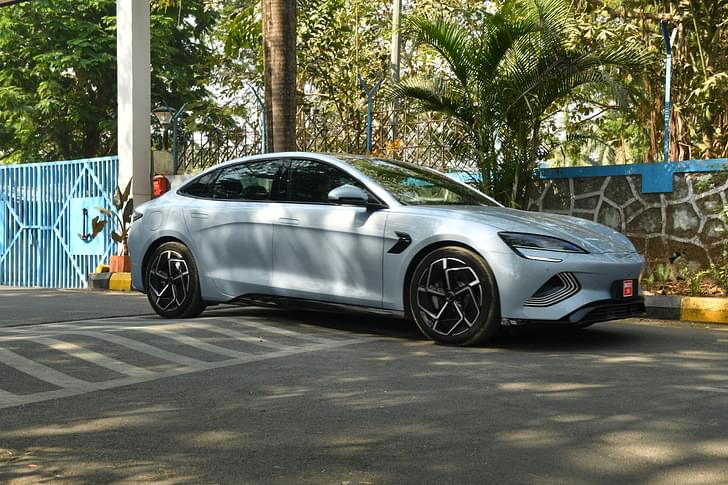
The Ioniq 6's closest rival in India will be the BYD Seal (₹41 – 53 Lakh, expected), which offers a similar aerodynamic sedan form, 82.56 kWh battery, and 700 km CLTC range (claimed). The Seal undercuts the Ioniq 6 on price but lacks the 800V charging architecture. The BMW i4 eDrive40 (₹69.9 Lakh, ex-showroom) offers a more established luxury badge and 590 km WLTP range but charges at a slower 205 kW peak. The Tesla Model 3 Long Range AWD (₹49.99 Lakh) is the efficiency benchmark in this class, with a 629 km WLTP range and Supercharger network advantage.
The Ioniq 6 differentiates itself through the 800V ultra-fast charging, the V2L feature, and the lowest drag coefficient in the segment. Buyers who prioritise charging speed and aerodynamic efficiency over brand prestige will find the Ioniq 6 a compelling proposition.
Who should buy it
The Ioniq 6 is best suited to tech-forward buyers who want a premium electric sedan with genuine long-distance capability and the fastest charging speeds available in the segment. It suits professionals who regularly drive inter-city routes of 300–500 km and want to minimise charging stops. The flat floor and generous rear legroom also make it a strong choice for chauffeur-driven use.
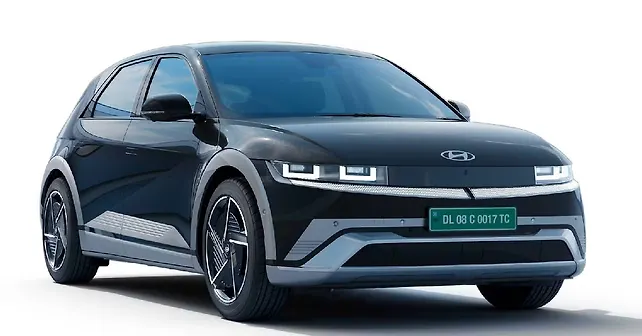
Buyers who prioritise a traditional luxury feel, a large boot, or an established service network may prefer the BMW i4 or wait for a locally assembled Hyundai EV. Those on a tighter budget should consider the BYD Seal or the Hyundai Ioniq 5, which offers SUV practicality on the same E-GMP platform at a lower expected price point.
Safety & ADAS
| NCAP rating | 5-star (Euro NCAP) |
|---|---|
| Airbags | 6 standard / 8 on higher trims (including centre front airbag) |
| ADAS level | Level 2 (Highway Driving Assist 2) |
| Notes | Bharat NCAP testing not yet confirmed for India-spec model. SmartSense suite includes FCA with pedestrian/cyclist/junction detection, LKA, LCA, BSCW, RCCA, and Remote Smart Parking Assist on top trims. |
Verdict
Best for: Tech-forward buyers wanting the fastest-charging premium EV sedan for inter-city travel in India
What we like
- 800V ultra-fast charging (10–80% in ~18 min claimed) — fastest in the expected India segment
- 0.21 Cd drag coefficient delivers up to 614 km WLTP claimed range on 77.4 kWh pack
- V2L at 3.6 kW — segment-first feature enabling external device power
- 5-star Euro NCAP with full Level 2 ADAS including Highway Driving Assist 2
- Flat E-GMP floor gives rear legroom comparable to larger D-segment sedans
What to know
- Expected ₹55–65 Lakh CBU pricing makes it significantly pricier than BYD Seal
- No confirmed India launch date or official Hyundai India announcement as of May 2026
- 19-inch wheel option may feel firm on broken Indian road surfaces
- Smaller 401-litre boot than rivals like the BMW i4 (470 litres)
Variants
| Variant | Price | Range | Notable |
|---|---|---|---|
| Standard Range RWD | ₹55 Lakh (expected) | ~430 km WLTP (claimed, 53 kWh) | Entry variant; 53 kWh battery; expected base specification |
| Long Range RWD | ₹60 Lakh (expected) | Up to 614 km WLTP (claimed, 77.4 kWh) | 800V fast charging; full SmartSense ADAS; likely primary India variant |
| Long Range AWD | ₹65 Lakh (expected) | ~519 km WLTP (claimed, 77.4 kWh) | 239 kW dual-motor; 0–100 km/h in 5.1 sec (claimed); top-of-range |
Key features
- 0.21 Cd drag coefficient — among the lowest of any production car
- 800V architecture: 10–80% charge in ~18 min on 350 kW DC (claimed)
- Vehicle-to-Load (V2L) at up to 3.6 kW for external power
- Hyundai SmartSense ADAS with Highway Driving Assist 2 (Level 2)
- Flat E-GMP floor with class-leading rear legroom and 57-litre frunk
- 12.3-inch dual-screen cockpit with OTA software updates
- 5-star Euro NCAP rating (global model)
Competitors
FAQs
What is the price of the Hyundai Ioniq 6 in India?
Hyundai Motor India has not officially announced pricing for the Ioniq 6 as of May 2026. Third-party estimates place the expected price between ₹55 Lakh and ₹65 Lakh (ex-showroom) for CBU imports, depending on the variant. Official pricing will be confirmed closer to the anticipated late 2026 or early 2027 launch.
What is the real-world range of the Hyundai Ioniq 6?
The 77.4 kWh Long Range RWD variant claims up to 614 km WLTP. In real-world mixed driving, owner reports and third-party tests suggest 480–510 km is achievable in temperate conditions. Highway-only range at sustained speeds drops to approximately 400–430 km, and winter driving can reduce this further to around 350 km.
How long does the Hyundai Ioniq 6 take to charge?
Thanks to its 800V architecture, the 77.4 kWh battery charges from 10% to 80% in approximately 18 minutes on a 350 kW DC fast charger (claimed). On a more common 150 kW CCS charger, the same window takes roughly 35–40 minutes. Home charging via an 11 kW AC wallbox takes approximately 10.5 hours for a full charge.
Does the Hyundai Ioniq 6 have ADAS?
Yes. The Ioniq 6 comes with Hyundai SmartSense, a Level 2 ADAS suite that includes Forward Collision-Avoidance Assist (with pedestrian, cyclist, and junction detection), Lane Keeping Assist, Lane Change Assist, Blind-Spot Collision Warning, Rear Cross-Traffic Collision-Avoidance Assist, and Highway Driving Assist 2 for hands-on highway driving. The exact features available on India-spec variants will be confirmed at launch.
Is the Hyundai Ioniq 6 safe?
The global Ioniq 6 achieved a 5-star Euro NCAP rating with strong scores in adult occupant protection and safety assist systems. It offers 6 airbags as standard and up to 8 airbags on higher trims, including a centre front airbag. Bharat NCAP testing for the India-spec model has not been confirmed as of May 2026.
When will the Hyundai Ioniq 6 launch in India?
Hyundai Motor India has not officially confirmed a launch date. Industry sources and third-party automotive portals estimate a late 2026 or early 2027 launch as a CBU import. Prospective buyers can register interest with Hyundai India dealerships to receive launch alerts.
Is the Hyundai Ioniq 6 worth buying in India?
For buyers who prioritise ultra-fast charging, long range, and advanced ADAS in a premium sedan, the Ioniq 6 is one of the most technically accomplished options expected in India. However, its anticipated ₹55–65 Lakh price tag, CBU import status, and unconfirmed launch timeline mean buyers should also consider the BYD Seal (lower price) or BMW i4 (established luxury network) depending on their priorities.
How does the Hyundai Ioniq 6 compare to the BYD Seal?
Both are aerodynamic electric sedans with large batteries, but the Ioniq 6 holds a key advantage in charging speed — its 800V system charges in ~18 minutes (10–80%) versus the Seal's 400V architecture at roughly 30–35 minutes. The BYD Seal is expected to be priced approximately ₹10–15 Lakh lower in India, making it the more accessible option, while the Ioniq 6 offers superior ADAS and V2L capability.
Sources
- The new IONIQ 6 Design | Hyundai Worldwide
- Hyundai IONIQ 6 Price – Features, Images & Reviews
- 2026 Hyundai Ioniq 6 N Review, Pricing, and Specs – Car and Driver
- Hyundai Ioniq 6 Long-Term Review 2026: Range & Reliability – Recharged
- 2026 Hyundai IONIQ 6 Facelift | First Impression & Drive with Real-World Range Tested – CarSceneKorea