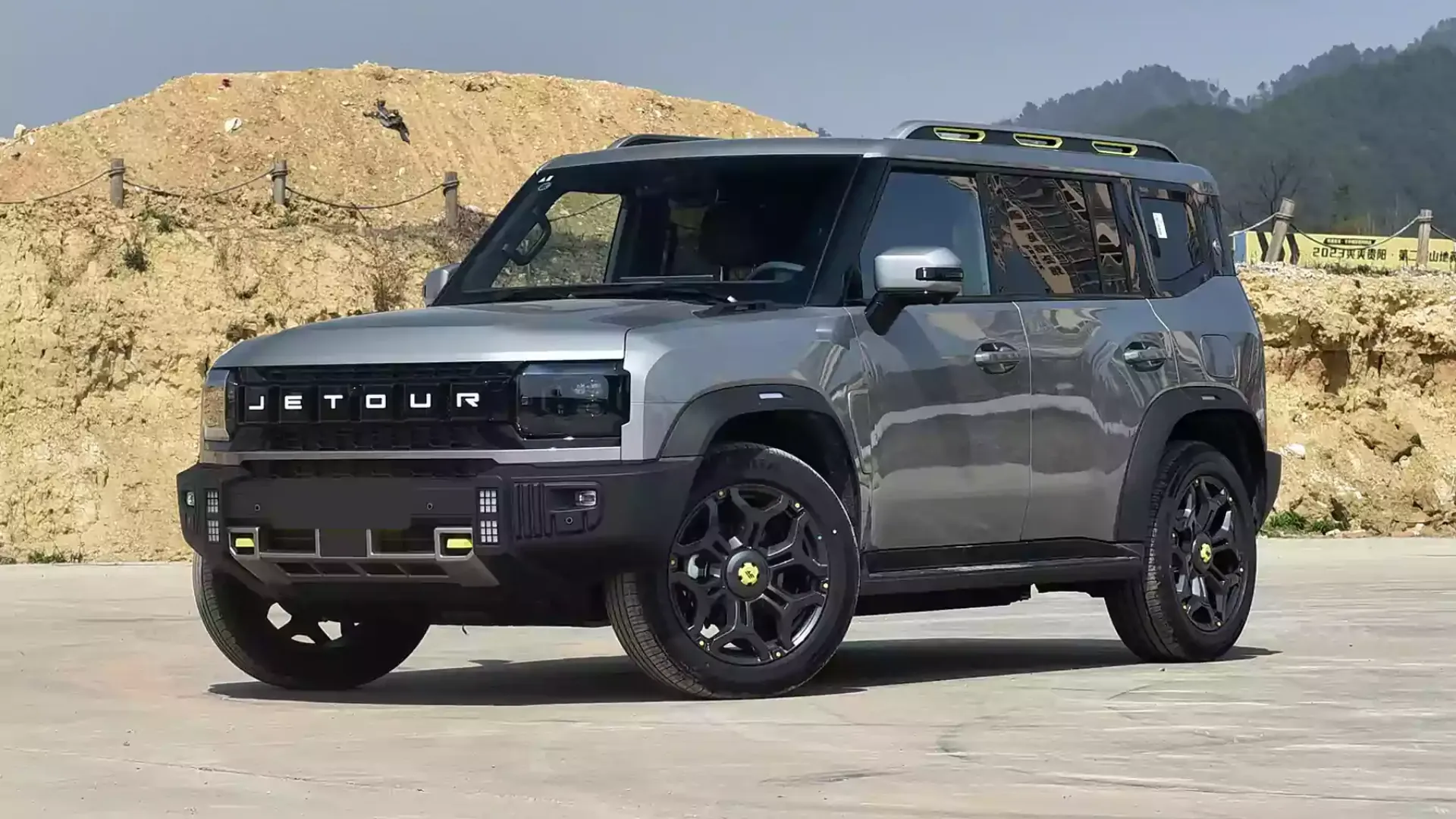

JSW Motors' ~₹45 lakh PHEV SUV targets a premium segment above the Maruti e Vitara's affordable EV play, expanding rather than cannibalizing India's electrified vehicle market in 2026.
JSW Motors' debut vehicle — an upscale plug-in hybrid SUV priced at approximately ₹45 lakh — is scheduled to arrive in the second half of 2026, placing it in a segment that the Maruti Suzuki e Vitara, India's most anticipated mass-market electric SUV, does not directly occupy. The two launches together signal that India's electrified vehicle market in 2026 is bifurcating: one lane for affordable pure EVs, another for premium PHEVs that bridge range anxiety and emission goals.
At a Glance: JSW Motors PHEV vs. Maruti Suzuki e Vitara
| Parameter | JSW Motors Debut PHEV SUV | Maruti Suzuki e Vitara |
|---|---|---|
| Expected Price | ~₹45 lakh (ex-showroom) | ~₹17–23 lakh (ex-showroom, estimated) |
| Powertrain | Plug-in Hybrid (PHEV) + Range Extender variant | Pure Battery Electric (BEV) |
| Launch Timeline | H2 2026 (show June/July 2026) | 2026 (confirmed for India) |
| Manufacturing Base | Chhatrapati Sambhajinagar, Maharashtra | Suzuki Motor Gujarat, Hansalpur |
| Retail Strategy | Company-Owned Experience Centres (COCO), then dealer network | Maruti Suzuki NEXA / Arena network |
| Technology Partner | Chery Automobile Co. (China) + undisclosed global partner | Suzuki Motor Corporation (Japan) |
| Target Buyer | Premium urban buyer seeking range flexibility | Value-conscious first-time EV buyer |
| Segment | D-segment premium electrified SUV | B/C-segment mass-market EV |
The contrast is stark enough to argue that these two vehicles are not rivals in any conventional sense — they are complementary proof points that India's electrified vehicle market is maturing across multiple price bands simultaneously.
What exactly is JSW Motors planning to launch in 2026?
JSW Motors is the independent passenger vehicle brand of the JSW Group, separate from its existing joint venture with SAIC Motor under the JSW MG Motor India umbrella. Bloomberg-cited reporting indicates the company plans to launch a plug-in hybrid and a range extender vehicle in 2026, followed by phased portfolio expansion across segments and powertrains.
A plug-in hybrid electric vehicle (PHEV) combines a conventional internal combustion engine with a rechargeable battery pack large enough to deliver meaningful electric-only driving range — typically 40–80 km — before the petrol engine takes over for longer journeys. This architecture directly addresses the two biggest objections Indian buyers have to pure EVs: range anxiety and charging infrastructure gaps.
JSW's spokesperson confirmed to Bloomberg that the company will begin with experience centres designed as curated spaces where customers can interact with products and understand the technology. At least four such centres are planned across Mumbai, New Delhi, and Ahmedabad, all company-owned and operated — a COCO (Company-Owned, Company-Operated) model that gives JSW direct control over pricing transparency and brand narrative from day one.
The product show is expected around June or July 2026, with the actual vehicle launch following in the second half of the year. Vehicles developed under JSW's partnership with China's Chery Automobile Co. will carry the JSW badge, per the same reporting.
Why is JSW starting with a PHEV rather than a pure EV?
The decision to lead with a PHEV rather than a battery-electric vehicle is commercially astute. India's public fast-charging network, while growing rapidly, remains concentrated in metro corridors. A buyer spending ₹45 lakh on an SUV expects the vehicle to work flawlessly on a Pune–Nashik highway run or a Delhi–Chandigarh weekend trip, not just within city limits.
PHEVs solve this by keeping a petrol engine in reserve. The electric motor handles urban commutes — where most Indian driving happens — while the combustion engine eliminates range anxiety on highways. For a brand with zero established service network and no charging infrastructure of its own, launching a PHEV is strategically safer: the vehicle does not depend on JSW building out charging infrastructure before it can be sold.
Park+ reports that JSW CEO Ranjan Nayak has confirmed the Maharashtra plant in Chhatrapati Sambhajinagar as the production base, and that the company is in advanced negotiations with global automotive partners for technology tie-ups covering range-extended EVs, hybrids, and clean energy vehicles. A partnership announcement with a multinational automaker is expected soon.
The ₹45 lakh price point is strategically significant. Most PHEVs available in India today — from Jeep, Volvo, or BMW — are priced north of ₹60–80 lakh, placing them firmly in the luxury segment. JSW's entry at ₹45 lakh would represent the most affordable PHEV from a mainstream brand in India, opening the segment to a much wider audience.
How does the Maruti Suzuki e Vitara fit into this picture?
The Maruti Suzuki e Vitara is Maruti's first mass-market battery-electric SUV for India, developed on the Suzuki-Toyota shared EV platform and positioned to bring the country's largest carmaker into the pure-EV mainstream. It targets a buyer profile almost entirely different from JSW's PHEV customer.
Where JSW chases the premium urban professional who wants technology, brand prestige, and range flexibility at ₹45 lakh, the e Vitara is aimed at the family buyer upgrading from a petrol hatchback or compact SUV, for whom total cost of ownership, service network density, and resale value matter far more than powertrain novelty.
Maruti's distribution muscle — thousands of NEXA and Arena outlets across Tier 1, 2, and 3 cities — is a moat that JSW cannot replicate in its first year. The e Vitara will benefit from Maruti's existing service infrastructure, trained technicians, and the brand trust that comes from decades of market leadership. For buyers in cities like Coimbatore, Bhopal, or Patna, the e Vitara will simply be more accessible.
That said, the e Vitara faces its own challenges. Maruti has historically been cautious about EVs, and the e Vitara's success will depend on competitive pricing, real-world range performance, and how quickly Maruti builds out its EV-specific service capabilities. Buyers evaluating the e Vitara should also look at which electric SUVs have the best after-sales service networks in India before committing.
Will JSW's PHEV cannibalize the e Vitara's potential buyers?
The short answer is: very little overlap, very little cannibalization.
A buyer seriously considering the Maruti Suzuki e Vitara is working with a budget of roughly ₹17–23 lakh. A buyer looking at JSW's ₹45 lakh PHEV is in a completely different financial bracket. The price gap alone — roughly ₹20–25 lakh — means these two vehicles are not cross-shopped in any meaningful way.
Marginal overlap could exist among buyers undecided between a top-spec e Vitara and an entry-spec JSW PHEV, but this is a narrow band. More likely, JSW's PHEV will be cross-shopped against the Jeep Meridian PHEV (if launched), upcoming Toyota Hyryder PHEV variants, or imported premium hybrids.
The more interesting dynamic is whether JSW's PHEV entry expands the overall electrified market. If JSW can demonstrate that a ₹45 lakh PHEV delivers genuine value — lower running costs, strong performance, and the convenience of petrol backup — it could pull buyers who would otherwise have bought a ₹40–50 lakh petrol SUV (think top-spec Hyundai Tucson or Jeep Compass) into the electrified segment. That is market expansion, not cannibalization.
What is JSW's retail strategy, and does it make sense for India?
JSW's COCO experience centre model — at least four outlets in Mumbai, Delhi, and Ahmedabad before expanding to a traditional dealer network — is borrowed from the Tesla and BYD playbook. It is a retail approach where the manufacturer owns and operates the showroom directly, eliminating the dealer margin layer and ensuring consistent brand experience across locations.
EVIndia Online notes that these centres are designed to immerse buyers in the brand's new energy space before the vehicles even hit the roads — focusing on technology education, transparent pricing, and direct manufacturer engagement. JSW has also begun reaching out to potential dealer partners for the subsequent expansion phase.
This strategy has clear advantages in the early phase: JSW controls the narrative, avoids the risk of poorly trained dealer staff misrepresenting a complex PHEV powertrain, and can gather direct customer feedback without intermediaries. The risk is scale — four experience centres cannot sell enough volume to justify a ₹45 lakh product's development costs. JSW will need to move quickly to a broader dealer network if it wants meaningful sales numbers in 2026–27.
For context, Tata Motors and Mahindra — the current leaders in India's EV segment — both rely on extensive dealer networks that took years to build. JSW is starting from zero on the retail side, which means the first 12–18 months will be as much about brand building as about actual vehicle sales.
What manufacturing and technology partnerships back JSW's ambitions?
JSW Group is building a greenfield manufacturing facility in Chhatrapati Sambhajinagar (formerly Aurangabad), Maharashtra. This plant is intended to produce JSW Motors' new-energy passenger vehicles, and will also support electrified trucks and buses under JSW Greentech Ltd — initially for JSW's internal fleet before opening to external customers.
The technology side involves two distinct partnerships. The first is with China's Chery Automobile Co., one of China's largest independent automakers with significant PHEV and EV expertise. Vehicles developed under this partnership will carry the JSW badge. The second is an as-yet-unannounced partnership with a global automaker, which JSW CEO Ranjan Nayak has indicated is in advanced stages.
Chery's involvement is particularly relevant for the PHEV. Chery has developed multiple PHEV platforms for the Chinese market — where PHEVs have seen explosive growth — and has the engineering depth to support JSW's product development timeline. The Maharashtra plant, combined with Chery's platform technology, gives JSW a credible path to competitive pricing at ₹45 lakh.
The JSW Group's existing automotive experience through JSW MG Motor India — which has seen significant nationwide sales growth in EVs — also provides institutional knowledge about EV retail, service, and customer education that JSW Motors can leverage for its independent brand.
How does JSW's entry affect India's broader EV and PHEV market in 2026?
India's electrified vehicle market in 2026 is undergoing rapid transition, driven by stricter CAFE (Corporate Average Fuel Economy) norms, rising petrol prices, and growing consumer awareness of total cost of ownership. The market is no longer a single segment — it spans sub-₹10 lakh electric two-wheelers, ₹15–25 lakh mass-market EVs like the e Vitara, and now a nascent ₹40–60 lakh premium PHEV segment that JSW is helping to create.
JSW's entry matters for several reasons beyond its own sales numbers:
Legitimacy for PHEVs at mainstream price points. Until now, PHEVs in India have been a luxury-segment story. JSW at ₹45 lakh changes the conversation — if the product delivers, it proves that PHEVs can work as a value proposition for upper-middle-class buyers, not just luxury car shoppers.
Competitive pressure on existing players. Tata Motors and Mahindra have focused almost entirely on pure BEVs. JSW's PHEV entry could prompt them to accelerate their own hybrid and PHEV roadmaps, ultimately giving Indian consumers more choice.
Manufacturing investment signal. A greenfield plant in Maharashtra for new-energy vehicles — covering passenger cars, trucks, and buses — is a significant long-term commitment. It signals that JSW sees India's electrified vehicle market as a multi-decade opportunity, not a short-term bet.
Retail innovation. The COCO experience centre model, if successful, could influence how other new EV brands approach India — prioritising brand education over volume in the early phase.
For buyers evaluating where to put their money in 2026, the space is genuinely exciting. The Maruti Suzuki e Vitara addresses the mass market with Maruti's reliability and network. JSW's PHEV addresses the premium segment with range flexibility and technology novelty. Neither is a direct substitute for the other — they serve different needs, different budgets, and different risk appetites.
Buyers who want the lowest total cost of ownership in the ₹15–25 lakh range should look at the best electric SUVs under ₹25 lakhs by range in 2026. Buyers worried about charging infrastructure on long routes — the exact buyer JSW is targeting — should read about which electric SUVs are most practical for India's current charging infrastructure.
What are the key risks for JSW Motors' 2026 launch?
No new automotive brand launch is without risk, and JSW's is no exception.
Timeline slippage. The June/July 2026 show is a product reveal, not a sales launch. The actual vehicle launch is expected in H2 2026 — which could mean anywhere from August to December. Manufacturing ramp-up at a new plant, supply chain dependencies on Chery components, and regulatory approvals (homologation, safety testing) all create timeline risk.
Pricing pressure. ₹45 lakh is an ambitious target for a brand with zero established equity in the passenger vehicle space. Buyers at this price point are comparing JSW against Hyundai Tucson, Jeep Compass top-spec, and imported PHEVs. JSW will need to offer a compelling feature set and strong warranty terms to justify the ask.
Service network gap. A PHEV is more mechanically complex than a pure EV — it has both an electric drivetrain and a combustion engine, meaning service technicians need dual expertise. With only four experience centres at launch and a dealer network still being assembled, early buyers face real uncertainty about after-sales support. This is a legitimate concern that JSW must address transparently.
Brand recognition. JSW Group is well-known in steel, energy, and infrastructure. In passenger vehicles, it is a new name. Building consumer trust for a ₹45 lakh purchase from a brand with no track record in cars will require sustained marketing investment and, critically, a flawless product at launch.
Regulatory environment. India's PHEV policy space is still evolving. PHEVs currently attract a 5% GST rate (same as EVs) on the electric component, but the overall GST on PHEVs can be higher depending on engine displacement. Any adverse policy change could affect JSW's pricing calculus.
Should you wait for JSW's PHEV or buy the Maruti e Vitara now?
This is the practical question most buyers will ask, and the honest answer depends entirely on your budget and use case.
If your budget is ₹15–25 lakh and you want a reliable, well-supported electric SUV with Maruti's service network behind it, the e Vitara is the logical choice. It will offer the lowest cost of ownership in its segment, strong resale value (given Maruti's brand equity), and the peace of mind of a nationwide service network. Buyers in this bracket should not wait for JSW — the products are not comparable.
If your budget is ₹40–50 lakh and you drive long distances regularly, live in a city with patchy fast-charging infrastructure, or simply want the flexibility of petrol backup without giving up electric efficiency in daily commutes, JSW's PHEV is worth waiting to evaluate. The caveat: wait for real-world test drives, independent range data, and clarity on service network coverage before committing.
For buyers in between — say ₹25–40 lakh — 2026 is actually a strong year to hold off and watch. The Maruti e Vitara, JSW's PHEV, and new entries from Hyundai, Kia, and Mahindra will all be competing for attention. More choice, more competitive pricing, and better-informed buying decisions are the reward for patience.
Regardless of which vehicle you choose, understanding which electric SUVs have the lowest maintenance costs in India and whether Battery as a Service models are worth considering will help you calculate true ownership costs beyond the sticker price.
The bottom line
JSW Motors' first PHEV will not challenge the Maruti Suzuki e Vitara directly — the price gap, the powertrain difference, and the target buyer profile are too distinct for a head-to-head battle. What JSW's entry does is something more important: it signals that India's electrified vehicle market has grown large and sophisticated enough to support multiple segments simultaneously.
The e Vitara democratises EVs for the mass market. JSW's PHEV legitimises electrification for the premium segment. Together, they represent a market that is no longer a niche — it is a mainstream battleground with room for multiple winners.
The real test for JSW will come after the launch: whether the product delivers on its ₹45 lakh promise, whether the Maharashtra plant can produce at scale, and whether the brand can build consumer trust fast enough to matter in a market where Tata, Mahindra, and Maruti already have deep roots. The experience centres are a smart first move. The vehicle itself will determine whether JSW Motors becomes India's next serious automotive brand or an ambitious experiment that arrived too early.