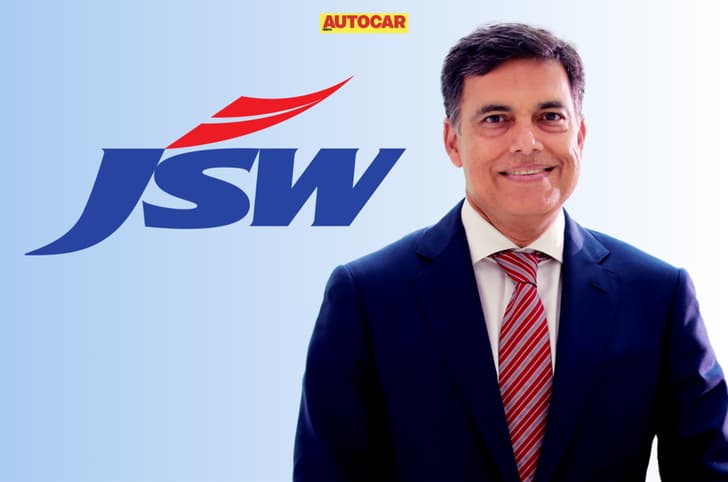

JSW's Sajjan Jindal says battery cells are "the new oil" for India's energy security—domestic cell production could reshape EV pricing, including for mid-segment models like the Maruti e Vitara, by 2027.
Battery cell technology is the foundational electrochemical unit that stores and releases energy in an electric vehicle. In September 2026, JSW Group chairman Sajjan Jindal declared it will become "the new oil" for India's economy and energy security, making the statement at the launch of JSW Greentech's Ampstar electric commercial vehicle brand. This crystallises a debate India's EV industry has circled for years: can the country electrify its transport sector without swapping dependence on imported crude for dependence on imported battery cells?
The answer remains uncomfortable. India does not manufacture battery cells at commercial scale. Lithium iron phosphate, or LFP—the dominant chemistry for passenger and commercial EVs—is effectively a Chinese monopoly in both production volume and proprietary know-how. JSW's Odisha gigafactory project, a proposed ₹40,000 crore, 50 GWh facility, remains on hold because that technology is not available outside China. Understanding why this matters and what it means for EV prices in India requires unpacking the full supply chain.
The State of Play: JSW's Battery Ambitions vs. the LFP Wall
| Dimension | Current Status | Target / Timeline |
|---|---|---|
| JSW Odisha 50 GWh gigafactory | On hold — no LFP technology partner secured | Resumes when tech tie-up found |
| JSW Greentech cell-to-pack assembly | Operational at Chhatrapati Sambhajinagar, Maharashtra | Scaling with Ampstar EV trucks & buses |
| Cell sourcing | Imported from China | Domestic cell R&D: 1–2 years per Sajjan Jindal |
| Chemistries under evaluation | Lithium-ion, sodium-ion | Decision pending technology access |
| JSW MG Motor India EV market share | 35% (up from 26% in CY2024) | Expanding with ADAPT multi-NEV platform |
| Maruti Suzuki e Vitara battery cells | Imported (Suzuki/Toyota supply chain) | Could benefit from domestic cell cost reduction by 2027 |
| JSW investment commitment (mobility) | Up to USD 3 billion (~₹25,000 crore) over five years | Greenfield plant at Chhatrapati Sambhajinagar |
Ambition is real and capital is committed, but the critical technology—the cell itself—remains locked behind Chinese walls.
What Does "Battery Cell as the New Oil" Actually Mean?
Energy security is a country's ability to access reliable, affordable energy without strategic vulnerability to foreign suppliers or geopolitical disruption. For most of the 20th century and into the 21st, that vulnerability for India was crude oil. The country imports roughly 85% of its crude requirements, spending hundreds of billions of dollars annually on foreign energy.
Electric vehicles were supposed to change this equation. Shift transport to electricity, generate that electricity domestically from solar and wind, and India reduces its oil import bill dramatically. The logic is sound—but it contains a hidden assumption: that India can also manufacture the batteries storing the electricity.
"If we do not change our way of mobility, we will continue to bring fuel oil from all over the world," Jindal told reporters. "As the country becomes more progressive, more transportation will happen and more movement of goods will take place. It will only increase."
The corollary is equally stark: if India electrifies its fleet but imports every battery cell, it has not achieved energy security—it has achieved energy security theatre. The geopolitical risk shifts from the Middle East to East Asia, and the strategic vulnerability remains. Jindal's framing of the cell as "the new oil" is more than a soundbite. It is a structural diagnosis.
Why Is LFP Technology So Hard to Access Outside China?
Lithium iron phosphate chemistry uses a lithium iron phosphate cathode, offering superior thermal stability, longer cycle life, and lower cost compared to nickel-manganese-cobalt (NMC) alternatives. This makes it the dominant chemistry for mass-market EVs globally.
China's dominance in LFP is not accidental. It is the product of two decades of state-backed investment, vertically integrated supply chains from lithium mining to cell manufacturing, and aggressive intellectual property accumulation. CATL, BYD, and a handful of other Chinese manufacturers control the overwhelming majority of global LFP cell production capacity.
Parth Jindal, Director of JSW MG Motor India, was blunt about the access problem when speaking to The Hindu in August 2026: "Making the cell, which is the key, the most important and most crucial part of an electric vehicle, that technology on LFP is not available anywhere in the world outside of China. And right now, they are guarding it like a weapon."
Sajjan Jindal echoed this at the Ampstar launch: "The technology is a very closely guarded secret of China. They are ready to supply the cells, but they are not giving us the know-how. It is okay. We will find a solution."
The distinction between supplying cells and transferring know-how is critical. Chinese manufacturers are happy to sell India battery cells—that generates revenue and deepens dependency. What they will not do is hand over the process technology, electrode formulations, electrolyte compositions, and manufacturing IP that would allow India to replicate the capability domestically. This is the wall JSW has hit with its Odisha project.
What Is JSW Actually Building Right Now?
Despite the gigafactory being on hold, JSW is not standing still. The group has taken a deliberate two-stage approach: build cell-to-pack assembly capability now, develop cell manufacturing capability later.
JSW's official newsroom describes the Chhatrapati Sambhajinagar facility as housing "production lines, battery assembly, research and supplier integration facilities." The plant is operational for cell-to-pack work—taking imported cells and assembling them into battery packs optimised for JSW's vehicle architectures. Pack design, thermal management, battery management system software, and structural integration all involve significant engineering and can be localised even when the cell itself is imported.
For JSW Greentech's Ampstar commercial vehicles—the 55-tonne electric tractor-trailer and electric bus showcased at the September 2026 launch—battery packs are assembled in India using Chinese cells. The vehicle control unit and source code have been developed in India, and JSW says it pays no royalty or technology-transfer fees for its core vehicle architecture.
Of JSW Greentech's first 100 employees, 88 were hired for research and development—a ratio that signals the company is building genuine engineering depth rather than simply assembling imported components. The R&D focus on vehicle control units, software, and battery-pack design creates the foundation from which cell-level work can eventually grow.
On the passenger vehicle side, JSW MG Motor India has sold over 1,50,000 electric vehicles since its first EV launch and held 35% EV market share as of mid-2026, up from 26% in CY2024. The MG Windsor was India's best-selling EV in 2025. In July 2026, the company unveiled MG ADAPT, India's first Multi New Energy Vehicle platform supporting EV, HEV, PHEV, and REEV architectures on a single base.
What Chemistries Is JSW Exploring Beyond LFP?
Sajjan Jindal confirmed that JSW is evaluating both lithium-ion and sodium-ion chemistries for its domestic cell programme. This is strategically significant.
Sodium-ion replaces lithium with sodium as the charge-carrying ion, using more abundant and geographically distributed raw materials—reducing India's dependence on lithium imports from South America and Australia. Currently less energy-dense than LFP, sodium-ion cells are improving rapidly, and China's CATL has already commercialised first-generation sodium-ion cells. Critically, the IP space for sodium-ion is less consolidated than for LFP—there is more room for new entrants to develop proprietary technology without immediately running into Chinese patent walls.
If JSW can develop competitive sodium-ion cells domestically, it would sidestep the LFP access problem entirely while also reducing India's exposure to lithium supply chain risks. The timeline Sajjan Jindal gave—"one year if we are lucky, two years for sure"—applies to cell technology development broadly, not specifically to sodium-ion commercialisation.
The group's approach is pragmatic. Jindal acknowledged that JSW may need to first replicate what China has already achieved before attempting to leapfrog it: "First, let us establish whatever is happening in China, which is a leader in electric mobility. Let us catch up with them on the technology front. Then we take a leap forward." This is a catch-up-then-innovate strategy, not a moonshot.
How Does This Affect EV Prices in India?
Battery cells typically account for 35–45% of an electric vehicle's total cost, depending on the chemistry, pack size, and vehicle segment. This is the single largest cost component in any EV, making domestic cell production the most direct lever for making EVs more affordable.
India currently imports virtually all its EV battery cells, primarily from China. Those cells are subject to currency risk (rupee-dollar fluctuations), geopolitical risk (trade tensions, export controls), and logistics costs. A domestic cell industry would reduce all three exposures simultaneously.
BusinessToday's analysis of JSW's stalled Odisha project highlights that the hold is not due to lack of capital or intent—JSW committed ₹40,000 crore to the project—but purely due to technology access. Once that barrier is cleared, the investment is ready to flow.
For mid-segment EVs, the pricing impact of domestic cells could be substantial. The Maruti Suzuki e Vitara competes in the ₹17–25 lakh segment where price sensitivity is acute and the gap between an EV and its petrol equivalent remains a key purchase barrier. The e Vitara's cost competitiveness depends directly on the price of the battery cells in its pack. If JSW or another Indian manufacturer achieves commercial-scale domestic cell production by 2027—even at modest volumes—it creates competitive pressure on imported cell prices and opens the door to localisation incentives under India's PLI scheme that could further reduce costs.
This is not speculative. It is the explicit policy logic behind the government's PLI for Advanced Chemistry Cell (ACC) manufacturing, which offers incentives of up to ₹18,100 crore for domestic cell production. The PLI scheme was designed precisely to create the conditions under which a company like JSW could invest in cell manufacturing without being immediately undercut by subsidised Chinese imports.
If you are evaluating the e Vitara today and wondering whether to wait for a cheaper version, the honest answer is: the 2027 window is real but uncertain. Domestic cell production at scale requires both technology access (still unresolved for LFP) and manufacturing ramp-up time. A more conservative estimate would place meaningful price impact in the 2028–2029 timeframe. For buyers who need a car now, the e Vitara's current pricing reflects imported cell costs—and those costs are unlikely to shift dramatically before 2027. Our guide to best electric cars under ₹20 lakhs in India covers the current competitive space in detail.
What Is the Odisha Project, and Why Is It on Hold?
The JSW Group signed a memorandum of understanding with the Odisha government in February 2024 to establish an integrated electric vehicle and battery manufacturing facility at Naraj in Cuttack. The proposed investment was ₹40,000 crore, and the battery plant was to have a capacity of 50 GWh—enough to supply cells for hundreds of thousands of EVs annually.
A 50 GWh plant can produce 50 gigawatt-hours of battery capacity per year, which at typical passenger EV pack sizes of 40–60 kWh would supply cells for roughly 800,000 to 1.25 million vehicles annually.
The project is currently on hold. As Parth Jindal told The Hindu: "We are very keen to make cells in India. But the LFP technology currently is not available for us. The hunt is on for a technology tie-up. We have not yet secured a technology tie-up, and hence, that project currently is on hold."
The group has already commissioned its cell-to-pack assembly line through JSW Energy for battery energy storage applications, and a separate cell-to-pack facility for JSW MG Motor India. These are operational. But manufacturing the cell itself—the electrochemical heart of the battery—requires process technology that JSW has not yet been able to licence or develop independently.
The Odisha hold is not a retreat. It is a pause while JSW pursues technology partnerships and internal R&D. The ₹40,000 crore commitment has not been withdrawn; it is waiting for the technology key to unlock it.
What Are the Broader Policy Implications?
India's battery cell challenge combines industrial policy, trade policy, and geopolitics. Several threads are worth tracking.
The PLI for ACC scheme is the primary policy instrument, offering production-linked incentives for domestic cell manufacturing with the goal of creating 50 GWh of domestic capacity. But the scheme's effectiveness depends on companies actually being able to manufacture cells—which requires technology access that the PLI itself does not provide.
The government has also been exploring bilateral agreements with countries that have battery technology capabilities outside China—Japan, South Korea, the United States, and the European Union. Japanese and Korean manufacturers (Panasonic, Samsung SDI, LG Energy Solution) have NMC technology that is more accessible than Chinese LFP, but NMC cells are more expensive and less thermally stable, making them less ideal for India's climate and cost requirements.
JSW MG Motor India has also been seeking lower GST on plug-in hybrid vehicles and plans to introduce extended-range electric vehicles (EREVs) for the Indian market. This reflects a pragmatic acknowledgement that the transition to pure EVs will be gradual, and that PHEVs and EREVs can serve as bridge technologies while domestic battery infrastructure develops. PHEVs currently attract 43% GST in India versus 5% for pure EVs—a disparity that JSW argues discourages the very technology that could ease the transition.
What Does This Mean for Indian EV Buyers in 2026?
For buyers making purchase decisions today, the JSW battery story has three practical implications.
First, imported cell costs are the floor for current EV pricing. Every EV sold in India today—from the Tata Nexon EV to the MG Windsor to the Maruti Suzuki e Vitara—is priced with imported cells as a given. There is no domestic cell alternative yet. Current prices reflect a structural cost that is higher than it needs to be in a world with domestic cell manufacturing.
Second, the 2027–2028 window is when the picture could start to change. JSW's internal cell R&D timeline of one to two years, combined with the PLI scheme's incentives, means that some form of domestic cell production—even if initially at small scale or using sodium-ion chemistry—could emerge within that window. This would not immediately slash EV prices, but it would create competitive pressure and reduce the import dependency that currently inflates costs.
Third, the technology gap is real and should not be underestimated. The LFP wall that JSW has hit reflects China's deliberate strategy to maintain technological advantage in the most critical component of the EV value chain. India will need either a breakthrough in alternative chemistries (sodium-ion being the most promising near-term candidate) or a geopolitical shift that makes Chinese technology transfer more accessible.
For buyers considering the Maruti Suzuki e Vitara specifically, the vehicle's positioning in the mid-segment makes it particularly sensitive to battery cost movements. Maruti's partnership with Suzuki and Toyota gives it access to Japanese battery supply chains, which are more transparent than Chinese ones but also more expensive. A domestic Indian cell industry—whether led by JSW or another player—would give Maruti the option to source locally, bringing e Vitara pricing down meaningfully in the 2027–2028 timeframe. Whether that happens depends on how quickly the technology access problem gets resolved.
For a broader view of where the e Vitara sits in the current market, our best electric cars to buy in India in 2026 guide provides current pricing context across segments.
How Does JSW's Strategy Compare to Other Indian Battery Initiatives?
JSW is not the only Indian conglomerate pursuing battery manufacturing. Reliance Industries has announced plans for a vertically integrated battery supply chain. Ola Electric has invested in cell manufacturing through its gigafactory in Tamil Nadu. Amara Raja Energy and Mobility is building LFP cell capacity with technology from a US-based partner.
The common thread across all these initiatives is the same LFP technology access problem that JSW has encountered. Ola's gigafactory has faced delays. Amara Raja's US technology partner provides NMC rather than LFP capability. The PLI scheme has attracted applications but commercial-scale production remains limited.
This is not a JSW-specific failure—it is an industry-wide constraint reflecting the genuine difficulty of building a battery cell industry from scratch when the dominant technology is controlled by a single country that has strong incentives to maintain that control.
JSW's differentiated approach—focusing on sodium-ion alongside lithium-ion, building vehicle architecture and software capability in parallel, and maintaining a clear-eyed acknowledgement of the catch-up challenge—may prove more durable than approaches that assume technology access will materialise through commercial negotiation alone.
The group's investment of up to USD 3 billion over five years in its mobility businesses, combined with the 88-out-of-100 R&D hiring ratio at JSW Greentech, suggests this is a long-term structural bet rather than a short-term market play.
The Bottom Line for India's EV Transition
India's EV transition is real and accelerating. MG Windsor was the country's best-selling EV in 2025. New models from Tata, Mahindra, Maruti, and JSW's own stable are expanding consumer choice. Charging infrastructure is growing. Government policy—from FAME subsidies to PLI incentives—is directionally supportive.
But the battery cell problem is the load-bearing constraint that none of these positives can fully offset. As long as India imports its cells, it imports its energy vulnerability. The strategic logic of Sajjan Jindal's "new oil" framing is correct: a country that electrifies its fleet on imported cells has not achieved energy independence—it has achieved a different form of energy dependence.
The path forward requires three things to happen in parallel: domestic R&D to develop cell technology (JSW's current focus), policy pressure to make Chinese technology transfer more accessible or to incentivise non-Chinese technology partners, and continued investment in alternative chemistries like sodium-ion that could bypass the LFP bottleneck entirely.
If you are tracking India's EV market for safety and reliability alongside cost, our guide to 5-star Bharat NCAP electric cars and best electric SUVs with 6 airbags under ₹20 lakh provide complementary context for making a well-rounded purchase decision.
The JSW story in 2026 is ultimately a story about the gap between ambition and capability—and about the hard, unglamorous work of closing that gap. Sajjan Jindal's "new oil" declaration is a call to action, not a victory lap. India has the capital, the market, and the policy intent. What it still needs is the technology. That is the work of the next two years.
Sources
- Battery cell is going to be the new oil: JSW Group chairman | Autocar India
- JSW Group puts Odisha battery plant on hold over LFP technology constraints | The Hindu
- BT Explainer: Why JSW Group is putting its plans to make battery cells in India on hold | BusinessToday
- JSW MG Motor India seeks lower tax on plug-in hybrids, plans EREVs for India | The Hindu BusinessLine
- Electric Vehicles and JSW Green Mobility: Paving the Way for India's EV Future | JSW Official