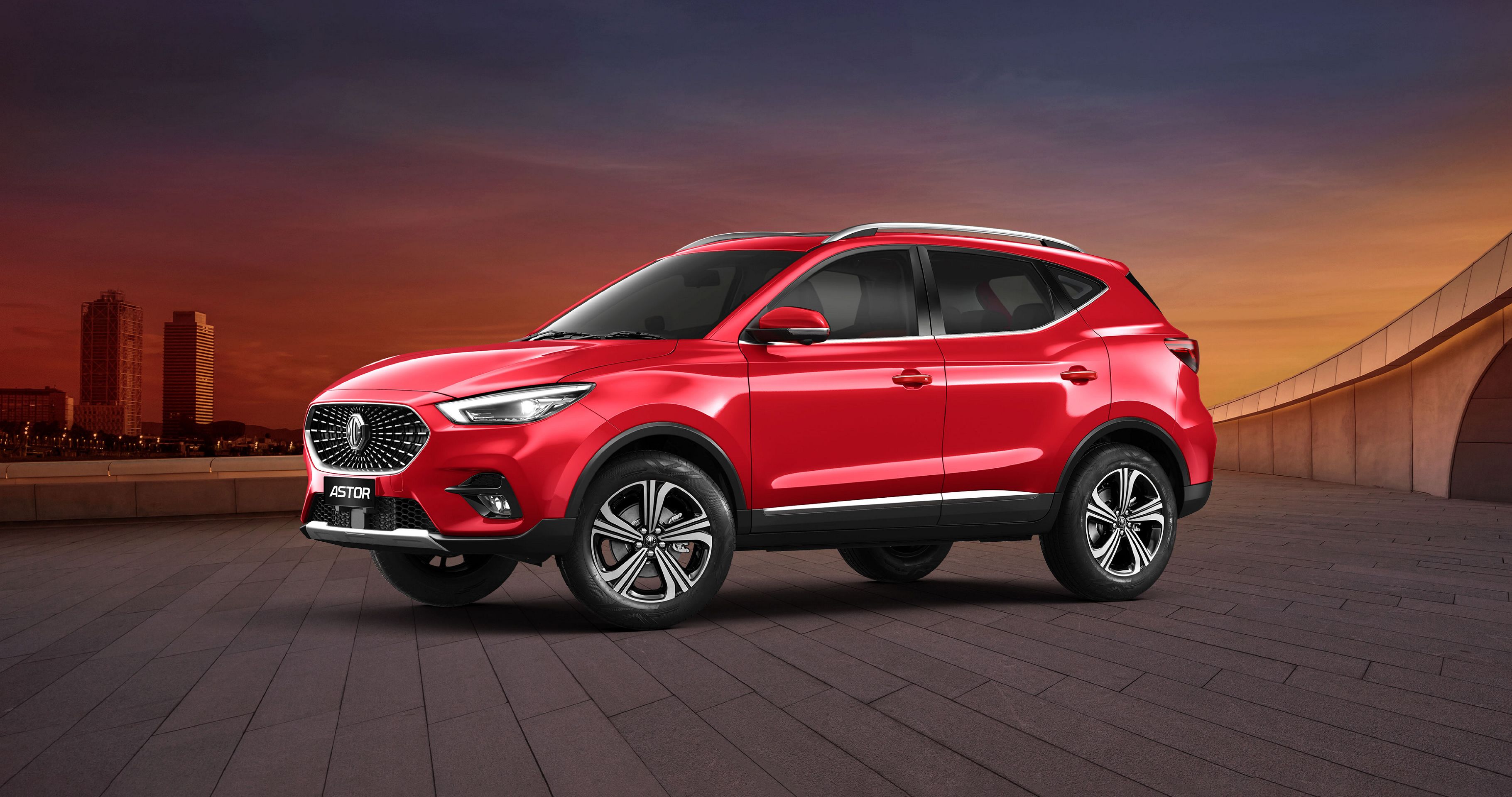

MG discontinued the Astor in October 2026 after chronic low sales (~112 units/month), opening space for the Maruti Suzuki e Vitara and other compact EVs. A SIGMA-platform successor is expected in 2027.
MG Astor Discontinued in India 2026: What the Mid-Size SUV Exit Means for EV Market Competition
The MG Astor is officially discontinued in India as of October 2026, confirmed by dealer sources speaking to Autocar India, ending a five-year run for a mid-size SUV that never managed to crack the segment's top tier. With a monthly average of just 112 units sold between September 2025 and September 2026, the Astor's exit was less a surprise than a formality — and its departure reshapes the competitive space for both ICE and electric SUVs in India's most hotly contested price band.
Here is how the Astor stacked up against the rivals it was meant to challenge, and the alternatives now available to buyers who were considering it:
| Model | Starting Price (Ex-Showroom) | Powertrain Options | Avg. Monthly Sales (approx.) | Key Differentiator |
|---|---|---|---|---|
| MG Astor (discontinued) | ₹9.79 lakh | 1.5L NA Petrol only (post-Feb 2025) | ~112 units | ADAS Level 2, AI assistant |
| Hyundai Creta | ~₹11.00 lakh | Petrol, Diesel, Hybrid, Electric | 15,000+ units | Segment leader, widest powertrain choice |
| Kia Seltos | ~₹10.90 lakh | Petrol, Diesel, Hybrid | 8,000–10,000 units | Premium feel, strong resale |
| MG ZS EV | ₹15.50 lakh | Electric only | Part of MG EV portfolio | Electric alternative to Astor |
| Maruti Suzuki e Vitara | ~₹17.49 lakh (expected) | Electric only | Ramp-up phase | Maruti trust, widest service network |
The Astor's price advantage was real, but price alone cannot compensate for a powertrain lineup that shrank to a single naturally aspirated petrol engine in a segment where buyers increasingly demand diesel, CNG, hybrid, or electric options.
Why did the MG Astor fail to find buyers in India?
The MG Astor is a compact-to-mid-size crossover SUV launched in October 2021, positioned squarely against the Hyundai Creta, Kia Seltos, Volkswagen Taigun, and Skoda Kushaq. On paper, it had a compelling story: Level-2 ADAS as standard on higher trims, an AI-powered personal assistant, a panoramic skyroof, and a bold Celestial Grille design. In practice, the Astor's sales never reflected that feature richness.
The core problem was powertrain poverty. At launch, the Astor offered two engines: a 110hp 1.5-litre naturally aspirated four-cylinder and a 140hp 1.3-litre direct-injection turbocharged three-cylinder. The turbo unit gave the car genuine performance credibility. But MG discontinued the 1.3-litre turbo engine in February 2025, leaving the Astor with only the less exciting 1.5-litre NA motor paired with either a 5-speed manual or a CVT automatic. At a time when rivals were adding strong hybrids, diesel variants, and CNG options, MG was moving in the opposite direction.
Design perception posed a second structural challenge. The Astor's relatively low-slung, crossover-esque silhouette made it appear smaller than its more upright rivals, even though its dimensions were broadly comparable. Indian mid-size SUV buyers have consistently rewarded tall, commanding proportions — the Creta's boxy stance, the Seltos's wide shoulders — and the Astor's car-like roofline worked against it in showroom walk-arounds.
A third factor, harder to quantify but real, was the absence of an electric variant at a competitive price. MG does sell the ZS EV — effectively the electric sibling of the Astor — but at ₹15.50 lakh ex-showroom, it costs significantly more than the Astor's entry price of ₹9.79 lakh. Buyers who wanted an MG in this size class and wanted electric had to stretch their budget considerably, while those who wanted petrol found better-rounded alternatives elsewhere.
What does MG's broader EV market position look like right now?
The Astor's discontinuation is part of a broader competitive squeeze on JSW MG Motor India. VAHAN registration data reported by The Financial Express shows MG's share of India's electric passenger vehicle market fell sharply to 18.8% in May 2026 from 31.2% a year earlier, even as its absolute EV sales volumes grew from 4,593 to 4,950 units.
The problem is that the overall electric PV market grew 79% year-on-year to 26,373 units in May 2026, and MG's growth simply did not keep pace. Tata Motors registered 10,246 EV units in May 2026 — more than double its year-ago figure — holding a 38.9% market share. Mahindra, powered by the XEV 9e and BE 6, overtook MG to become the second-largest EV player with a 23.3% share.
Gaurav Vangaal, associate director for light vehicle forecasting at S&P Global Mobility, described the challenge plainly: "With a concentrated product range, MG is more exposed as competition intensifies. The entry and expansion of players such as Maruti Suzuki and VinFast have also increased pressure in the market."
MG's Windsor EV carries much of the weight in its EV portfolio — listed at ₹12.04 lakh ex-showroom, it is one of the most affordable EVs in India and has found genuine traction. But a single volume driver is a fragile position in a market that is diversifying rapidly. The Astor's exit removes one more ICE product from MG's lineup, concentrating the brand further on its EV and premium SUV offerings.
Who benefits from the Astor's exit — and does the Maruti Suzuki e Vitara gain?
The mid-size SUV segment in India spans the price band roughly between ₹10 lakh and ₹20 lakh ex-showroom, covering both ICE and electric options. The Astor occupied the lower end of this band. Its discontinuation does not leave a vacuum — the Creta and Seltos will absorb most of its erstwhile consideration set — but it does shift the dynamics for newer entrants targeting budget-conscious buyers who were open to alternatives.
The Maruti Suzuki e Vitara is one of the most strategically positioned beneficiaries. Maruti Suzuki, which had virtually no presence in the electric PV segment a year ago, registered 1,580 units in May 2026 alone and captured a 6% EV market share — a remarkable ramp-up for a brand entering the space. The e Vitara brings something neither the Astor nor the ZS EV could offer: the Maruti Suzuki service network, which spans over 4,000 touchpoints across India, giving first-time EV buyers the confidence of after-sales support in tier-2 and tier-3 cities.
Buyers who were considering the Astor for its ADAS features and tech-forward positioning may find the e Vitara's proposition compelling — it offers electric efficiency, Maruti's reliability reputation, and a size class that overlaps with what the Astor occupied. For those evaluating safety credentials, our guide to 5-star Bharat NCAP electric SUVs under ₹25 lakh covers the e Vitara and its peers in detail.
That said, the e Vitara is a pure-electric vehicle priced higher than the Astor's entry point, so it does not replace the Astor on a like-for-like basis. Buyers who specifically wanted a petrol mid-size SUV under ₹12 lakh will gravitate toward the Creta, Seltos, or the Taigun/Kushaq pair.
Is MG working on an Astor replacement?
Yes — and this is the most consequential part of the story for anyone tracking MG's India roadmap. Autocar India reported exclusively in March 2026 that MG is readying a next-generation Astor replacement based on the SIGMA platform — which stands for SAIC Intelligent Global Modular Architecture. A launch in 2027 is expected.
The SIGMA platform is significant because it accommodates pure-combustion, hybrid, and fully electric powertrains on the same underpinnings. This directly addresses the Astor's fatal flaw: powertrain monotony. A SIGMA-based Astor successor could theoretically offer a petrol, a strong hybrid, and a pure-EV variant under the same nameplate — giving MG the powertrain diversity that the Creta and Seltos have used to dominate the segment.
The global-spec MG One has been cited as a visual reference point for the replacement, suggesting a more upright, commanding SUV stance that would also address the Astor's perceived size disadvantage. If MG prices the replacement competitively and launches it with at least two powertrain options at launch, it has a genuine shot at relevance in 2027's mid-size SUV market.
MG continues to develop its existing lineup. The brand recently launched the 2026 Hector Storm Series — comprising the Hector Blackstorm and Snowstorm editions at ₹19,99,800 ex-showroom each, keeping the Hector nameplate fresh with distinctive styling packages while the broader portfolio transitions.
What should Astor owners and prospective buyers do now?
If you already own an MG Astor, the discontinuation does not immediately affect your ownership experience. MG's standard warranty and service commitments remain in place, and the brand's dealer network continues to stock parts for existing models. The more relevant question is resale value — discontinued models in India typically see a modest depreciation acceleration in the 12–24 months after discontinuation, as buyer confidence in long-term parts availability softens. Astor owners considering a switch in the next year or two may want to act sooner rather than later to capture better resale values.
For buyers who were actively considering the Astor, the practical alternatives fall into two camps:
If you want a petrol mid-size SUV now: The Hyundai Creta remains the segment benchmark for a reason — broad powertrain choice, strong resale, and a wide service network. The Kia Seltos offers a premium feel at a similar price point. The Volkswagen Taigun and Skoda Kushaq are worth considering if you prioritise driving dynamics and build quality over feature lists.
If you are open to going electric: The MG ZS EV, Tata Nexon EV, and Maruti Suzuki e Vitara all occupy the compact-to-mid-size electric SUV space. The MG Windsor EV at ₹12.04 lakh is particularly interesting for budget-conscious buyers — it is priced close to where the Astor sat and offers MG's Battery as a Service model, which reduces upfront cost further. Our guide to Battery as a Service models in India explains how that works in practice.
For buyers prioritising long-distance capability, our best electric cars for long trips in India in 2026 guide covers range and charging infrastructure in detail. And if ADAS was a key draw of the Astor for you — it was genuinely one of the first mass-market SUVs in India to offer Level-2 autonomy — our roundup of best electric cars with ADAS in India in 2026 maps out which EVs now offer comparable or better safety tech.
What does this mean for MG's India strategy going forward?
MG's India story is at an inflection point. The brand entered India in 2019 with the Hector and quickly built a reputation for feature-rich, tech-forward vehicles at competitive prices. The Astor was meant to extend that formula into the mid-size SUV heartland. It did not work — but the reasons are instructive.
The Indian mid-size SUV buyer in 2026 expects powertrain optionality as a baseline, not a premium. Diesel remains important in many markets. Hybrids are gaining ground rapidly, particularly after the Creta's strong hybrid variant found a loyal audience. CNG is a cost-of-ownership play that resonates in urban markets. A petrol-only SUV — especially one with a single, unexciting engine — simply cannot compete in this environment.
MG's pivot toward EVs is the right strategic direction, but the Financial Express data makes clear that the brand needs a broader EV portfolio to maintain relevance as Tata, Mahindra, Maruti, and newcomers like VinFast expand their lineups. The Windsor EV is a strong product, but it cannot carry the brand alone. The Hector Tomahawk EV, listed at ₹16.74 lakh ex-showroom, adds another data point, but MG needs a compelling mid-size electric SUV to fill the gap the Astor leaves — and the ZS EV, at ₹15.50 lakh, is aging.
The SIGMA-platform Astor replacement in 2027 is therefore not just a product launch — it is a strategic test of whether MG can re-enter the mid-size segment with the powertrain diversity and design ambition that the original Astor lacked. If it arrives with a strong hybrid and a pure-EV variant alongside a petrol option, and if MG prices it aggressively, it could recapture the consideration the Astor never quite earned.
Until then, the mid-size SUV segment will remain dominated by Hyundai and Kia, with Tata, Mahindra, and Maruti Suzuki fighting for the electric slice of that pie. The Maruti Suzuki e Vitara, in particular, is well-placed to attract buyers who want a trusted brand, a wide service network, and electric efficiency in a compact-to-mid-size SUV package — precisely the buyer profile that MG was targeting with the Astor and never fully converted.
For a broader view of where the Indian EV market stands and which models offer the best overall value, our best electric cars to buy in India in 2026 guide is a useful starting point. And if budget is a primary constraint, best electric cars under ₹20 lakhs in India in 2026 covers the most competitive options in the price band where the Astor once competed.
The MG Astor's discontinuation is a cautionary tale about the cost of powertrain complacency in a market that is evolving faster than almost any other in the world. The brand that replaces it — whether MG itself with the SIGMA successor, or Maruti with the e Vitara, or Tata with the Nexon EV — will be the one that gives buyers the choice they have come to expect as standard.
Sources
- MG Astor discontinued in India | Autocar India
- MG Astor Price in India 2026 - Advanced SUV by MG Motors
- JSW MG Motor India launches the 2026 Hector Storm Series
- MG cedes ground to Tata, Mahindra in EV market | The Financial Express
- MG Cars Price in India 2026 - Models and Prices
- JSW MG Motor readying new Astor/ZS EV replacement | Autocar India