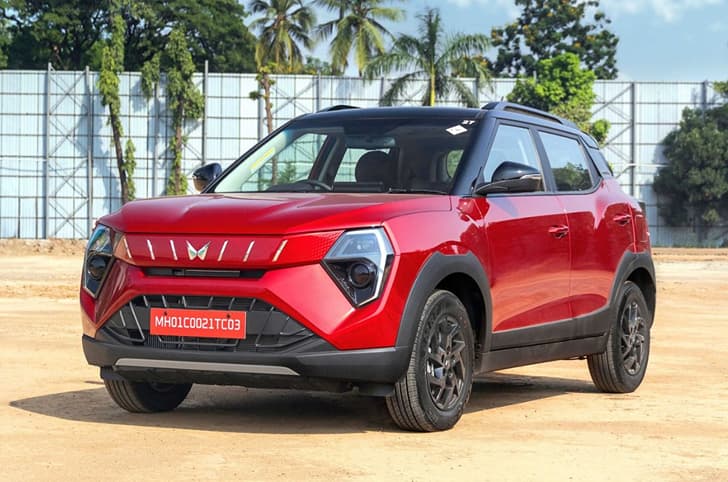

The XUV 3XO CNG (from Rs 9.99 lakh) offers the strongest CNG performance; the Brezza CNG is the most fuel-efficient; the Nexon iCNG packs the most features but costs more at the top.
Mahindra XUV 3XO CNG vs Tata Nexon iCNG vs Maruti Brezza CNG: Which Compact CNG SUV Offers Best Value in India 2026?
The Mahindra XUV 3XO CNG — officially badged the XUV 3XO ZNG — enters India's compact CNG SUV segment at Rs 9.99 lakh (ex-showroom), taking on the Tata Nexon iCNG and the Maruti Brezza CNG with a turbocharged engine that, uniquely among its rivals, delivers identical power output on both petrol and gas.
Before diving into the detailed comparison, here is a side-by-side snapshot of all three contenders — plus a note on where the Maruti Suzuki e Vitara fits for buyers who are open to going fully electric:
| Spec / Feature | Mahindra XUV 3XO CNG | Tata Nexon iCNG | Maruti Brezza CNG | Maruti Suzuki e Vitara (EV alternative) |
|---|---|---|---|---|
| Price range (ex-showroom) | Rs 9.99–12.27 lakh | Rs 8.3–13.42 lakh | Rs 9.17–11.46 lakh | Rs 17.49–22.49 lakh (approx.) |
| Engine / Powertrain | 1.2L turbo-petrol + CNG | 1.2L turbo-petrol + CNG | 1.5L NA petrol + CNG | 61 kWh battery, pure electric |
| Power (CNG mode) | 111hp | 100hp | 88hp | 167hp (electric) |
| Torque (CNG mode) | 200Nm | 170Nm | 122Nm | 245Nm (electric) |
| Claimed CNG mileage | 24.7 km/kg | 24 km/kg | 25.5 km/kg | N/A (electric) |
| CNG tank capacity | Twin cylinders (under floor) | 60 litres (dual cylinder) | 55 litres | N/A |
| Transmission (CNG) | 6-speed manual only | 6-speed manual only | 5-speed manual only | Single-speed automatic |
| Boot space | 270 litres (CNG) | 321 litres | Not disclosed | ~320 litres |
| 6 airbags (standard) | Yes | Yes (top trims) | No (varies by trim) | Yes |
| Bharat NCAP rating | 5-star (claimed, CNG) | 5-star | Not rated (CNG) | Expected 5-star |
| 360-degree camera | No | Yes (top trims) | No | Yes |
| Ventilated front seats | No | Yes (top trims) | No | Yes |
| Panoramic sunroof | Yes (RevX A trim) | No | No | Yes |
e Vitara pricing is indicative; CNG mileage figures are manufacturer-claimed; boot space for Brezza CNG not officially disclosed.
For buyers who want to skip CNG infrastructure worries altogether, the Maruti Suzuki e Vitara is worth a look — it is defined as a battery-electric compact SUV that occupies the next price band up, but eliminates fuel costs almost entirely. Our guide to 5-star Bharat NCAP-rated electric SUVs under Rs 25 lakh covers it in detail.
What exactly is a factory-fitted CNG kit, and why does it matter?
A factory-fitted CNG kit is a compressed natural gas fuel system integrated into the vehicle during manufacture at the OEM's plant, as opposed to an aftermarket retrofit installed post-sale. The distinction matters for three reasons: warranty coverage (OEM kits are covered under the standard vehicle warranty), safety certification (the cylinders and plumbing meet OEM crash-test standards), and resale value (factory CNG commands a premium over retrofitted units in the used-car market).
All three SUVs in this comparison — the XUV 3XO CNG, Nexon iCNG, and Brezza CNG — carry factory-fitted systems. This is a meaningful differentiator in the compact SUV segment, where most rivals still leave CNG as an aftermarket option.
How does the Mahindra XUV 3XO CNG perform compared to its rivals?
Performance is where the XUV 3XO CNG makes its clearest statement. The 1.2-litre MPFI turbo-petrol engine develops 111hp and 200Nm in both petrol and CNG modes — an unusual achievement in a segment where switching to gas typically means a noticeable power drop. According to Autocar India, this represents a significant edge.
Compare that to the Nexon iCNG, which produces 120hp in petrol mode but drops to 100hp on CNG, and the Brezza CNG, which falls from 101hp on petrol to just 88hp on gas. The Nexon's 100hp CNG output still gives it a 12hp and 48Nm advantage over the Brezza in gas mode — and the XUV 3XO now tops both on outright power. Autocar India's mileage comparison confirms this hierarchy.
The XUV 3XO's turbo engine exhibits some lag below 2,000rpm, but it pulls eagerly once past that threshold and rarely requires dropping to first gear for speed breakers — a meaningful real-world advantage on India's urban roads. Autocar India notes the Nexon iCNG behaves similarly, with its turbocharged setup preventing any breathless feeling even with the added weight of the CNG kit.
The Brezza CNG, with its naturally aspirated 1.5-litre four-cylinder engine, is the most relaxed performer of the three. It won't win any drag races, but its broader power band and lighter kerb weight make it feel adequately brisk in city traffic.
Transmission: All three are manual-only in CNG guise. The XUV 3XO CNG gets a 6-speed unit (noted for long throws and heavy clutch travel), the Nexon iCNG also uses a 6-speed, and the Brezza CNG makes do with a 5-speed. None offer an automatic option with CNG — a gap that buyers coming from petrol automatics will feel.
Which CNG compact SUV is the most fuel-efficient?
Fuel efficiency is the primary reason most buyers choose CNG, so this section deserves careful reading.
Claimed mileage figures:
- Maruti Brezza CNG: 25.5 km/kg
- Mahindra XUV 3XO CNG: 24.7 km/kg
- Tata Nexon iCNG: 24 km/kg
Real-world mileage (Autocar India tested): Autocar India's controlled real-world test — conducted in fixed city and highway loops around Navi Mumbai with a single driver, AC on, and tanks filled to the brim before and after — showed the Brezza CNG returning 5.3 km/kg more than the Nexon iCNG in city conditions and 1.8 km/kg more on the highway. The average gap worked out to 3.55 km/kg in the Brezza's favour.
The XUV 3XO CNG has not yet been independently tested for real-world mileage at the time of writing. Mahindra's claimed 24.7 km/kg translates to a theoretical CNG range of 247km — reasonable but likely to be lower in real-world urban conditions given the turbo engine's thirst under load.
Why does the Brezza win on efficiency? Two factors stand out: a significantly lighter kerb weight (the Nexon's CNG kit adds ~120kg; the XUV 3XO's adds ~100kg) and a naturally aspirated engine that doesn't need to manage boost pressure. Turbocharged engines, while more powerful, tend to consume more fuel when driven enthusiastically.
The running cost argument: CNG is currently priced at roughly Rs 75–95 per kg in major Indian cities (prices vary by city and are subject to change). At 24 km/kg, the Nexon iCNG costs approximately Rs 3.1–3.9 per km in fuel. At 25.5 km/kg, the Brezza CNG drops that to roughly Rs 2.9–3.7 per km. Over 15,000 km a year, the Brezza's efficiency edge could save Rs 3,000–5,000 annually — meaningful but not transformative.
How do the three SUVs compare on features and cabin quality?
Mahindra XUV 3XO CNG
The XUV 3XO CNG's cabin is one of its strongest selling points. Autocar India describes it as identical to the non-CNG versions, with dual-tone dashboard, gloss black accents, and leatherette upholstery. The top-spec RevX A trim adds twin 10.25-inch screens (infotainment + digital instrument cluster), a panoramic sunroof, and a 6-speaker Dolby Atmos audio system. Standard safety across all CNG trims includes 6 airbags, electronic stability control, ISOFIX anchors, and a reversing camera.
The caveats: the CNG version is sold in only four mid-spec trim levels, which means no 360-degree camera, no ventilated front seats, and no wireless charging pad. The steering wheel also lacks reach adjustment, and the driver footwell is cramped with no dead pedal — ergonomic niggles that will bother taller drivers on longer journeys.
Tata Nexon iCNG
The Nexon iCNG is the feature-richest of the three at the top end. Higher trims offer a 360-degree camera, ventilated front seats, and wireless charging — features conspicuously absent from the XUV 3XO CNG. The Nexon's cabin is practical and well-laid-out, with 321 litres of boot space — the largest of the three in CNG configuration. The Nexon iCNG can also be started directly in CNG mode, which is a convenience the Brezza CNG doesn't offer.
Maruti Brezza CNG
The Brezza CNG's cabin is functional rather than plush. It lacks the premium feel of the XUV 3XO or the feature density of the Nexon's top trims. However, Maruti's reputation for reliability and its unmatched service network across India — particularly in Tier 2 and Tier 3 cities — is a real-world advantage that doesn't show up in spec sheets.
What are the boot space and practicality trade-offs?
Boot space is a genuine pain point for CNG SUVs, and the XUV 3XO CNG suffers most here. The standard XUV 3XO already had the smallest boot in the segment at 295 litres. The twin-cylinder CNG setup — fitted beneath the boot floor, with the spare wheel relocated under the body — reduces this to just 270 litres. Autocar India notes that only the boot's width saves it, allowing up to four cabin-sized bags to be stored.
The Nexon iCNG retains 321 litres of boot space — a meaningful advantage for families who travel with luggage. The Brezza CNG's boot space in CNG configuration has not been officially disclosed by Maruti Suzuki, which is an odd omission for a car that's been on sale for some time.
Rear seat space is a different story. The XUV 3XO CNG's rear bench is described as genuinely roomy for the class, accommodating three adults without much fuss. The Nexon's rear is similarly practical. The Brezza's rear seat is adequate but not class-leading.
CNG tank size: The Nexon iCNG's dual-cylinder setup holds 60 litres, versus the Brezza's 55 litres. Mahindra hasn't officially disclosed the XUV 3XO CNG's total tank volume in litres, but the claimed 247km range on CNG suggests a comparable capacity to the Nexon.
How do the prices and variants stack up?
Pricing is where the three SUVs diverge most sharply in terms of value.
Mahindra XUV 3XO CNG: Rs 9.99 lakh to Rs 12.27 lakh (ex-showroom). At launch, this represented a premium of Rs 1 lakh to Rs 1.2 lakh over corresponding petrol variants. Four trim levels, all mid-spec.
Tata Nexon iCNG: Rs 8.3 lakh to Rs 13.42 lakh (ex-showroom). The widest price spread of the three, with the top-spec trim offering the most features. At the top end, the Nexon iCNG is Rs 2.1 lakh more expensive than the equivalent Brezza CNG variant.
Maruti Brezza CNG: Rs 9.17 lakh to Rs 11.46 lakh (ex-showroom). The Brezza's 1,462cc engine crosses the 1,200cc threshold for the lower 18% GST slab, meaning it's taxed at 40% — which is why its entry price sits Rs 95,000 above the Nexon's, despite being a less powerful car. Autocar India's comparison explains this GST dynamic clearly.
Value verdict by use case:
- Best entry-level value: Tata Nexon iCNG (starts at Rs 8.3 lakh)
- Best mid-range value: Mahindra XUV 3XO CNG (strongest performance, premium cabin for the price)
- Best top-end features per rupee: Tata Nexon iCNG (360-degree camera, ventilated seats, wireless charging)
- Best running cost efficiency: Maruti Brezza CNG (highest real-world mileage)
What are the safety ratings and how do they compare?
Safety is defined in this segment by Bharat NCAP crash test ratings, and the XUV 3XO has a notable claim here. Mahindra says the CNG version is engineered to match the five-star Bharat NCAP rating of other combustion-powered XUV 3XO versions. Autocar India reports this is a claim, not a tested result for the CNG variant specifically — a distinction worth noting.
The Tata Nexon has achieved a 5-star Bharat NCAP rating. The Maruti Brezza CNG has not been independently rated by Bharat NCAP in CNG configuration.
Standard safety equipment across the segment:
- XUV 3XO CNG: 6 airbags, ESC, ISOFIX, reversing camera (all trims)
- Nexon iCNG: 6 airbags on higher trims; lower trims may have fewer
- Brezza CNG: Airbag count varies by trim; ESC available on higher variants
For buyers who prioritise crash-test-verified safety and are open to spending more, the Maruti Suzuki e Vitara — Maruti's electric compact SUV — is expected to carry a 5-star safety rating and offers a different powertrain architecture. It's worth reading our guide on 5-star Bharat NCAP electric cars worth buying in 2026 if safety is your primary filter.
Who should buy the Mahindra XUV 3XO CNG?
The XUV 3XO CNG is best suited to buyers who:
- Want the strongest CNG performance in the segment (111hp, 200Nm — no power loss on gas)
- Value a premium cabin feel and are willing to accept mid-spec trim limitations
- Prioritise ride quality and handling over outright boot space
- Drive primarily in cities where CNG infrastructure is well-developed
- Don't need a 360-degree camera, ventilated seats, or automatic transmission
It is not the right choice if you regularly carry large amounts of luggage (270-litre boot is a real constraint), need reach-adjustable steering, or want the flexibility of an automatic gearbox.
The Hindu BusinessLine notes that the XUV 3XO ZNG's entry into the CNG SUV race intensifies competition in a segment that Tata and Maruti have dominated, and Mahindra's turbo-CNG combination is a genuine differentiator.
Who should buy the Tata Nexon iCNG?
The Nexon iCNG is the right pick for buyers who:
- Want the widest feature set in CNG form (360-degree camera, ventilated seats, wireless charging at top trims)
- Need the largest boot in the segment (321 litres)
- Want to start the car directly in CNG mode
- Are budget-conscious at the entry level (starts at Rs 8.3 lakh — lowest of the three)
- Can stretch to the top trim for the full feature experience
The Nexon's turbocharged engine means it doesn't feel underpowered on CNG, even if it concedes 11hp to the XUV 3XO in gas mode.
Who should buy the Maruti Brezza CNG?
The Brezza CNG makes the most sense for buyers who:
- Prioritise fuel efficiency above all else (best real-world mileage of the three)
- Want the lowest long-term running costs
- Value Maruti's service network, particularly outside major metros
- Are comfortable with a naturally aspirated engine and 5-speed gearbox
- Don't need turbocharged performance or a feature-heavy cabin
The Brezza's GST disadvantage (taxed at 40% due to its 1,462cc engine) means it's not the cheapest to buy, but it is likely the cheapest to run.
Should you consider an EV instead of a CNG compact SUV?
This is a question worth asking seriously in 2026. CNG is a transitional fuel — cleaner than petrol or diesel but still a fossil fuel, with infrastructure concentrated in larger cities and along major highways. If your daily commute is under 60–70km and you have access to home or workplace charging, a battery electric vehicle may offer lower per-km costs than even the most efficient CNG SUV.
The Maruti Suzuki e Vitara is the most directly comparable EV to this segment — a compact electric SUV from the same brand as the Brezza CNG, priced from approximately Rs 17.49 lakh. The price gap over the Brezza CNG (roughly Rs 8 lakh at entry level) is significant, but the e Vitara's running costs are lower, its performance is stronger (167hp, 245Nm), and it carries no CNG infrastructure dependency. For buyers who can absorb the higher upfront cost, our guide to the best electric cars to buy in India in 2026 is worth reading before making a final decision.
If CNG infrastructure in your city is patchy or you frequently travel to areas without CNG stations, the range anxiety argument flips: CNG's limited station network can be as problematic as EV charging gaps in some regions.
What are the key weaknesses across all three CNG SUVs?
No CNG compact SUV is without compromise, and buyers should go in with clear eyes:
Common to all three:
- Manual-only transmission in CNG mode (no AMT or DCT option)
- Added kerb weight (100–120kg) affects dynamics to varying degrees
- CNG infrastructure remains patchy outside major cities and national highways
XUV 3XO CNG specific:
- Smallest boot in the segment (270 litres)
- No reach adjustment on steering wheel
- No fog lamps, no dead pedal
- Only four mid-spec trim levels available
Nexon iCNG specific:
- Top-spec variants are the most expensive of the three (up to Rs 13.42 lakh)
- Three-cylinder engine has more NVH than the four-cylinder Brezza
Brezza CNG specific:
- Least powerful in CNG mode (88hp, 122Nm)
- GST disadvantage pushes entry price above the Nexon's
- Cabin is the least premium of the three
- Boot space in CNG config not officially disclosed
Final verdict: Which compact CNG SUV offers the best value in 2026?
There is no single answer — the best value depends on what you're optimising for.
Buy the XUV 3XO CNG if performance and cabin quality are your priorities and you can live with the small boot. At Rs 9.99–12.27 lakh, it delivers a genuinely turbocharged CNG experience with a premium interior that punches above its price.
Buy the Nexon iCNG if you want the most features for your money at the top end, or the lowest entry price at the bottom. Its 321-litre boot and feature-rich upper trims make it the most versatile CNG compact SUV currently on sale.
Buy the Brezza CNG if fuel efficiency and long-term running costs are your primary concern, and you value Maruti's service network. It won't excite you, but it will cost you the least per kilometre.
And if you're willing to stretch your budget by Rs 6–8 lakh and have access to charging, the Maruti Suzuki e Vitara reframes the entire conversation — it is a zero-tailpipe-emission compact SUV that makes the CNG vs petrol debate irrelevant. Our guide to electric cars under Rs 20 lakh in India in 2026 can help you evaluate whether the EV premium makes financial sense for your usage pattern.
Sources
- 3 reasons to buy the Mahindra XUV 3XO CNG and 3 reasons not to | Autocar India
- Maruti Brezza vs Tata Nexon real world CNG mileage comparison | Autocar India
- Mahindra XUV 3XO CNG launched at Rs 9.99 lakh, claims 24.7km/kg mileage | India Today
- Mahindra takes on Tata, Maruti in CNG SUV race with XUV 3XO | The Hindu BusinessLine
- Maruti Suzuki e Vitara – Official Page
- Mahindra XUV 3XO – Official Page | Autocar India