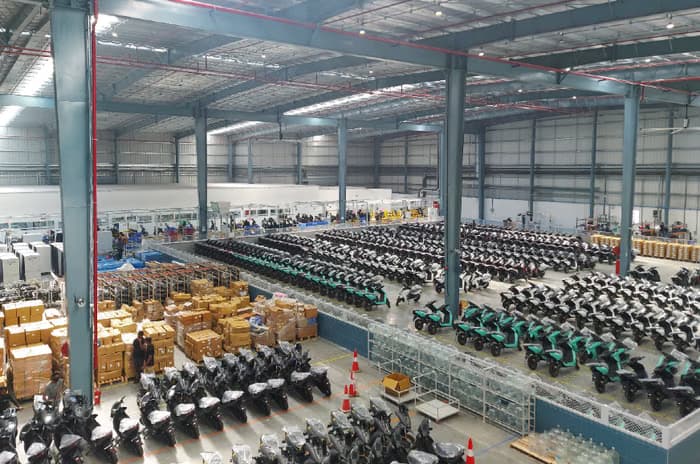

India's electric two-wheeler market hit 207,385 units in September 2026 — up 88.7% YoY — with TVS, Bajaj, and Ather leading while Ola Electric continued to lose ground.
India Electric Two-Wheeler Sales Hit 207,385 Units in September 2026: What TVS, Bajaj & Ather's Surge Means for Buyers
India registered 207,385 electric two-wheelers in September 2026, marking one of the strongest months the segment has ever recorded — an 88.7% jump over September 2025 and a 12.3% sequential rise over August 2026. Electric two-wheelers now represent the fastest-growing sub-segment of India's overall two-wheeler market, accounting for 11.6% of all two-wheeler registrations in September, up from just 8.2% a year ago.
The headline number matters, but the story underneath it is more interesting: the competitive order at the top has reshuffled dramatically, and the gap between the leaders and the laggards is widening fast. For buyers, this shift has direct implications — on model availability, after-sales networks, pricing confidence, and the long-term viability of the brand whose scooter you park in your garage.
September 2026 Electric Two-Wheeler Sales at a Glance
The table below captures the full competitive picture for September 2026, including year-on-year and month-on-month growth rates, based on Vahan dashboard data.
| Manufacturer | Sep 2026 Sales | Market Share | MoM Growth | YoY Growth |
|---|---|---|---|---|
| TVS Motor | 54,057 units | 26.1% | +9.7% | +126% |
| Bajaj Auto | 48,444 units | 23.4% | +17.2% | +138.9% |
| Ather Energy | 30,550 units | 14.7% | +5.1% | +55.7% |
| Hero MotoCorp (Vida) | 24,325 units | 11.7% | +27.1% | +83.3% |
| Ola Electric | 13,451 units | 6.5% | -3.5% | -3% |
| Greaves Electric Mobility | 9,317 units | 4.5% | +8.0% | +114.1% |
Source: Vahan Dashboard, Ministry of Road Transport & Highways, compiled by E-Vehicle Info.
From January to September 2026, India has already registered more than 15.70 lakh electric two-wheelers — a figure that puts the full-year tally on course to comfortably exceed the 1.40 million units registered in FY26, which itself was a 21.8% jump over FY25.
Why Did September 2026 See Such a Sharp Jump?
The 88.7% year-on-year surge stems from several structural and seasonal factors converging in September 2026.
September 2025 was a softer month for the industry. ETAuto reported that the shradh period (when vehicle purchases traditionally slow), a GST rejig, and production constraints at Bajaj Auto due to a rare-earth magnet shortage all weighed on that year's numbers. Those headwinds have now resolved, making the year-on-year comparison look especially dramatic.
Structural tailwinds are real and compounding. Business Standard's analysis of FY26 data identified several durable drivers: expanding charging infrastructure, a wider range of feature-rich models across price segments, improved supply chains, more accessible EV financing, and reduced battery costs from localisation. The PM E-DRIVE scheme for electric two-wheelers, extended until July 31, 2026, also provided a demand floor through much of the year.
Bajaj's production recovery added significant momentum. The company grew 17.2% month-on-month in September, partly because it had been supply-constrained in August. That pent-up demand flushed through in September.
The e2W penetration rate — the share of electric vehicles in total two-wheeler registrations — is now at 11.6%, up from 8.2% a year ago. Industry analysts quoted by Business Standard noted that the e2W market share for FY26 was around 9%, up roughly 1.4 times from 6.3% in FY25, and the market has entered a "next phase of maturity despite subsidies reducing."
Is TVS Motor's Lead Sustainable?
TVS Motor registered 54,057 electric two-wheelers in September 2026, commanding a 26.1% market share — the highest of any manufacturer. Its year-on-year growth of 126% is exceptional even by the segment's elevated standards.
The TVS iQube is the primary volume driver. According to Autocar Professional, the iQube had sold 824,181 cumulative units by end-December 2025, accounting for a 57% share of the combined 1.45 million units sold by the iQube and Bajaj Chetak together since their January 2020 launches. TVS built its cumulative lead of 190,354 units over Bajaj partly because it had a wider sales network in place for its EV much earlier.
That network advantage is real and durable. TVS has one of the largest two-wheeler dealer footprints in India, and it has been systematically converting those touchpoints into EV sales and service centres. For a buyer evaluating an electric scooter, after-sales network depth matters enormously — a point worth weighing carefully. (For a broader look at service network quality across EV brands, see our guide on which electric SUV has the best after-sales service network in India, which applies many of the same evaluation criteria.)
TVS has now held the top position across multiple consecutive months even as Bajaj, Ather, and Hero have all grown aggressively. That consistency signals both manufacturing reliability and sustained consumer pull.
How Close Is Bajaj to Overtaking TVS?
The gap between TVS and Bajaj was just 5,613 units in September 2026 — the narrowest it has been. Bajaj Auto registered 48,444 units with a 23.4% market share, growing 17.2% month-on-month and a striking 138.9% year-on-year.
The Bajaj Chetak is the sole driver of this performance. Autocar Professional notes that the Chetak had sold 633,827 cumulative units by end-December 2025, and its pace has accelerated sharply since then. Bajaj has expanded the Chetak's geographic reach aggressively, and the scooter is now finding buyers in tier-2 and tier-3 cities where Bajaj's ICE dealer network provides a ready-made service backbone.
Approximately 29.2% of Bajaj Auto's own two-wheeler registrations in September 2026 were electric. That internal electrification ratio — the share of a manufacturer's own EV sales within its total two-wheeler volumes — is a useful indicator of how seriously a legacy OEM is transitioning its business. At nearly 30%, Bajaj is clearly treating the Chetak as a strategic priority, not a niche product.
For buyers, Bajaj's trajectory is reassuring. A manufacturer growing at 138.9% year-on-year and investing heavily in EV-specific dealer training and service infrastructure is one that will likely be around to honour warranties and provide parts for years to come.
What Does Ather's 30,550-Unit Month Tell Buyers?
Ather Energy registered 30,550 electric two-wheelers in September 2026, securing a 14.7% market share. Its 55.7% year-on-year growth is lower than TVS or Bajaj in percentage terms, but the absolute numbers tell a different story about trajectory.
Autocar India reported in June 2026 that Ather crossed 7 lakh cumulative retail sales, becoming the fourth e2W manufacturer to reach that milestone after Ola Electric, TVS, and Bajaj. Ather sold its most recent 2 lakh units in just eight months — a pace that reflects genuine demand acceleration, not just a low base.
The Rizta, launched in April 2024, is now the primary volume driver, accounting for nearly 75% of Ather's monthly sales. Its cumulative sales crossed 3 lakh units in just 25 months. The Rizta is positioned as a family electric scooter — a deliberate move to expand Ather's addressable market beyond the tech-forward urban early adopters who bought the 450 series.
Ather's next growth levers are already in motion. The company's new EL platform is designed to underpin a wider range of electric scooters at different price points, while a third manufacturing plant in Maharashtra — with an eventual annual capacity of 10 lakh units — is expected to begin its first phase of operations (42,000 units per month) by March 2027. For buyers, this signals that Ather's supply constraints, which occasionally limited availability in certain cities, should ease materially over the next 18 months.
Ather's September performance also confirms something that ETAuto flagged as early as September 2025: the company has definitively displaced Ola Electric from the No. 3 position and is now applying pressure on Bajaj from below.
Is Hero MotoCorp's Vida Becoming a Serious Contender?
Hero MotoCorp's Vida brand registered 24,325 electric two-wheelers in September 2026 — an 11.7% market share — with the strongest month-on-month growth of any top-five player at 27.1%, and an 83.3% year-on-year increase.
Vida's rise rests on two structural advantages that most pure-play EV startups simply cannot replicate. First, Hero MotoCorp operates one of the largest two-wheeler dealer and service networks in India, with a presence in hundreds of towns and cities that Ather, Ola, or even Bajaj's Chetak-specific network cannot match. Second, Hero's brand recognition in semi-urban and rural India — built over decades of selling the Splendor and Passion — gives Vida an inherent trust advantage when it enters new markets.
ETAuto noted that Vida's Battery-as-a-Service (BaaS) model has been a meaningful demand driver, lowering the upfront acquisition cost of the scooter and making it accessible to price-sensitive buyers. An aggressive marketing push using high-profile celebrity endorsements has also helped build brand salience. (For more on how BaaS works and whether it makes financial sense, see our detailed guide on Battery as a Service models in India.)
At 24,325 units, Vida is now only 6,225 units behind Ather. If Hero sustains even half of September's month-on-month growth rate, it will be challenging Ather for the No. 3 position within a few months. That competitive pressure is ultimately good for buyers — it keeps pricing in check and accelerates feature development.
What Is Happening to Ola Electric?
Ola Electric registered 13,451 electric two-wheelers in September 2026 — a 6.5% market share — with registrations falling 3.5% from August and 3% year-on-year. It is the only major player in the top six to have posted negative growth on both a sequential and annual basis.
The contrast with where Ola stood just two years ago is stark. ETAuto's analysis noted that in the June quarter of the previous fiscal year, almost every second electric two-wheeler sold in India was an Ola. By the June quarter of FY26, not even every fifth e2W sold was from Ola Electric. The company's market share erosion has been one of the defining stories of India's EV market in 2025-26.
Several factors have contributed. The company faced tens of thousands of consumer complaints over product quality issues, which prompted intervention from the Central Consumer Protection Authority (CCPA) and required significant financial provisions for warranties. Early in 2025, a disruption in the vehicle registration process — as Ola transitioned away from a third-party vendor — created further friction. Through these challenges, Ola's management has framed the current phase as a deliberate pivot from "aggressive penetration" to "balanced profitable growth," with Bhavish Aggarwal describing the June quarter of FY26 as "major."
Whether that narrative holds up depends on what happens in the next two to three months. Ola still has strong brand recognition and a large installed base of customers. But with TVS, Bajaj, Ather, and Hero all growing aggressively, the window for a recovery is narrowing. For buyers considering an Ola scooter today, the key questions are around after-sales service quality and the company's ability to execute on its product roadmap.
What About Greaves Electric Mobility?
Greaves Electric Mobility registered 9,317 units in September 2026, with a 4.5% market share, 8% month-on-month growth, and an impressive 114.1% year-on-year increase. Greaves does not attract the same headlines as TVS or Bajaj, but its consistent improvement is worth noting.
Greaves operates primarily through its Ampere brand, which targets value-conscious buyers in tier-2 and tier-3 cities. Autocar India reported in June 2026 that Ampere crossed 4 lakh cumulative unit sales — a figure that includes both Vahan-registered scooters and slower-speed vehicles not captured in the Vahan data. For buyers in smaller cities who prioritise low acquisition cost and a simple, reliable product over premium features, Greaves/Ampere remains a credible option.
What Does the January–September 2026 Tally Mean for Full-Year Projections?
India has registered more than 15.70 lakh electric two-wheelers in the first nine months of 2026. At the September run rate of approximately 2.07 lakh units per month, the full-year 2026 tally could approach or exceed 20 lakh units — roughly 43% above FY26's 1.40 million units.
That projection carries uncertainty. The festive season (October–November) typically drives strong volumes, but macro factors — fuel price movements, any changes to the PM E-DRIVE scheme, and global supply chain conditions — could shift the trajectory. Business Standard's FY26 analysis noted that while rising crude oil prices strengthen the case for electrification, they can also increase logistics and input costs across the supply chain, a tension that manufacturers will need to manage.
The e2W penetration rate of 11.6% in September 2026 is a meaningful milestone. The segment is now past the early-adopter phase and entering what analysts describe as the "next phase of maturity" — characterised by mainstream buyers, competitive pricing, and a wider geographic spread of demand.
What Should a Buyer Take Away from These Numbers?
The September 2026 data carries several concrete implications for anyone in the market for an electric scooter.
Brand stability matters more than it did two years ago. When Ola was selling every second electric scooter in India, buyers had limited choice. Today, with TVS, Bajaj, Ather, and Hero all offering credible products and growing fast, you can afford to be selective. Choose a brand whose sales trajectory and service network give you confidence that it will be around — and investing in its EV business — for the next five to seven years.
The TVS iQube and Bajaj Chetak have proven longevity. Both scooters have crossed 1.45 million combined cumulative sales since their 2020 launches. That scale means a large installed base of owners, an established parts space, and technicians who have seen and fixed most of the problems these scooters can throw up. For buyers who prioritise reliability over modern features, this matters.
Ather's Rizta is the value-for-money sweet spot in the premium segment. At nearly 75% of Ather's monthly volume, the Rizta has clearly found its audience. Its family-scooter positioning, combined with Ather's expanding service network and the upcoming Maharashtra plant, makes it a strong choice for buyers who want a feature-rich product from a brand with genuine EV DNA.
Vida is worth a serious look, especially outside metro cities. Hero's dealer network depth is unmatched, and the BaaS option meaningfully lowers the entry cost. If you live in a city or town where Ather or Ola service centres are sparse, Vida's Hero network is a genuine advantage.
If you are considering a four-wheeler instead, the market context is relevant too. The Maruti Suzuki e Vitara, entering the electric SUV space with Maruti's unparalleled service network, represents a similar "legacy brand with EV ambitions" story at the four-wheeler level — the kind of bet that the TVS and Bajaj trajectories suggest can pay off well for buyers who prioritise after-sales peace of mind over being first with the newest technology.
How Does India's E2W Surge Fit Into the Broader EV Picture?
Electric two-wheelers are the volume backbone of India's EV transition. While electric four-wheelers attract more media attention, e2Ws account for the overwhelming majority of EV registrations in India. FY26 data from Business Standard shows e2Ws at 1.40 million units versus just 193,633 electric four-wheelers — a ratio of more than 7:1.
The structural drivers underpinning e2W growth — lower total cost of ownership versus petrol scooters, improving charging infrastructure, accessible financing, and a widening product range — are not going away. The e2W segment's penetration rate of 11.6% in September 2026 still leaves significant headroom: nearly nine in ten two-wheelers sold in India in September were still petrol-powered.
For buyers who have been waiting for the "right time" to switch to electric, the September 2026 data suggests that time is now. The product quality has improved, the service networks have deepened, the prices have stabilised, and the brands leading the market are ones with the financial and operational scale to support their products for the long term.
The next inflection point to watch is the festive season sales data for October and November 2026 — historically the strongest months for two-wheeler sales in India. If the e2W penetration rate holds above 11% through the festive period, it will confirm that the shift to electric is no longer a seasonal or incentive-driven phenomenon, but a durable structural change in how India moves.
Sources
- India Electric Two-Wheeler Sales September 2026: TVS, Bajaj, Ather & Ola - E-Vehicle Info
- TVS iQube and Bajaj Chetak Sales Cross 1.45 Million Units Six Years After Launch | Autocar Professional
- Ather Energy crosses 7 lakh scooter sales | Autocar India
- Electric vehicle sales saw surge in FY26 on strong year-end push | Business Standard
- Ather Energy outperforms Ola in September e2w sales, closes in on Bajaj | ETAuto
- Ola Electric Official Website