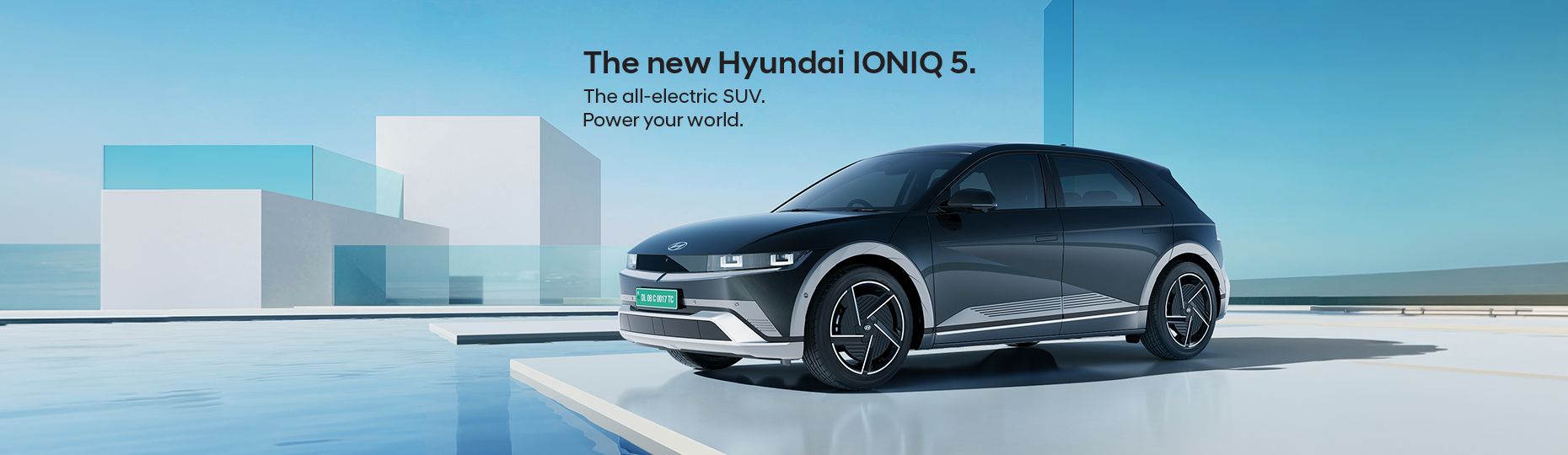

The Hyundai Ioniq 5 delivers 501 km of real-world range vs 371 km for the Tesla Model Y in India, despite costing ₹4.82 lakh more at ₹55.71 lakh ex-showroom.
Hyundai Ioniq 5 vs Tesla Model Y: Which Premium EV Delivers Better Real-World Range in India 2026?
The Hyundai Ioniq 5 delivers 501 km of real-world range in India versus the Tesla Model Y's 371 km — a 130 km gap — according to Autocar India's standardised range test conducted in September 2026. That headline number, however, only tells part of the story. The two cars take different approaches to battery chemistry, weight, aerodynamics and pricing, and the right choice depends on how and where you drive.
Before diving into the details, here is a side-by-side snapshot of the three key contenders in the premium-to-mid-size EV space in India right now — including the Maruti Suzuki e Vitara for buyers who want a capable mid-size alternative without the premium import price tag.
| Specification | Hyundai Ioniq 5 | Tesla Model Y | Maruti Suzuki e Vitara |
|---|---|---|---|
| Battery size (kWh) | 84 (NMC) | 60 (LFP) | 49 / 61 (LFP) |
| Power (hp) | 229 | 299 | 144 / 174 |
| Torque (Nm) | 350 | 420 | 300 / 338 |
| Drive layout | RWD | RWD | FWD / AWD |
| Claimed range (km) | 690 (ARAI) | 500 (WLTP) | ~500 (ARAI, est.) |
| Real-world range (km) | 501 | 371 | Not yet tested |
| Kerb weight (kg) | 2,165 | 2,003 | ~1,800 (est.) |
| Price (₹ lakh, ex-sh.) | 55.71 | 50.89 | ~25–30 (est.) |
Sources: Autocar India range comparison; Autocar India Ioniq 5 range test. e Vitara pricing and range are estimates pending official India launch confirmation.
What are the key specification differences between the Ioniq 5 and Model Y?
The Hyundai Ioniq 5 is a mid-size battery-electric crossover built on Hyundai's dedicated E-GMP platform, using nickel manganese cobalt (NMC) cell chemistry that prioritises energy density and fast-charging capability. The 2026 update — which arrived in April 2026 — bumped the gross battery capacity from 72.6 kWh to 84 kWh, pushing the ARAI-certified claimed range to 690 km. The trade-off is weight: the new pack adds 150 kg, bringing kerb weight to 2,165 kg.
The Tesla Model Y uses lithium ferrous phosphate (LFP) cell chemistry in its 60 kWh (gross) battery. LFP sacrifices some energy density in exchange for greater thermal stability, longer cycle life, and the ability to charge to 100% regularly without significant degradation. The result is a lighter car — 2,003 kg — with a WLTP-certified claimed range of 500 km.
One important caveat: ARAI and WLTP are different test cycles, and the figures are not directly comparable. ARAI testing is generally conducted under more controlled, lower-speed conditions that tend to produce optimistic numbers. WLTP is closer to real-world European driving patterns. Neither perfectly predicts Indian real-world performance, which is why independent range tests matter.
On motor output, the Model Y has a clear edge — 299 hp and 420 Nm versus the Ioniq 5's 229 hp and 350 Nm. Both use rear-wheel drive in their base configurations. Autocar India noted that the Model Y "feels stronger to drive, with quicker acceleration and sharper throttle response" than the Ioniq 5.
How did the two EVs perform in real-world range testing in India?
Autocar India's standardised range test drives each car on a fixed loop covering city and highway stretches, with the battery fully charged and tyre pressures set to manufacturer recommendations. AC is maintained at 22°C in auto mode, and features like the audio system, lights and ventilated seats are used as a regular driver would. Range is calculated from the percentage of charge consumed — not from the car's own range estimator, which can be optimistic.
The Ioniq 5 was tested in Eco mode with Level 2 regenerative braking in the city and Level 1 on the highway. The Model Y was tested in Chill mode (Tesla's equivalent of Eco) with Standard regeneration in the city and Reduced on the highway.
In stop-start urban traffic, the Ioniq 5 returned 6.22 km/kWh, ahead of the Model Y's 5.84 km/kWh. The Ioniq 5's aggressive regenerative braking settings recover more energy in city driving. On the open road, however, the tables turn. The Model Y posted 6.52 km/kWh versus the Ioniq 5's 5.71 km/kWh. Tesla's superior aerodynamics — the Model Y has a lower drag coefficient — help it sustain efficiency at higher speeds, while the Ioniq 5's heavier weight and slightly blunter profile work against it on the highway.
Despite losing on highway efficiency, the Ioniq 5's much larger battery (84 kWh vs 60 kWh) gives it a decisive total range advantage. The Ioniq 5 achieved 501 km on a full charge; the Model Y managed 371 km — a gap of 130 km.
| Efficiency metric | Hyundai Ioniq 5 | Tesla Model Y |
|---|---|---|
| City efficiency (km/kWh) | 6.22 | 5.84 |
| Highway efficiency (km/kWh) | 5.71 | 6.52 |
| Average efficiency (km/kWh) | 5.96 | 6.18 |
| Real-world range (km) | 501 | 371 |
The Model Y is the more efficient car per unit of energy — it extracts 6.18 km/kWh on average versus the Ioniq 5's 5.96 km/kWh. But efficiency alone doesn't determine range; battery size does. For long intercity trips — say, Mumbai to Pune, or Delhi to Agra — the Ioniq 5's 501 km real-world range means you can complete many such journeys without a charge stop, while the Model Y's 371 km may require planning around chargers. For a deeper look at which EVs suit long-distance travel in India, see our guide on best electric cars for long trips in India in 2026.
How does the Ioniq 5's charging performance compare to the Model Y's?
Charging speed is where the Ioniq 5's NMC chemistry and E-GMP platform shine. Autocar India's dedicated Ioniq 5 range and charging test recorded a peak charging rate of 149 kW on a 150 kW DC fast charger. On a 360 kW ultra-fast charger, the Ioniq 5 hit a peak of approximately 251 kW — and charged from 20% to 80% in just 16 minutes. That is a genuinely impressive figure for a production car available in India.
The charging curve stays close to peak between 30% and 70% state of charge before tapering off rapidly. From 80% to 100%, the Ioniq 5 took an additional 33 minutes — a common characteristic of NMC cells that slow down significantly in the upper range to protect battery health. On a standard 150 kW charger, the 20–80% charge took 22 minutes, and a full charge from 20% to 100% required about 54 minutes total.
The Tesla Model Y with LFP chemistry has a different charging profile. LFP cells are more tolerant of regular 100% charges — Tesla actually recommends charging LFP-equipped vehicles to 100% regularly — but peak DC charging speeds are lower. The Model Y supports up to 170 kW DC charging in some markets, though real-world peak rates in India depend on charger availability and conditions. Data on the Model Y's India-specific charging speeds in this test was not separately published.
For Indian buyers, the practical charging infrastructure question matters. Tesla's Supercharger network is growing but remains concentrated in metro areas. The Ioniq 5 is compatible with the broader CCS2 charging network, which includes Tata Power, Ather Grid, and various third-party operators — giving it wider access across the country.
Which car offers better value for money in India?
As of September 23, 2026, the Hyundai Ioniq 5 is priced at ₹55.71 lakh ex-showroom, while the Tesla Model Y starts at ₹50.89 lakh. The Ioniq 5 costs ₹4.82 lakh more.
That premium buys you 130 km of additional real-world range, a faster-charging battery, and Hyundai's established service network in India. The Model Y offers more power, a lighter and more agile driving character, and — since Tesla has dropped its India price — a more accessible entry point into the premium EV segment.
JD Power's 2026 comparison of the two models gives the Ioniq 5 an advantage on price and value, noting that Hyundai offers free BlueLink+ connected services for the duration of ownership, while Tesla's premium connectivity requires a paid subscription after a 30-day trial. Hyundai also provides five years of complimentary roadside assistance with no mileage cap.
On reliability and quality, JD Power notes that the Model Y ranks second among Premium Battery Electric Vehicles in the 2026 U.S. Electric Vehicle Experience (EVX) Ownership Study, though it does not rank in the top three in the broader Compact Premium SUV segment in either the Vehicle Dependability Study or the Initial Quality Study. The Ioniq 5's reliability record in India has been generally positive, though the 2026 model with its new battery pack is too recent for long-term data.
For buyers who find both cars too expensive, the Maruti Suzuki e Vitara presents a compelling mid-size alternative. Positioned well below the ₹50 lakh threshold, the e Vitara offers a choice of 49 kWh and 61 kWh LFP battery options, Maruti's unmatched service network across India, and the peace of mind that comes with a mass-market brand. It won't match the Ioniq 5's 501 km real-world range or the Model Y's performance, but for buyers whose priority is value, reliability, and serviceability rather than maximum range, it deserves serious consideration. You can explore how it stacks up in our roundup of the best electric cars to buy in India in 2026.
How do the two cars differ in driving experience and features?
The Hyundai Ioniq 5 stands out for its retro-futuristic design language, roomy flat-floor interior (enabled by the E-GMP skateboard platform), and a feature set that includes a large dual-screen dashboard, relaxation seats that recline almost flat, vehicle-to-load (V2L) capability, and over-the-air software updates. The 2026 update brought cosmetic refreshes alongside the larger battery.
The Tesla Model Y's interior is famously minimalist — a single large central touchscreen controls virtually all functions, with almost no physical buttons. This design philosophy divides opinion. The Model Y also benefits from Tesla's continuous OTA updates, which have improved performance and added features over time. Full Self-Driving (Supervised) is available as an add-on, though it remains expensive and its capabilities in Indian traffic conditions are limited.
Both cars offer advanced driver assistance systems. For a broader look at which EVs offer the best ADAS packages in India, our guide on best electric cars with ADAS in India in 2026 covers the full space.
On safety, the Ioniq 5 has strong global crash test credentials — it has received top ratings from Euro NCAP and ANCAP. The Model Y has similarly strong safety ratings internationally. Neither has been tested by Bharat NCAP at the time of writing, though India's crash testing programme is expanding. You can track which EVs have been assessed in our article on 5-star Bharat NCAP electric cars in India worth buying in 2026.
Who should buy the Ioniq 5, and who should buy the Model Y?
Buy the Hyundai Ioniq 5 if:
- Long-distance range is your primary concern — 501 km real-world is genuinely class-leading at this price point in India.
- You frequently drive in city traffic, where the Ioniq 5's regenerative braking gives it a city efficiency edge.
- You want access to ultra-fast charging (up to 251 kW peak) and a broad CCS2 charging network.
- You value Hyundai's established service infrastructure across India.
- The V2L feature (powering appliances from the car's battery) is useful for your lifestyle.
Buy the Tesla Model Y if:
- You prioritise performance — the Model Y's 299 hp and sharper throttle response make it the more engaging driver's car.
- Highway driving dominates your usage pattern, where the Model Y's aerodynamic efficiency advantage is most pronounced.
- You're comfortable with Tesla's minimalist interior and touchscreen-centric interface.
- The ₹4.82 lakh price difference matters, and 371 km of real-world range is sufficient for your daily and intercity needs.
- You want the Tesla ecosystem, including Supercharger access and FSD capability.
Consider the Maruti Suzuki e Vitara if:
- Your budget sits below ₹35 lakh and you want a mid-size EV with a trusted service network.
- You don't need 500+ km of range and primarily drive within city limits or on shorter intercity routes.
- After-sales support and resale value are high priorities — Maruti's dealer network is unmatched in India. For more on service networks, see our guide on which electric SUV has the best after-sales service network in India.
What does the Ioniq 5's battery upgrade mean for long-term ownership?
The shift from 72.6 kWh to 84 kWh is significant, but it comes with trade-offs that matter for long-term ownership. The heavier battery (contributing to a 2,165 kg kerb weight) puts more stress on tyres, brakes and suspension components. NMC chemistry, while excellent for energy density and fast charging, is generally considered slightly less durable over very high cycle counts compared to LFP — though modern NMC cells in premium EVs are engineered to last well beyond 1,000 charge cycles with minimal degradation.
The previous 72.6 kWh Ioniq 5 was priced at ₹45 lakh and was widely regarded as the value king of its segment. At ₹55.71 lakh, that positioning has shifted. The 2026 model is now squarely a premium import competing on range and features rather than price. Buyers who valued the old Ioniq 5's value may find the e Vitara or even the BYD Atto 3 more relevant alternatives.
The Ioniq 5's fast-charging capability — 16 minutes from 20% to 80% on a 360 kW charger — is a genuine differentiator for road-trip use. As India's ultra-fast charging infrastructure expands along highways, this advantage will become more practically useful. Currently, 360 kW chargers are rare in India, and most public DC fast chargers operate at 60–150 kW, where the Ioniq 5 still charges at close to its rated speed.
What is the bottom line?
Judged purely on real-world range in Indian conditions, the Hyundai Ioniq 5 wins this comparison by a clear margin — 501 km versus 371 km, as tested by Autocar India. For buyers who regularly drive long distances or want the security of a large range buffer, the Ioniq 5's 84 kWh NMC battery and ultra-fast charging capability make a strong case, even at ₹55.71 lakh.
The Tesla Model Y is the more efficient car per kilowatt-hour — and on the highway, it actually beats the Ioniq 5 on efficiency. Its lower price (₹50.89 lakh), stronger motor output, and Tesla's software ecosystem make it a serious contender for urban and performance-focused buyers. The 371 km real-world range is adequate for most daily use cases in Indian cities, where average daily driving rarely exceeds 60–80 km.
Neither car is a wrong choice at this price point. The decision comes down to whether you're optimising for total range and charging speed (Ioniq 5) or performance, efficiency and price (Model Y). And if both feel like overkill for your needs, the Maruti Suzuki e Vitara offers a grounded, practical alternative that brings the EV experience within reach of a much wider audience.
Sources
- Hyundai Ioniq 5 vs Tesla Model Y real-world range compared | Autocar India
- 2026 Hyundai Ioniq 5 real world range tested, explained | Autocar India
- 2026 Tesla Model Y vs. 2026 Hyundai Ioniq 5 Comparison | JD Power
- Hyundai Ioniq 5 | Wikipedia
- Hyundai Ioniq 5 – Official Model Page | Autocar India
- Tesla Model Y – Official Model Page | Autocar India
- Best Electric Cars for Long Trips in India in 2026 | EV Index India
- Best Electric Cars to Buy in India in 2026 | EV Index India
- Best Electric Cars with ADAS in India in 2026 | EV Index India
- 5-Star Bharat NCAP Electric Cars in India Worth Buying in 2026 | EV Index India
- Which Electric SUV Has the Best After-Sales Service Network in India? | EV Index India