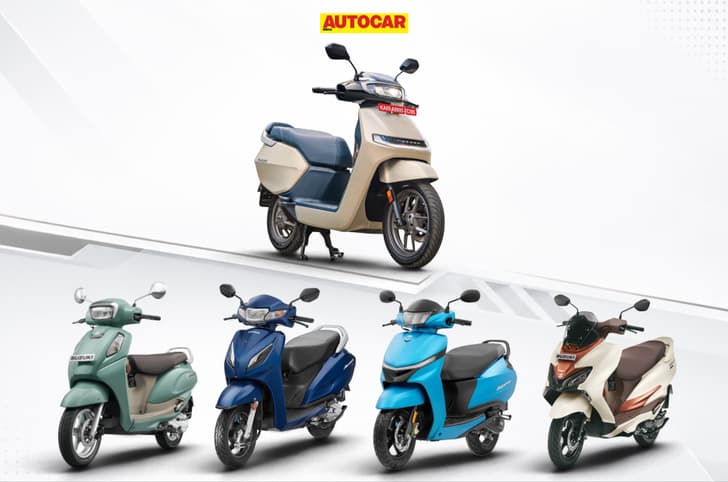

The Ather Konarc S 100 at Rs 99,999 costs Rs 9,000–Rs 25,000 more than top petrol rivals but offers larger wheels, more storage, and EV tech advantages that ICE scooters can't match.
Ather Konarc vs Top 6 Petrol Scooters in India 2026: Which Family Scooter Offers Better Value?
The Ather Konarc S 100 is Ather Energy's entry-level mass-market electric scooter, priced at Rs 99,999 (ex-showroom, Bengaluru) — roughly Rs 9,000 to Rs 25,000 more than the top variants of its closest petrol rivals in the family scooter segment. Whether that premium is justified depends entirely on how you use your scooter every day.
For two decades, the family scooter segment in India has been dominated by petrol-powered two-wheelers, with the Honda Activa as its undisputed mascot. Ather Energy's Konarc, launched in August 2026 on the brand-new EL platform, is the most direct EV challenge yet to that petrol establishment. It brings a metal body, a 14-inch front wheel, 31L of underseat storage, and Ather's signature software space — all at a price point that finally overlaps with the top-spec petrol options.
Here is how the Konarc S 100 stacks up against the six petrol scooters a buyer in this segment would realistically consider:
| Scooter | Starting Price | Top Variant Price | Engine/Motor | Claimed Range/Mileage | Underseat Storage | Wheel Size (F/R) |
|---|---|---|---|---|---|---|
| Ather Konarc S 100 | Rs 99,999 | Rs 1.45 lakh (range) | Electric, 4kW peak | 100km IDC | 31L | 14/12-inch |
| Honda Activa 110 | Rs 76,083 | Rs 91,082 | 110cc, ~7.9hp | 270km (54.4kpl) | ~18L | 12/12-inch |
| Honda Activa 125 | Rs 91,178 | Rs 95,622 | 124cc, 8.3hp | ~250km (est.) | ~18L | 12/12-inch |
| TVS Jupiter 110 | Rs 74,125 | Rs 89,825 | 113.3cc, 7.9hp | 285km (57kpl) | 33L | 12/12-inch |
| TVS Jupiter 125 | Rs 81,700 | Rs 89,935 | 124.8cc, ~8.4hp | ~270km (est.) | 33L | 12/12-inch |
| Suzuki Access 125 | Rs 82,185 | Rs 1.02 lakh | 124cc | ~240km (est.) | 24.4L | 12/10-inch |
| Suzuki Burgman Street | Rs 1.03 lakh | Rs 1.15 lakh | 124cc | ~240km (est.) | 25L | 12/12-inch |
Konarc price: ex-showroom Bengaluru. Petrol scooter prices: ex-showroom Delhi. Source: Autocar India
A note on the broader EV market context: while this comparison focuses on two-wheelers, the EV transition is happening across vehicle categories. Buyers considering a step up to four wheels might look at the Maruti Suzuki e Vitara, which represents a similar value-vs-premium debate in the electric car segment — established brand trust meeting new EV technology at a price point that challenges petrol alternatives.
Is the Honda Activa still the default family scooter in 2026?
The Honda Activa remains the benchmark family scooter in India — a product so dominant that the word "scooter" and "Activa" are often used interchangeably by everyday buyers. In 2026, that reputation holds, though the feature gap between the Activa and newer rivals has narrowed considerably.
The Activa 110 starts at Rs 76,083 and tops out at Rs 91,082. For that money, you get a 110cc engine, a 4-inch TFT instrument cluster with turn-by-turn navigation, smartphone connectivity, an Integrated Starter Generator (ISG) for silent start and stop-start functionality, and a smart key on the top variant. With tested fuel economy of 54.4kpl, the Activa delivers approximately 270km of range on a full tank — more than double the Konarc's 100km IDC range.
Trust is the Activa's strongest asset. Honda's service network ranks among the densest in India, and the reliability record of the Activa engine is unmatched. For buyers anxious about EV charging infrastructure, service availability, or battery longevity, the Activa remains the path of least resistance.
Storage capacity tells a different story. The Activa offers roughly 18L underseat versus the Konarc's 31L, while its 12/12-inch wheels lag the Konarc's 14/12-inch setup. Ride dynamics also favour the Konarc — that larger front wheel absorbs road imperfections better and gives the scooter a more planted feel, a tangible real-world difference on India's varied road surfaces.
By paying Rs 9,000 more for the Konarc S 100 over the top Activa 110, you gain 100km IDC range, 70kph top speed, two ride modes, bigger 14/12-inch wheels, and a 31L underseat storage. Whether those gains justify the premium — and the switch to electric — is the central question this article addresses.
How does the Honda Activa 125 compare to the Konarc?
The Honda Activa 125 pairs the Activa 110's platform with a larger engine. The 124cc unit produces 8.3hp and 10.5Nm of torque — 0.4hp and 1.4Nm more than the 110. Real-world riding reveals a perceptible but not dramatic difference: slightly better highway composure and a touch more confidence when carrying a pillion.
Prices start at Rs 91,178 and top out at Rs 95,622. The feature set mirrors the 110 almost exactly — same 4-inch TFT cluster, ISG, smartphone connectivity, and smart key on the top variant. There is no meaningful feature differentiation that makes the 125 a clearly superior choice over the 110; it's a powertrain upgrade, not a technology upgrade.
Against the Konarc, the calculation resembles the 110 comparison: the top Activa 125 at Rs 95,622 is Rs 4,377 cheaper than the Konarc S 100. For that saving, you sacrifice the larger wheels, the bigger storage, and the EV riding experience. You gain the peace of mind of a petrol engine, a denser service network, and the ability to refuel in minutes anywhere in India.
For buyers who regularly travel intercity or live in areas with unreliable power supply, the Activa 125 remains a sensible, if unexciting, choice.
Is the TVS Jupiter 110 the best-value petrol scooter in this comparison?
Among the six petrol scooters compared here, the TVS Jupiter 110 makes the strongest case for itself. It starts at Rs 74,125 and tops out at Rs 89,825 — making it the most affordable top-spec option in this comparison.
TVS gave the Jupiter a full overhaul in 2024. The all-new 113.3cc engine produces 7.9hp and 9.8Nm of torque (with an additional 0.6Nm from the ISG). More significantly, it inherited the platform from its bigger 125cc sibling, which means it gets a front fuel tank — freeing up the underseat space for a class-leading 33L of storage. That exceeds even the Konarc's 31L, making the Jupiter 110 the outright winner on storage capacity among all scooters in this comparison.
With tested fuel economy of 57kpl, the Jupiter delivers approximately 285km of range — the highest of any scooter here. It also gets 12-inch wheels at both ends, a front disc brake on higher variants, a wide floorboard, front apron storage, ISG, and smartphone connectivity. The design is the most modern of any ICE scooter in this segment.
The Konarc's clear edge over the Jupiter 110 is the 14-inch front wheel. By stepping up to the Konarc and paying an additional Rs 10,174 over the top Jupiter 110, that is the primary hardware gain. Everything else — storage, features, connectivity — the Jupiter 110 either matches or exceeds.
For buyers not yet ready to commit to electric, the TVS Jupiter 110 is the most compelling petrol alternative. It offers the most features, the most storage, and the best fuel economy of any petrol scooter in this segment.
Does the TVS Jupiter 125 offer enough over the 110 to justify its price?
The short answer is no — at least not in 2026. The TVS Jupiter 125 starts at Rs 81,700 and tops out at Rs 89,935, overlapping significantly with the 110's price range.
The 124.8cc engine adds 0.5hp and 1.3Nm of torque over the 110 with ISG assistance. Without the ISG, the gains shrink to just 0.1hp and 0.7Nm — barely perceptible in real-world riding. The Jupiter 125 does get a TFT display on its instrument cluster, but as Autocar India notes, it isn't adding any real value over what the 110 already offers.
The Jupiter 125 hasn't received the same design refresh as the 110. It retains the older design from its 2021 debut, which looks dated next to the thoroughly modernised 110. Sharing the same platform means the 110 has caught up to most of the 125's features, making the 125 feel like a more expensive version of a scooter that's been overtaken by its own sibling.
Against the Konarc, the Jupiter 125 at its top variant (Rs 89,935) is approximately Rs 10,000 cheaper. The only hardware gain from stepping up to the Konarc is the larger 14-inch front tyre. If that matters to you — and it should, given India's road conditions — the Konarc is worth the premium. If it doesn't, the Jupiter 110 is a better buy than the 125 at similar prices.
How does the Suzuki Access 125 compare to the Ather Konarc?
The Suzuki Access 125 has been one of India's best-selling scooters for years, quietly building a loyal customer base through reliability and refinement rather than headline features. It received a full upgrade in early 2025 — a new frame and numerous engine improvements — but Suzuki chose not to add significant new features.
The Access starts at Rs 82,185 and goes up to Rs 1.02 lakh for the TFT-ABS variant. That top variant is actually Rs 3,000 more expensive than the Konarc S 100. For that extra money, you get a 12/10-inch wheel setup (smaller than the Konarc's 14/12-inch), just 24.4L of underseat storage (versus the Konarc's 31L), and no ride modes. What you do get — and this is significant — is single-channel ABS on the top variant. The Access is the only scooter in this entire comparison that offers ABS, making it the safest option from a braking perspective.
The Access also carries the Suzuki reliability halo, which matters to buyers who prioritise long-term ownership costs and service simplicity over technology features.
The value equation here is interesting: the Konarc S 100 at Rs 99,999 is actually cheaper than the top Access 125 at Rs 1.02 lakh, while offering larger wheels, more storage, and two ride modes. The Access fights back with ABS and petrol convenience. If safety is your primary concern and you're not ready for EV, the top Access 125 is the only petrol scooter here with ABS — a meaningful differentiator.
Is the Suzuki Burgman Street worth considering over the Konarc?
The Suzuki Burgman Street occupies a unique position in this comparison. It's the only maxi-scooter here, with a longer wheelbase (+25mm over the Access), more weight (+7kg), and a slightly larger fuel tank (+0.2L). It received most of the same mechanical upgrades as the Access in early 2026.
Prices start at Rs 1.03 lakh — already more expensive than the Konarc S 100 — and the top TFT variant with keyless system costs Rs 1.15 lakh. At that price, the Burgman Street is Rs 15,000 more expensive than the Konarc entry point, and Rs 15,000 less than the Konarc's upper variants.
The Burgman Street's differentiators over the Access are the keyless system on the top variant, a 12/12-inch wheel setup (versus the Access's 12/10-inch), and the maxi-scooter stance that some buyers genuinely prefer for its upright, comfortable riding position. It loses the single-channel ABS that the Access offers, which is a notable step back in safety.
Against the Konarc, the Burgman Street buyer ends up paying about Rs 4,000 more for the entry variant while getting smaller wheels, less underseat storage, and no ride modes. The Konarc's 14-inch front wheel is a clear advantage over the Burgman's 12-inch setup. The Burgman fights back with its maxi-scooter design appeal and the familiarity of a petrol powertrain.
For buyers who love the Burgman's look and feel but are open to electric, the Konarc's similar price point makes it a genuinely competitive alternative.
What does the Ather Konarc actually offer that petrol scooters can't match?
The Ather Konarc is Ather's first mass-market electric scooter built on the new EL platform — a ground-up architecture designed to compete with the Honda Activa and TVS Jupiter rather than the performance-oriented 450 range.
Hardware advantages are clear: the 14-inch front wheel is unique in this segment (no petrol scooter here uses anything larger than 12 inches at the front), the 31L underseat storage beats every petrol scooter except the TVS Jupiter's 33L, and the two ride modes add a layer of customisation that no petrol scooter in this price range offers.
Software is where the Konarc genuinely separates itself. Ather's AtherStack space — including the 7-inch LCD cluster (the largest in segment), AirWalk for easy manual manoeuvring, TrueRange for accurate range prediction, and AutoHold — has no equivalent in the petrol world. Ather promises yearly software upgrades and new features, a claim no petrol scooter manufacturer can make. The scooter improves over time, a concept entirely alien to the ICE world.
The catch is Ather StackPro. Many headline tech features require this subscription, which costs Rs 16,000 for the Konarc S 125km variant as a one-time purchase. This is a significant add-on that effectively raises the real-world cost of the Konarc. Without StackPro, the Konarc's feature set is competitive but not dramatically superior to the best petrol scooters.
Running costs tell a compelling story. Electric scooters cost roughly Rs 0.5–1 per kilometre to run on electricity, versus Rs 3–4 per kilometre for petrol scooters at current fuel prices. Over 50,000km of riding — a reasonable 5-year ownership period — the Konarc could save Rs 1–1.5 lakh in fuel costs alone, partially or fully offsetting the higher purchase price.
Who should buy the Ather Konarc and who should stick with petrol?
The decision framework here is straightforward once you understand your own usage pattern.
Choose the Ather Konarc if:
- Your daily commute is under 80km (well within the 100km IDC range of the S 100)
- You have access to home charging — either your own house or a housing society that permits charger installation
- You are drawn to technology and want a scooter that improves over time through software updates
- You want the largest underseat storage and the best ride quality in this price bracket
- You are willing to pay the StackPro premium to unlock the full feature set
Stick with petrol if:
- You regularly travel intercity or have unpredictable daily distances
- You live in an apartment without charging access and rely on public charging infrastructure
- You prioritise ABS (in which case, the Suzuki Access 125 top variant is the only option here)
- You want the lowest total cost of ownership without any upfront premium
- You need the widest possible service network, especially in smaller towns and cities
Ather CEO Tarun Mehta has acknowledged that the entry variant of the Konarc remains roughly 30% more expensive than the entry-level Activa. That gap narrows significantly at the top-spec level — the top Activa 110 at Rs 91,082 versus the Konarc S 100 at Rs 99,999 is only a 10% premium — but it doesn't disappear entirely.
Ather's broader strategy is clear: the company ended FY26 as India's third-largest electric two-wheeler manufacturer with sales jumping 82% to 239,178 units and a 17% market share. The Konarc, built on the new EL platform, is designed to close the gap with TVS (24% market share) and Bajaj (21% market share) by targeting the mass-market commuter segment directly. Autocar Pro reports that Ather is targeting over 350,000 units in CY2026, with the Konarc as the primary growth driver.
What is the real total cost of ownership over 5 years?
Total cost of ownership (TCO) is the sum of purchase price, running costs, maintenance costs, and insurance over a defined ownership period — and it is where the EV case becomes most compelling.
Assuming 30km of daily riding (roughly 10,000km per year):
| Cost Component | Ather Konarc S 100 | Honda Activa 110 (top) | TVS Jupiter 110 (top) |
|---|---|---|---|
| Purchase price | Rs 99,999 | Rs 91,082 | Rs 89,825 |
| StackPro (one-time, optional) | Rs 16,000 | — | — |
| Running cost (5 years, 50,000km) | ~Rs 5,000–10,000 | ~Rs 1,50,000–1,75,000 | ~Rs 1,40,000–1,60,000 |
| Maintenance (est. 5 years) | ~Rs 10,000–15,000 | ~Rs 20,000–30,000 | ~Rs 20,000–30,000 |
| Estimated 5-year TCO | ~Rs 1.30–1.40 lakh | ~Rs 2.60–2.95 lakh | ~Rs 2.50–2.80 lakh |
Running cost estimates based on electricity at Rs 8/unit and petrol at Rs 100/litre. These are approximations; actual costs vary by city, riding style, and fuel prices.
The numbers are striking. Even with the StackPro add-on, the Konarc's 5-year TCO is likely to be significantly lower than any petrol scooter in this comparison. The higher purchase price is recovered through fuel savings within 2–3 years of average use.
This is the argument Ather is making to mainstream buyers — and it's a compelling one, provided the buyer has home charging access. Without it, the convenience cost of public charging erodes much of this advantage.
How does the Konarc fit into the broader EV adoption picture in India?
The Ather Konarc's launch represents a maturation of the Indian EV two-wheeler market. Earlier EVs like the TVS iQube and Ather Rizta proved that electric scooters could compete with petrol alternatives in features and performance. The Konarc takes that a step further by competing on price — at least at the top-spec level.
Charging infrastructure is expanding in urban areas, battery technology is improving, and government incentives continue to support EV adoption. The Maruti Suzuki e Vitara's entry into the electric car segment signals that even the most conservative mainstream manufacturers now see EVs as a core part of their product strategy — a trend that will accelerate consumer confidence across all EV categories, including two-wheelers.
For the family scooter buyer in 2026, the Ather Konarc is the first EV that genuinely belongs in the same consideration set as the Activa and Jupiter — not as an aspirational alternative, but as a practical, price-competitive option. The petrol scooters in this comparison are not obsolete; they remain excellent products with proven reliability and unmatched convenience. But the gap is closing, and the Konarc is the clearest evidence yet that it will continue to close.
Take a test ride before you decide. The EV riding experience — instant torque, near-silent operation, smartphone integration — is genuinely different from petrol, and for many buyers, that difference alone is worth the premium.
Sources
- Top 6 Petrol rivals to the Ather Konarc | Autocar India
- Ather Konarc S 125 vs rivals: Price and specifications compared | Autocar India
- Ather Energy takes on Bajaj Auto, TVS Motor with new Konarc electric scooter | Mint
- New Konarc to help power Ather Energy's record sales of 350,000 e-scooters in CY2026 | Autocar Pro
- 2025 Honda Activa review: India's ubiquitous scooter | Autocar India
- TVS Jupiter 110 road test review | Autocar India
- Ather Konarc – Official Page | Autocar India
- Honda Activa 110 – Official Page | Autocar India
- Honda Activa 125 – Official Page | Autocar India
- TVS Jupiter – Official Page | Autocar India
- TVS Jupiter 125 – Official Page | Autocar India
- Suzuki Access 125 – Official Page | Autocar India
- Suzuki Burgman Street – Official Page | Autocar India